

White Fields in Winter: 3-Part Mixed Choral Octavo
Words by James Stephens, music by Ruth Morris Gray
Item: 00-PO-0007134

$2.05
Minimum order quantity: 20 copies
Pickup currently not available
Related Items
White Fields in Winter: SATB Choral Octavo |
$2.05
|
View | |
White Fields in Winter: SATB Choral Octavo |
$2.50
|
View | |
White Fields in Winter: 3-Part Mixed Choral Octavo |
$2.50
|
View | |
White Fields in Winter: SSA Choral Octavo |
$2.05
|
View | |
White Fields in Winter: SSA Choral Octavo |
$2.50
|
View | |
White Fields in Winter: PianoTrax Digital Audio Download |
$9.99
|
View | |
White Fields in Winter: PartTrax Digital Audio Download |
$49.99
|
View | |
White Fields in Winter: PartTrax Digital Audio Download |
$49.99
|
View | |
White Fields in Winter: PartTrax Digital Audio Download |
$49.99
|
View | |
White Fields in Winter: SATB Choral Octavo |
$2.50
|
View | |
White Fields in Winter: 3-Part Mixed Choral Octavo |
$2.50
|
View | |
White Fields in Winter: SSA Choral Octavo |
$2.50
|
View |
Description
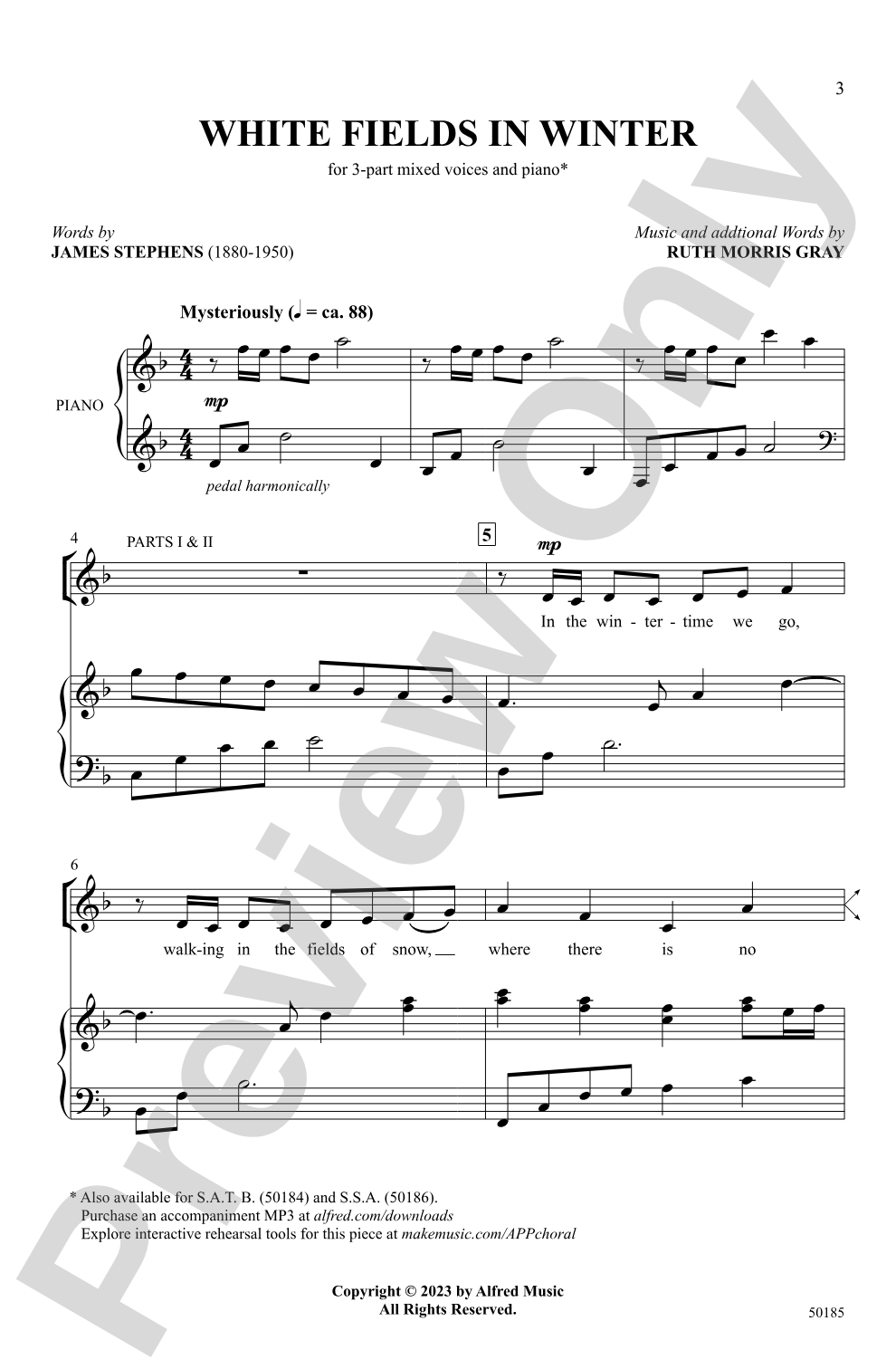
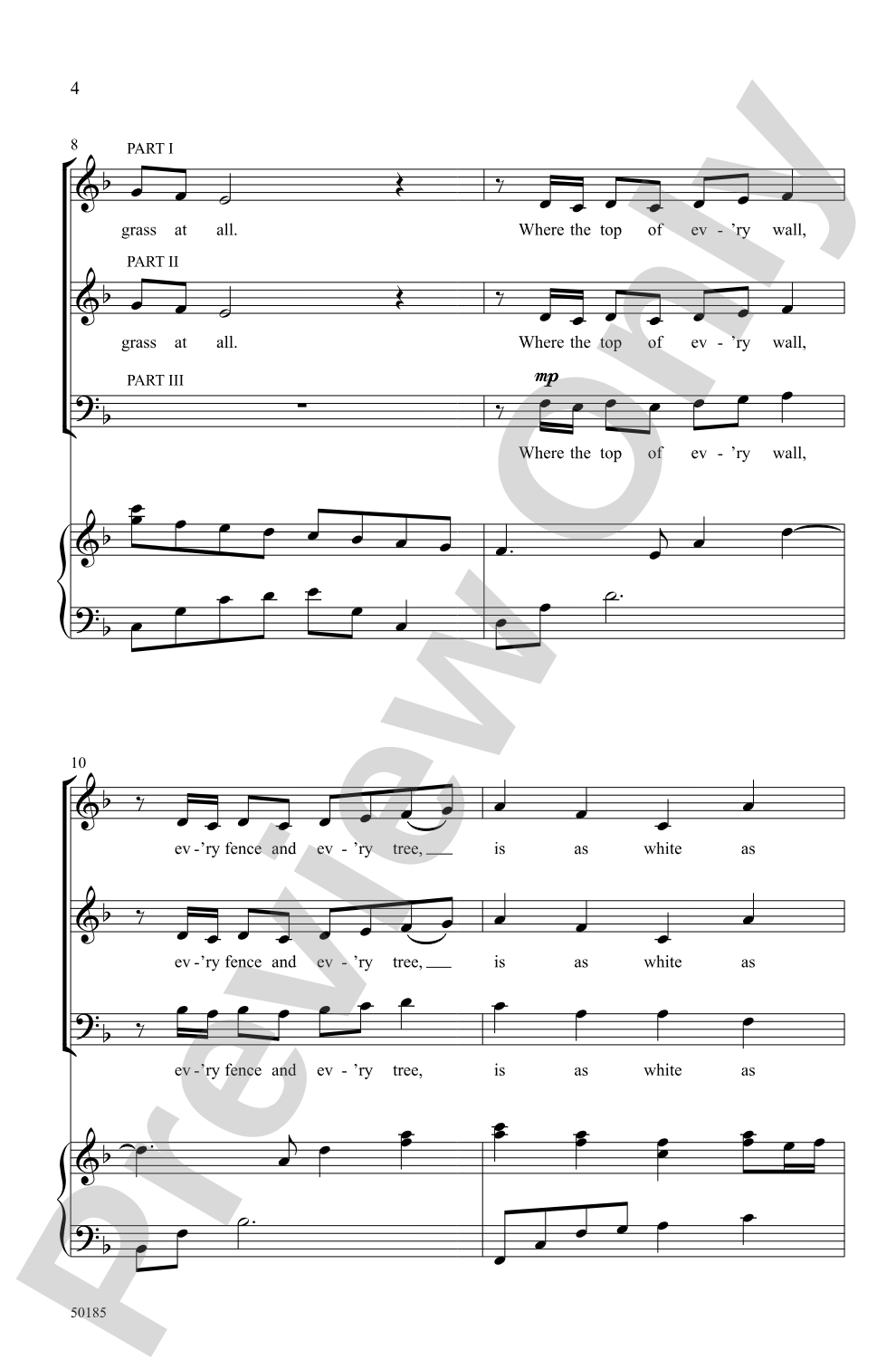
This delightful winter poem imagines footprints in the snow as "prints of silver filigree." Ruth Morris Gray's captivating musical setting seamlessly alternates between major and minor keys. Enunciate clearly on the lightly lilting verses, sing lyrically on the legato refrain, and then enjoy the surprise when the two distinct motives come together near the end.
The PerformancePlus+ series is an innovative addition to the ever-expanding MakeMusic Cloud interactive library. These engaging selections are presented with educational resources designed to enrich the rehearsal process and create outstanding performances. Including:


The PerformancePlus+ series is an innovative addition to the ever-expanding MakeMusic Cloud interactive library. These engaging selections are presented with educational resources designed to enrich the rehearsal process and create outstanding performances. Including:
- Assignment, recording, and assessment tools within MakeMusic Cloud
- Part-predominant and accompaniment tracks
- Printable sheet music (with a standard MakeMusic Cloud subscription)
- Correlated rehearsal guides and performance notes
- Rights to perform in a live or virtual setting
Don't just read it, hear it, play along with it, and watch your students grow with it. In MakeMusic Cloud, White Fields in Winter: 3-Part Mixed Choral Octavo comes alive with professional accompaniment, adjustable tempo, and built-in practice tools that turn solo practice into real progress.
Open in the Player
Jump straight in and assign it today.
Start Your Free Trial
Open this title and explore the full library in minutes.
Sample Audio
1
Audio File
--:--
2
Audio File
--:--
Audio File
0:00
0:00
Sample Video
Additional Details
Series:
Alfred Choral Designs
Publisher:
Alfred Music
Page Count:
12
SKU:
00-PO-0007134
More about this title
About the Composer: Ruth Morris Gray

Ruth Morris Gray serves as Director of Choirs at Rosemead High School in California, where she has led the choral program since 2004. She also teaches piano and has composed over 100 choral works performed by ensembles across the country. Her training spans performance and composition, with degrees from Biola University, UC Santa Barbara, and a California Single Subject Music Credential from Cal State Northridge.
Beyond her work in music education, Gray is an active performer and composer whose pieces reflect her interest in setting poetry with musical sensitivity. She brings decades of classroom experience directly into her compositions, understanding the needs of student singers and the challenges directors face when programming meaningful, engaging repertoire.
Why we love this
Gray's alternation between major and minor tonality gives this piece real compositional sophistication without losing accessibility. The structural payoff near the end, where two distinct melodic ideas finally intertwine, rewards careful rehearsal and creates a genuine "aha" moment for singers and listeners alike. You'll find the text setting clean and singable throughout, with the shift in character between verse and refrain naturally encouraging your singers to make meaningful interpretive choices.
What to expect
Crisp, contemplative verses give way to a warm, lyrical refrain that lands like gentle snow. The tonal shifts between major and minor create an introspective quality, suggesting both the beauty and quiet solitude of a winter landscape. When the two melodic themes finally weave together, the effect is both surprising and inevitable.
Who it's for
Three-part mixed choirs at the high school level and adult community ensembles seeking repertoire that balances musical substance with singability. This works well for groups comfortable with tonal variety and ready to tackle expressive interpretation across contrasting sections.
How to get the most out of it
- Shape the lightly lilting verses with clear articulation and rhythmic precision; resist the urge to drag or sentimentalize these sections.
- Allow the refrain to breathe and sing with genuine legato, creating contrast through line quality rather than tempo change.
- Listen closely during the final section where both motives combine; balance the parts so each melodic idea remains distinct and audible.
- Use the recorded accompaniment in rehearsal to build confidence with harmonic changes, especially during the tonal shifts between major and minor.
How to use it
This fits naturally into a winter concert, either as a standalone feature or paired with other reflective seasonal literature. Its modest length and clear structure also make it a solid choice for festival competitions where your program benefits from a piece that showcases focused rehearsal and musical maturity without demanding extended performance time.
Skills your students will build
- Singing in major and minor tonalities and responding to tonal contrast
- Differentiating articulation and phrasing between strophic and legato sections
- Balancing independent melodic lines while maintaining harmonic clarity
- Reading and performing SAB voicing with attention to part independence