

(What a) Wonderful World: SATB Choral Octavo
Words and music by Sam Cooke, Herb Alpert, and Lou Adler / arr. Greg Gilpin
Item: 00-PO-0007511
$2.35
Minimum order quantity: 20 copies
Pickup currently not available
Related Items
(What a) Wonderful World: 3-Part Mixed Choral Octavo |
$2.35
|
View | |
(What a) Wonderful World: SSA Choral Octavo |
$2.35
|
View | |
(What a) Wonderful World: TTB Choral Octavo |
$2.35
|
View | |
(What a) Wonderful World: SoundTrax Digital Audio Download |
$29.99
|
View | |
(What a) Wonderful World: SATB Choral Octavo |
$2.35
|
View | |
(What a) Wonderful World: 3-Part Mixed Choral Octavo |
$2.35
|
View | |
(What a) Wonderful World: SSA Choral Octavo |
$2.35
|
View | |
(What a) Wonderful World: TTB Choral Octavo |
$2.35
|
View | |
(What a) Wonderful World: Choral SoundTrax CD |
$29.99
|
View |
Description
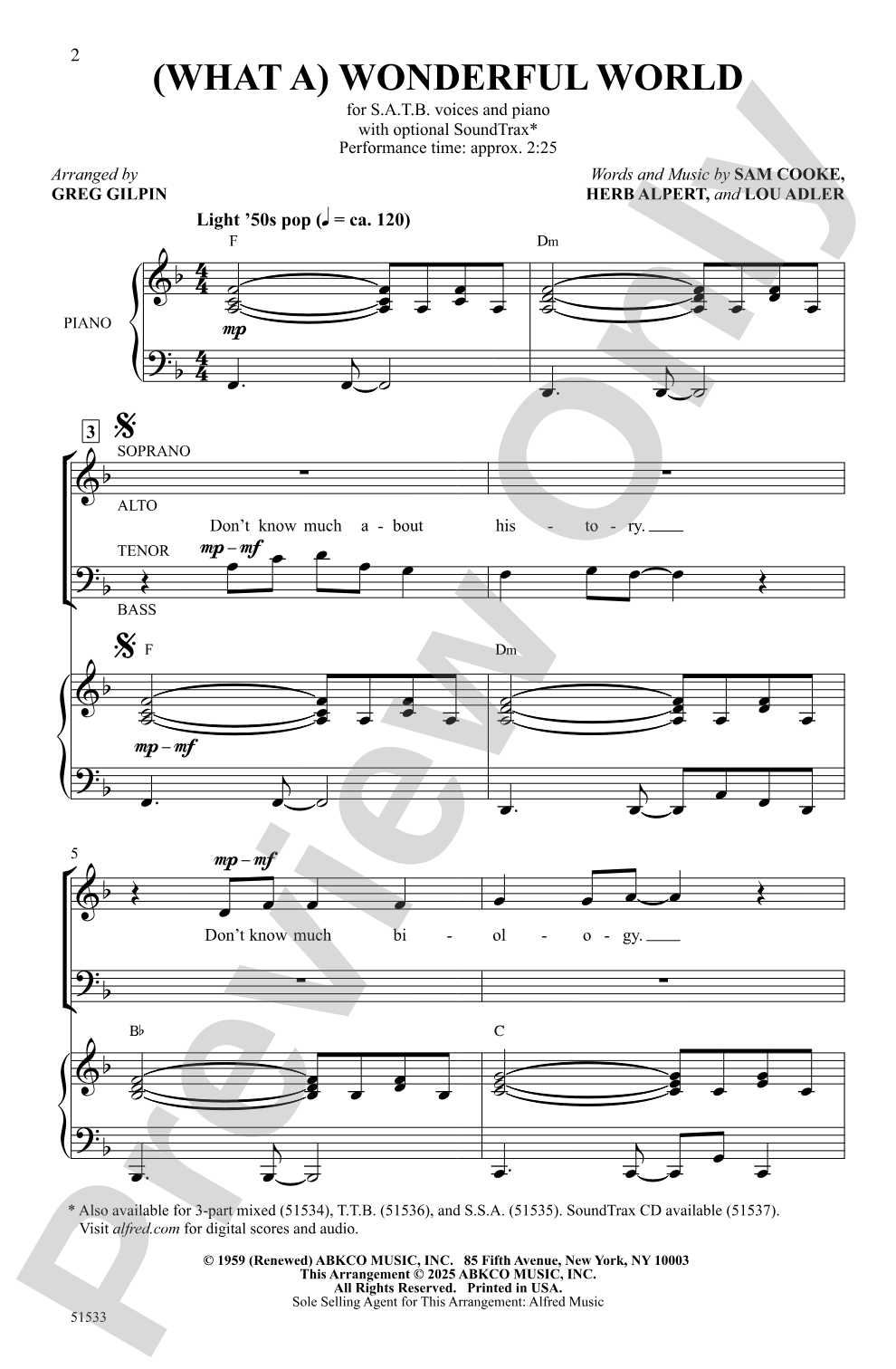
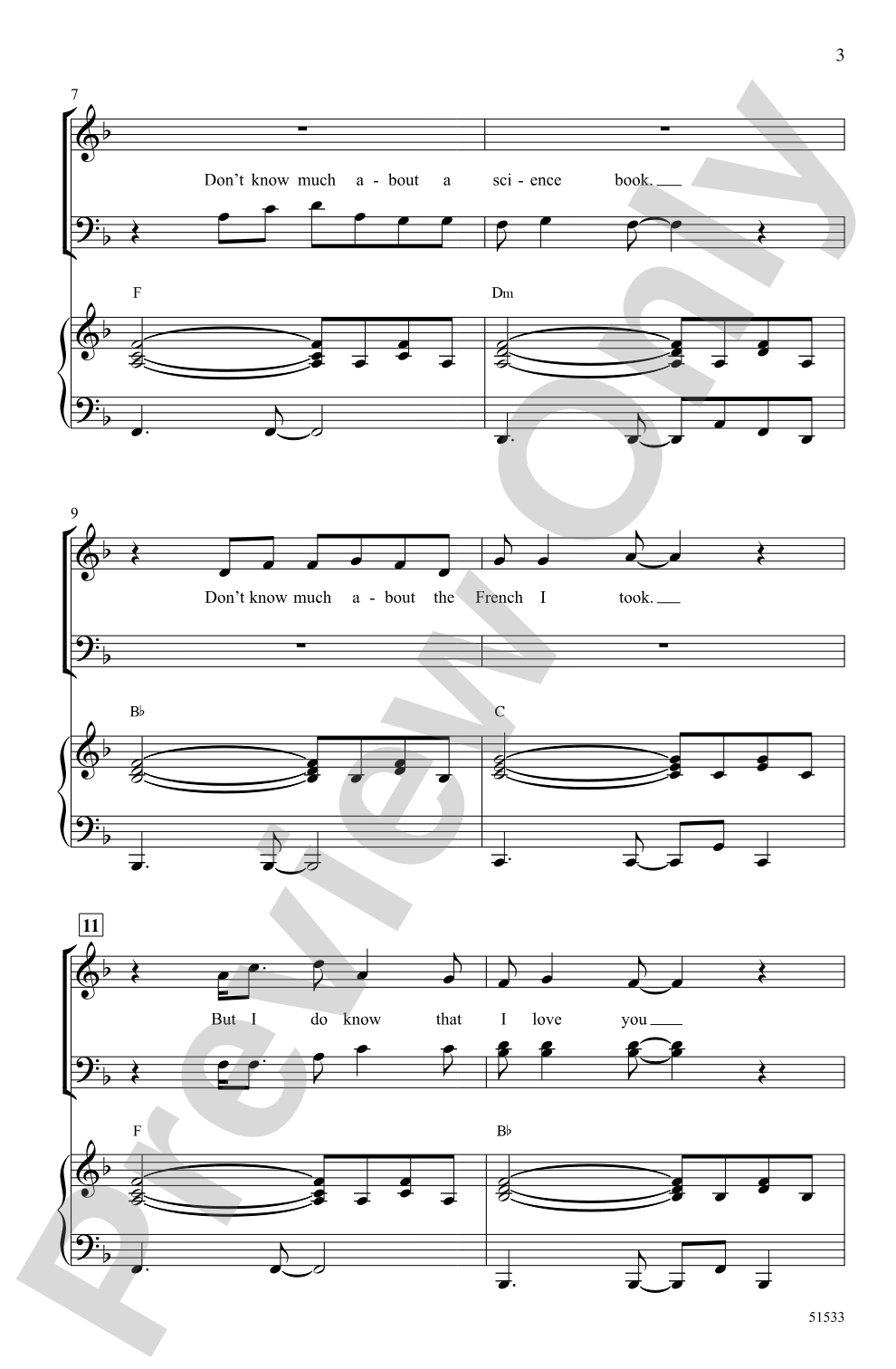
"Don't know much about history. Don't know much biology." Sam Cooke's iconic '60s single is built on the theme that love makes the world a better place. This straightforward arrangement is a snap to learn in any voicing and sounds just as soulful as the original. A brief crooner solo at the end solidifies the unmistakable R&B style of this romantic throwback. Cute and fun!


(What a) Wonderful World: SATB Choral Octavo isn't in MakeMusic Cloud just yet...but it could be. Let us know you'd like to see it, and you'll help shape what comes next. In the meantime, start a free trial and dive into thousands of interactive titles your students can play along with today.
Request This Title
Tell us you want it.
Start Your Free Trial
Explore everything that's ready to play right now.
Sample Audio
1
Audio File
--:--
0:00
0:00
Sample Video
Additional Details
Series:
Alfred Pop Choral Series
Publisher:
Alfred Music
Page Count:
12
SKU:
00-PO-0007511
More about this title
About the Composer: Sam Cooke
Sam Cooke (1931-1964) was a singer, songwriter, and civil rights activist who fundamentally shaped American popular music. Moving from gospel to R&B and pop, he crafted some of the most enduring love songs and socially conscious records of the 1960s, blending smooth vocal delivery with sophisticated songwriting that influenced generations of artists across multiple genres.
Cooke's artistry extended beyond performance; he was a shrewd businessman who founded his own record label and publishing company at a time when few Black artists controlled their own work. His legacy in music education contexts remains vital, as his songs offer students accessible entry points into understanding how popular music can carry both romantic sentiment and deeper cultural meaning.
Why we love this
Greg Gilpin's arrangement captures the warmth and accessibility of the original without sacrificing any of its charm. The straightforward voicing means your singers can focus on the style and heart of the piece rather than navigating complex harmony, and the included solo moment gives you a natural showcase for a confident vocalist while keeping the energy intimate and personal.
What to expect
Warm, conversational, and deeply romantic, this arrangement wraps you in the vintage soul of a '60s R&B classic. The straightforward harmonies let the melody and message shine, while the style demands just enough sophistication in phrasing and dynamics to feel polished without ever losing its casual, heartfelt sincerity.
Who it's for
This piece works beautifully for mixed choirs at the high school level and above who want to explore accessible popular music repertoire with genuine style. It's equally at home in concert settings, pop showcase programs, or as a standalone opener that signals to the audience they're in for something fun and contemporary.
How to get the most out of it
- Shape the opening phrases with a gentle swell and release; the beauty of this arrangement lies in its conversational, understated delivery rather than powerful belting.
- Lock in the rhythmic pocket early in rehearsal by isolating the bass line and rhythm section feel, then layer the upper voices to sit comfortably on top.
- Coach the solo section as if it's a real crooner singing to someone special; encourage your soloist to own the style with confidence and a touch of swagger rather than over-singing.
- Use the recorded accompaniment to help singers internalize the groove and R&B inflection, especially if your group hasn't spent much time with pop idiom and phrasing.
How to use it
Open a concert with this piece to set a relaxed, engaging tone and signal that you're not afraid to program music audiences actually love. It pairs naturally with other pop standards or classic love songs, and works equally well as a standalone moment that gives your singers room to breathe and connect with the text.
Skills your students will build
- R&B phrasing and style conventions (swing, laid-back articulation, vocal inflection)
- Reading and performing a solo moment within ensemble context
- Blend and balance in popular music idiom
- Rhythmic precision in groove-based music