
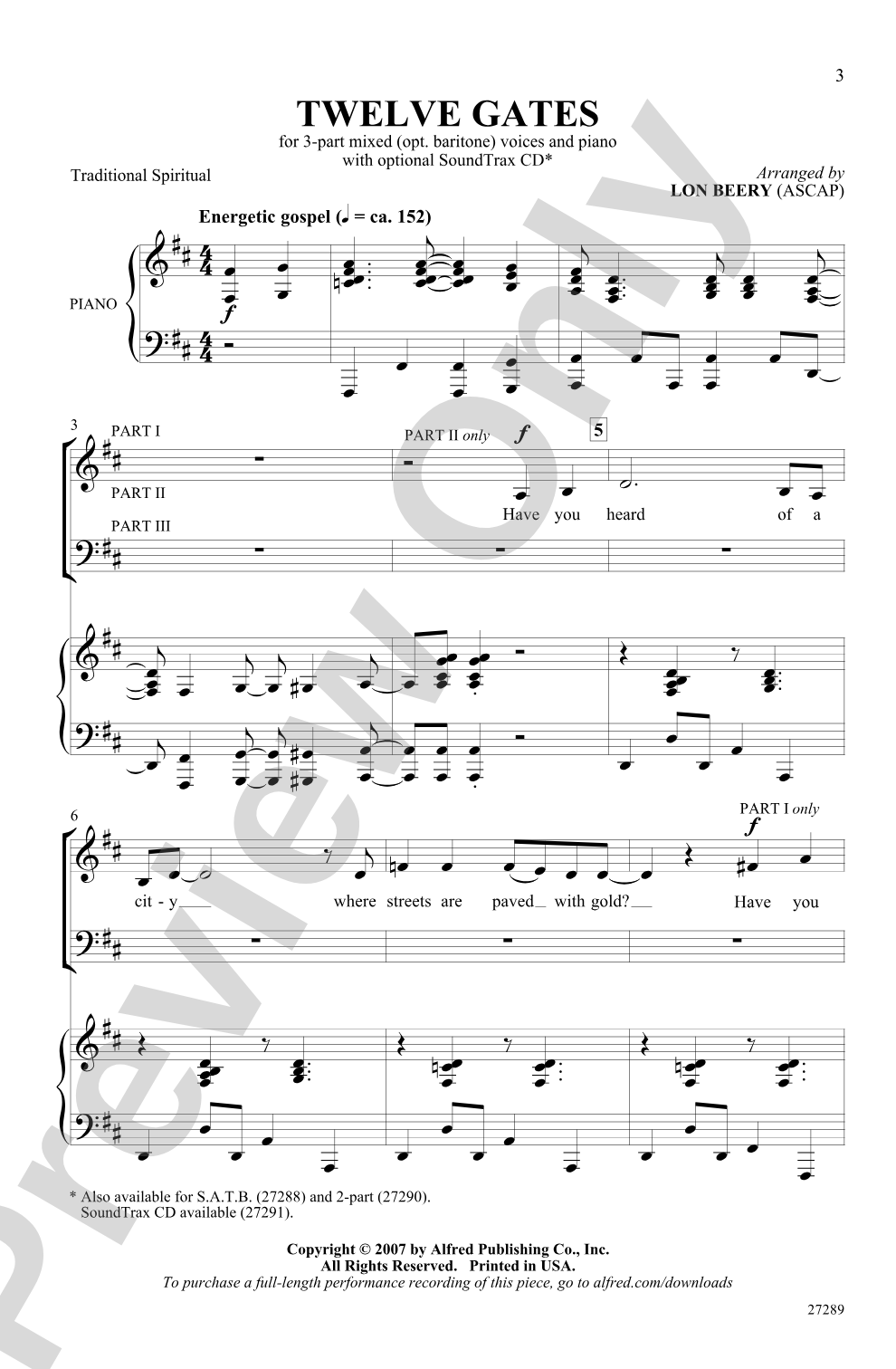
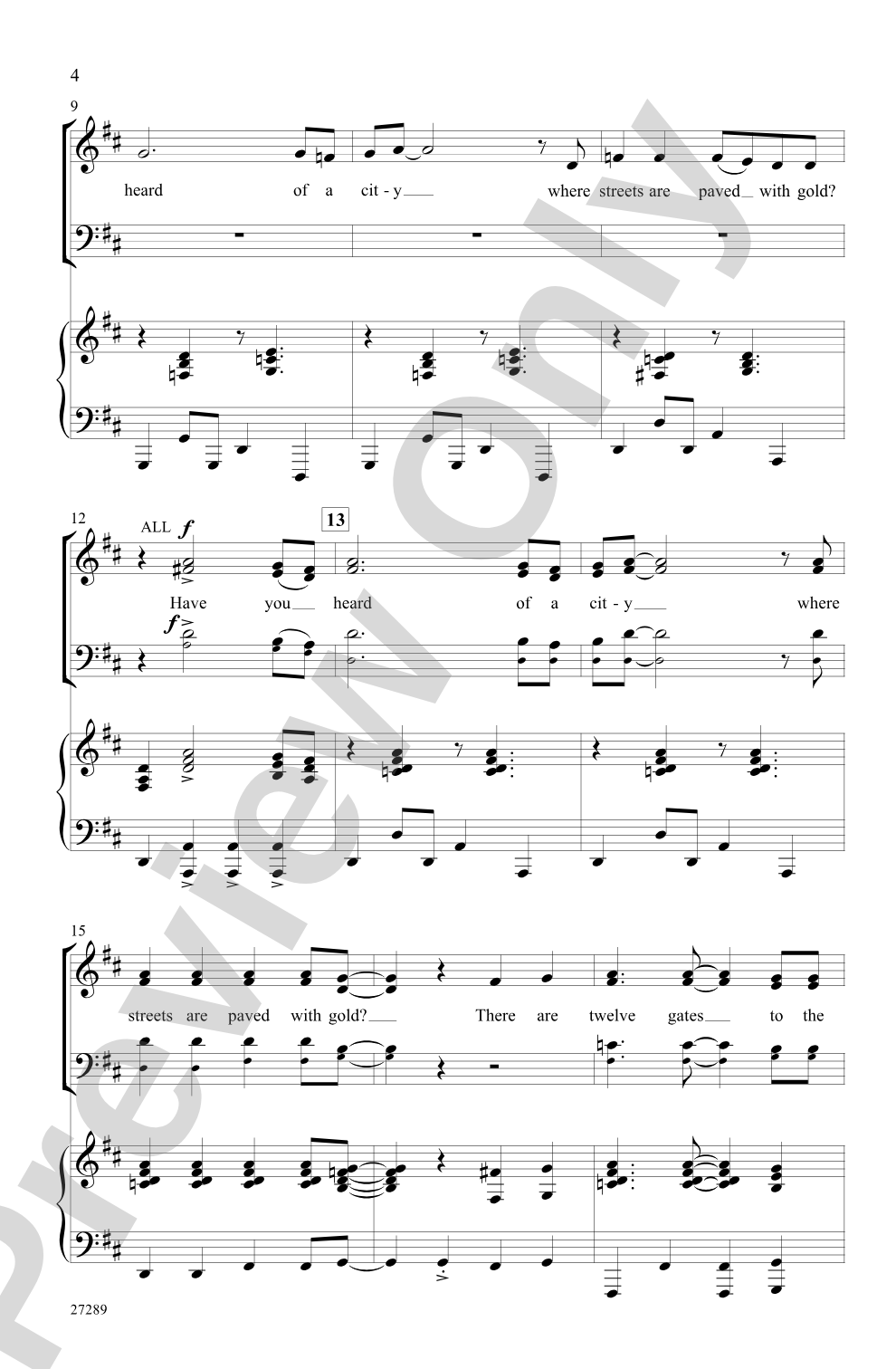

Twelve Gates: 3-Part Choral Octavo
Traditional Spiritual / arr. Lon Beery
Item: 00-PO-0000363
$1.75
Minimum order quantity: 20 copies
Pickup currently not available
Related Items
Twelve Gates: SoundTrax Digital Audio Download |
$22.95
|
View | |
Twelve Gates: SATB Choral Octavo |
$1.75
|
View | |
Twelve Gates: 2-Part Choral Octavo |
$1.75
|
View | |
Twelve Gates: SATB Choral Octavo |
$1.75
|
View | |
Twelve Gates: 3-Part Choral Octavo |
$1.75
|
View | |
Twelve Gates: 2-Part Choral Octavo |
$1.75
|
View | |
Twelve Gates: Choral Octavo SoundTrax CD |
$22.95
|
View |
Description
The gospel-style vocals rock, the driving accompaniment kicks it up a notch, but it may be the stop-time section that stands out most in this not-so-traditional arrangement of a traditional spiritual. Lon Beery's careful attention to appropriate vocal ranges is apparent in all voicings, even offering an optional baritone part in the 3-part mixed. With so much going for it, it's hard to say whether this piece is more educational or entertaining. A must have!


Twelve Gates: 3-Part Choral Octavo isn't in MakeMusic Cloud just yet...but it could be. Let us know you'd like to see it, and you'll help shape what comes next. In the meantime, start a free trial and dive into thousands of interactive titles your students can play along with today.
Request This Title
Tell us you want it.
Start Your Free Trial
Explore everything that's ready to play right now.
Sample Audio
1
Audio File
--:--
0:00
0:00
Sample Video
No sample videos found.
Additional Details
Series:
Alfred Choral Designs
Publisher:
Alfred Music
Page Count:
12
SKU:
00-PO-0000363
More about this title
About the Arranger: Lon Beery
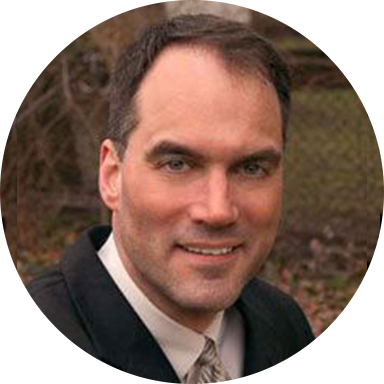
Lon Beery directs six choral ensembles at Spry Middle School in Webster, New York, where he works with approximately 500 students across all grades. His arrangements and compositions have been published by Alfred Music, BriLee, and other major publishers, earning him multiple ASCAP Standard Awards for his work.
Beyond the classroom, Beery is an active voice in music education advocacy. His TTBB composition "I Believe" was performed by the U.S. Army Chorus at President Ronald Reagan's internment service. He regularly contributes to professional journals including the Choral Journal and Music Educators Journal, and he presents at state, regional, and national conferences for ACDA and MENC. He currently serves as Middle School Chair for New York ACDA.
Why we love this
Beery proves that a traditional spiritual can still surprise audiences when the arrangement is genuinely inventive. The stop-time section feels fresh without losing the song's roots, and the gospel-inflected vocal writing sits comfortably in SAB ranges while the driving accompaniment keeps energy high throughout. This is the rare piece that works equally well as a concert closer or a teaching tool.
What to expect
This arrangement walks the line between reverence and celebration. The gospel-style vocal writing feels alive and modern, supported by a rhythm section that propels the piece forward with drive and purpose. The stop-time section hits like a moment of collective breath, transforming the energy in the room.
Who it's for
Middle school and high school choirs with mixed or emerging voices will find this piece especially rewarding. The SAB voicing and attention to appropriate ranges mean students can sing confidently even if they're still developing their voice parts, and the gospel energy keeps singers engaged and motivated.
How to get the most out of it
- Give the stop-time section real contrast by pulling back dynamics and letting the vocal rhythms cut through cleanly. The power of that section relies on restraint.
- Lock the rhythm section into the accompaniment's pulse early in rehearsal. The 'kick' mentioned in the description comes from precision in the rhythm, not from pushing harder.
- Use the recorded accompaniment during sectional rehearsals to help singers anchor the gospel feel before putting voices and accompaniment together.
- Balance the optional baritone part carefully if you choose to include it. It should support rather than overwhelm the main voicings.
How to use it
Place this as a second-half opener or concert closer where you need a mood shift. It pairs well with other spirituals rearranged in contemporary styles, and it also stands alone as a showcase for what your singers can do with rhythmic precision and stylistic flexibility. This piece works across concert and sacred music settings.
Skills your students will build
- Gospel-style phrasing and articulation
- Stop-time rhythm execution
- SAB voice independence and balance
- Rhythmic precision with accompaniment
- Stylistic contrast within a single piece