
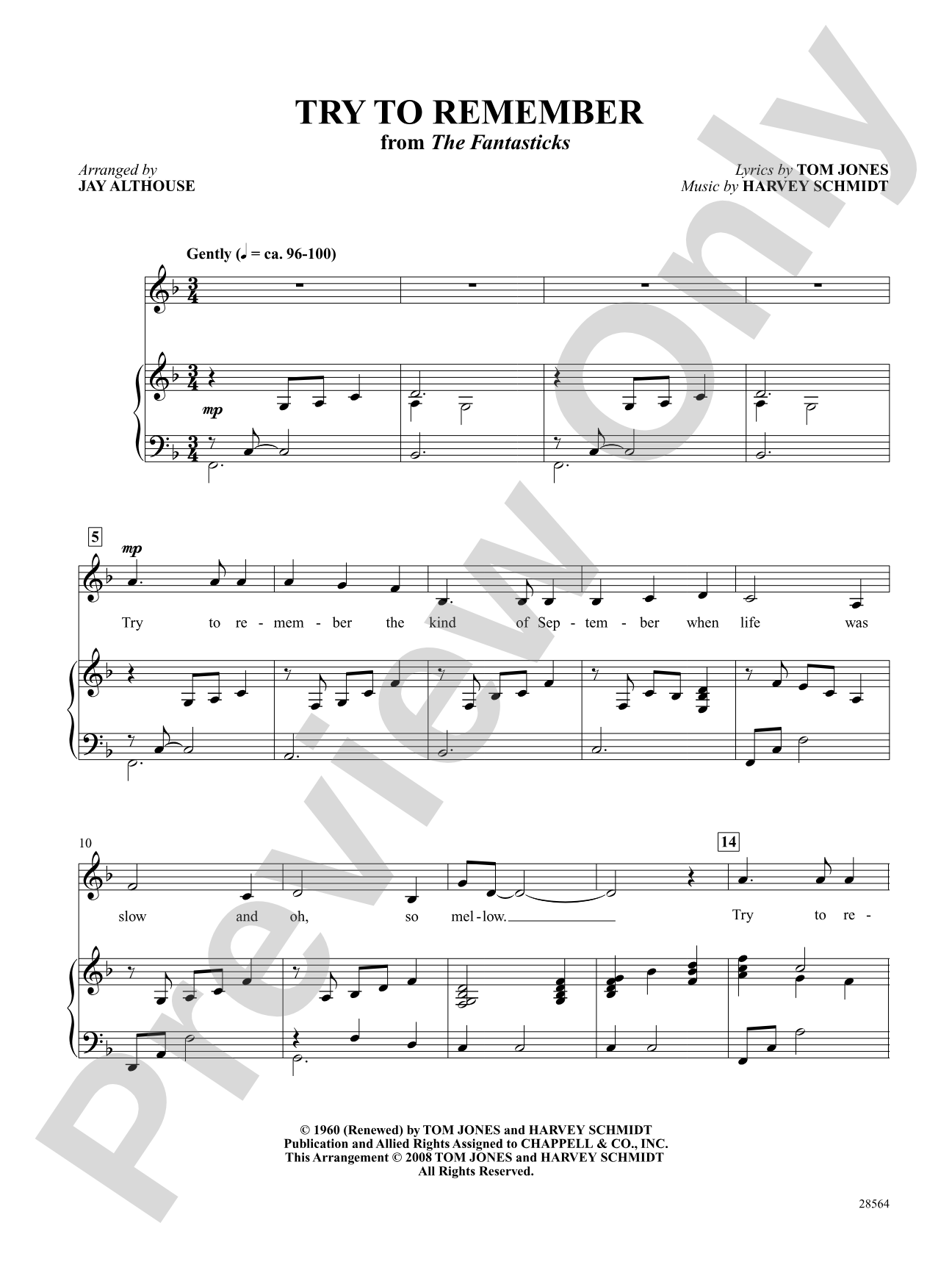

Try to Remember (From "the Fantasticks"): Piano/Vocal/Chords
Contemporary Arrangements of 10 Broadway Favorites
Compiled, with background information, by Sally K. Albrecht and Brian Fisher
Item: 00-PS-0010399
$4.99
One moment…
Related Items
A Brand New Day (Everybody Rejoice) (From "the Wiz"): Piano/Vocal/Chords |
$5.99
|
View | |
Hey There! (From "the Pajama Game"): Piano/Vocal/Chords |
$4.99
|
View | |
Over the Rainbow (From "the Wizard of Oz"): Piano/Vocal/Chords |
$5.99
|
View | |
Hushabye Mountain (From "Chitty Chitty Bang Bang"): Piano/Vocal/Chords |
$5.99
|
View | |
Hopelessly Devoted to You (From "Grease"): Piano/Vocal/Chords |
$5.99
|
View | |
Everything's Coming up Roses (From "Gypsy"): Piano/Vocal/Chords |
$5.99
|
View | |
The Winner Takes It All (From "Mamma Mia!"): Piano/Vocal/Chords |
$5.99
|
View | |
People (From "Funny Girl"): Piano/Vocal/Chords |
$5.99
|
View | |
Lullaby of Broadway/Forty-second Street (Medley): Piano/Vocal/Chords |
$5.99
|
View | |
Broadway for Solo Singers: Vocal Book & Enhanced CD |
$26.99
|
View |
Description
Each of these ten showtunes is a winner! Here's a Broadway collection perfect for auditions or performance, with arrangements by the top names at Alfred. You'll also enjoy performing with the CD, which features full instrumental accompaniment recordings. A full page of Background Information is included about each song, plus all ten solos are appropriate for all voice parts, male or female, young and old alike! Songs include: A Brand New Day (Everybody Rejoice) * Everything's Coming Up Roses * Hey There * Hopelessly Devoted to You * Hushabye Mountain * Lullaby of Broadway * Over the Rainbow * People * Try to Remember * The Winner Takes It All.


Try to Remember (From "the Fantasticks"): Piano/Vocal/Chords isn't in MakeMusic Cloud just yet...but it could be. Let us know you'd like to see it, and you'll help shape what comes next. In the meantime, start a free trial and dive into thousands of interactive titles your students can play along with today.
Request This Title
Tell us you want it.
Start Your Free Trial
Explore everything that's ready to play right now.
Sample Audio
1
Audio File
--:--
2
Audio File
--:--
Audio File
0:00
0:00
Sample Video
No sample videos found.
Additional Details
Series:
For Solo Singers
Publisher:
Alfred Music
Page Count:
80
SKU:
00-PS-0010399
More about this title
About the Composer: Harvey Schmidt
Harvey Schmidt composed the score for The Fantasticks, one of the longest-running theatrical productions in history. His gift for melody and emotional directness shaped a generation of musical theater writers and continues to define what audiences expect from intimate, character-driven shows. Schmidt's work demonstrates that accessible songwriting and theatrical depth are not mutually exclusive.
Why we love this
This collection captures ten essential Broadway moments arranged for solo singers with real musical intelligence. The vocal writing sits comfortably across all voice types and ages, which means you can program any of these songs without worrying about transposition or range limitations. The included background information on each tune helps singers understand context and intention, turning preparation into genuine learning rather than rote memorization.
What to expect
These songs range from intimate and wistful to brash and triumphant, all written with the kind of melodic clarity that makes a lyric memorable. You'll find yourself inhabiting distinct characters and emotional worlds, from the nostalgic ache of Try to Remember to the self-assured joy of A Brand New Day.
Who it's for
Solo singers preparing for auditions, recitals, or concert performances will find reliable material here. Voice teachers can build a well-rounded audition book or use these selections to teach students how different theatrical styles require different technical and interpretive approaches.
How to get the most out of it
- Listen to the recorded accompaniment first without singing to absorb the harmonic movement and style; then sing along multiple times before performing live.
- Notice the lyrical content of each song and let it shape your phrasing rather than fitting words mechanically to the rhythm.
- Use the chord symbols to understand the harmonic progression and where emotional weight lands in the arrangement.
- Vary your dynamic approach between songs; what works for the tenderness of Try to Remember needs adjustment for the driving energy of Everything's Coming Up Roses.
How to use it
Build a Broadway recital around selections from this collection, mixing tempos and moods to keep audiences engaged. These songs also work well as audition material for musical theater programs or as performance pieces in school concerts where you want crowd-pleasing, singable material with substance.
Skills your students will build
- Sustaining legit vocal production across extended phrases
- Interpreting character and emotional subtext within theatrical repertoire
- Sight-reading from chord charts and lead sheets
- Performing confidently with recorded accompaniment
- Building an audition-ready solo repertoire across multiple musical theater styles