
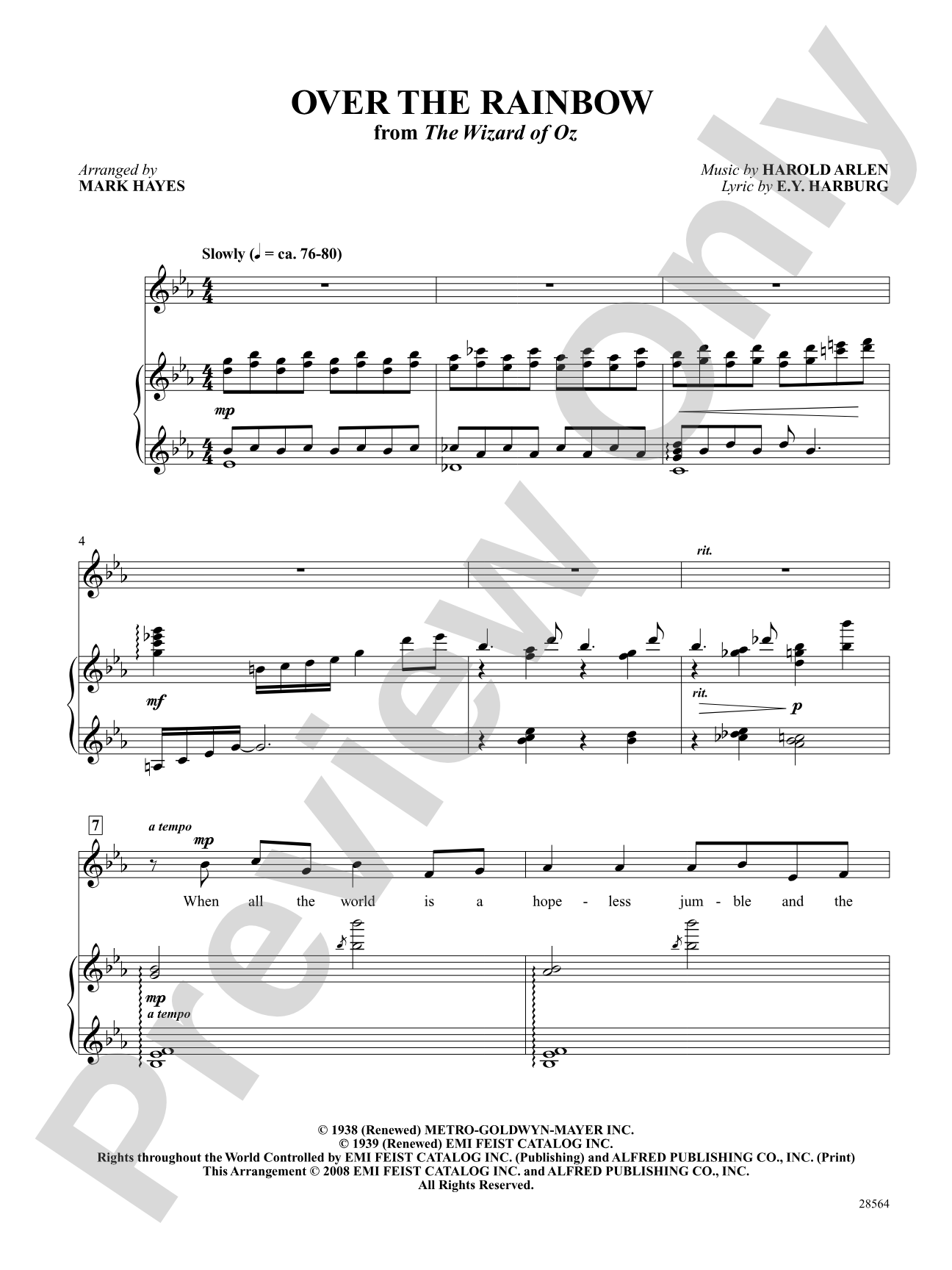
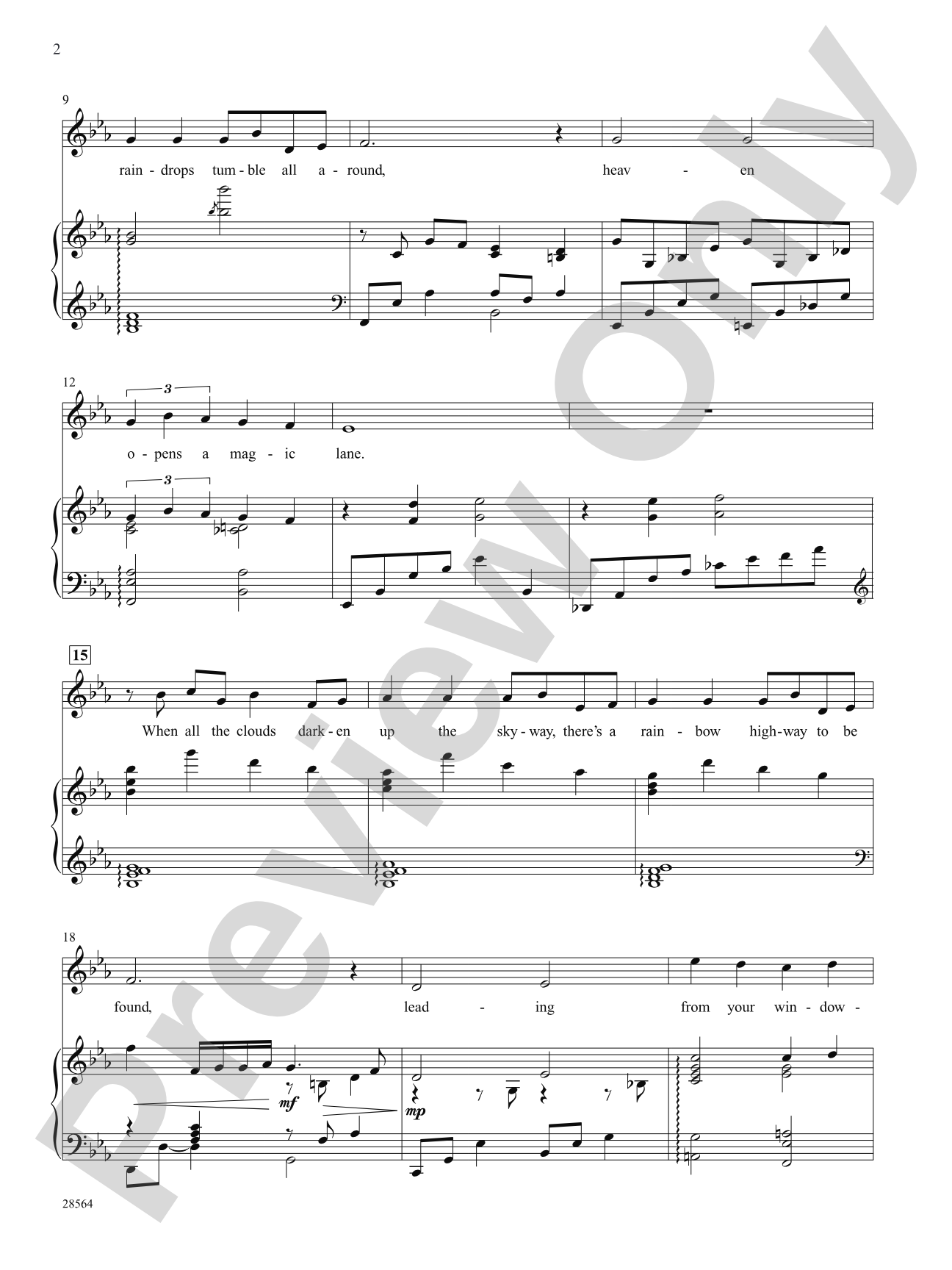

Over the Rainbow (From "the Wizard of Oz"): Piano/Vocal/Chords
Contemporary Arrangements of 10 Broadway Favorites
Compiled, with background information, by Sally K. Albrecht and Brian Fisher
Item: 00-PS-0010350
$5.99
One moment…
Related Items
A Brand New Day (Everybody Rejoice) (From "the Wiz"): Piano/Vocal/Chords |
$5.99
|
View | |
Hey There! (From "the Pajama Game"): Piano/Vocal/Chords |
$4.99
|
View | |
Hushabye Mountain (From "Chitty Chitty Bang Bang"): Piano/Vocal/Chords |
$5.99
|
View | |
Hopelessly Devoted to You (From "Grease"): Piano/Vocal/Chords |
$5.99
|
View | |
Everything's Coming up Roses (From "Gypsy"): Piano/Vocal/Chords |
$5.99
|
View | |
Try to Remember (From "the Fantasticks"): Piano/Vocal/Chords |
$4.99
|
View | |
The Winner Takes It All (From "Mamma Mia!"): Piano/Vocal/Chords |
$5.99
|
View | |
People (From "Funny Girl"): Piano/Vocal/Chords |
$5.99
|
View | |
Lullaby of Broadway/Forty-second Street (Medley): Piano/Vocal/Chords |
$5.99
|
View | |
Broadway for Solo Singers: Vocal Book & Enhanced CD |
$26.99
|
View |
Description
Each of these ten showtunes is a winner! Here's a Broadway collection perfect for auditions or performance, with arrangements by the top names at Alfred. You'll also enjoy performing with the CD, which features full instrumental accompaniment recordings. A full page of Background Information is included about each song, plus all ten solos are appropriate for all voice parts, male or female, young and old alike! Songs include: A Brand New Day (Everybody Rejoice) * Everything's Coming Up Roses * Hey There * Hopelessly Devoted to You * Hushabye Mountain * Lullaby of Broadway * Over the Rainbow * People * Try to Remember * The Winner Takes It All.


Over the Rainbow (From "the Wizard of Oz"): Piano/Vocal/Chords isn't in MakeMusic Cloud just yet...but it could be. Let us know you'd like to see it, and you'll help shape what comes next. In the meantime, start a free trial and dive into thousands of interactive titles your students can play along with today.
Request This Title
Tell us you want it.
Start Your Free Trial
Explore everything that's ready to play right now.
Sample Audio
1
Audio File
--:--
2
Audio File
--:--
Audio File
0:00
0:00
Sample Video
No sample videos found.
Additional Details
Series:
For Solo Singers
Publisher:
Alfred Music
Page Count:
80
SKU:
00-PS-0010350
More about this title
About the Composer: Harold Arlen
Harold Arlen composed some of the most enduring melodies in American musical theater, with a gift for writing songs that balance sophistication with immediate accessibility. His work across the 1930s and 1940s defined the sound of Broadway at its most optimistic, and his collaborations with lyricists like E.Y. Harburg and Johnny Mercer produced standards that remain central to the vocal repertoire.
Why we love this
This collection gives singers genuine Broadway material without demanding the kind of vocal range or technical firepower that can intimidate developing performers. The arrangements by Mark Hayes are respectful to the originals while staying singable, and the inclusion of recorded accompaniments means your singers can work independently between rehearsals.
What to expect
These are songs built on melody first. You'll find yourself singing lines that lodge in your memory, supported by chords that feel both warm and classically constructed. There's an ease to performing them, despite their theatrical heritage, because the writing respects the human voice.
Who it's for
This book serves singers preparing for auditions who need tested material that showcases their voice without requiring dramatic training, as well as choirs and vocal programs looking for quality solo literature that audiences actually want to hear. It works equally well for individual voice lessons and ensemble contexts.
How to get the most out of it
- Lean on the background information provided for each song. Understanding the dramatic context of a number shapes how your soloist approaches the melody and text.
- The recorded accompaniments are most effective when singers use them for practice, then move to live piano for performances. This builds confidence without creating dependency.
- Pay attention to lyrical clarity over volume. These songs live and die by the storytelling, not belting power.
How to use it
Pull individual selections for a vocal concert showcasing different styles and moods, or anchor a Broadway-themed evening with multiple numbers from this collection. The variety in mood and key means you can program songs strategically to show different facets of your soloist's voice across a single performance.
Skills your students will build
- Sustaining legit vocal tone across phrase lengths typical of American songbook material
- Interpreting lyrics with nuance and emotional specificity
- Reading piano/vocal scores and coordinating with accompaniment
- Managing transitions between registers without audible shifts
- Phrasing around musical theater diction and naturally occurring breath points