
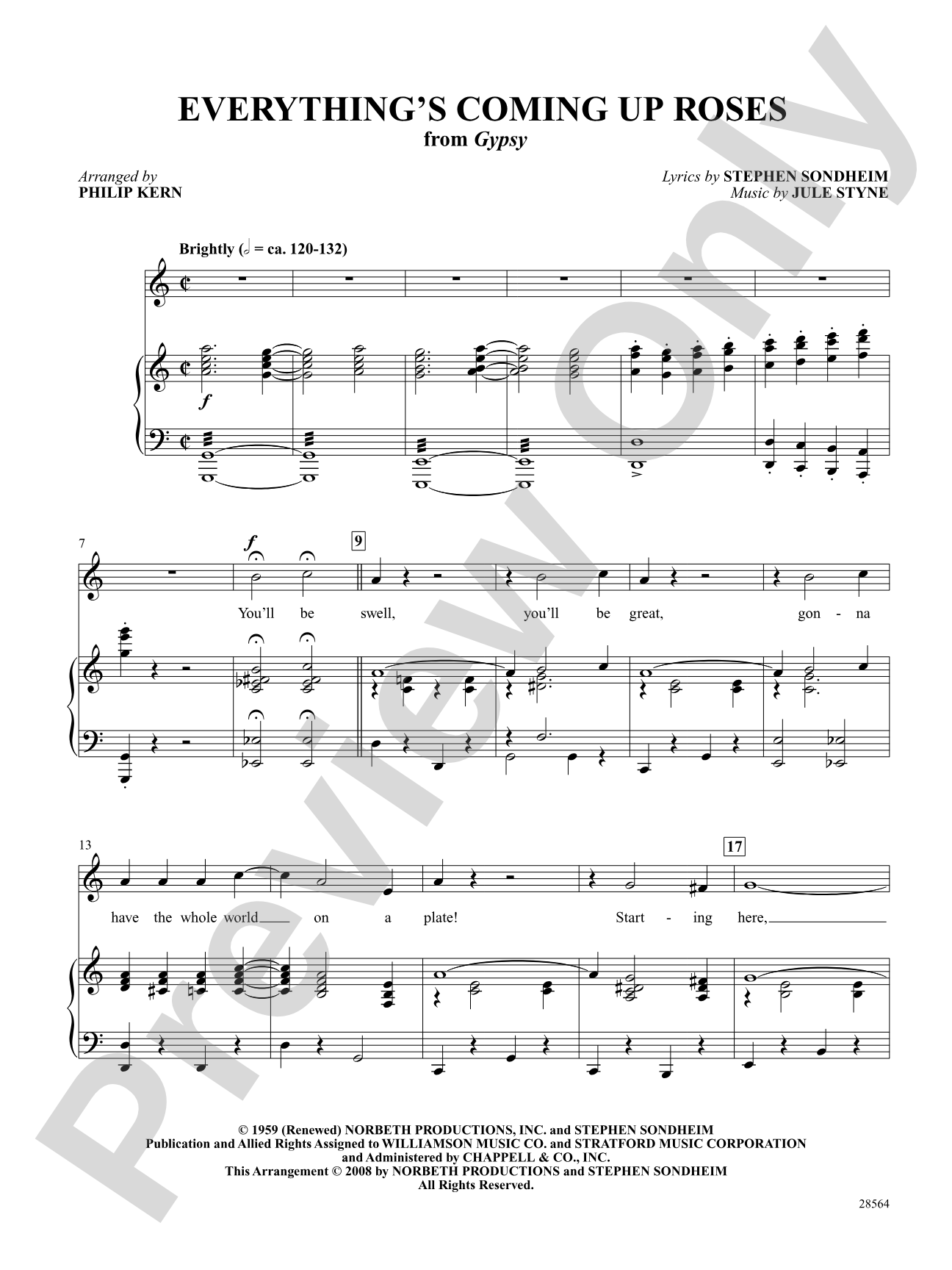
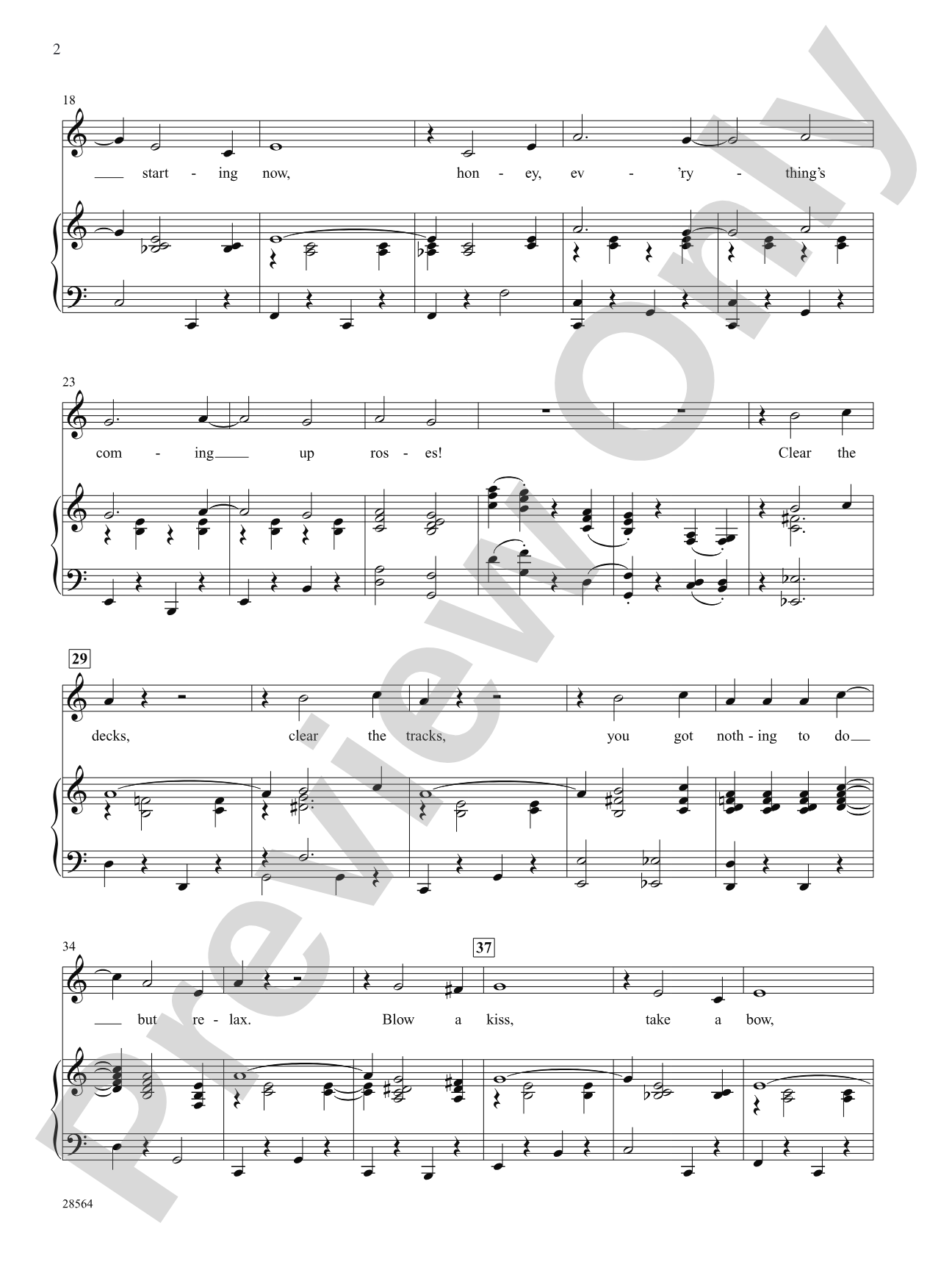

Everything's Coming up Roses (From "Gypsy"): Piano/Vocal/Chords
Contemporary Arrangements of 10 Broadway Favorites
Compiled, with background information, by Sally K. Albrecht and Brian Fisher
Item: 00-PS-0010375
$5.99
One moment…
Related Items
A Brand New Day (Everybody Rejoice) (From "the Wiz"): Piano/Vocal/Chords |
$5.99
|
View | |
Hey There! (From "the Pajama Game"): Piano/Vocal/Chords |
$4.99
|
View | |
Over the Rainbow (From "the Wizard of Oz"): Piano/Vocal/Chords |
$5.99
|
View | |
Hushabye Mountain (From "Chitty Chitty Bang Bang"): Piano/Vocal/Chords |
$5.99
|
View | |
Hopelessly Devoted to You (From "Grease"): Piano/Vocal/Chords |
$5.99
|
View | |
Try to Remember (From "the Fantasticks"): Piano/Vocal/Chords |
$4.99
|
View | |
The Winner Takes It All (From "Mamma Mia!"): Piano/Vocal/Chords |
$5.99
|
View | |
People (From "Funny Girl"): Piano/Vocal/Chords |
$5.99
|
View | |
Lullaby of Broadway/Forty-second Street (Medley): Piano/Vocal/Chords |
$5.99
|
View | |
Broadway for Solo Singers: Vocal Book & Enhanced CD |
$26.99
|
View |
Description
Each of these ten showtunes is a winner! Here's a Broadway collection perfect for auditions or performance, with arrangements by the top names at Alfred. You'll also enjoy performing with the CD, which features full instrumental accompaniment recordings. A full page of Background Information is included about each song, plus all ten solos are appropriate for all voice parts, male or female, young and old alike! Songs include: A Brand New Day (Everybody Rejoice) * Everything's Coming Up Roses * Hey There * Hopelessly Devoted to You * Hushabye Mountain * Lullaby of Broadway * Over the Rainbow * People * Try to Remember * The Winner Takes It All.


Everything's Coming up Roses (From "Gypsy"): Piano/Vocal/Chords isn't in MakeMusic Cloud just yet...but it could be. Let us know you'd like to see it, and you'll help shape what comes next. In the meantime, start a free trial and dive into thousands of interactive titles your students can play along with today.
Request This Title
Tell us you want it.
Start Your Free Trial
Explore everything that's ready to play right now.
Sample Audio
1
Audio File
--:--
2
Audio File
--:--
Audio File
0:00
0:00
Sample Video
No sample videos found.
Additional Details
Series:
For Solo Singers
Publisher:
Alfred Music
Page Count:
80
SKU:
00-PS-0010375
More about this title
About the Composer: Jule Styne
Jule Styne composed for stage and screen during Broadway's golden age, creating melodies that became standards. His gift for writing songs that sit naturally in the voice while remaining dramatically compelling made him a go-to composer for musical theater from the 1940s through the 1980s. Works like "Gypsy," "Funny Girl," and "Bells Are Ringing" showcase his ability to marry sophisticated harmony with immediate memorability.
For music students, Styne's catalog offers a masterclass in song architecture. His melodies reward careful interpretation without requiring vocal extremes, and his harmonies support singers across different ranges and experience levels. Teachers return to his music again and again because it sounds fresh with each new student.
Why we love this
This collection gathers ten proven audition and performance selections, each one a complete standalone number that doesn't demand operatic chops or vocal gymnastics. The arrangements by Phillip Kern keep the focus on the melody and lyric, making these pieces accessible whether you're casting a young singer or preparing someone for a college audition. Having recorded accompaniments included removes a major rehearsal barrier and lets singers hear exactly how the arrangement sits.
What to expect
These are songs built on charm, optimism, and storytelling. They live in the space where accessible melody meets genuine dramatic stakes; you're never asked to belt impossibly high or stretch your range, but you are expected to deliver real emotion and clarity. The accompaniments are lush enough to feel like a complete theatrical experience, yet they never overshadow the voice.
Who it's for
Vocal students preparing for auditions, young singers developing their solo repertoire, and anyone seeking polished Broadway material that doesn't require a trained opera voice. This collection works equally well for male and female singers across age ranges, making it valuable whether you're coaching a high school student or preparing material for music theater programs.
How to get the most out of it
- Listen through the full accompaniment track before rehearsal to familiarize yourself with the tempo and orchestral colors; these arrangements often have specific rhythmic pocket you'll want to lock into from day one.
- Pay attention to the background information provided for each song. Knowing the dramatic context and character intent helps singers make stronger musical choices, especially in how they shape phrases and color their tone.
- Work with the recorded accompaniment early, but don't become dependent on it. The goal is to internalize the tempo and harmonic support so you can perform with confidence and presence, not just follow along.
- Experiment with vocal placement and resonance across different songs in the collection. Each number sits differently in the voice, and adjusting your approach from "Over the Rainbow" to "Everything's Coming Up Roses" keeps your voice engaged and prevents fatigue.
How to use it
Solo this collection during audition season or as part of a spring vocal showcase where each performer can choose a piece that fits their voice and personality. You might also select individual numbers to anchor a themed concert, pairing "Over the Rainbow" with children's songs or "The Winner Takes It All" with a contemporary musical theater set. The eighty pages allow flexibility, perform one song or build an entire solo set from the collection.
Skills your students will build
- Sustaining legit musical theater tone across different melodic shapes and ranges
- Interpreting lyrical content and character intention within a song's dramatic arc
- Coordinating with recorded accompaniment at various tempos while maintaining independence
- Building audition stamina with multiple contrasting selections
- Shaping phrases in standard Broadway style while preserving individual vocal color