
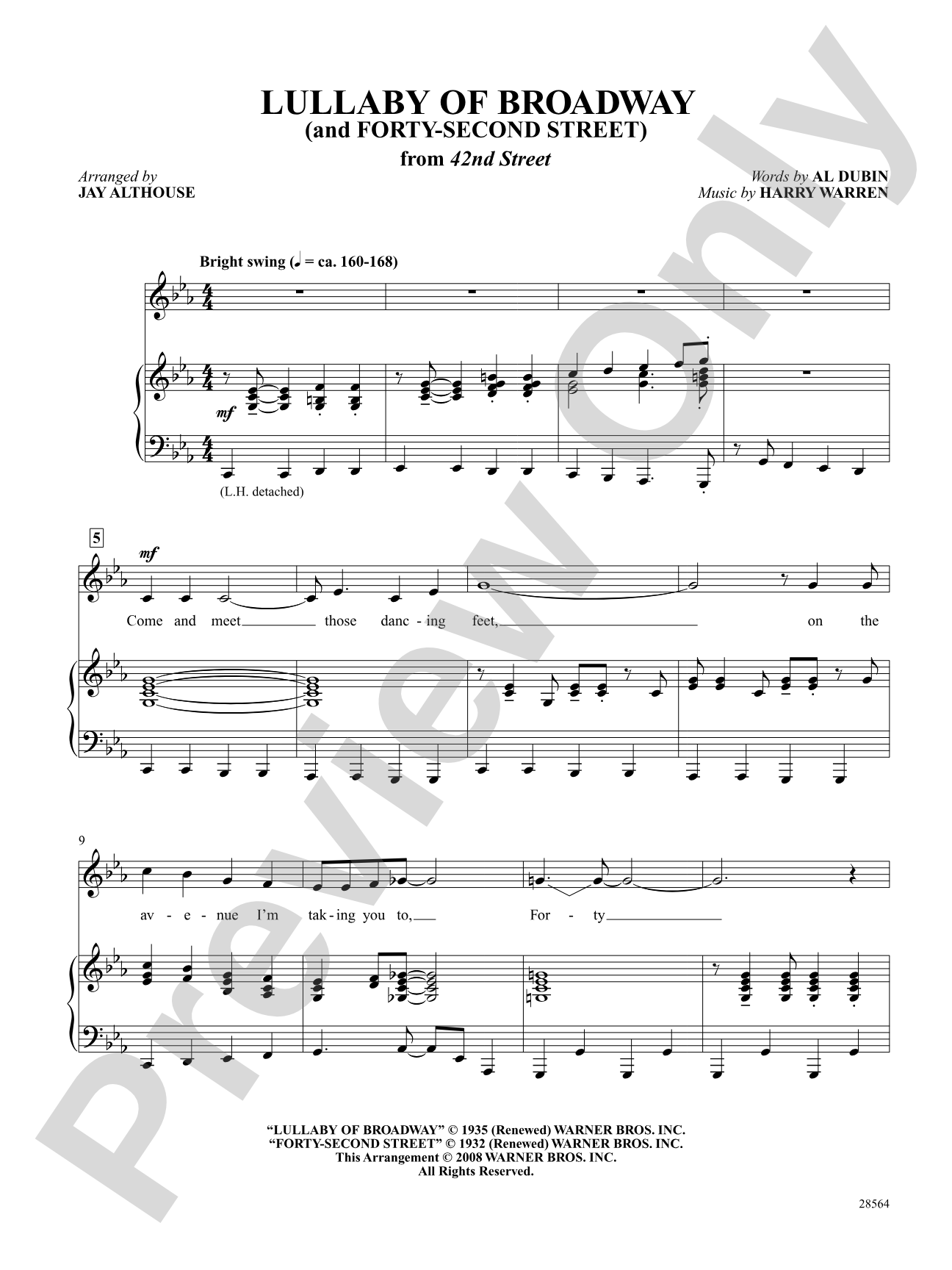
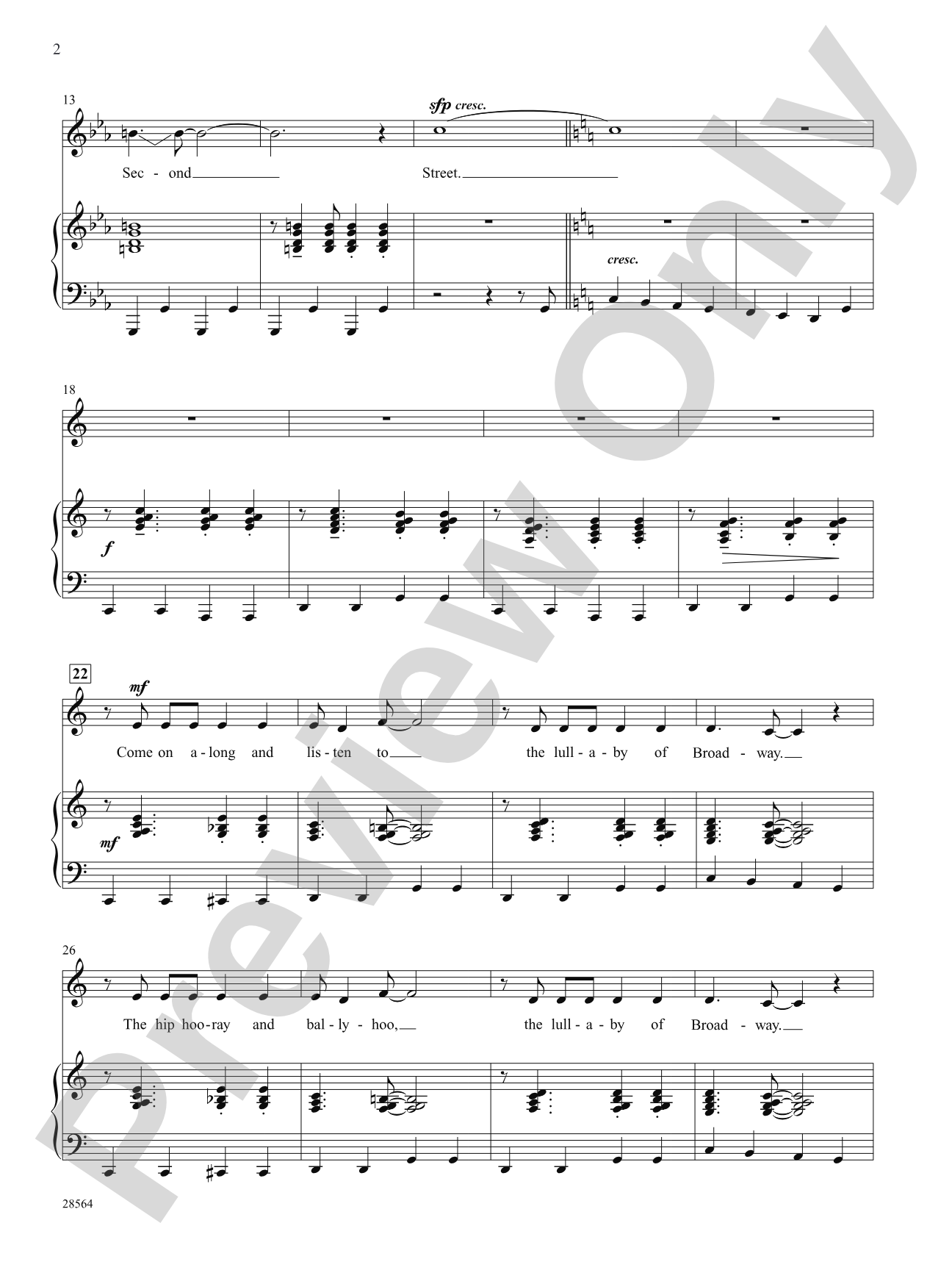

Lullaby of Broadway/Forty-second Street (Medley): Piano/Vocal/Chords
Contemporary Arrangements of 10 Broadway Favorites
Compiled, with background information, by Sally K. Albrecht and Brian Fisher
Item: 00-PS-0010503
$5.99
One moment…
Related Items
A Brand New Day (Everybody Rejoice) (From "the Wiz"): Piano/Vocal/Chords |
$5.99
|
View | |
Hey There! (From "the Pajama Game"): Piano/Vocal/Chords |
$4.99
|
View | |
Over the Rainbow (From "the Wizard of Oz"): Piano/Vocal/Chords |
$5.99
|
View | |
Hushabye Mountain (From "Chitty Chitty Bang Bang"): Piano/Vocal/Chords |
$5.99
|
View | |
Hopelessly Devoted to You (From "Grease"): Piano/Vocal/Chords |
$5.99
|
View | |
Everything's Coming up Roses (From "Gypsy"): Piano/Vocal/Chords |
$5.99
|
View | |
Try to Remember (From "the Fantasticks"): Piano/Vocal/Chords |
$4.99
|
View | |
The Winner Takes It All (From "Mamma Mia!"): Piano/Vocal/Chords |
$5.99
|
View | |
People (From "Funny Girl"): Piano/Vocal/Chords |
$5.99
|
View | |
Broadway for Solo Singers: Vocal Book & Enhanced CD |
$26.99
|
View |
Description
Each of these ten showtunes is a winner! Here's a Broadway collection perfect for auditions or performance, with arrangements by the top names at Alfred. You'll also enjoy performing with the CD, which features full instrumental accompaniment recordings. A full page of Background Information is included about each song, plus all ten solos are appropriate for all voice parts, male or female, young and old alike! Songs include: A Brand New Day (Everybody Rejoice) * Everything's Coming Up Roses * Hey There * Hopelessly Devoted to You * Hushabye Mountain * Lullaby of Broadway * Over the Rainbow * People * Try to Remember * The Winner Takes It All.


Lullaby of Broadway/Forty-second Street (Medley): Piano/Vocal/Chords isn't in MakeMusic Cloud just yet...but it could be. Let us know you'd like to see it, and you'll help shape what comes next. In the meantime, start a free trial and dive into thousands of interactive titles your students can play along with today.
Request This Title
Tell us you want it.
Start Your Free Trial
Explore everything that's ready to play right now.
Sample Audio
1
Audio File
--:--
2
Audio File
--:--
Audio File
0:00
0:00
Sample Video
No sample videos found.
Additional Details
Series:
For Solo Singers
Publisher:
Alfred Music
Page Count:
80
SKU:
00-PS-0010503
More about this title
About the Composer: Al Dublin
Al Dubin (1891–1945) was a prolific lyricist who shaped the Golden Age of American musical theater. Working primarily with composer Harry Warren, Dubin crafted some of Broadway and Hollywood's most enduring song lyrics, earning an Academy Award for "Lullaby of Broadway" in 1936. His gift for witty, singable verse and his ability to capture both humor and pathos made him one of the most recorded lyricists of his era.
Why we love this
This collection gives singers access to legitimate Broadway material arranged specifically for solo vocalists, with full background notes that deepen understanding of each song's theatrical context. The variety of tempos, moods, and vocal styles means you can build an audition set or recital program that truly showcases your singer's range without relying on oversimplified arrangements.
What to expect
These songs carry the sparkle and sophistication of 1930s–1940s Broadway, with melodies that sit naturally in the voice and lyrics designed to land with clarity and charm. Whether playful and energetic or intimate and reflective, each number invites genuine emotional connection without requiring operatic vocal production.
Who it's for
Solo singers preparing audition materials, recital programs, or performance sets. This collection works equally well for young singers building confidence with familiar standards and more experienced vocalists seeking authentic arrangements that honor Broadway's compositional tradition.
How to get the most out of it
- Study the background information provided for each song before rehearsal; understanding the character and dramatic situation transforms a technical performance into storytelling.
- Use the recorded accompaniments to develop independence from the piano part while building confidence with full orchestral textures.
- Shape the phrasing to match the lyrical intent rather than strictly following the written rhythm; Broadway songs reward a conversational, expressive approach to text.
How to use it
Pair individual selections with art songs or classical arias to create a diversified recital that shows stylistic range. For auditions, choose songs that match the character you're pursuing and your vocal strengths; the arrangement's theatrical roots make these appropriate for both musical theater auditions and traditional vocal competitions.
Skills your students will build
- Phrasing and text expression in American musical theater style
- Harmonic awareness through chord symbols and piano accompaniment
- Performing with recorded accompaniments in multiple tempos and styles
- Interpreting character and dramatic context from background notes
- Balancing technical accuracy with emotional storytelling