
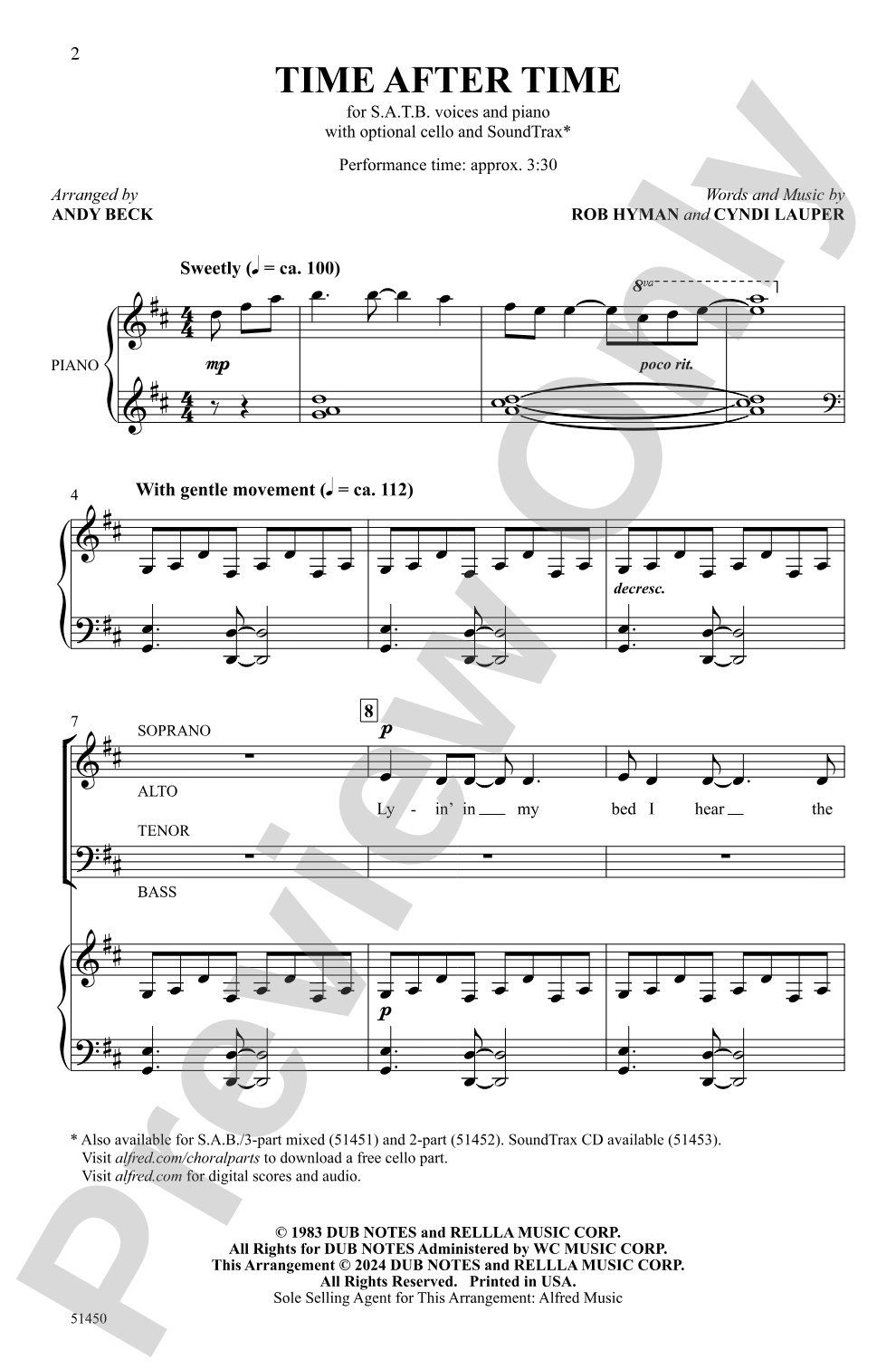
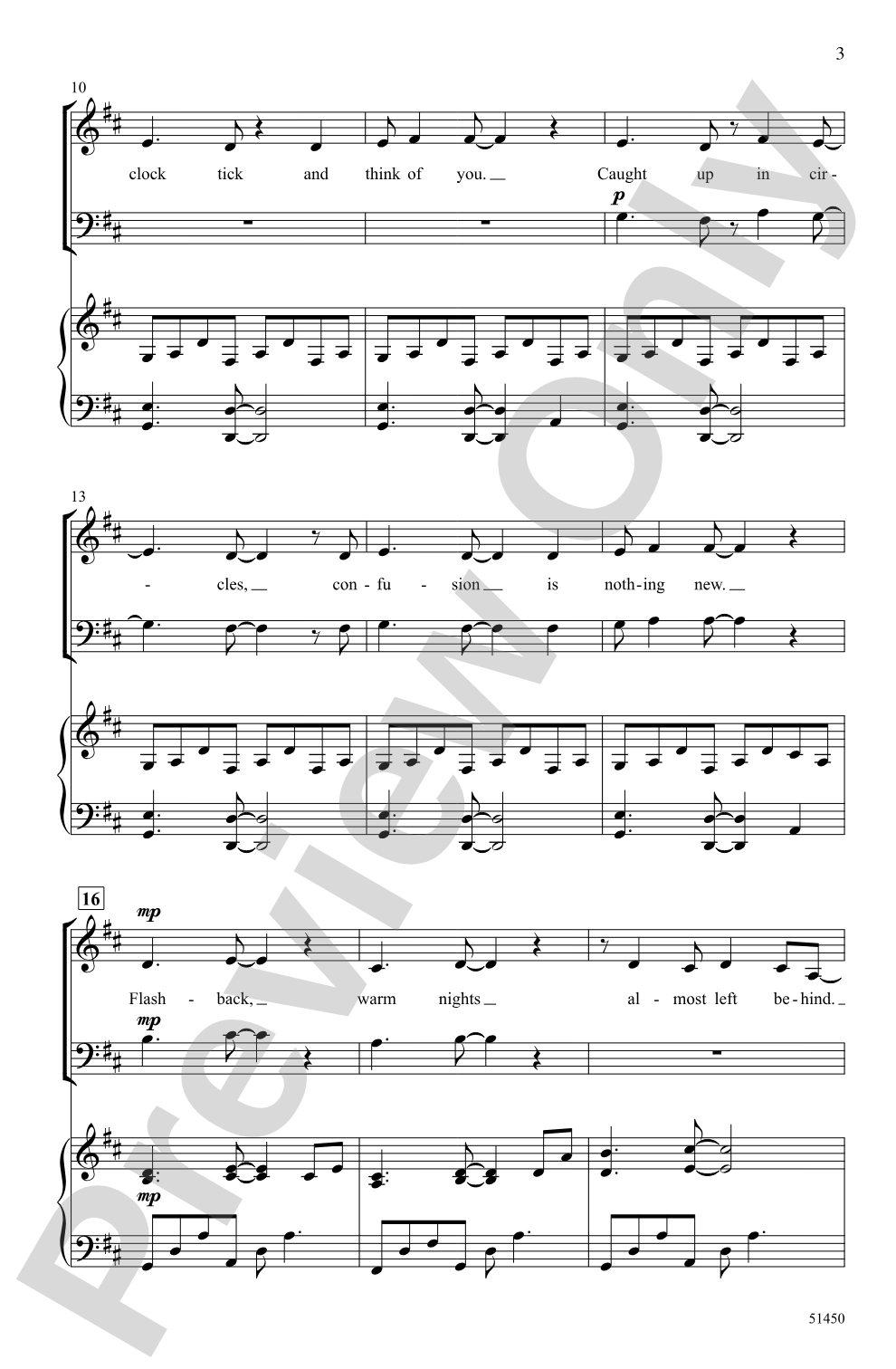
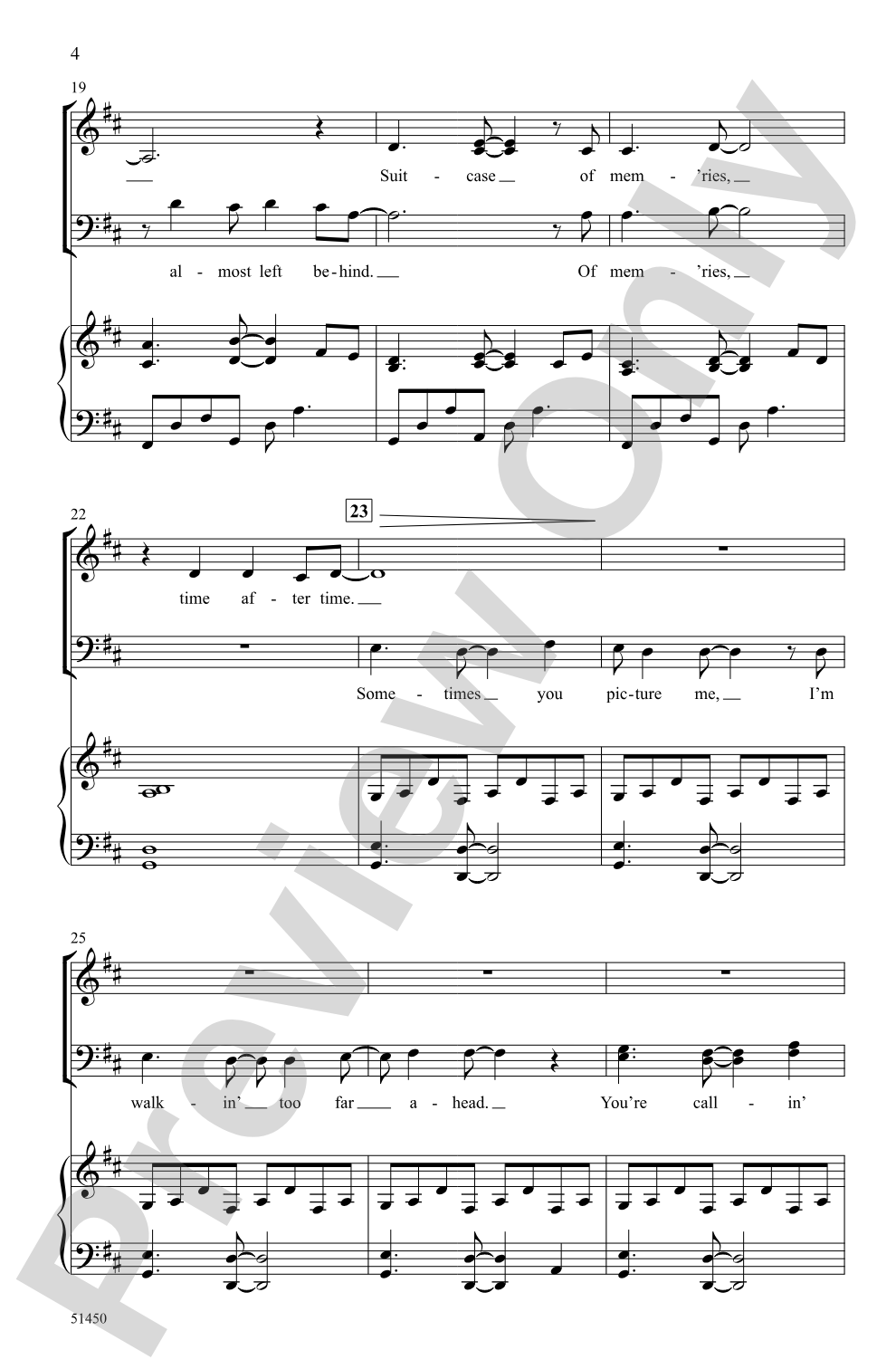

Time After Time: SATB Choral Octavo
Words and music by Rob Hyman and Cyndi Lauper / arr. Andy Beck
Item: 00-PO-0007331

$2.35
Minimum order quantity: 20 copies
One moment…
Related Items
Time After Time: SSA Choral Octavo |
$2.65
|
View | |
Time After Time: SAB/3-Part Mixed Choral Octavo |
$2.35
|
View | |
Time After Time: 2-Part Choral Octavo |
$2.35
|
View | |
Time After Time: SoundTrax Digital Audio Download |
$29.99
|
View | |
Time After Time: SSA Choral Octavo |
$2.65
|
View | |
Time After Time: SATB Choral Octavo |
$2.50
|
View | |
Time After Time: SAB/3-Part Mixed Choral Octavo |
$2.35
|
View | |
Time After Time: 2-Part Choral Octavo |
$2.35
|
View | |
Time After Time: Choral SoundTrax CD |
$29.99
|
View |
Description
Cyndi Lauper's iconic ballad has been reimagined in this breathtaking arrangement for concert choir with piano and cello. With its poignant lyrics and memorable melody, this pop classic continues to captivate audiences with profound emotional depth and enduring beauty. Perfect for any occasion, this tender treatment lends a touch of elegance to any program.


Don't just read it, hear it, play along with it, and watch your students grow with it. In MakeMusic Cloud, Time After Time: SATB Choral Octavo comes alive with professional accompaniment, adjustable tempo, and built-in practice tools that turn solo practice into real progress.
Open in the Player
Jump straight in and assign it today.
Start Your Free Trial
Open this title and explore the full library in minutes.
Sample Audio
1
Audio File
--:--
0:00
0:00
Sample Video
Additional Details
Series:
Alfred Pop Choral Series
Publisher:
Alfred Music
Page Count:
12
SKU:
00-PO-0007331
More about this title
About the Composer: Rob Hyman
Rob Hyman co-wrote "Time After Time" with Cyndi Lauper in 1984, crafting one of the most enduring pop ballads of the decade. His work as a songwriter and keyboardist for the band Cyndi Lauper helped define the sound of 1980s pop music, blending sophisticated harmonic sensibilities with accessible, emotionally direct melodies.
Hyman's compositions consistently demonstrate a gift for writing songs that transcend their original context. His melodies are inherently singable, his chord progressions reward careful harmonic analysis, and his lyrics resonate across generations. For music educators, his catalog offers rich material for exploring how pop songwriting can achieve genuine artistic depth.
Why we love this
Andy Beck's arrangement respects the song's emotional core while creating genuine four-part writing that lets your singers find their voices within the texture. The addition of cello alongside piano adds a dimension of warmth that transforms a pop staple into something concert-ready without losing the intimacy that makes the song resonate.
What to expect
Tender and reflective, with an underlying current of longing. The arrangement unfolds like a conversation between voices, never rushing toward resolution, allowing each verse and chorus to breathe with the kind of emotional honesty that made the original recording unforgettable.
Who it's for
Concert choirs looking for a pop standard that carries genuine emotional weight and serves as a showstopper without requiring virtuosic vocal technique. This arrangement works equally well for community choirs, school groups preparing for spring concerts, and honor choirs seeking modern repertoire that audiences will connect with immediately.
How to get the most out of it
- Balance the opening sections carefully; the melody should float above the harmonic foundation rather than cut through it. This arrangement rewards a softer, more blended dynamic approach than typical pop treatments.
- Give the recorded accompaniment a full rehearsal run-through early in your preparation. Singing against a stable harmonic foundation helps your singers internalize the chord changes and prevents them from rushing.
- Shape the phrasing in longer arcs rather than stopping at the ends of musical phrases. "Time After Time" lives in its sustained emotional space, not in punctuated moments.
- Listen closely to how the cello part interacts with the vocal lines. It often doubles or shadows important moments; marking these moments in the score keeps your singers aware of the full sonority you're building.
How to use it
Program this as a centerpiece for a graduation or year-end concert, where its themes of constancy and emotional truth resonate with the occasion. It also pairs beautifully in a set exploring how pop songwriting can achieve artistic legitimacy, sitting comfortably alongside folk standards or Broadway selections.
Skills your students will build
- Balancing melody and harmony in four-part texture
- Singing sustained, lyric-driven phrases without instrumental rhythm driving the line
- Coordinating with instrumental accompaniment (piano and cello)
- Interpreting pop music with concert choir sensibilities
- Building emotional communication through careful dynamic control