
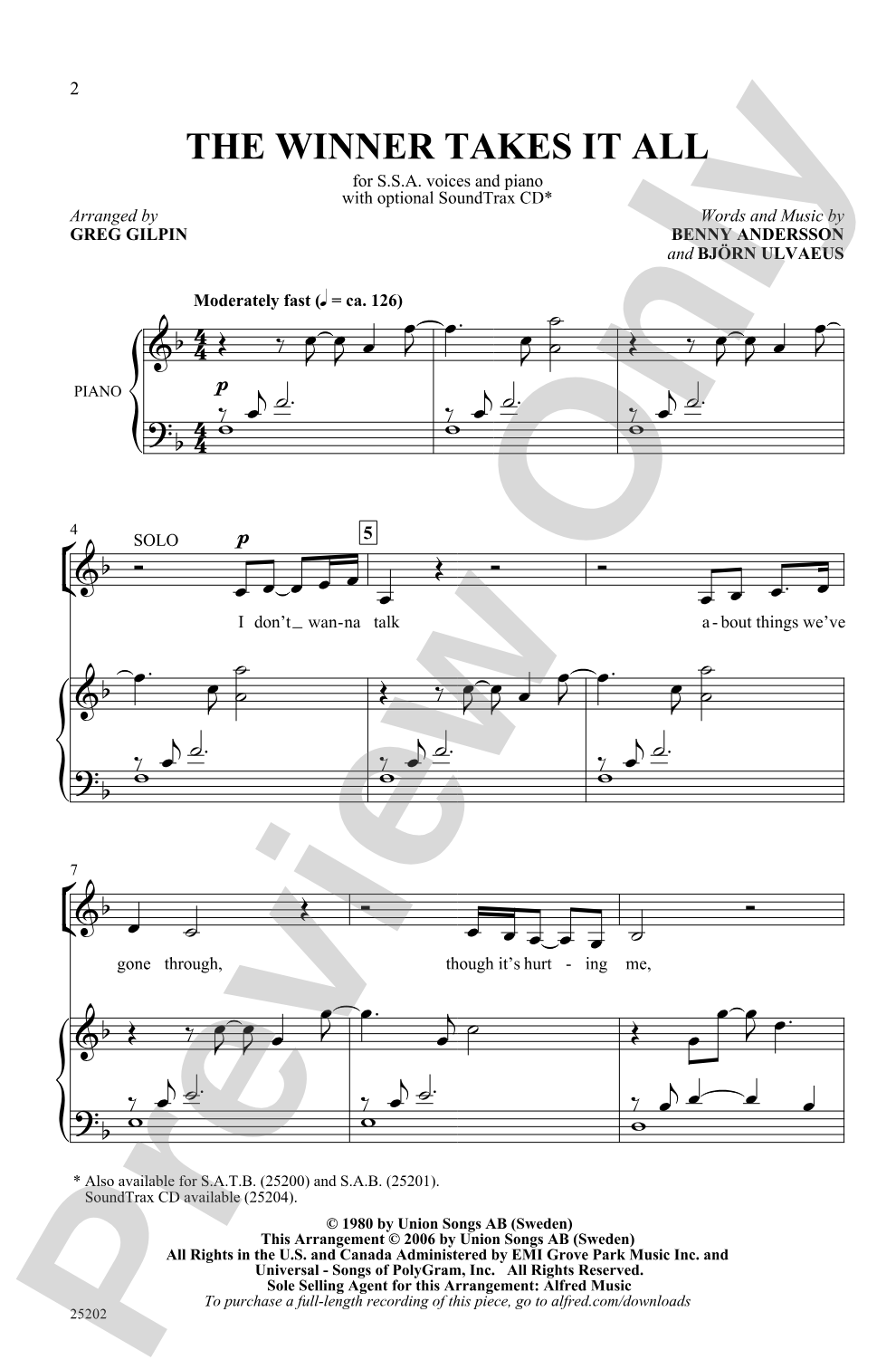
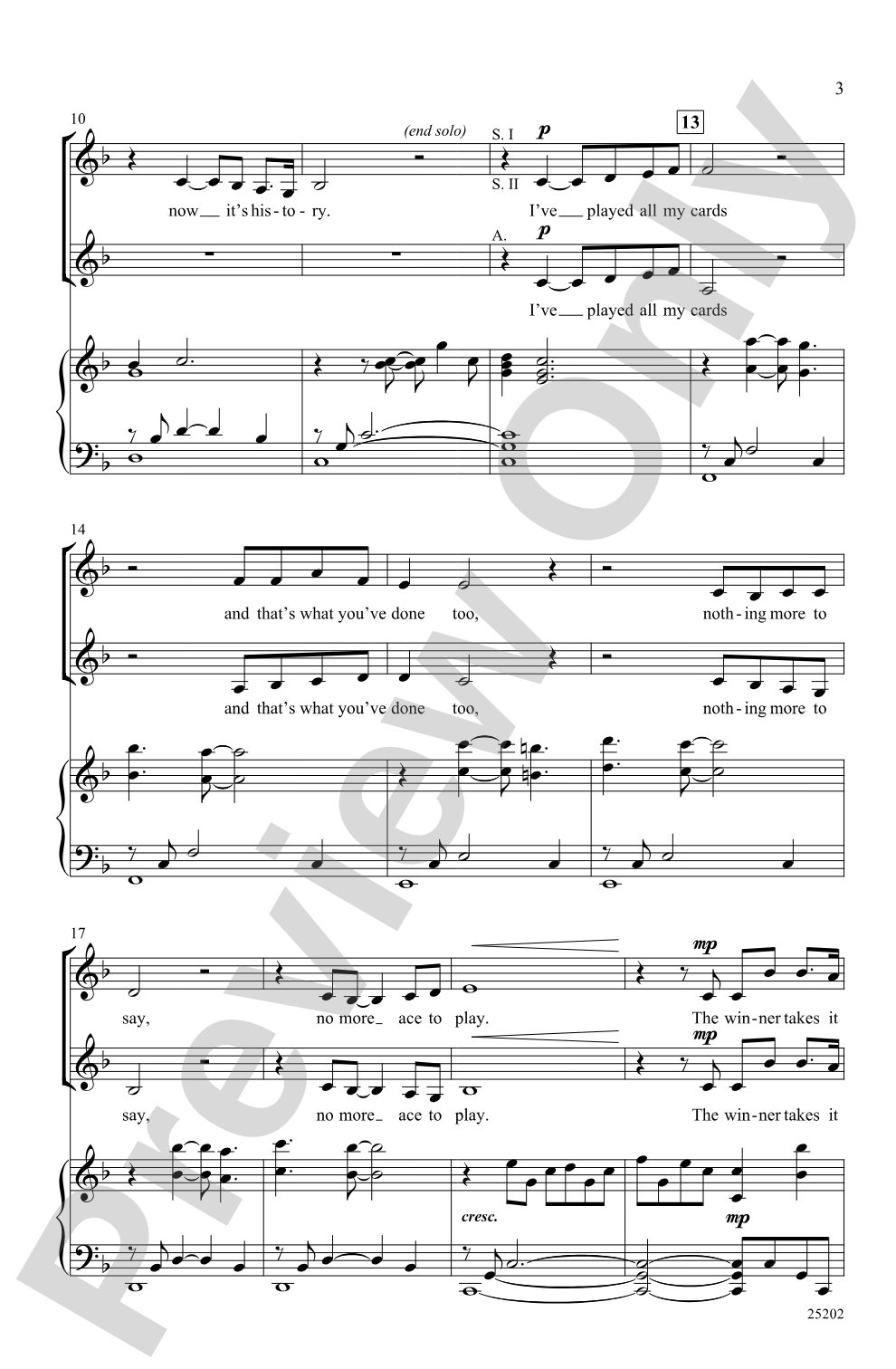
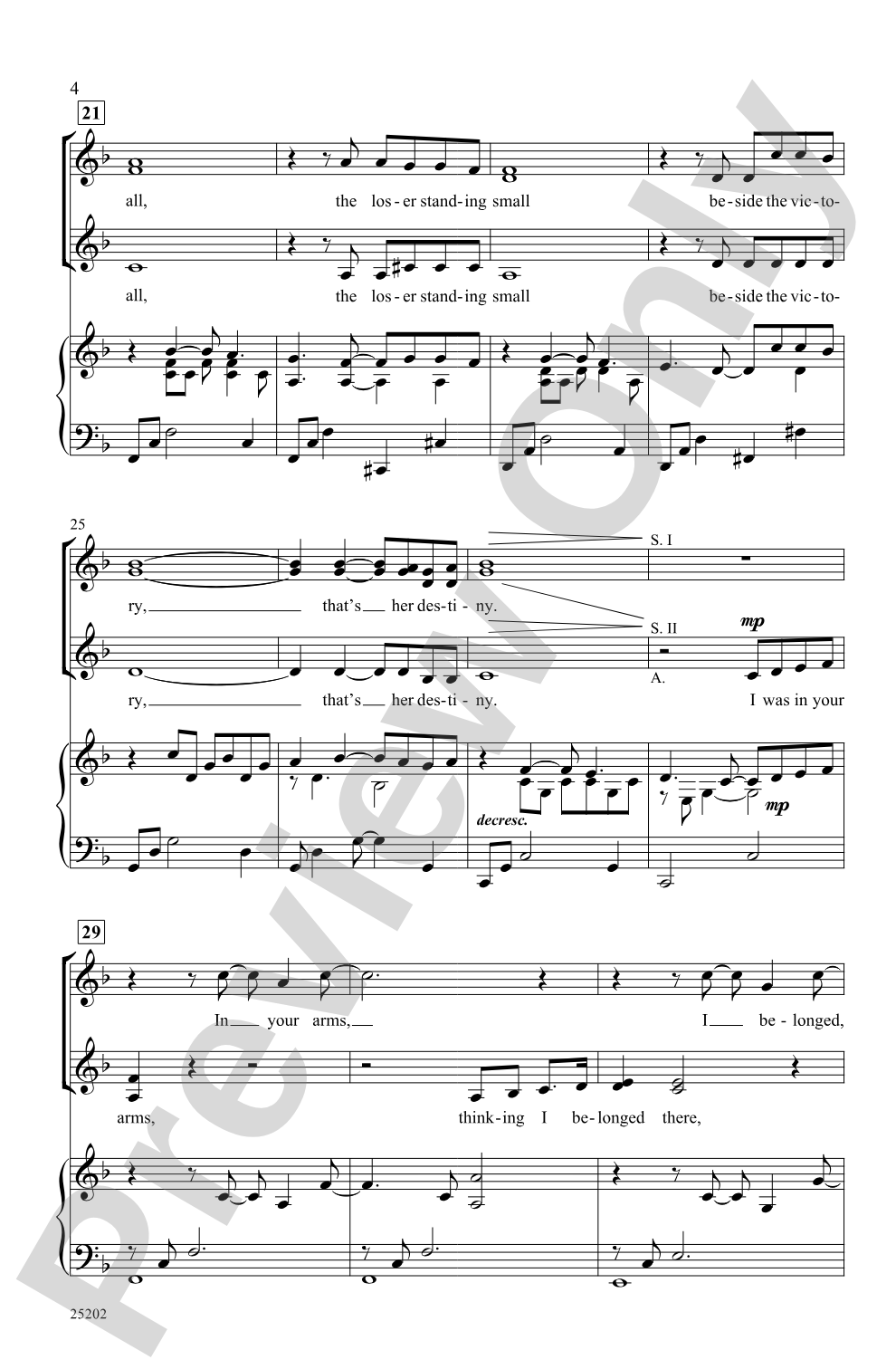

The Winner Takes It All: SSA Choral Octavo
From the smash hit Musical Mamma Mia!
Words and music by Benny Andersson and Björn Ulvaeus / arr. Greg Gilpin
Item: 00-PO-0006565
$2.25
Minimum order quantity: 20 copies
One moment…
Related Items
The Winner Takes It All: SoundTrax Digital Audio Download |
$27.99
|
View | |
The Winner Takes It All (from Mamma Mia!): SATB Choral Octavo |
$2.25
|
View | |
The Winner Takes It All: SAB Choral Octavo |
$1.75
|
View | |
The Winner Takes It All: SATB Choral Octavo |
$2.25
|
View | |
The Winner Takes It All: SAB Choral Octavo |
$1.75
|
View | |
The Winner Takes It All: Choral Octavo SoundTrax CD |
$27.99
|
View |
Description
Don't miss this heart-felt ballad from the international musical and movie hit Mamma Mia! Greg Gilpin has turned this popular hit into a fine choral work.


The Winner Takes It All: SSA Choral Octavo isn't in MakeMusic Cloud just yet...but it could be. Let us know you'd like to see it, and you'll help shape what comes next. In the meantime, start a free trial and dive into thousands of interactive titles your students can play along with today.
Request This Title
Tell us you want it.
Start Your Free Trial
Explore everything that's ready to play right now.
Sample Audio
1
Audio File
--:--
0:00
0:00
Sample Video
No sample videos found.
Additional Details
Series:
Alfred Archive Edition: Alfred Pop Choral Series
Publisher:
Alfred Music
Page Count:
12
SKU:
00-PO-0006565
More about this title
About the Composer: Benny Andersson
Benny Andersson co-founded ABBA with Björn Ulvaeus in 1972, becoming one of the most commercially successful songwriting partnerships in popular music history. Beyond his work with the band, Andersson has composed for stage and screen, including the global phenomenon Mamma Mia!, which introduced his catalog to new generations of listeners through theater and film.
Anderssson's melodies are built on accessible harmonic language and singable lines that work across varied vocal abilities. This quality has made his songs enduring resources for choral arrangers looking to bridge contemporary popular music with ensemble singing.
Why we love this
Greg Gilpin's arrangement respects the emotional weight of the original while reshaping it for treble voices with genuine choral texture. The piece stands apart from typical pop arrangements because it demands real musicality from singers rather than relying on the novelty of a familiar tune, making it substantive enough to program alongside traditional choral literature.
What to expect
The piece captures the quiet resignation and dignity of the original ballad. Gilpin's arrangement strips away production excess and invites singers into an intimate emotional space, allowing the melody's beauty to emerge through honest vocal storytelling rather than arrangement spectacle.
Who it's for
This arrangement works for SSA and SSAA choirs of intermediate capability. Directors seeking accessible contemporary repertoire that carries genuine dramatic weight will find it more rewarding than novelty pop charts, and singers connect readily to material from beloved films.
How to get the most out of it
- Balance the inner harmony parts carefully in verse sections so the melody remains the clear focal point without requiring the soloists to oversing.
- Shape the final chorus to build gradually rather than arriving at full volume immediately; the arrangement rewards dynamic restraint that makes the climax feel earned.
- Attend to the text's emotional narrative during rehearsal; singers who understand the character's vulnerability will instinctively make better phrasing choices.
- Use the recorded accompaniment to lock intonation on sustained chords, particularly in transition passages where the harmony shifts.
How to use it
Program this as a showcase for your treble section on a concert featuring film and musical theater music, or pair it with other pieces that explore themes of closure and reflection. Its twelve pages and moderate difficulty make it a viable anchor piece for a pop choral set without requiring extended rehearsal time.
Skills your students will build
- Sustaining long melodic lines with consistent tone quality
- Balancing individual voice part clarity within three-part harmony
- Shaping phrasing around lyrical text and emotional arc
- Reading and performing arrangement-specific dynamic and tempo markings
- Singing contemporary popular music with the precision of classical choral technique