
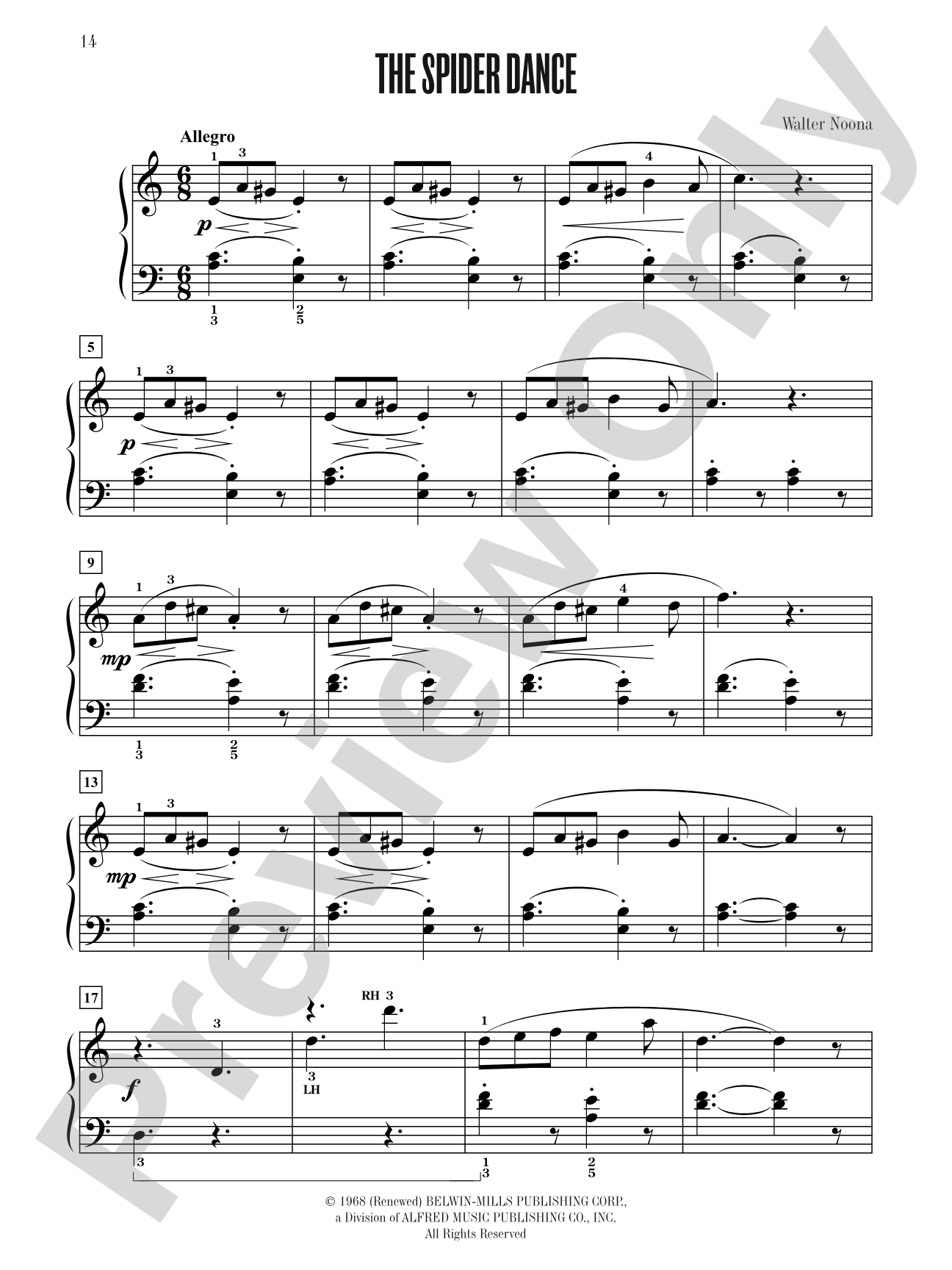

The Spider Dance - Piano Solo: Piano Solo
12 Original Piano Solos from the Libraries of Belwin-Mills and Summy-Birchard
Level: Early Intermediate / Intermediate
Item: 00-PS-0017621
$4.99
Pickup currently not available
Related Items
¡Olé! - Piano Solo: Piano Solo |
$4.99
|
View | |
Aeolian Harp - Piano Solo: Piano Solo |
$4.99
|
View | |
Braziliana - Piano Solo: Piano Solo |
$4.99
|
View | |
Ceremonial - Piano Solo: Piano Solo |
$4.99
|
View | |
Coffee Beans - Piano Solo: Piano Solo |
$4.99
|
View | |
Hopak - Piano Solo: Piano Solo |
$4.99
|
View | |
Reflections of the Moon - Piano Solo: Piano Solo |
$4.99
|
View | |
Shadows on the Moon - Piano Solo: Piano Solo |
$4.99
|
View | |
Sonatina in A Minor - Piano Solo: Piano Solo |
$5.99
|
View | |
Spanish Serenade - Piano Solo: Piano Solo |
$4.99
|
View | |
The Viking - Piano Solo: Piano Solo |
$8.99
|
View | |
Belwin Contest Winners, Book 3: Piano Book |
$8.99
|
View |
Description
Exciting piano solos are motivating for students, as well as thrilling for audiences. Thoughtfully written and carefully graded original compositions are essential for every piano studio and produce successful learning experiences for students. Over the years, Belwin-Mills and Summy-Birchard produced extensive libraries of quality elementary and intermediate supplementary piano music. The pieces included in this series represent the two companies' most popular and effective solos drawn from festival and contest lists. Book 3 is for early intermediate through intermediate students and the pieces are placed in approximate order of difficulty. Titles: Aeolian Harp * Braziliana * Ceremonial * Coffee Beans * Hopak * ¡Olé! * Reflections of the Moon * Shadows on the Moon * Sonatina in A Minor * Spanish Serenade * The Spider Dance * The Viking. A Federation Festivals 2024-2028 selection.


The Spider Dance - Piano Solo: Piano Solo isn't in MakeMusic Cloud just yet...but it could be. Let us know you'd like to see it, and you'll help shape what comes next. In the meantime, start a free trial and dive into thousands of interactive titles your students can play along with today.
Request This Title
Tell us you want it.
Start Your Free Trial
Explore everything that's ready to play right now.
Sample Audio
No sample audio found.
Sample Video
No sample videos found.
Additional Details
Series:
Belwin Contest Winners
Publisher:
Alfred Music
Page Count:
32
SKU:
00-PS-0017621
More about this title
About the Composer: Walter Noona
Walter Noona contributed substantially to the mid-20th century piano repertoire through his work with Belwin-Mills and Summy-Birchard, two of the era's most influential educational music publishers. His compositional approach prioritized accessibility without sacrificing musical substance, creating original pieces that engaged young pianists while remaining worthy of festival and contest performance.
Why we love this
This collection draws from proven festival and contest repertoire, meaning every piece has already been tested in performance and earned recognition. Noona's writing shows genuine understanding of what motivates intermediate pianists: accessible technical challenges paired with strong musical character and narrative.
What to expect
These pieces evoke specific moods and scenes: moonlit reflection, Spanish warmth, energetic folk character. Noona writes music that tells a story through sound, inviting pianists to imagine the scene even as they manage technical demands.
Who it's for
Early intermediate through intermediate piano students who are ready to tackle concert pieces with genuine musical substance rather than technical etudes. This collection suits students preparing for recitals or festival competition, as well as teachers seeking reliable, engaging supplementary solos that students actually want to perform.
How to get the most out of it
- Study the rhythmic patterns in isolation before connecting them to the melodic line; pieces like The Spider Dance benefit from confident rhythm work that supports the dramatic character.
- Use the Federation Festivals 2024-2028 list as your guide for programming and preparation timeline; knowing contest expectations helps you shape interpretation with informed pacing.
- Balance the ornamental passages against the main themes so neither overshadows the other; Noona's writing often pairs filigree with strong melodic anchors.
How to use it
Select individual pieces for studio recitals throughout the year, or curate a thematic program drawing titles from across the collection. The variety means you can match repertoire to student interests and competitive season schedules without compromising musical quality.
Skills your students will build
- Sustained melodic phrasing over accompaniment patterns
- Pedal control for coloristic and dynamic effects
- Left-hand independence in Alberti bass and rhythmic accompaniment figures
- Interpretation of descriptive titles and musical imagery
- Tempo control and rhythmic precision in contrasting styles
- Expression within intermediate technical range