
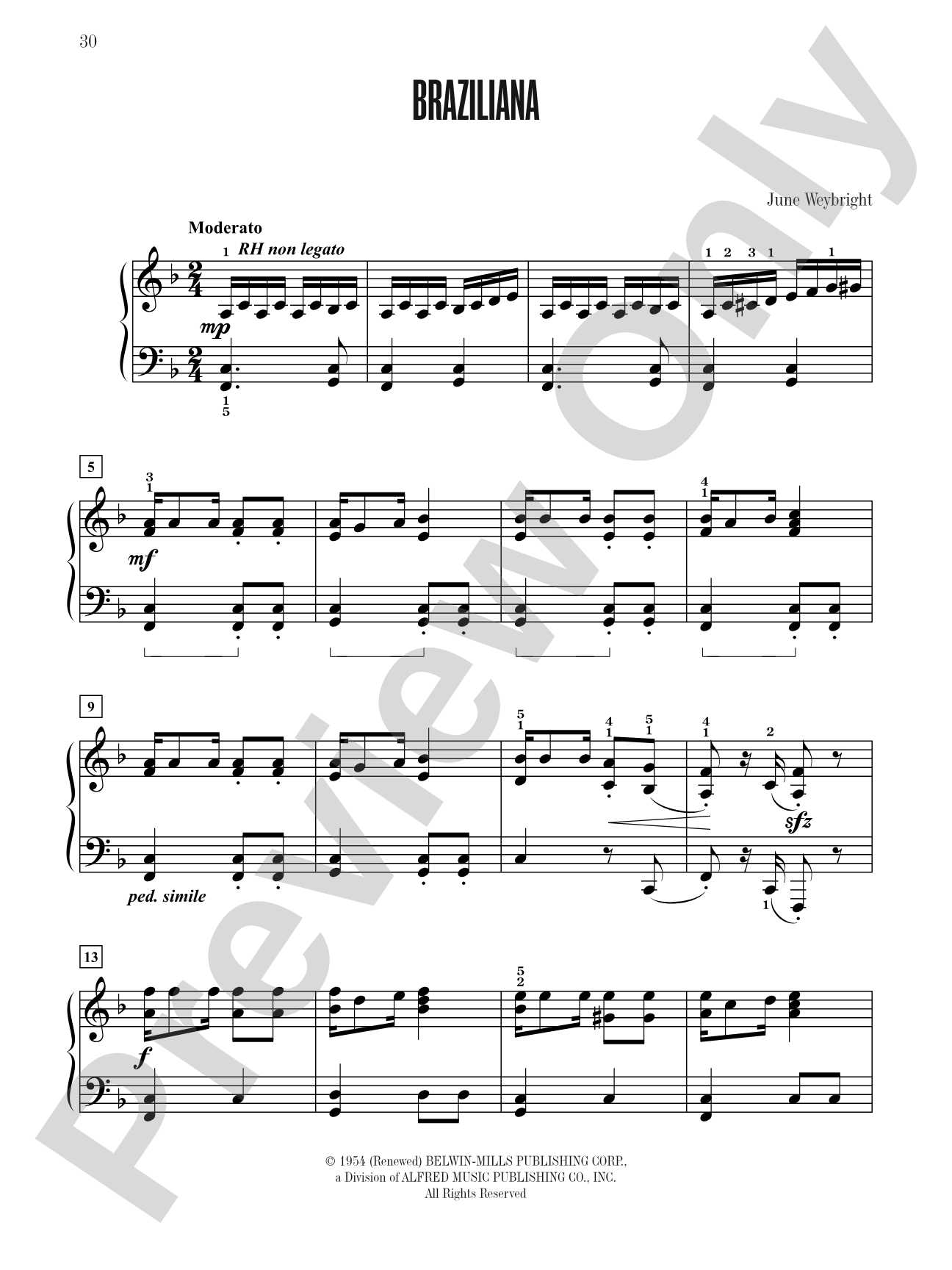

Braziliana - Piano Solo: Piano Solo
12 Original Piano Solos from the Libraries of Belwin-Mills and Summy-Birchard
Level: Early Intermediate / Intermediate
Item: 00-PS-0017613
$4.99
Pickup currently not available
Related Items
¡Olé! - Piano Solo: Piano Solo |
$4.99
|
View | |
Aeolian Harp - Piano Solo: Piano Solo |
$4.99
|
View | |
Ceremonial - Piano Solo: Piano Solo |
$4.99
|
View | |
Coffee Beans - Piano Solo: Piano Solo |
$4.99
|
View | |
Hopak - Piano Solo: Piano Solo |
$4.99
|
View | |
Reflections of the Moon - Piano Solo: Piano Solo |
$4.99
|
View | |
Shadows on the Moon - Piano Solo: Piano Solo |
$4.99
|
View | |
Sonatina in A Minor - Piano Solo: Piano Solo |
$5.99
|
View | |
Spanish Serenade - Piano Solo: Piano Solo |
$4.99
|
View | |
The Spider Dance - Piano Solo: Piano Solo |
$4.99
|
View | |
The Viking - Piano Solo: Piano Solo |
$8.99
|
View | |
Belwin Contest Winners, Book 3: Piano Book |
$8.99
|
View |
Description
Exciting piano solos are motivating for students, as well as thrilling for audiences. Thoughtfully written and carefully graded original compositions are essential for every piano studio and produce successful learning experiences for students. Over the years, Belwin-Mills and Summy-Birchard produced extensive libraries of quality elementary and intermediate supplementary piano music. The pieces included in this series represent the two companies' most popular and effective solos drawn from festival and contest lists. Book 3 is for early intermediate through intermediate students and the pieces are placed in approximate order of difficulty. Titles: Aeolian Harp * Braziliana * Ceremonial * Coffee Beans * Hopak * ¡Olé! * Reflections of the Moon * Shadows on the Moon * Sonatina in A Minor * Spanish Serenade * The Spider Dance * The Viking. A Federation Festivals 2024-2028 selection.


Discover MakeMusic Cloud: thousands of interactive titles your students can play along with today.
Sample Audio
No sample audio found.
Sample Video
No sample videos found.
Additional Details
Series:
Belwin Contest Winners
Publisher:
Alfred Music
Page Count:
32
SKU:
00-PS-0017613
More about this title
About the Composer: June Weybright
June Weybright built her reputation writing accessible piano music that engages young students without sacrificing musical substance. Her work appears regularly on festival lists and in studio recitals across North America, earning recognition for pedagogically sound compositions that hold student interest while developing technical skills.
Why we love this
Weybright's collection captures the energy and character that keep students engaged without sacrificing musical substance. Each piece stands alone as a rewarding performance, yet the careful grading across Book 3 means your students progress naturally from early intermediate to solid intermediate playing without hitting a wall.
What to expect
These solos transport you across landscapes and moods. You'll find yourself dancing through Brazilian rhythms and Spanish streets, observing moonlit shadows, and venturing into folk traditions from Eastern Europe. The writing honors each cultural touchstone while remaining accessible to growing hands.
Who it's for
Early intermediate through intermediate pianists preparing recital repertoire or working toward festival and contest performance. This collection serves private studio teachers who need reliable, musically substantial pieces that motivate student progress without overwhelming technical demands.
How to get the most out of it
- Pay attention to the rhythmic vitality in pieces like Braziliana and Hopak. These dances demand precision and a clear pulse; lock in the underlying meter before worrying about ornamental passages.
- Explore the pedal strategically in atmospheric pieces such as Reflections of the Moon and Aeolian Harp. The sustain pedal should enhance harmonic resonance without muddying fast passagework.
- Balance melody and accompaniment texture in Spanish Serenade and The Spider Dance by controlling dynamic layers. The left hand supports; the right hand sings.
- Vary your touch between the descriptive character pieces and the more formally structured Sonatina in A Minor. Each demands different voicing and articulation choices.
How to use it
Select pieces from this collection to anchor your students' recital programs. Braziliana and ¡Olé! work beautifully as energetic openers or closers; the quieter pieces like Reflections of the Moon provide contrast in a mixed program. The Sonatina in A Minor suits more formal concert contexts and festival competitions.
Skills your students will build
- Rhythmic independence and coordination between hands in mixed meter and syncopated accompaniment patterns
- Pedal control for sustaining harmony while maintaining clarity in rapid figurations
- Dynamic shaping and voicing to highlight melody over accompaniment
- Touch differentiation across styles (dance, lyrical, character pieces)
- Ensemble awareness through pieces with accompaniment-like textures that prepare students for accompanying others