
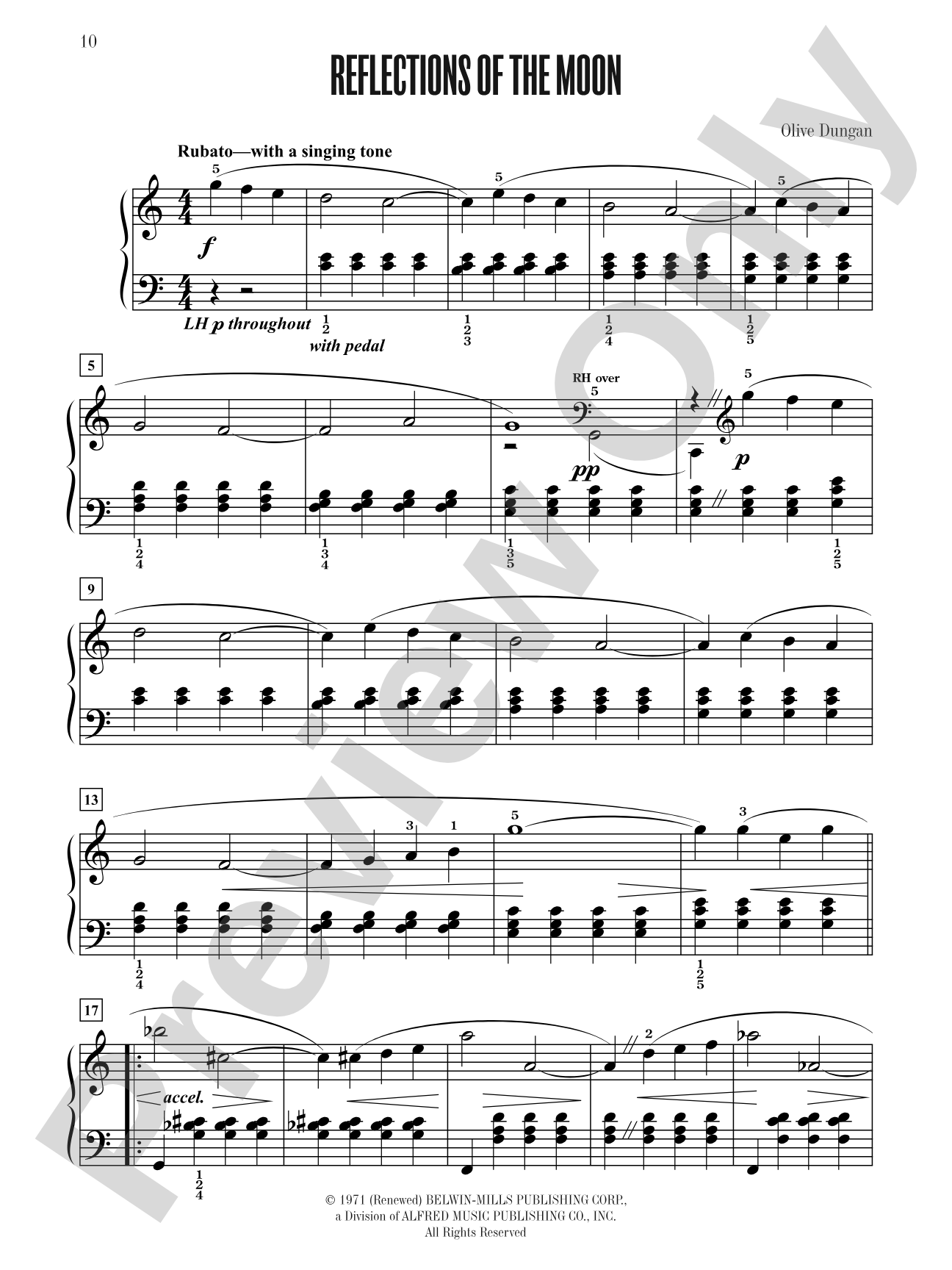

Reflections of the Moon - Piano Solo: Piano Solo
12 Original Piano Solos from the Libraries of Belwin-Mills and Summy-Birchard
Level: Early Intermediate / Intermediate
Item: 00-PS-0017617
$4.99
Pickup currently not available
Related Items
¡Olé! - Piano Solo: Piano Solo |
$4.99
|
View | |
Aeolian Harp - Piano Solo: Piano Solo |
$4.99
|
View | |
Braziliana - Piano Solo: Piano Solo |
$4.99
|
View | |
Ceremonial - Piano Solo: Piano Solo |
$4.99
|
View | |
Coffee Beans - Piano Solo: Piano Solo |
$4.99
|
View | |
Hopak - Piano Solo: Piano Solo |
$4.99
|
View | |
Shadows on the Moon - Piano Solo: Piano Solo |
$4.99
|
View | |
Sonatina in A Minor - Piano Solo: Piano Solo |
$5.99
|
View | |
Spanish Serenade - Piano Solo: Piano Solo |
$4.99
|
View | |
The Spider Dance - Piano Solo: Piano Solo |
$4.99
|
View | |
The Viking - Piano Solo: Piano Solo |
$8.99
|
View | |
Belwin Contest Winners, Book 3: Piano Book |
$8.99
|
View |
Description
Exciting piano solos are motivating for students, as well as thrilling for audiences. Thoughtfully written and carefully graded original compositions are essential for every piano studio and produce successful learning experiences for students. Over the years, Belwin-Mills and Summy-Birchard produced extensive libraries of quality elementary and intermediate supplementary piano music. The pieces included in this series represent the two companies' most popular and effective solos drawn from festival and contest lists. Book 3 is for early intermediate through intermediate students and the pieces are placed in approximate order of difficulty. Titles: Aeolian Harp * Braziliana * Ceremonial * Coffee Beans * Hopak * ¡Olé! * Reflections of the Moon * Shadows on the Moon * Sonatina in A Minor * Spanish Serenade * The Spider Dance * The Viking. A Federation Festivals 2024-2028 selection.


Reflections of the Moon - Piano Solo: Piano Solo isn't in MakeMusic Cloud just yet...but it could be. Let us know you'd like to see it, and you'll help shape what comes next. In the meantime, start a free trial and dive into thousands of interactive titles your students can play along with today.
Request This Title
Tell us you want it.
Start Your Free Trial
Explore everything that's ready to play right now.
Sample Audio
No sample audio found.
Sample Video
No sample videos found.
Additional Details
Series:
Belwin Contest Winners
Publisher:
Alfred Music
Page Count:
32
SKU:
00-PS-0017617
More about this title
About the Composer: Olive Dungan
Olive Dungan composed prolifically for student musicians throughout the 20th century, with a particular gift for writing pieces that sound accomplished without overwhelming developing players. Her works appeared regularly on festival and contest lists, earning recognition for their musicality and practical pedagogy. Dungan understood what early intermediate pianists could achieve and wrote accordingly, with real harmonic interest, appealing melodies, and textures that challenge without frustrating.
Why we love this
Dungan's writing sits at that sweet spot where pieces sound polished enough for recital but stay grounded in what early intermediate pianists can actually execute. The collection spans multiple styles and moods, giving you genuine variety rather than twelve variations on the same harmonic idea. These pieces show up on festival lists because they engage both the player and the listener.
What to expect
The collection opens doors to many musical landscapes: the shimmer of Aeolian Harp, the rhythmic energy of folk-inspired dances, the dreamy quality of pieces named after moonlight. Each piece has its own personality, making practice feel like exploration rather than repetition.
Who it's for
Early intermediate through intermediate piano students ready to move beyond simplified arrangements and into genuine compositions. Players preparing for festivals, recitals, or studio showcases will find 12 pieces with different character and technical profiles to choose from.
How to get the most out of it
- Build momentum in pieces like Hopak and The Spider Dance by keeping the pulse steady; these dances demand rhythmic confidence even at a moderate tempo.
- Listen closely to the harmonic color in pieces like Aeolian Harp and Reflections of the Moon; Dungan's writing rewards attention to pedal clarity and voice balance.
- Shape the lyrical lines in Spanish Serenade and Braziliana with the same care you'd give to a vocal melody, maintaining phrase direction even at a relaxed tempo.
How to use it
Select individual pieces to anchor recitals at different points in the year. A lyrical piece like Reflections of the Moon works well as an opener, while The Spider Dance or Hopak can energize an audience as a second-half closer. Teachers can assign pieces strategically throughout the season to match student readiness and program balance.
Skills your students will build
- Pedal control and sustain pedal independence
- Rhythmic independence between hands (especially in dances and folk-inspired pieces)
- Harmonic awareness and voice leading in accompanimental textures
- Tempo flexibility and stylistic interpretation across multiple genres
- Memorization strategies for varied musical forms and key centers