
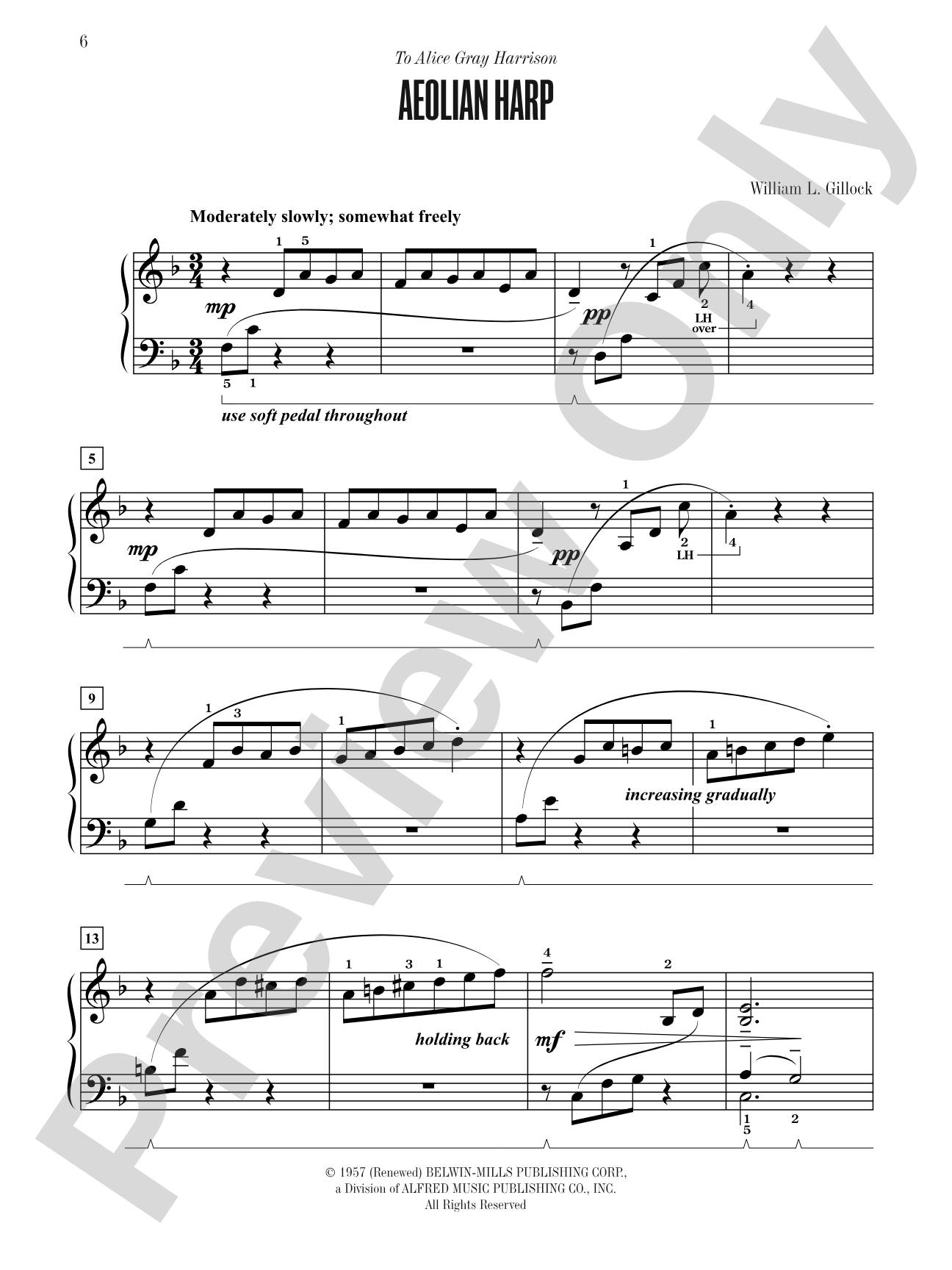

Aeolian Harp - Piano Solo: Piano Solo
12 Original Piano Solos from the Libraries of Belwin-Mills and Summy-Birchard
Level: Early Intermediate / Intermediate
Item: 00-PS-0017612
$4.99
Pickup currently not available
Related Items
¡Olé! - Piano Solo: Piano Solo |
$4.99
|
View | |
Braziliana - Piano Solo: Piano Solo |
$4.99
|
View | |
Ceremonial - Piano Solo: Piano Solo |
$4.99
|
View | |
Coffee Beans - Piano Solo: Piano Solo |
$4.99
|
View | |
Hopak - Piano Solo: Piano Solo |
$4.99
|
View | |
Reflections of the Moon - Piano Solo: Piano Solo |
$4.99
|
View | |
Shadows on the Moon - Piano Solo: Piano Solo |
$4.99
|
View | |
Sonatina in A Minor - Piano Solo: Piano Solo |
$5.99
|
View | |
Spanish Serenade - Piano Solo: Piano Solo |
$4.99
|
View | |
The Spider Dance - Piano Solo: Piano Solo |
$4.99
|
View | |
The Viking - Piano Solo: Piano Solo |
$8.99
|
View | |
Belwin Contest Winners, Book 3: Piano Book |
$8.99
|
View |
Description
Exciting piano solos are motivating for students, as well as thrilling for audiences. Thoughtfully written and carefully graded original compositions are essential for every piano studio and produce successful learning experiences for students. Over the years, Belwin-Mills and Summy-Birchard produced extensive libraries of quality elementary and intermediate supplementary piano music. The pieces included in this series represent the two companies' most popular and effective solos drawn from festival and contest lists. Book 3 is for early intermediate through intermediate students and the pieces are placed in approximate order of difficulty. Titles: Aeolian Harp * Braziliana * Ceremonial * Coffee Beans * Hopak * ¡Olé! * Reflections of the Moon * Shadows on the Moon * Sonatina in A Minor * Spanish Serenade * The Spider Dance * The Viking. A Federation Festivals 2024-2028 selection.


Discover MakeMusic Cloud: thousands of interactive titles your students can play along with today.
Sample Audio
No sample audio found.
Sample Video
No sample videos found.
Additional Details
Series:
Belwin Contest Winners
Publisher:
Alfred Music
Page Count:
32
SKU:
00-PS-0017612
More about this title
About the Composer: William L. Gillock
William L. Gillock (1917-2002) was an American composer and educator whose prolific catalog shaped piano pedagogy for generations. His gift lay in writing original compositions that felt inevitable at their difficulty level: pieces that sounded sophisticated and rewarding to play while remaining accessible to students building technical and musical confidence.
Gillock's work for Belwin-Mills and other publishers became standard fare on festival and contest lists because he understood what students needed to grow. His melodies are memorable, his harmonic language clear without being simplistic, and his textures manageable. Teachers returned to his writing again and again because students wanted to play his pieces, and those students developed genuine musicianship in the process.
Why we love this
This collection survives on festival lists because Gillock refuses to compromise between artistry and playability. Each piece genuinely interests a young pianist while respecting the realities of what early-intermediate hands can execute. The 12 pieces here are varied enough to serve multiple recital needs within a single book, from program openers to closing statements.
What to expect
This collection spans from impressionistic sketches and folk-inspired character pieces to rhythmic celebrations and introspective nocturnes. Students encounter evocative imagery (moonlight, spiders, Viking imagery, Brazilian rhythms) without the music becoming overly descriptive or programmatic in a way that would require explanation.
Who it's for
Early-intermediate and intermediate piano students ready to move beyond method-book repertoire into pieces that sound and feel like real recital material. Teachers seeking a reliable collection of original works that maintain consistent pedagogical quality across a range of moods and musical styles.
How to get the most out of it
- Shape each phrase with the touch and pedal work the texture demands rather than playing evenly throughout. A delicate piece like 'Reflections of the Moon' requires different pedal technique than the rhythmic energy of 'The Spider Dance.'
- Listen for Gillock's harmonic language as it shifts between pieces. Understanding where he places his chord changes helps students voice the music expressively instead of treating accidentals as obstacles.
- Balance the melody against accompaniment textures thoughtfully. Many of these solos feature repetitive accompanying figures that can overwhelm the line if not controlled dynamically.
How to use it
Mix and match these 12 pieces strategically across multiple recitals throughout a season, or feature several in a single concert program to showcase range and mood contrast. The variety makes this collection ideal for studio recitals where you have students at slightly different levels, since you can confidently assign pieces from the same book to performers at different points in their development.
Skills your students will build
- Pedal control and color choices in pieces ranging from impressionistic to rhythmic
- Finger independence and articulation within repetitive accompaniment textures
- Dynamic shaping of melodies against consistent harmonic backgrounds
- Sight-reading confidence through exposure to varied tonalities and time signatures
- Musical interpretation beyond technique, including stylistic choices in rubato and voice leading