
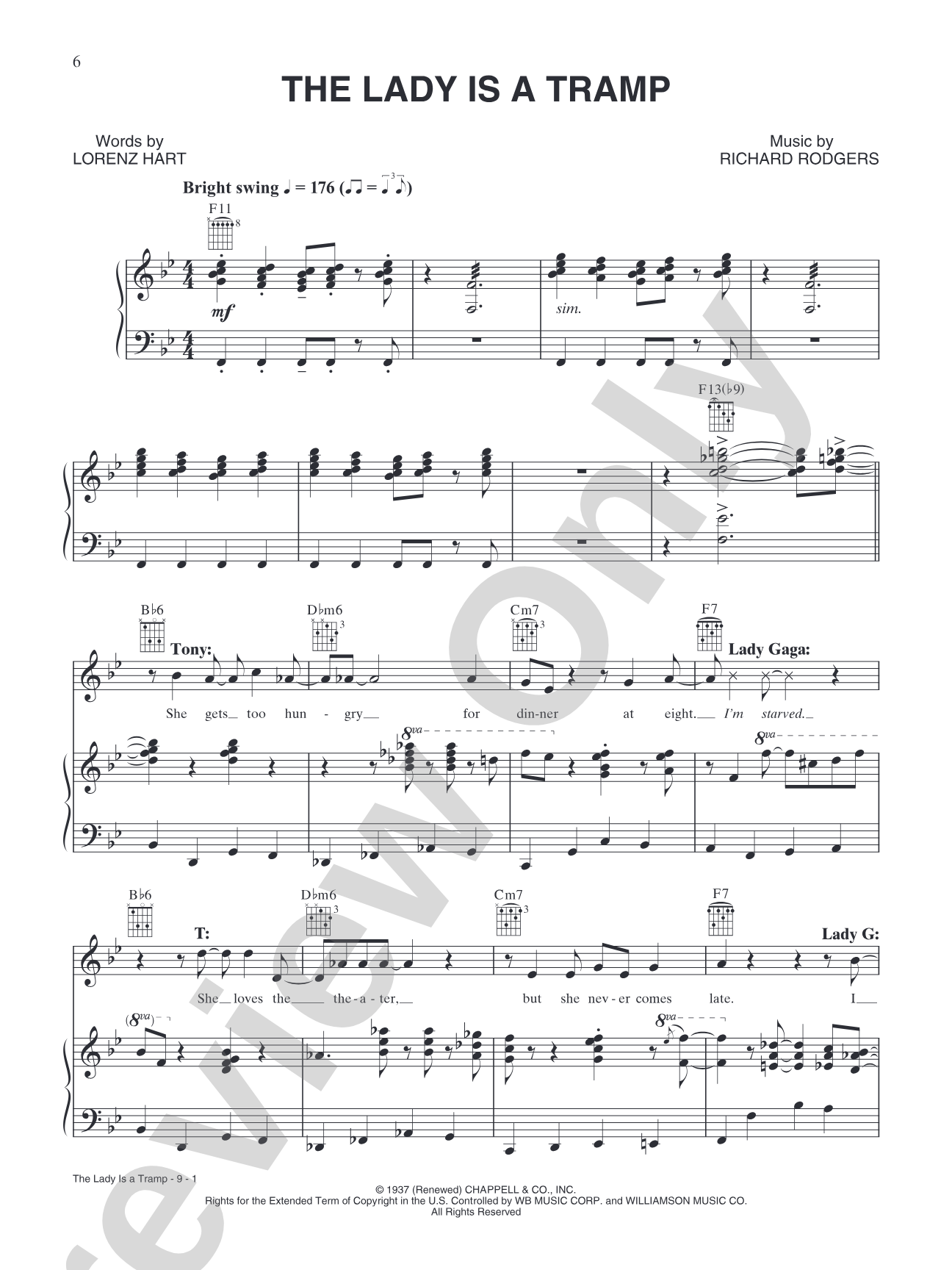
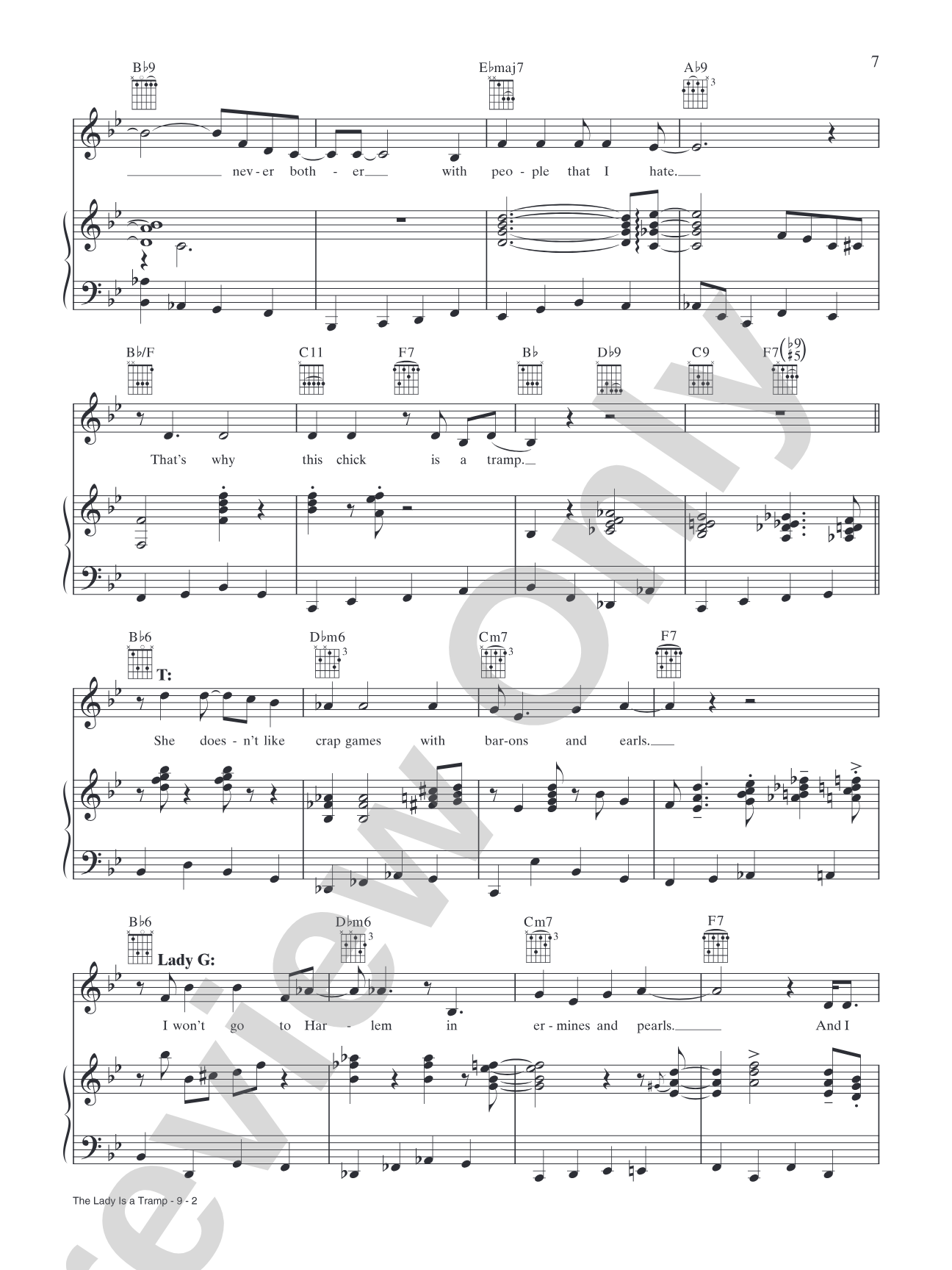

The Lady is a Tramp: Piano/Vocal/Chords
Tony Bennett
Item: 00-XS-0000482
$5.99
One moment…
Description
This songbook contains sheet music arrangements of every song on Tony Bennett's 2011 album of vocal collaborations with pop music stars like Lady Gaga, Michael Buble, and 15 others. The piano/vocal arrangements match the album's renditions of 17 Great American Songbook standards as interpreted by Bennett and his fellow celebrities, including the famous "Body and Soul" duet recorded with Amy Winehouse just months prior to her passing. Titles: * The Lady Is a Tramp * One for My Baby (And One More for the Road) * Body and Soul * Don't Get Around Much Anymore * Blue Velvet * How Do You Keep the Music Playing? * The Girl I Love * On the Sunny Side of the Street * Who Can I Turn To (When Nobody Needs Me) * Speak Low * This Is All I Ask * Watch What Happens * Stranger in Paradise * The Way You Look Tonight * Yesterday I Heard the Rain * It Had to Be You * When Do The Bells Ring for Me.


The Lady is a Tramp: Piano/Vocal/Chords isn't in MakeMusic Cloud just yet...but it could be. Let us know you'd like to see it, and you'll help shape what comes next. In the meantime, start a free trial and dive into thousands of interactive titles your students can play along with today.
Request This Title
Tell us you want it.
Start Your Free Trial
Explore everything that's ready to play right now.
Sample Audio
No sample audio found.
Sample Video
No sample videos found.
Additional Details
Publisher:
Alfred Music
Page Count:
116
SKU:
00-XS-0000482
More about this title
About the Composer: Richard Rodgers
Richard Rodgers (1902-1979) shaped American musical theater for half a century through his partnerships with lyricists Lorenz Hart and Oscar Hammerstein II. His melodies defined the Great American Songbook, blending sophisticated harmonic language with singable, memorable lines that have become standards in jazz and pop repertoires worldwide. Many of the songs in this collection originated in Rodgers' theatrical works, where they were crafted to serve both dramatic narrative and standalone vocal performance.
For music educators, Rodgers' output offers a master class in melodic construction and harmonic progression. His songs reward detailed study of voice leading, functional harmony, and the relationship between lyrics and musical phrase. Teachers and students find in his compositions an ideal bridge between classical music theory and the repertoire performers actually want to sing and play.
Why we love this
This collection captures 17 timeless standards through the distinctive interpretations of Tony Bennett and a roster of contemporary artists, making the Great American Songbook feel genuinely alive for today's singers. The piano/vocal arrangements preserve the album's carefully crafted orchestrations while remaining playable in intimate settings, offering both accessibility and sophistication. The inclusion of the Amy Winehouse/Bennett "Body and Soul" duet provides a poignant historical moment and natural entry point for discussions about jazz history and vocal artistry.
What to expect
These arrangements breathe with the elegance and restraint of classic jazz accompaniment, never overcrowding the vocalist's line yet providing rich harmonic support. The piano and guitar parts reflect the album's sophisticated production while remaining grounded in the melodic beauty Rodgers composed decades ago. Whether intimate or swinging, each song carries the intimacy of a vocalist speaking directly to the listener.
Who it's for
Singers preparing for recitals, jazz combos, or vocal jazz courses will find authentic, performer-friendly arrangements of canonical American standards. Pianists accompanying vocalists, as well as guitarists in jazz or cabaret settings, gain direct access to the specific voicings and harmonic interpretations heard on Bennett's album. This resource serves intermediate to advanced musicians seeking repertoire that balances historical significance with contemporary performance practice.
How to get the most out of it
- Study the harmonic movement underneath the melody; these standards often contain surprising chord substitutions and voice-leading patterns that clarify phrasing and breath placement.
- Listen to the specific album recordings before rehearsing to capture the interpretive choices Bennett and each guest artist made, then decide which elements serve your own performance.
- Balance lyrical clarity with the sophisticated harmonic language; these songs demand attention to diction without sacrificing the beauty of Rodgers' melodic lines.
- Use the chord changes to understand song structure and form; many of these pieces follow 32-bar song form with distinct sections that shape both accompaniment and vocal interpretation.
How to use it
Feature these standards in a recital exploring the Great American Songbook, pairing them with other jazz-influenced vocal literature from the same era or with contemporary interpretations of classic material. Use individual songs as audition pieces or as supplementary repertoire for intermediate vocal students deepening their understanding of American musical theater traditions. This collection works particularly well in a concert celebrating vocal artistry across generations, especially when programming the duet "Body and Soul" as a centerpiece piece that invites reflection on mentorship and artistic legacy.
Skills your students will build
- Interpreting jazz and pop vocal phrasing within a sophisticated harmonic context
- Reading and playing piano/vocal arrangements with attention to chord voicings and voice leading
- Understanding 32-bar song form and how harmonic structure shapes melodic interpretation
- Coordinating accompaniment (piano and guitar) with vocal performance across varied tempos and styles
- Analyzing and performing standards that bridge classical song craft with jazz idiom