
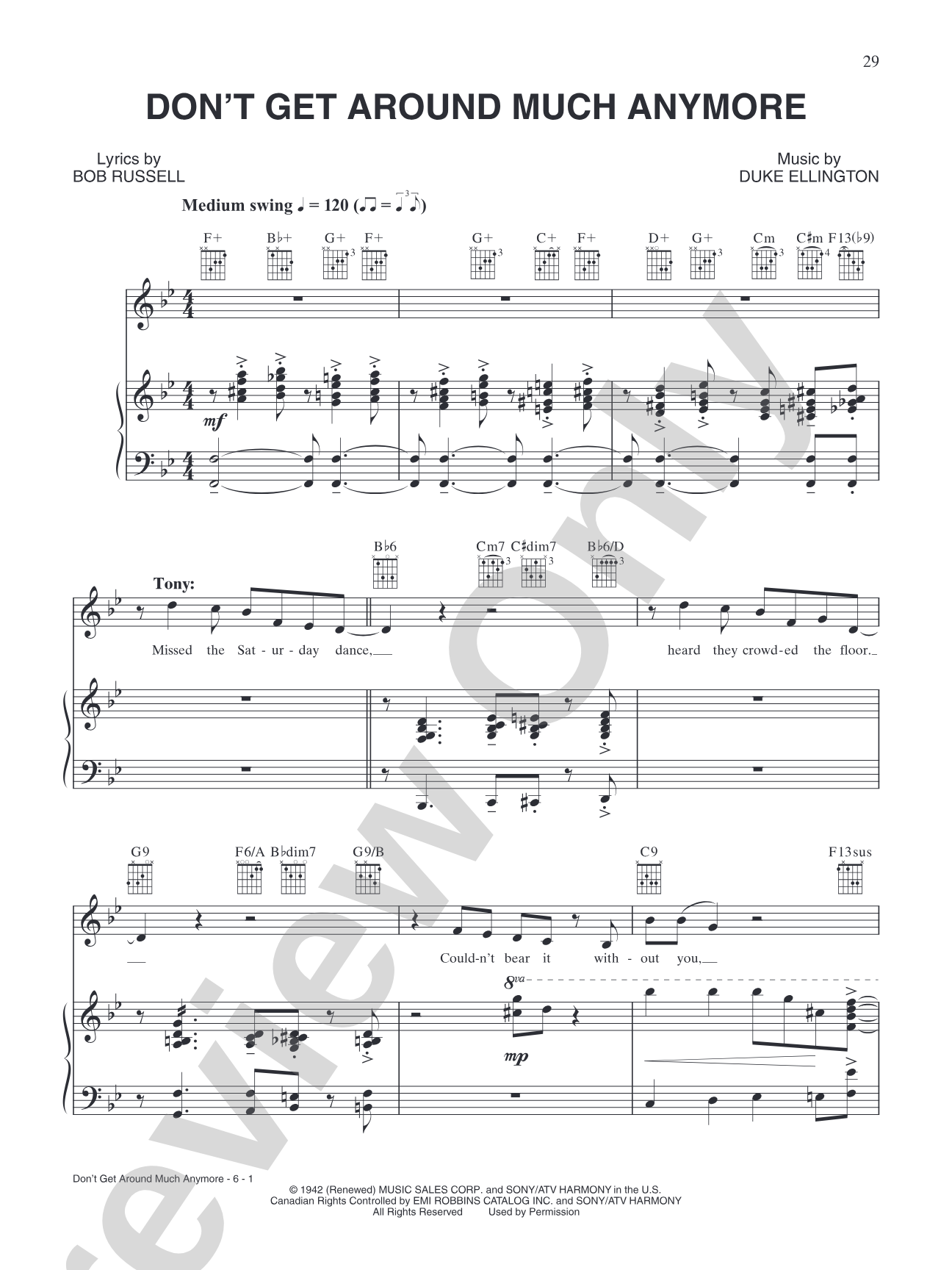
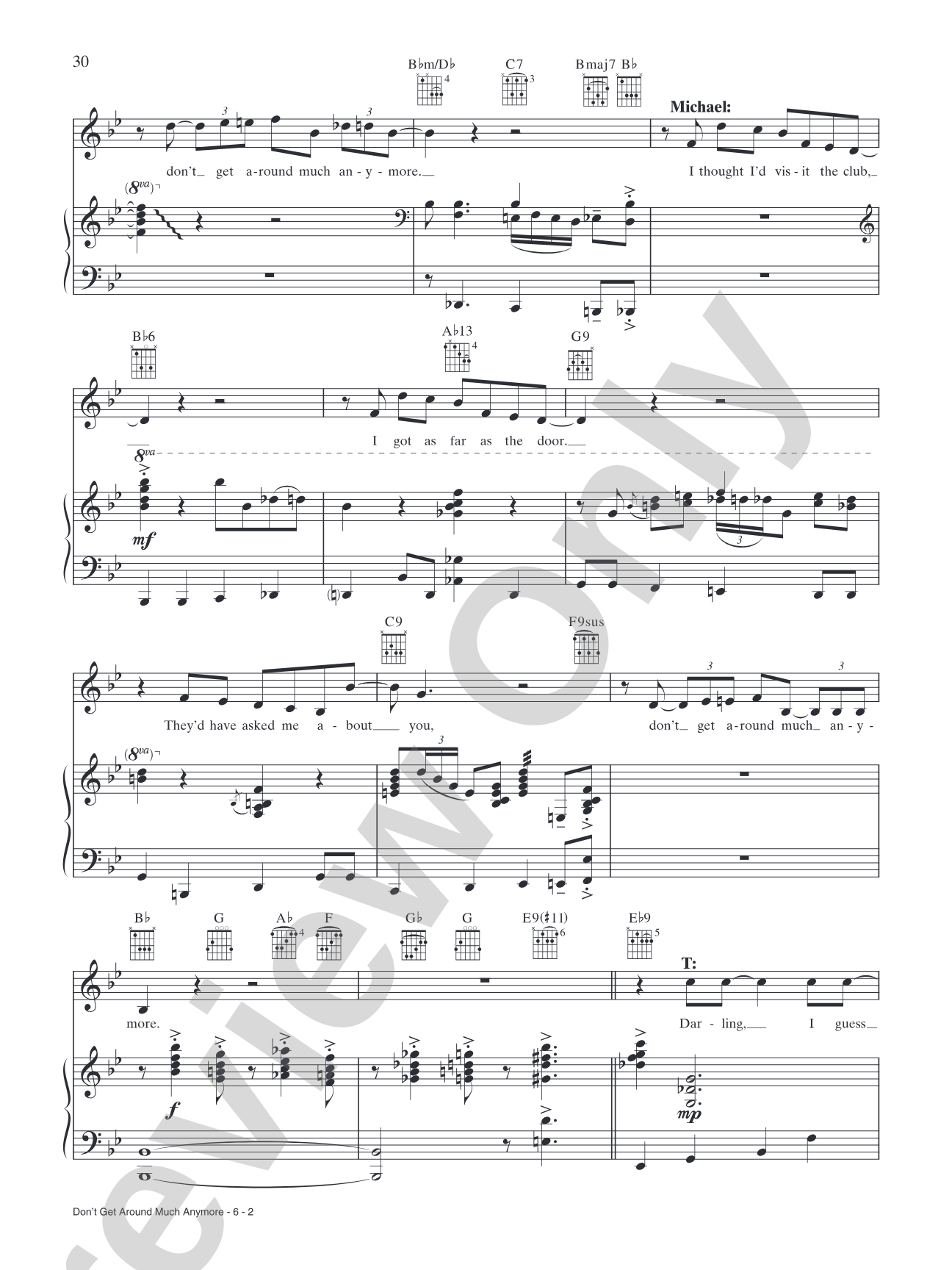

Don't Get Around Much Anymore: Piano/Vocal/Chords
Tony Bennett
Item: 00-XS-0000480
$5.99
One moment…
Description
This songbook contains sheet music arrangements of every song on Tony Bennett's 2011 album of vocal collaborations with pop music stars like Lady Gaga, Michael Buble, and 15 others. The piano/vocal arrangements match the album's renditions of 17 Great American Songbook standards as interpreted by Bennett and his fellow celebrities, including the famous "Body and Soul" duet recorded with Amy Winehouse just months prior to her passing. Titles: * The Lady Is a Tramp * One for My Baby (And One More for the Road) * Body and Soul * Don't Get Around Much Anymore * Blue Velvet * How Do You Keep the Music Playing? * The Girl I Love * On the Sunny Side of the Street * Who Can I Turn To (When Nobody Needs Me) * Speak Low * This Is All I Ask * Watch What Happens * Stranger in Paradise * The Way You Look Tonight * Yesterday I Heard the Rain * It Had to Be You * When Do The Bells Ring for Me.


Don't Get Around Much Anymore: Piano/Vocal/Chords isn't in MakeMusic Cloud just yet...but it could be. Let us know you'd like to see it, and you'll help shape what comes next. In the meantime, start a free trial and dive into thousands of interactive titles your students can play along with today.
Request This Title
Tell us you want it.
Start Your Free Trial
Explore everything that's ready to play right now.
Sample Audio
No sample audio found.
Sample Video
No sample videos found.
Additional Details
Publisher:
Alfred Music
Page Count:
116
SKU:
00-XS-0000480
More about this title
About the Composer: Duke Ellington
Duke Ellington (1899-1974) stands as one of the most prolific and influential composers in American music history. His command of harmonic sophistication, orchestration, and melodic invention shaped jazz and popular music for over five decades, and his compositions have become cornerstones of the Great American Songbook.
Elington's works transcend the boundaries between jazz and classical music, earning respect from musicians across every genre. Many of his compositions, including several featured in this collection, have become standards recorded countless times by vocalists and instrumentalists worldwide. His legacy as a bandleader, pianist, and composer continues to inspire music educators who recognize his influence on both popular song and the broader landscape of American music.
Why we love this
This collection captures some of the most elegant standards ever written, arranged to match Tony Bennett's interpretations alongside contemporary pop voices. The piano/vocal format preserves the album's intimate approach to these timeless songs while remaining accessible for singers and pianists working at different levels. Programming any of these arrangements signals taste and musical substance to your audience.
What to expect
Sophisticated and timeless. These songs carry the warmth of classic American song writing paired with the contemporary production sensibility of the Bennett album, creating arrangements that feel both rooted in tradition and alive in the present moment. The duets and featured artist collaborations on the album inspire a conversational quality in the singing, where intimacy and emotional directness matter more than vocal display.
Who it's for
Vocalists and pianist collaborators looking to expand their standards repertoire with elegant, singable arrangements. This collection works equally well for a pop-influenced singer exploring the Great American Songbook or a jazz vocalist seeking fresh interpretations of familiar material. Whether you're preparing recital repertoire, building a standards-focused lesson series, or planning a concert featuring jazz classics, these arrangements offer substantial musicianship without excessive technical demands.
How to get the most out of it
- Study the album recordings before rehearsing. Bennett's phrasing and the guest artists' approaches reveal interpretive choices that the sheet music alone won't convey; use these recordings as your musical reference.
- Pay attention to the chord symbols and any jazz voicings notated in the piano part. These arrangements reflect modern jazz harmony, and playing them accurately shapes the entire harmonic character of each song.
- Let the lyrics guide your vocal tone and emotional arc. These standards demand storytelling; the piano part supports but never overwhelms the narrative the vocalist is telling.
- Balance the piano and vocal lines carefully. The piano should anchor the harmony without overshadowing the singer's lyrical line, especially in the more intimate moments.
How to use it
Feature any of these arrangements in a recital that explores American song standards across generations. The collection works particularly well as a thematic program pairing Ellington compositions with vocal-piano storytelling, or as individual selections interspersed throughout a concert showcasing different interpretations of the Great American Songbook. Consider the album's celebrity collaborations as an entry point for intermediate vocalists who connect with contemporary pop music but want to deepen their understanding of classic song structure and harmony.
Skills your students will build
- Interpreting jazz chord voicings and substitutions from lead sheets
- Balancing vocal line clarity with harmonic complexity in the piano part
- Shaping phrasing and breath control across longer melodic arcs
- Understanding standards repertoire and its role in American musical history
- Collaborating between vocalist and accompanist to achieve musical cohesion