
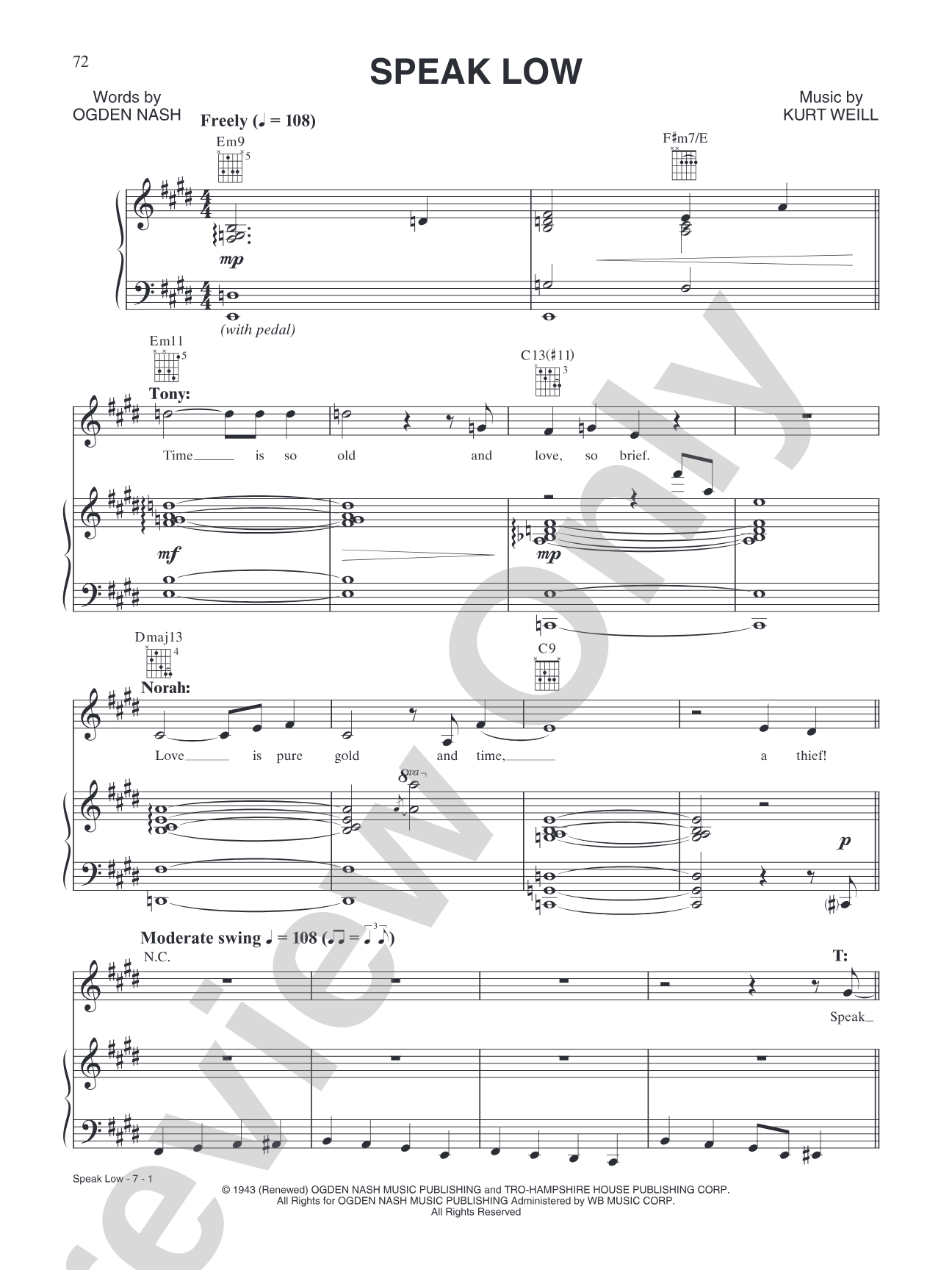
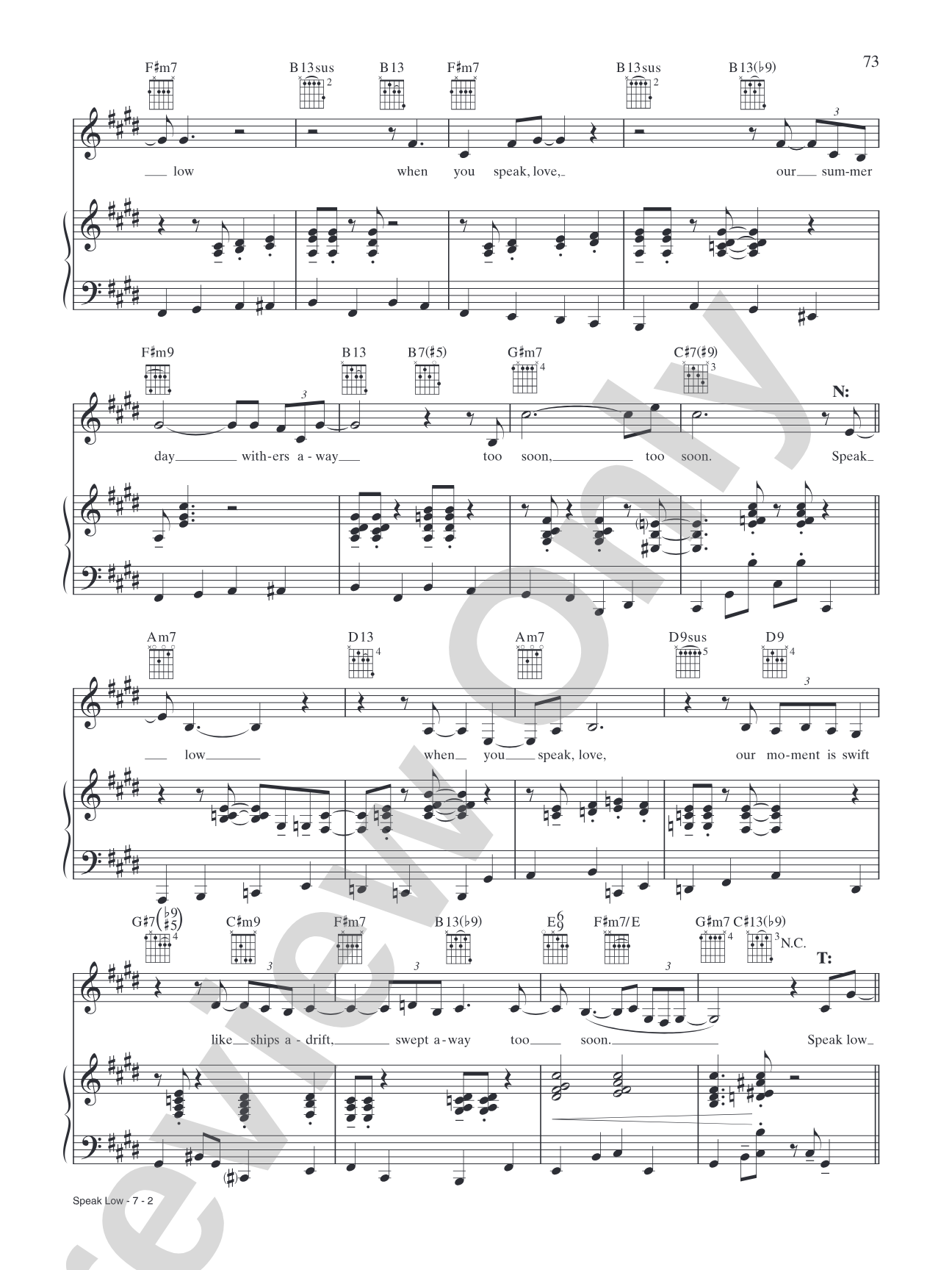

Speak Low: Piano/Vocal/Chords
Tony Bennett
Item: 00-XS-0000491
$5.99
One moment…
Description
This songbook contains sheet music arrangements of every song on Tony Bennett's 2011 album of vocal collaborations with pop music stars like Lady Gaga, Michael Buble, and 15 others. The piano/vocal arrangements match the album's renditions of 17 Great American Songbook standards as interpreted by Bennett and his fellow celebrities, including the famous "Body and Soul" duet recorded with Amy Winehouse just months prior to her passing. Titles: * The Lady Is a Tramp * One for My Baby (And One More for the Road) * Body and Soul * Don't Get Around Much Anymore * Blue Velvet * How Do You Keep the Music Playing? * The Girl I Love * On the Sunny Side of the Street * Who Can I Turn To (When Nobody Needs Me) * Speak Low * This Is All I Ask * Watch What Happens * Stranger in Paradise * The Way You Look Tonight * Yesterday I Heard the Rain * It Had to Be You * When Do The Bells Ring for Me.


Speak Low: Piano/Vocal/Chords isn't in MakeMusic Cloud just yet...but it could be. Let us know you'd like to see it, and you'll help shape what comes next. In the meantime, start a free trial and dive into thousands of interactive titles your students can play along with today.
Request This Title
Tell us you want it.
Start Your Free Trial
Explore everything that's ready to play right now.
Sample Audio
No sample audio found.
Sample Video
No sample videos found.
Additional Details
Publisher:
Alfred Music
Page Count:
116
SKU:
00-XS-0000491
More about this title
About the Composer: Kurt Weill
Kurt Weill (1900-1950) revolutionized musical theater by fusing classical training with jazz, blues, and popular idioms. His collaborations with lyricist Bertolt Brecht produced some of the 20th century's most distinctive songs, including "Speak Low" and "The Lady Is a Tramp," works that have become standards in both theater and jazz repertoires. After emigrating to the United States in 1935, Weill continued composing for stage and screen, creating a body of work that bridges concert hall sophistication and vernacular accessibility.
Weill's influence on music education extends beyond composition; his approach to melody, harmony, and storytelling offers singers and pianists models for expressive interpretation. His songs reward close attention to lyrical content, harmonic subtlety, and the interplay between voice and accompaniment. For educators, Weill's catalog provides richly musical material that engages students in both technical and interpretive work.
Why we love this
This collection brings together 17 standards arranged specifically for the duet partnerships on Bennett's 2011 album, making it an ideal resource for singers studying vocal jazz interpretation and collaboration. The piano/vocal/guitar format gives pianists, guitarists, and singers genuine flexibility in performance settings, whether in a studio lesson, cabaret program, or jazz ensemble context. Bennett's interpretations of these Weill classics (and other standards) demonstrate artistic maturity and musical restraint, offering singers substantive models for phrasing and jazz inflection.
What to expect
These songs carry the sophistication and restraint that define the Great American Songbook. Weill's melodies are lyrical and memorable, yet his harmonies contain unexpected turns and jazz colors that reward repeated listening. The album's duet format brings intimacy to every arrangement, creating spaces for genuine musical conversation between singers.
Who it's for
Singers studying American songbook standards and jazz interpretation will find authentic material rooted in Bennett's approach to musical storytelling. Pianists and guitarists accompanying vocalists can use these arrangements in private lessons, studio sessions, or small ensemble performances. Voice teachers can draw on these duet arrangements to develop students' listening skills, ensemble awareness, and understanding of vocal jazz idioms.
How to get the most out of it
- Listen closely to the album recordings before rehearsing. Bennett's phrasing choices and the specific arrangements in this songbook align with his duet partners' performances, making the recordings essential reference material for matching style and tempo.
- Pay attention to the harmonic language. Weill's chord progressions often contain jazz alterations and unexpected movement; follow the chord symbols carefully and use them to inform your interpretation rather than treating them as static harmony.
- Balance the relationship between voice and accompaniment. In duet passages, let the piano or guitar support without overwhelming the vocal line, and maintain clarity in both parts even when the arrangement is dense.
- Shape phrases based on lyrical content and syntax rather than strict 4-bar or 8-bar groupings. Weill's melodies breathe differently depending on the text, so mark your phrasing before performance.
How to use it
Program these arrangements in a jazz vocal recital or cabaret-style concert; the duet repertoire works particularly well for two singers with complementary voices. Use individual songs in voice lessons to develop interpretation and style, pairing the sheet music with album recordings for comparative study. These standards fit naturally into jazz ensemble or small jazz combo contexts, where guitarists and pianists can explore the harmonic vocabulary alongside singers.
Skills your students will build
- Interpreting jazz standards and lyrical phrasing
- Reading piano/vocal/guitar arrangements
- Understanding harmonic color and jazz alterations in Weill's compositional language
- Ensemble balance and musical conversation in duet singing
- Connecting lyrical meaning to melodic shape and interpretation