
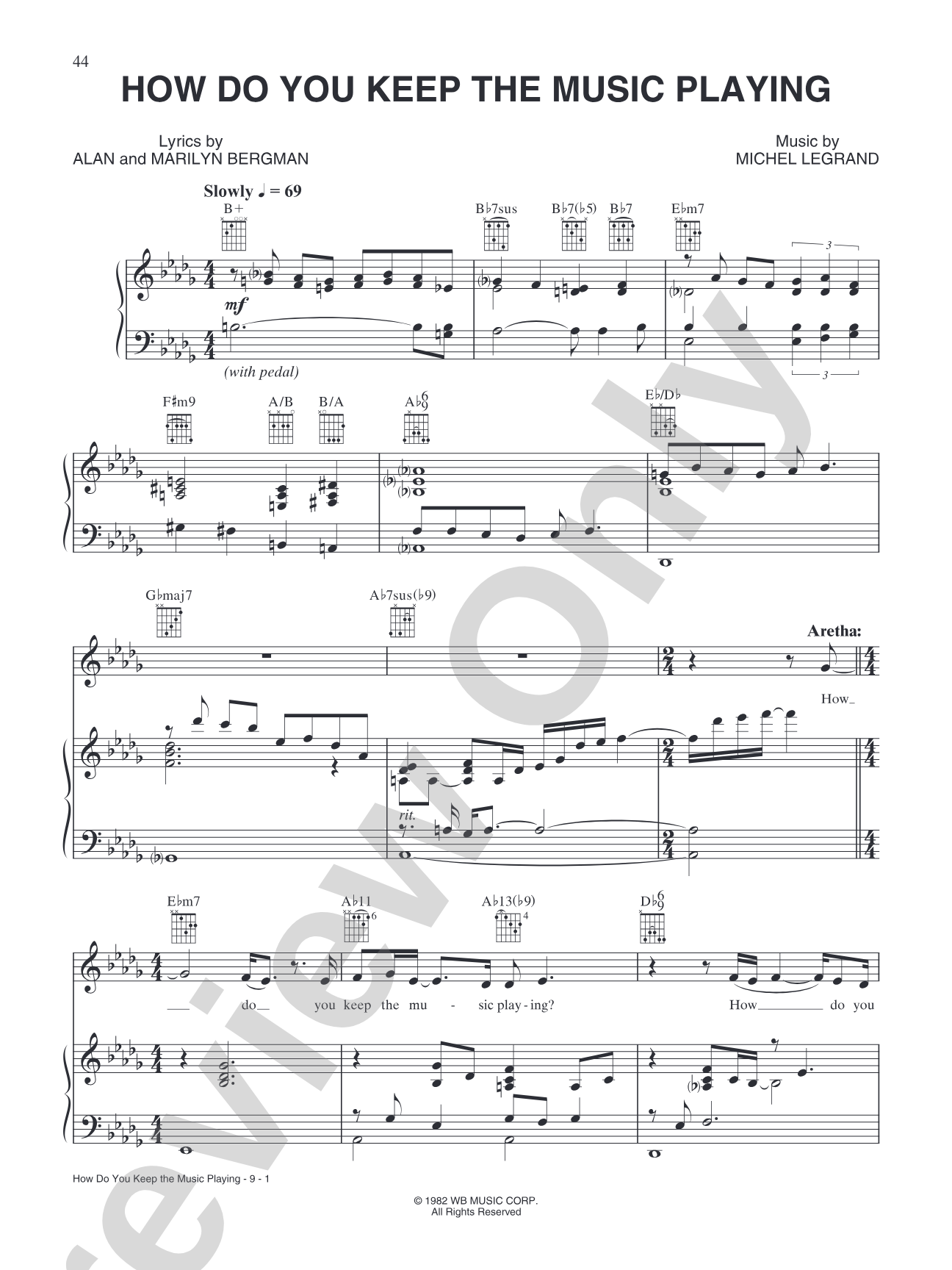
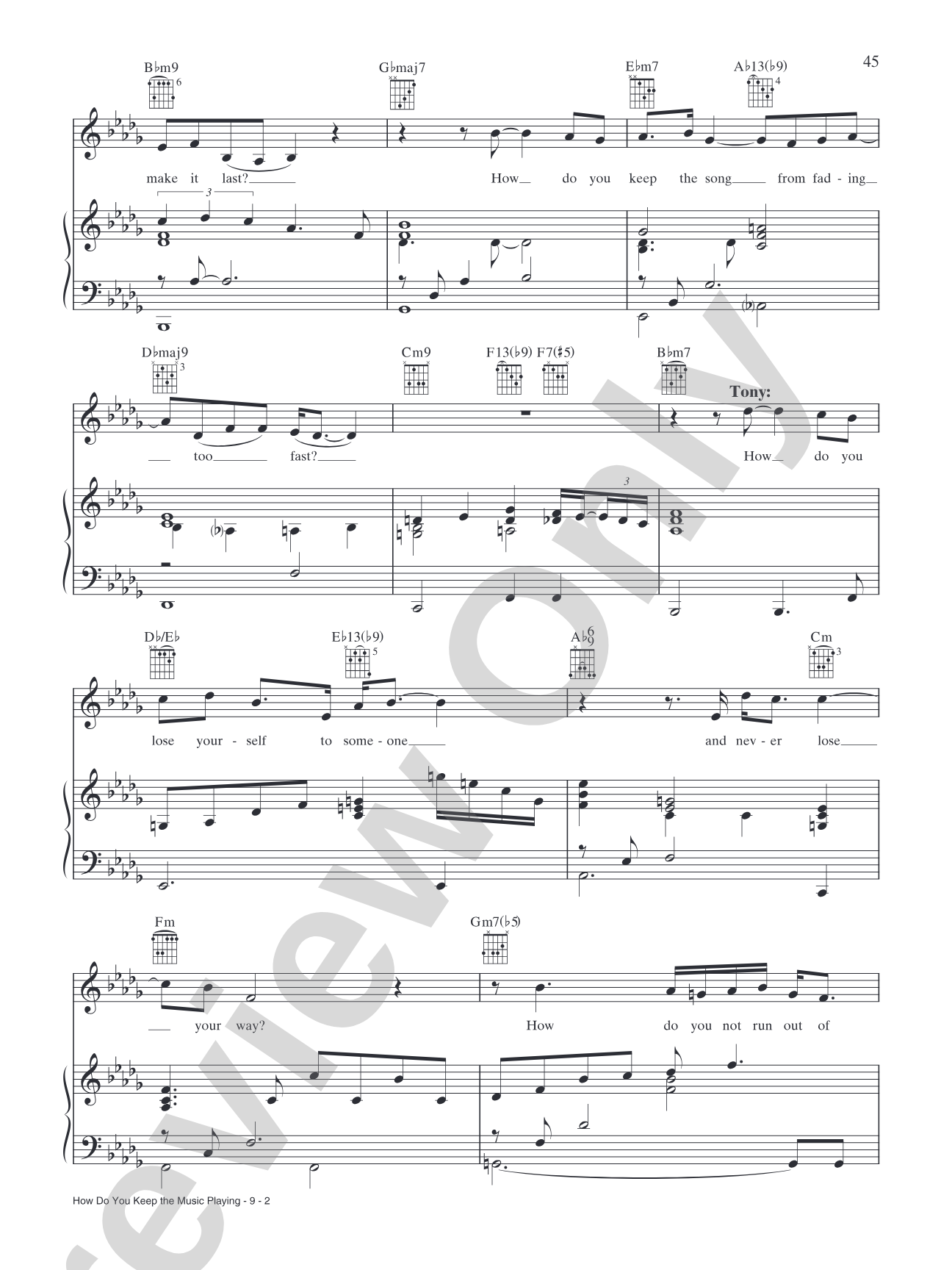

How Do You Keep the Music Playing: Piano/Vocal/Chords
Tony Bennett
Item: 00-XS-0000490
$5.99
Pickup currently not available
Description
This songbook contains sheet music arrangements of every song on Tony Bennett's 2011 album of vocal collaborations with pop music stars like Lady Gaga, Michael Buble, and 15 others. The piano/vocal arrangements match the album's renditions of 17 Great American Songbook standards as interpreted by Bennett and his fellow celebrities, including the famous "Body and Soul" duet recorded with Amy Winehouse just months prior to her passing. Titles: * The Lady Is a Tramp * One for My Baby (And One More for the Road) * Body and Soul * Don't Get Around Much Anymore * Blue Velvet * How Do You Keep the Music Playing? * The Girl I Love * On the Sunny Side of the Street * Who Can I Turn To (When Nobody Needs Me) * Speak Low * This Is All I Ask * Watch What Happens * Stranger in Paradise * The Way You Look Tonight * Yesterday I Heard the Rain * It Had to Be You * When Do The Bells Ring for Me.


Discover MakeMusic Cloud: thousands of interactive titles your students can play along with today.
Sample Audio
No sample audio found.
Sample Video
No sample videos found.
Additional Details
Publisher:
Alfred Music
Page Count:
116
SKU:
00-XS-0000490
More about this title
About the Composer: Michel Legrand
Michel Legrand (1932-2019) composed some of the most enduring standards of the late 20th century, with a gift for melody that placed him among the great American Songbook composers despite his French origins. His work in film and theater earned him three Academy Awards and countless Grammy nominations, and his songs have become essential repertoire for jazz vocalists and pop interpreters alike.
Why we love this
This collection captures the spirit of Tony Bennett's landmark 2011 project in piano/vocal arrangements that honor both the classical elegance of the standards and the contemporary arrangements heard on the album. The pairing of Bennett with artists like Amy Winehouse, Aretha Franklin, and Michael Bublé creates interpretive variety across the book, giving pianists and singers real musical models to study and emulate.
What to expect
Sophisticated and intimate, these arrangements channel the warmth and maturity of Bennett's voice while honoring the harmonic language of the Great American Songbook. There is an elegance here, combined with genuine emotional directness; these are songs about love, longing, and life lived with style, performed by artists who understand exactly how to convey that timeless sensibility.
Who it's for
Pianists and vocalists performing jazz standards, cabaret, or pop-influenced interpretations of the American Songbook will find these arrangements invaluable. Voice teachers preparing students for recitals or competitions centered on American standards, as well as jazz ensembles exploring the intersection of traditional and contemporary vocal music, will benefit from the bridge these arrangements provide.
How to get the most out of it
- Study the album versions of these arrangements before rehearsing; Bennett's phrasing and the collaborators' interpretations are integral to understanding how these piano parts support the vocal line.
- Pay attention to the harmonic sophistication in the chord symbols, particularly in Legrand's compositions like 'How Do You Keep the Music Playing?' and 'Watch What Happens,' where jazz voicings demand careful comping choices.
- Balance the vocal melody with the piano accompaniment by listening for the breathy, conversational quality that defines Bennett's singing; the piano should support rather than overshadow.
- Approach the rhythm section with flexibility in tempo and rubato, especially in the ballads, allowing space for the singer to breathe and interpret the lyric naturally.
How to use it
Feature selections from this collection in a jazz standards recital, pairing them with other contemporary interpretations of classic songs to show how different artists approach the same material. These arrangements also work beautifully in a concert celebrating the legacy of the American Songbook, especially if you want to showcase how traditional standards continue to resonate with modern audiences.
Skills your students will build
- Comping jazz voicings and chord substitutions from written symbols
- Balancing accompaniment texture with vocal phrasing and breath control
- Interpreting rubato and flexible tempo in ballad accompaniment
- Understanding the harmonic language of mid-20th century popular song composition
- Performing standards with conversational intimacy and emotional authenticity