
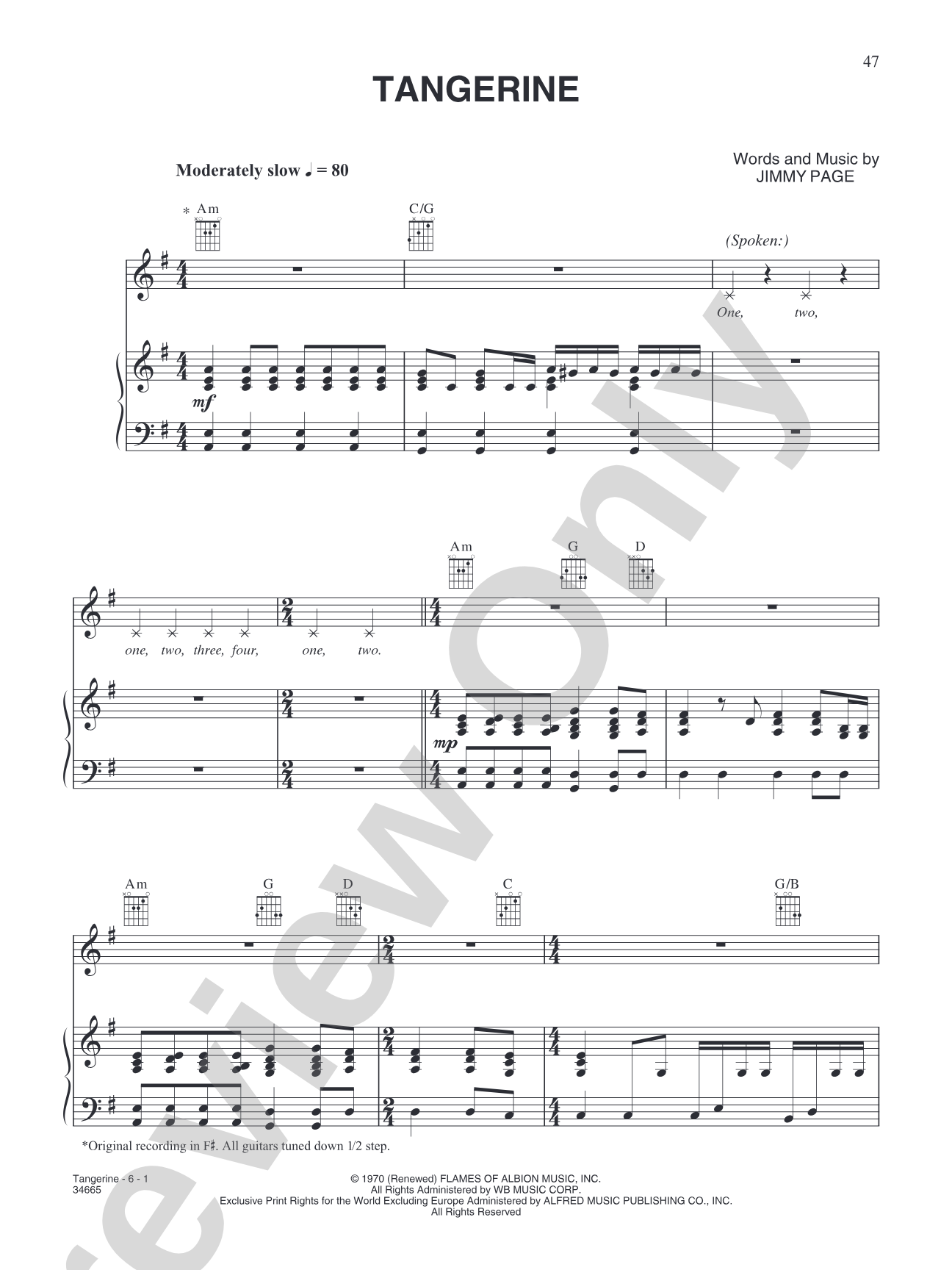
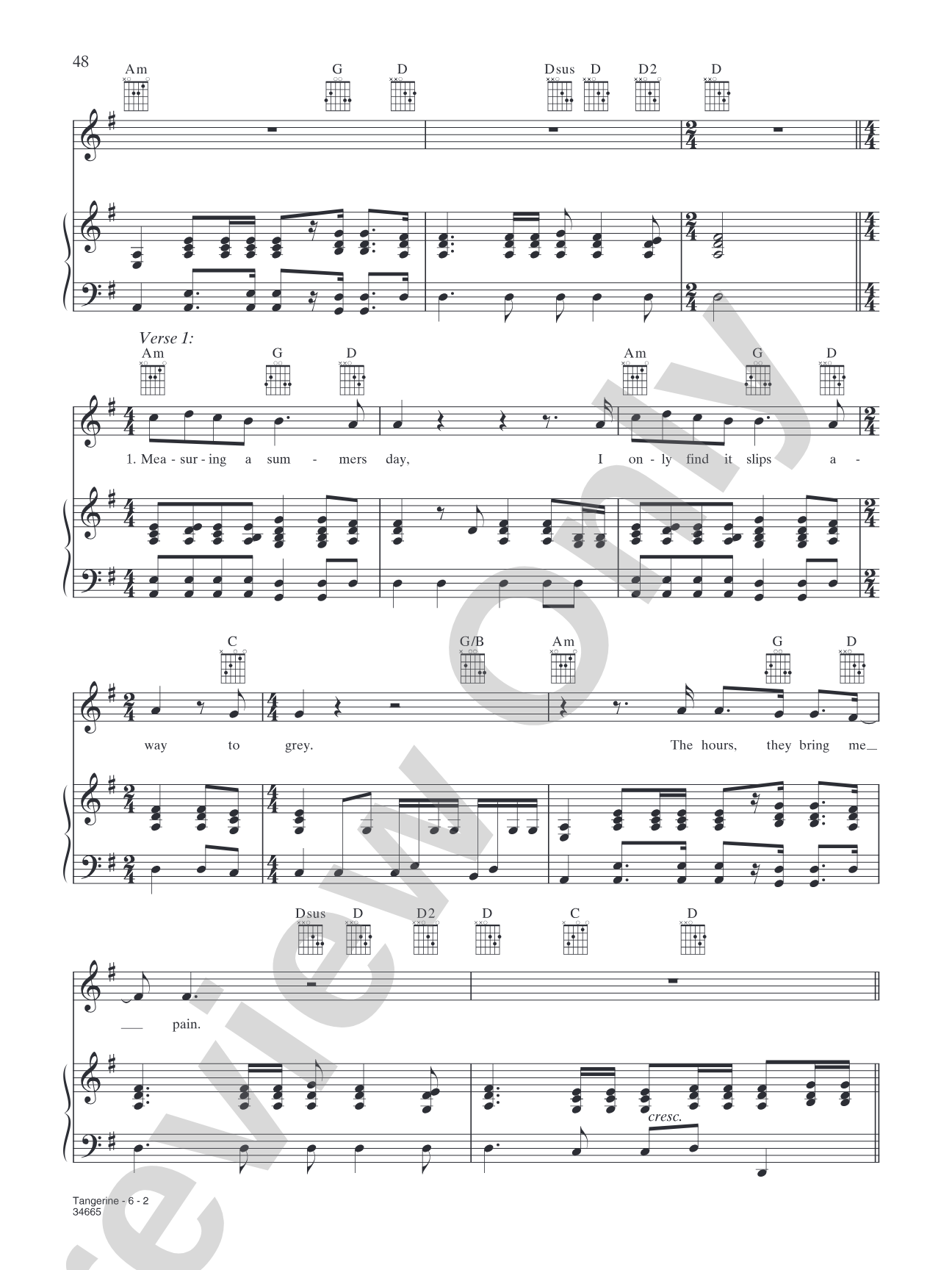

Tangerine: Piano/Vocal/Chords
Led Zeppelin
Item: 00-XS-0000055
$5.99
Pickup currently not available
Related Items
Immigrant Song: Authentic Guitar TAB |
$5.99
|
View | |
Since I've been loving you: Authentic Guitar TAB |
$9.99
|
View | |
Bron-Y-Aur Stomp: Authentic Guitar TAB |
$9.99
|
View | |
Celebration Day: Authentic Guitar TAB |
$5.99
|
View | |
Friends: Authentic Guitar TAB |
$5.99
|
View | |
Gallows Pole: Authentic Guitar TAB |
$9.99
|
View | |
Hats Off to (Roy) Harper: Authentic Guitar TAB |
$9.99
|
View | |
Out on the Tiles: Authentic Guitar TAB |
$4.99
|
View | |
Tangerine: Authentic Guitar TAB |
$5.99
|
View | |
That's the Way: Authentic Guitar TAB |
$9.99
|
View | |
Bron-Y-Aur Stomp: Piano/Vocal/Chords |
$5.99
|
View | |
Celebration Day: Piano/Vocal/Chords |
$5.99
|
View | |
Gallows Pole: Piano/Vocal/Chords |
$9.99
|
View | |
Hats Off to Roy Harper: Piano/Vocal/Chords |
$9.99
|
View | |
Immigrant Song: Piano/Vocal/Chords |
$4.99
|
View | |
Out On the Tiles: Piano/Vocal/Chords |
$4.99
|
View | |
Since I've Been Loving You: Piano/Vocal/Chords |
$5.99
|
View | |
Led Zeppelin: III Platinum Album Edition: Authentic Guitar TAB Book |
$24.99
|
View | |
Led Zeppelin: III Platinum Album Edition: Drum Transcriptions Book |
$19.99
|
View | |
Led Zeppelin: III Platinum Album Edition: Piano/Vocal/Chords Book |
$19.99
|
View | |
Led Zeppelin: III Platinum Album Edition: Authentic Bass TAB Book |
$16.99
|
View |
Description
Matching songbook to Led Zeppelin's third album, featuring detailed piano/vocal/guitar arrangements that capture all the nuances. Included are the intricate bass lines and organ parts played by John Paul Jones, along with keyboard renditions of the essential guitar parts. Guitar World magazine editor Brad Tolinski provides an insightful historical foreword, and Robert Plant has officially certified the accuracy of the lyrics. Titles: Immigrant Song * Friends * Celebration Day * Since I've Been Loving You * Out on the Tiles * Gallows Pole * Tangerine * That's the Way * Bron-Y-Aur Stomp * Hats Off to (Roy) Harper.


Tangerine: Piano/Vocal/Chords isn't in MakeMusic Cloud just yet...but it could be. Let us know you'd like to see it, and you'll help shape what comes next. In the meantime, start a free trial and dive into thousands of interactive titles your students can play along with today.
Request This Title
Tell us you want it.
Start Your Free Trial
Explore everything that's ready to play right now.
Sample Audio
No sample audio found.
Sample Video
No sample videos found.
Additional Details
Series:
Alfred's Platinum Album Editions
Publisher:
Alfred Music
Page Count:
76
SKU:
00-XS-0000055
More about this title
About the Composer: Jimmy Page
Jimmy Page is a guitarist and composer whose work with Led Zeppelin fundamentally reshaped rock music in the 1970s. His approach to composition blended blues foundations with world music influences, Eastern modal playing, and studio experimentation, establishing a template that countless rock musicians continue to follow.
Why we love this
This edition captures Led Zeppelin III in its complete arrangement form, translating Page's intricate guitar work and John Paul Jones's layered keyboard and bass textures into a format accessible to pianists and singers. The inclusion of organ parts, detailed bass lines, and an official lyric certification from Robert Plant ensures authenticity that resonates with students serious about understanding classic rock composition and arrangement.
What to expect
These ten tracks pulse with the mythic heaviness and acoustic intimacy that defined Led Zeppelin III, where mandolin dances alongside electric riff and folk melody meets blues snarl. Playing from these arrangements places you inside the band's compositional thinking—the layers, the restraint, the explosive releases—rather than watching from the audience.
Who it's for
Pianists and vocalists working through classic rock repertoire at an intermediate level, as well as arrangers and composers studying how blues-based songwriting translates across instrumental voices. Music students and educators exploring the relationship between guitar-driven rock composition and keyboard adaptation will find the John Paul Jones parts especially instructive.
How to get the most out of it
- Study the organ and keyboard parts separately before combining them with vocal lines; these are not background elements but essential textural voices that define each song's character.
- Pay attention to dynamic shaping across the full 76 pages; rock arrangements thrive on contrast between verse restraint and chorus intensity, and these scores indicate those shifts clearly.
- Balance the bass line voicings in your left hand as you would a bass instrument; these lines carry harmonic and rhythmic weight that can't be buried under piano flourish.
- Use the guitar chord symbols to understand harmonic movement even as you render Page's riffs through keyboard; this dual awareness deepens your grasp of the arrangement choices.
How to use it
Program individual songs from this collection in a rock history concert alongside original recordings, allowing singers and pianists to perform their own interpretations of canonical tracks. The 76-page format also supports a deep-dive study session or masterclass exploring how classic rock songs are reconstructed for different instrumental contexts and performance settings.
Skills your students will build
- Reading and balancing multiple independent lines (vocal melody, piano voicing, bass line, organ part) simultaneously
- Understanding blues harmonic progressions in rock contexts
- Interpreting guitar-originated riffs as keyboard and vocal material
- Sight-reading chord symbols in conjunction with notated parts
- Managing dynamic and textural changes across extended song forms