
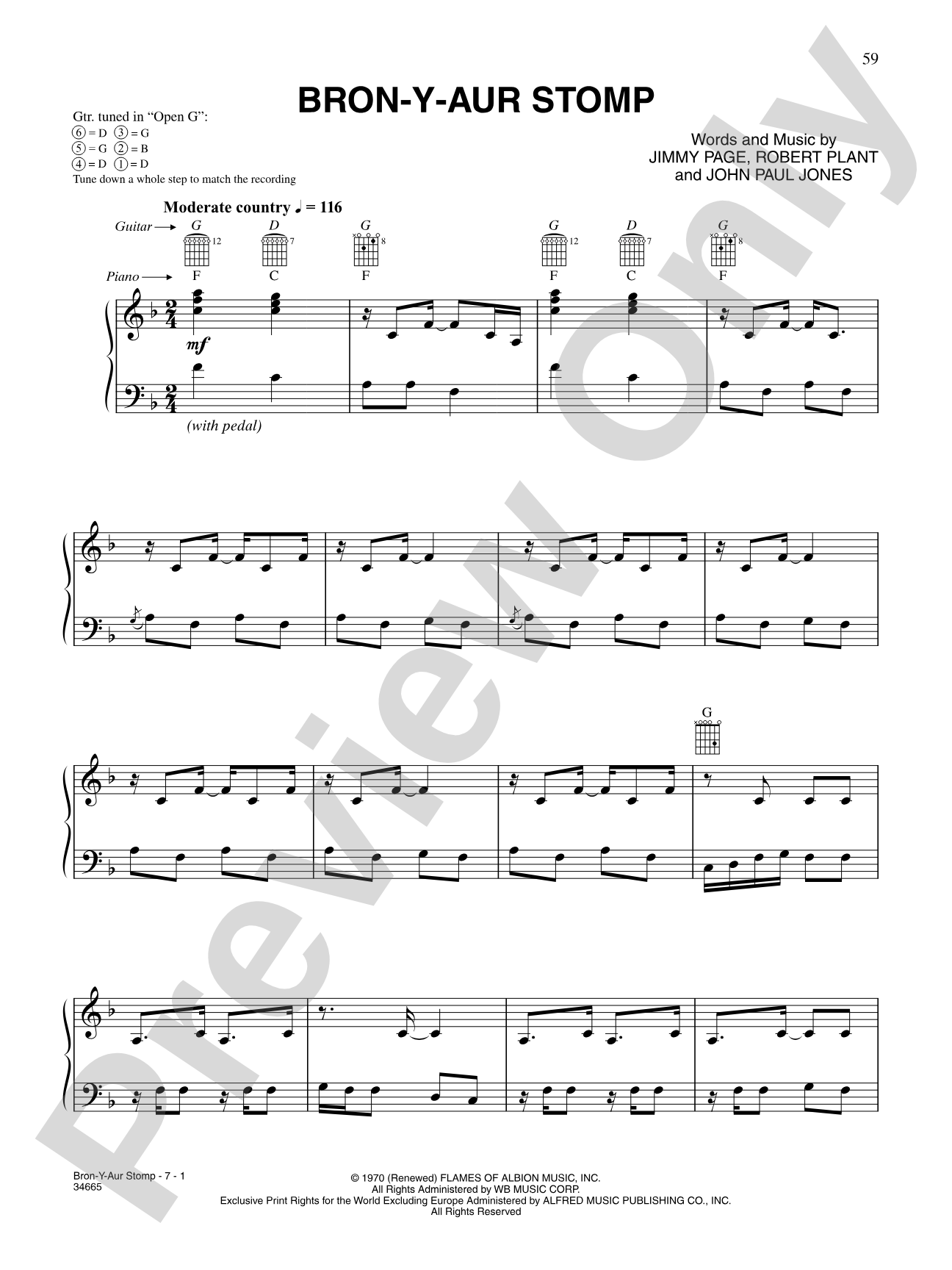
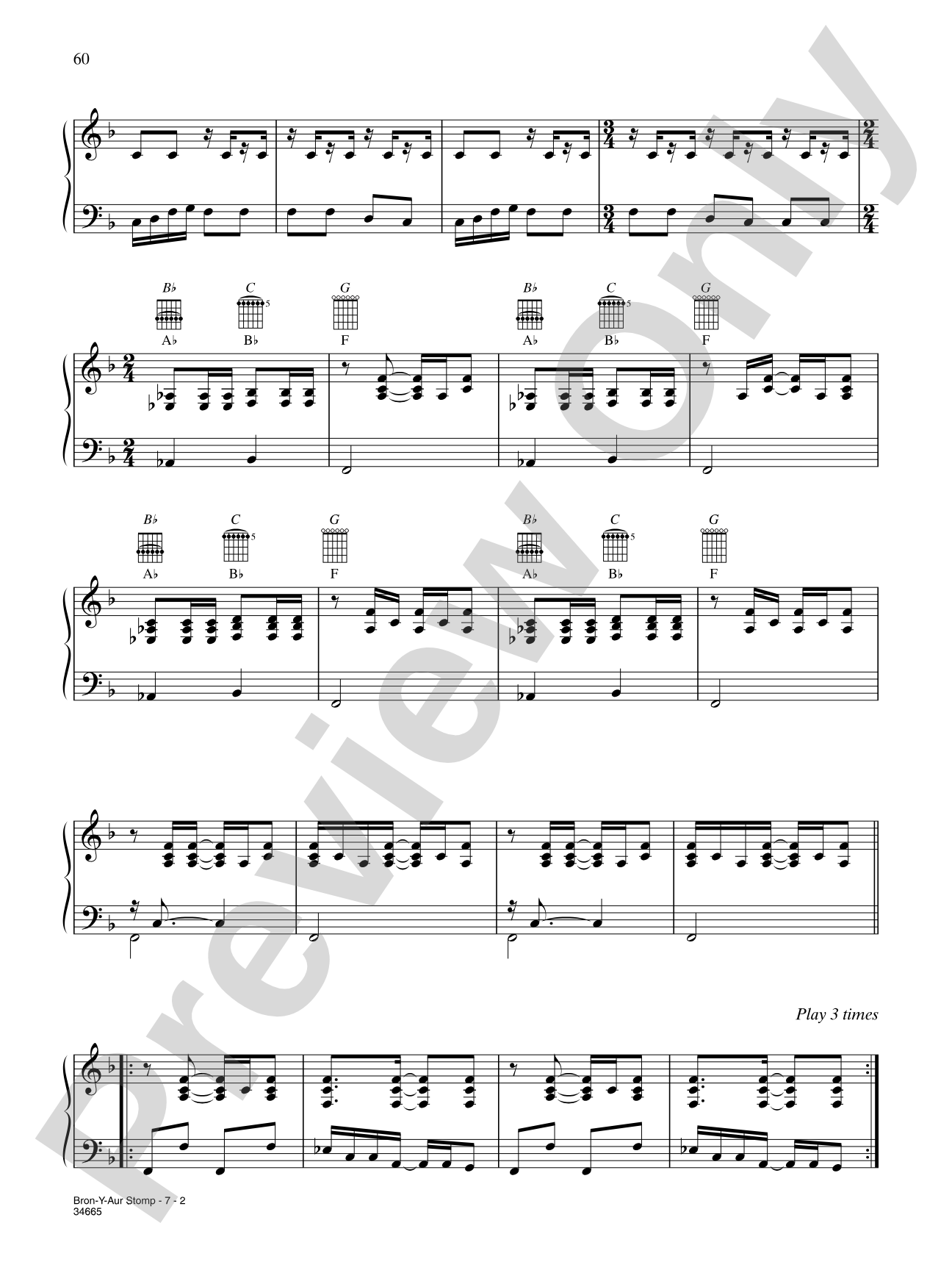

Bron-Y-Aur Stomp: Piano/Vocal/Chords
Led Zeppelin
Item: 00-XS-0000046
$5.99
Pickup currently not available
Related Items
Immigrant Song: Authentic Guitar TAB |
$5.99
|
View | |
Since I've been loving you: Authentic Guitar TAB |
$9.99
|
View | |
Bron-Y-Aur Stomp: Authentic Guitar TAB |
$9.99
|
View | |
Celebration Day: Authentic Guitar TAB |
$5.99
|
View | |
Friends: Authentic Guitar TAB |
$5.99
|
View | |
Gallows Pole: Authentic Guitar TAB |
$9.99
|
View | |
Hats Off to (Roy) Harper: Authentic Guitar TAB |
$9.99
|
View | |
Out on the Tiles: Authentic Guitar TAB |
$4.99
|
View | |
Tangerine: Authentic Guitar TAB |
$5.99
|
View | |
That's the Way: Authentic Guitar TAB |
$9.99
|
View | |
Celebration Day: Piano/Vocal/Chords |
$5.99
|
View | |
Gallows Pole: Piano/Vocal/Chords |
$9.99
|
View | |
Hats Off to Roy Harper: Piano/Vocal/Chords |
$9.99
|
View | |
Immigrant Song: Piano/Vocal/Chords |
$4.99
|
View | |
Out On the Tiles: Piano/Vocal/Chords |
$4.99
|
View | |
Since I've Been Loving You: Piano/Vocal/Chords |
$5.99
|
View | |
Tangerine: Piano/Vocal/Chords |
$5.99
|
View | |
Led Zeppelin: III Platinum Album Edition: Authentic Guitar TAB Book |
$24.99
|
View | |
Led Zeppelin: III Platinum Album Edition: Drum Transcriptions Book |
$19.99
|
View | |
Led Zeppelin: III Platinum Album Edition: Piano/Vocal/Chords Book |
$19.99
|
View | |
Led Zeppelin: III Platinum Album Edition: Authentic Bass TAB Book |
$16.99
|
View |
Description
Matching songbook to Led Zeppelin's third album, featuring detailed piano/vocal/guitar arrangements that capture all the nuances. Included are the intricate bass lines and organ parts played by John Paul Jones, along with keyboard renditions of the essential guitar parts. Guitar World magazine editor Brad Tolinski provides an insightful historical foreword, and Robert Plant has officially certified the accuracy of the lyrics. Titles: Immigrant Song * Friends * Celebration Day * Since I've Been Loving You * Out on the Tiles * Gallows Pole * Tangerine * That's the Way * Bron-Y-Aur Stomp * Hats Off to (Roy) Harper.


Discover MakeMusic Cloud: thousands of interactive titles your students can play along with today.
Sample Audio
No sample audio found.
Sample Video
No sample videos found.
Additional Details
Series:
Alfred's Platinum Album Editions
Publisher:
Alfred Music
Page Count:
76
SKU:
00-XS-0000046
More about this title
About the Composer: Jimmy Page
Jimmy Page transformed rock music through his work as a session guitarist, producer, and bandleader. His approach to composition merged blues fundamentals with experimental production techniques, Eastern musical influences, and layered arrangement concepts that redefined what a rock band could achieve in the studio.
Why we love this
This songbook captures Led Zeppelin III at a moment when the band was expanding beyond heavy blues into folk, acoustic, and orchestral territory. The piano/vocal/chords format lets pianists and singers explore these songs from an entirely different angle than guitar-driven arrangements, revealing harmonic and melodic structures that are easy to overlook in the original recordings. Robert Plant's lyrical certification and John Paul Jones's keyboard parts ensure the arrangements honor the band's original vision.
What to expect
These arrangements sit at the intersection of raw rock energy and deliberate compositional craft. Acoustic textures coexist with moments of orchestral lushness; folk simplicity brushes against heavy, hypnotic grooves. The piano and vocal lines bring intimacy to songs that often feel monumental in their original form.
Who it's for
Pianists and vocalists who want to perform Led Zeppelin's Third Album material in a format suited to keyboard and voice collaboration. This works equally well for solo pianists exploring rock repertoire, singer-pianists building contemporary repertoire, and music students interested in how iconic rock songs function when transposed from their original instrumentation.
How to get the most out of it
- Study the organ parts notated alongside the piano line; they define the harmonic color in several tracks and shouldn't be treated as optional fills.
- Pay attention to the bass line notation; John Paul Jones's playing is melodically inventive and often carries the song's emotional weight in ways that aren't obvious from the vocal melody alone.
- Balance the vocal line against the piano arrangement rather than treating them as separate elements; the interplay between voice and accompaniment shifts throughout each song and rewards careful listening.
- Use the guitar part notation as a rhythmic and harmonic reference point, especially in songs where the acoustic or electric guitar defines the groove.
How to use it
Introduce this material in a contemporary music unit that explores how classic rock compositions hold up outside their original arrangement context. Individual songs work as recital pieces for pianists and singers seeking substantial material that audiences recognize but few performers attempt. For music theory or arrangement courses, these transcriptions demonstrate how rhythm section and keyboard voicing choices communicate the same musical ideas as a multi-guitar texture.
Skills your students will build
- Reading complex chord voicings and translating guitar notation to keyboard voice leading
- Accompanying singers with stylistically appropriate left-hand patterns that honor rock grooves while maintaining pianistic clarity
- Balancing melody, harmony, and bass line interdependence across keyboard and vocal lines
- Interpreting dynamic and textural variation between verse, chorus, and bridge sections in extended rock compositions
- Integrating organ registration and keyboard effects into a piano-based performance framework