
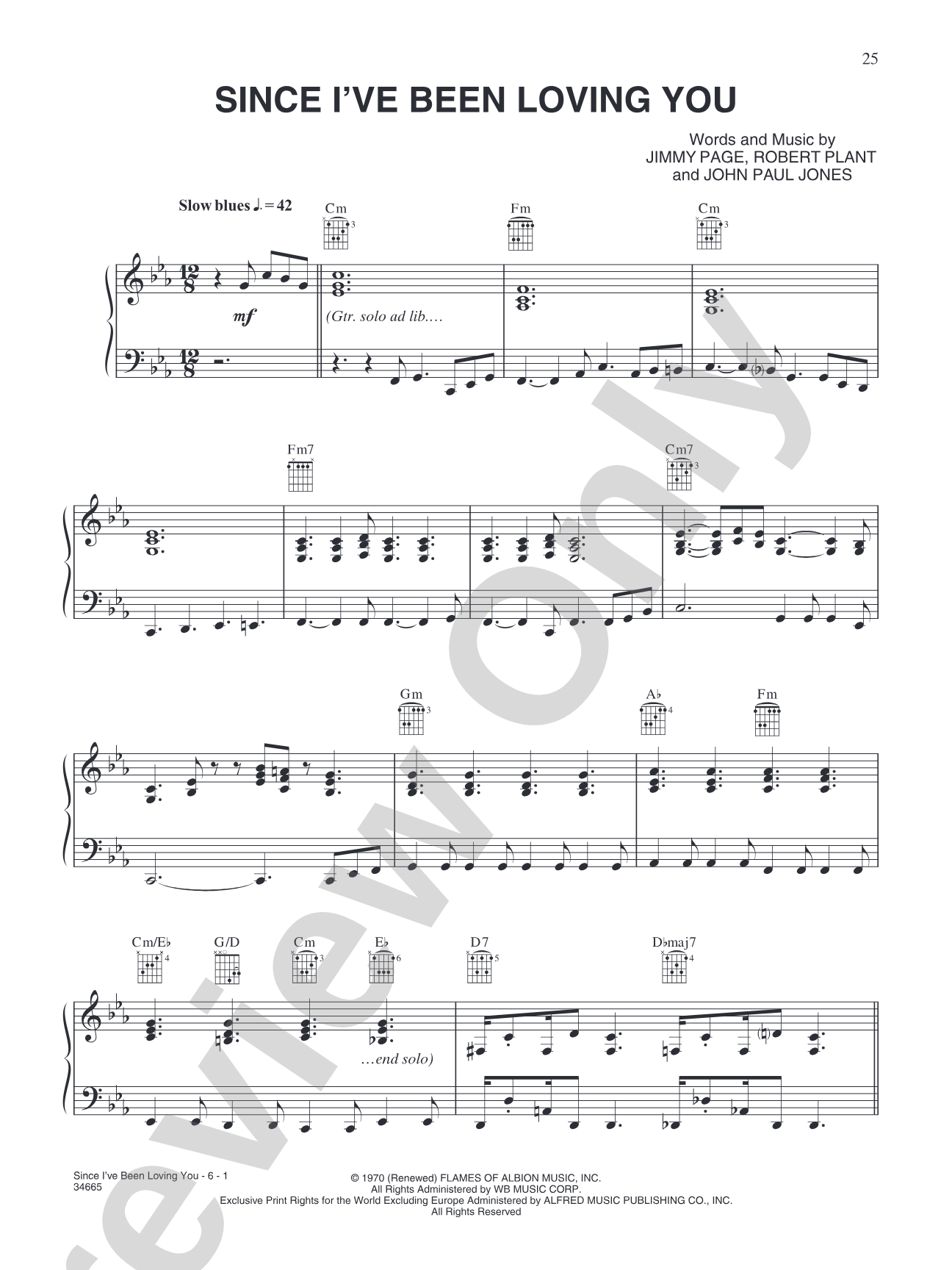
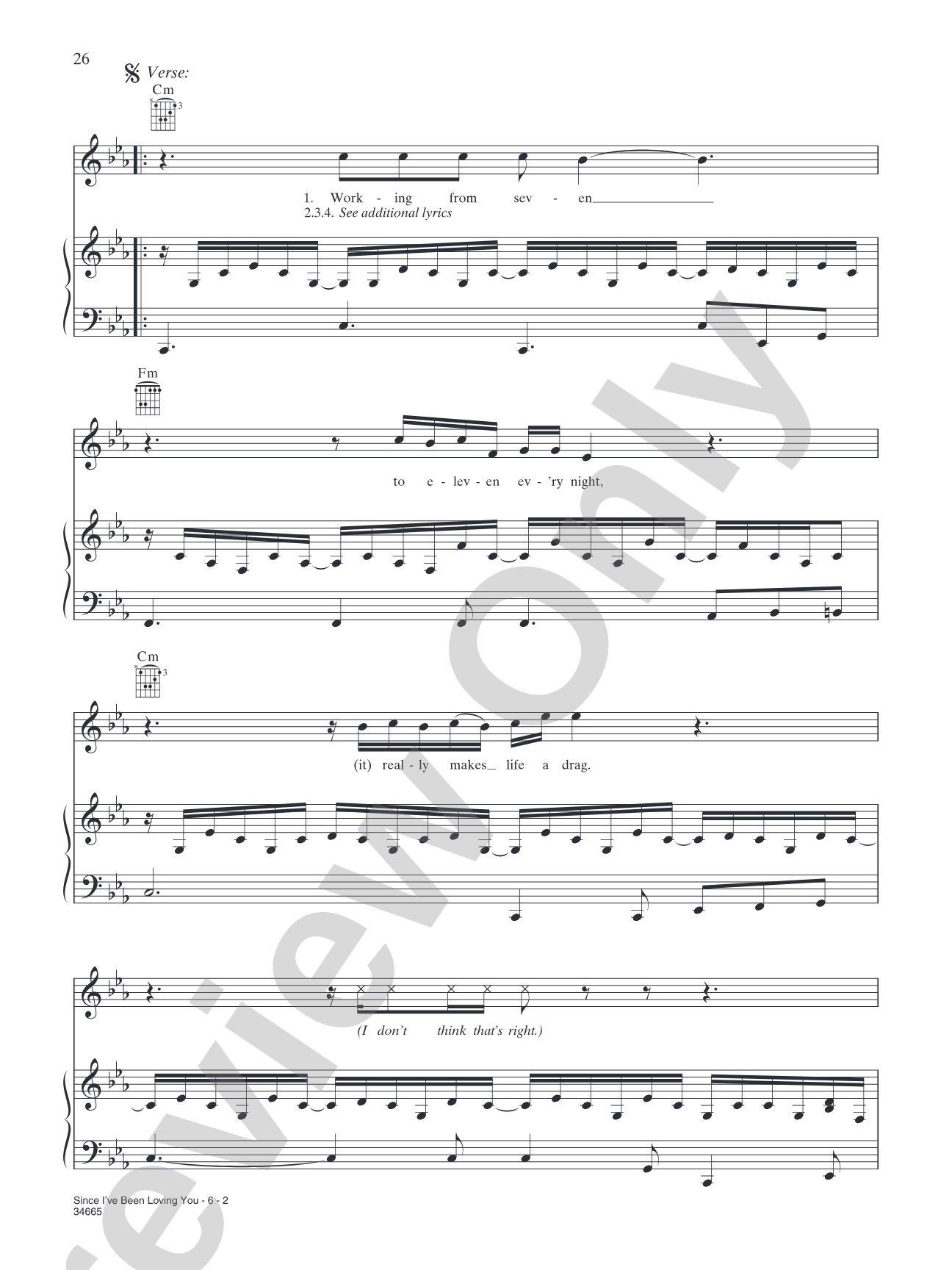

Since I've Been Loving You: Piano/Vocal/Chords
Led Zeppelin
Item: 00-XS-0000054
$5.99
Pickup currently not available
Related Items
Immigrant Song: Authentic Guitar TAB |
$5.99
|
View | |
Since I've been loving you: Authentic Guitar TAB |
$9.99
|
View | |
Bron-Y-Aur Stomp: Authentic Guitar TAB |
$9.99
|
View | |
Celebration Day: Authentic Guitar TAB |
$5.99
|
View | |
Friends: Authentic Guitar TAB |
$5.99
|
View | |
Gallows Pole: Authentic Guitar TAB |
$9.99
|
View | |
Hats Off to (Roy) Harper: Authentic Guitar TAB |
$9.99
|
View | |
Out on the Tiles: Authentic Guitar TAB |
$4.99
|
View | |
Tangerine: Authentic Guitar TAB |
$5.99
|
View | |
That's the Way: Authentic Guitar TAB |
$9.99
|
View | |
Bron-Y-Aur Stomp: Piano/Vocal/Chords |
$5.99
|
View | |
Celebration Day: Piano/Vocal/Chords |
$5.99
|
View | |
Gallows Pole: Piano/Vocal/Chords |
$9.99
|
View | |
Hats Off to Roy Harper: Piano/Vocal/Chords |
$9.99
|
View | |
Immigrant Song: Piano/Vocal/Chords |
$4.99
|
View | |
Out On the Tiles: Piano/Vocal/Chords |
$4.99
|
View | |
Tangerine: Piano/Vocal/Chords |
$5.99
|
View | |
Led Zeppelin: III Platinum Album Edition: Authentic Guitar TAB Book |
$24.99
|
View | |
Led Zeppelin: III Platinum Album Edition: Drum Transcriptions Book |
$19.99
|
View | |
Led Zeppelin: III Platinum Album Edition: Piano/Vocal/Chords Book |
$19.99
|
View | |
Led Zeppelin: III Platinum Album Edition: Authentic Bass TAB Book |
$16.99
|
View |
Description
Matching songbook to Led Zeppelin's third album, featuring detailed piano/vocal/guitar arrangements that capture all the nuances. Included are the intricate bass lines and organ parts played by John Paul Jones, along with keyboard renditions of the essential guitar parts. Guitar World magazine editor Brad Tolinski provides an insightful historical foreword, and Robert Plant has officially certified the accuracy of the lyrics. Titles: Immigrant Song * Friends * Celebration Day * Since I've Been Loving You * Out on the Tiles * Gallows Pole * Tangerine * That's the Way * Bron-Y-Aur Stomp * Hats Off to (Roy) Harper.


Since I've Been Loving You: Piano/Vocal/Chords isn't in MakeMusic Cloud just yet...but it could be. Let us know you'd like to see it, and you'll help shape what comes next. In the meantime, start a free trial and dive into thousands of interactive titles your students can play along with today.
Request This Title
Tell us you want it.
Start Your Free Trial
Explore everything that's ready to play right now.
Sample Audio
No sample audio found.
Sample Video
No sample videos found.
Additional Details
Series:
Alfred's Platinum Album Editions
Publisher:
Alfred Music
Page Count:
76
SKU:
00-XS-0000054
More about this title
About the Composer: Jimmy Page
Jimmy Page stands as one of rock's most innovative and technically accomplished guitarists. His work with Led Zeppelin from 1968 onward fundamentally shaped modern rock music through his mastery of blues vocabulary, studio production, and arrangement—skills that shine throughout Led Zeppelin III, where his compositions balance acoustic fingerpicking with heavy, layered arrangements.
Page's approach to songwriting emphasizes texture and dynamics rather than conventional song structures, a quality that makes his work particularly rewarding for musicians learning to hear and execute complex instrumental voicings. His influence extends across decades of popular music education and performance.
Why we love this
This songbook captures the full orchestration of one of rock's most sonically intricate albums in a format that works at the piano. The inclusion of John Paul Jones's bass lines and organ parts alongside keyboard renditions of Page's guitar work means singers and pianists aren't simplifying the arrangements; they're experiencing the actual compositional architecture. Robert Plant's lyrical certification and Brad Tolinski's historical context deepen the educational value for musicians interested in understanding how this album was constructed.
What to expect
Moody, complex, and grounded in acoustic blues while maintaining moments of explosive intensity. The arrangements reveal why this album marked a turning point for the band: there's restraint and space alongside dramatic dynamics, with each song inhabiting its own sonic world. Playing from these pages means engaging with layered voicings that feel fuller and more intentional than typical rock songbooks.
Who it's for
Pianists and vocalists who want to learn Led Zeppelin III as written rather than as simplified transcriptions, and musicians studying how rock arrangers build texture through layered instruments. This book works for intermediate and advanced students, tribute musicians, and anyone exploring the intersection of blues-based songwriting and studio orchestration.
How to get the most out of it
- Study the organ parts notated for keyboard; they provide harmonic grounding and reveal how much of the album's texture comes from layering rather than lead guitar alone.
- Pay attention to the bass line notation, particularly in 'Gallows Pole' and 'Immigrant Song,' to understand the rhythmic foundation beneath the vocal melody.
- Experiment with dynamic control in the acoustic pieces like 'Tangerine' and 'That's the Way'—the written arrangement accounts for the album's contrast between intimacy and power.
- Use the chord symbols to explore reharmonization on second or third verses, noting where the original recordings shift accompaniment patterns.
How to use it
Program a song or two in a rock history unit or a concert exploring the evolution of blues in popular music. These arrangements work well for musicians preparing a cover set, studying arrangement techniques across a semester, or developing interpretive choices informed by seeing the actual piano and keyboard parts the band used. The acoustic pieces pair especially well with singer-songwriter repertoire.
Skills your students will build
- Reading and executing complex chord voicings with bass line awareness
- Coordinating keyboard parts with vocal melody and chord changes
- Interpreting dynamic and textural contrast across a song cycle
- Understanding how blues language translates into rock songwriting
- Managing rhythmic independence between accompaniment and vocal line in syncopated passages