
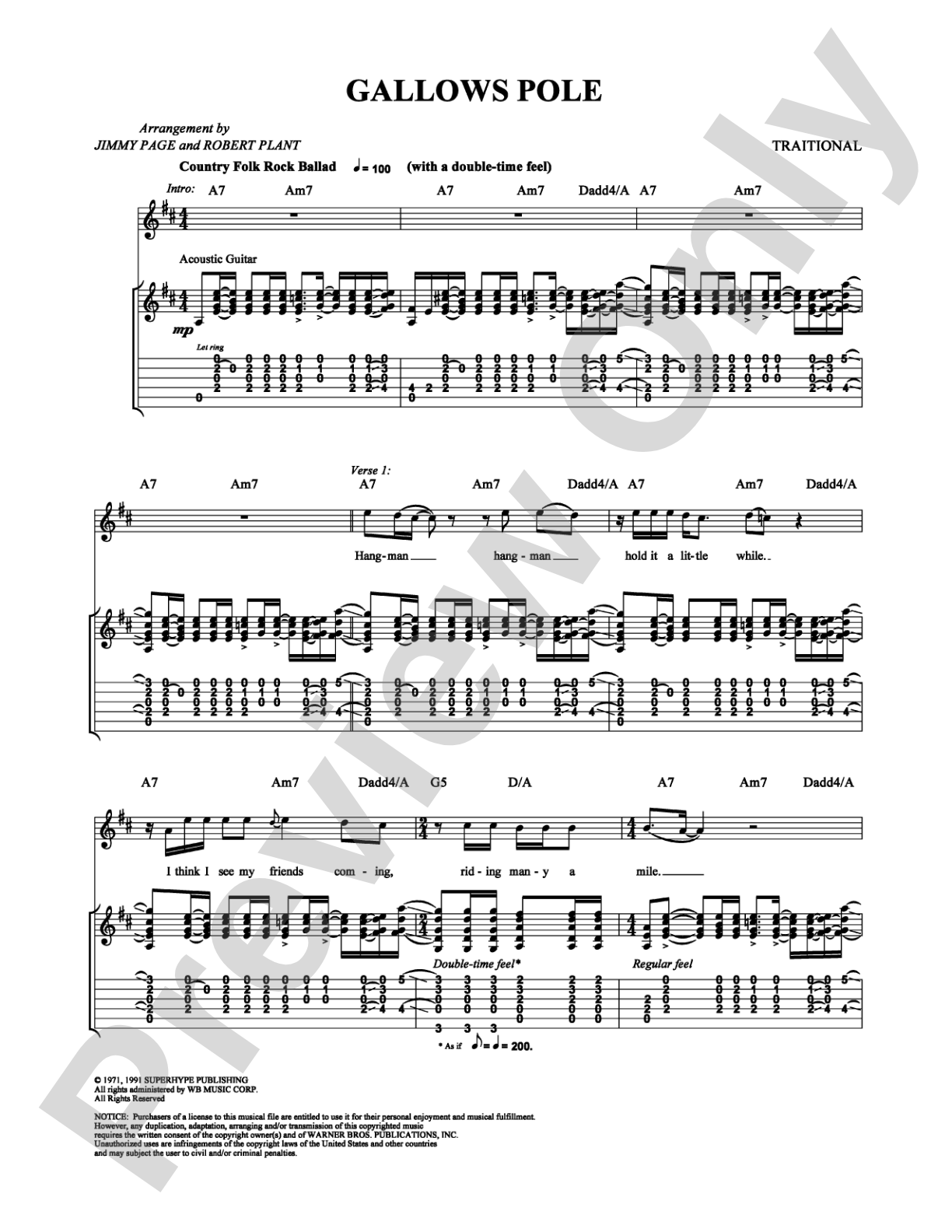
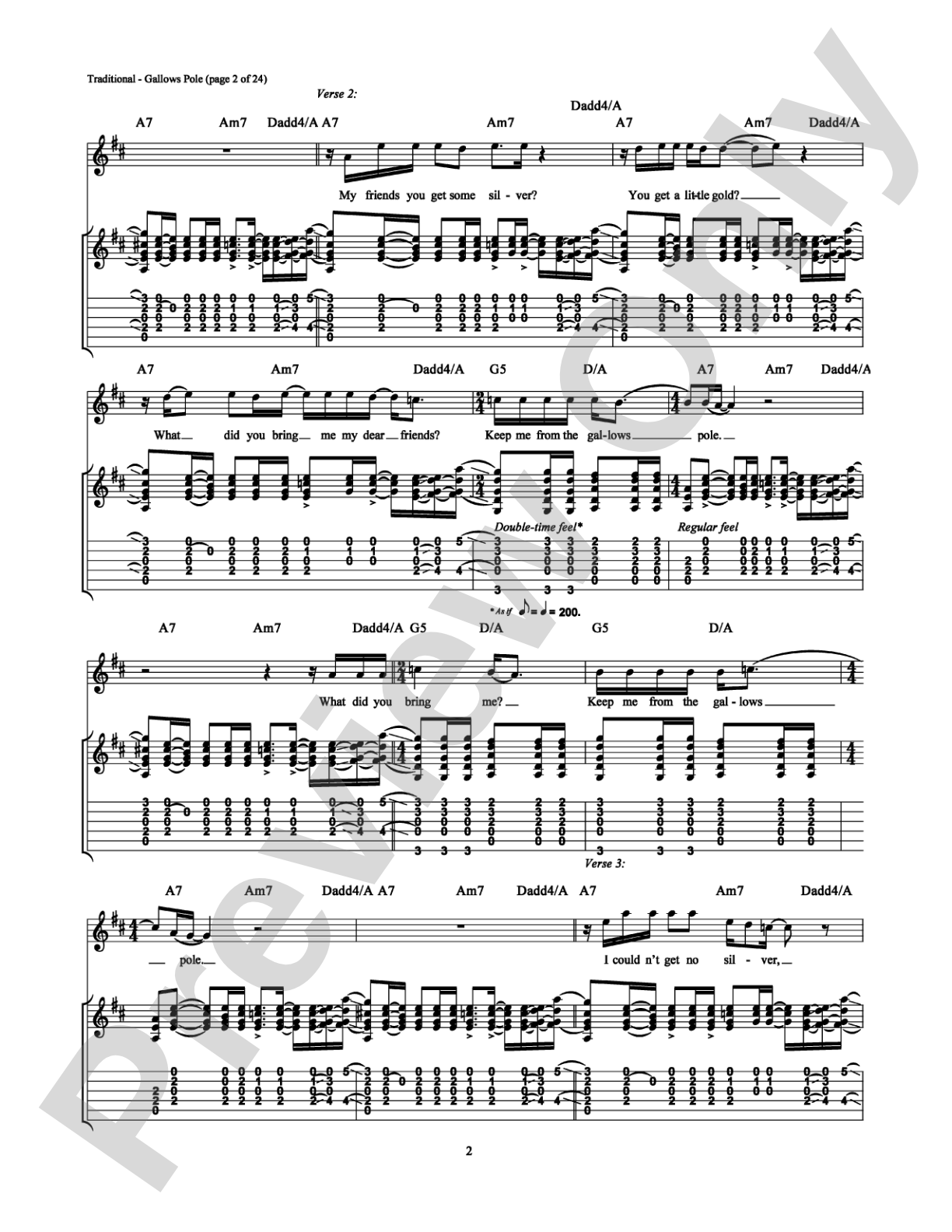
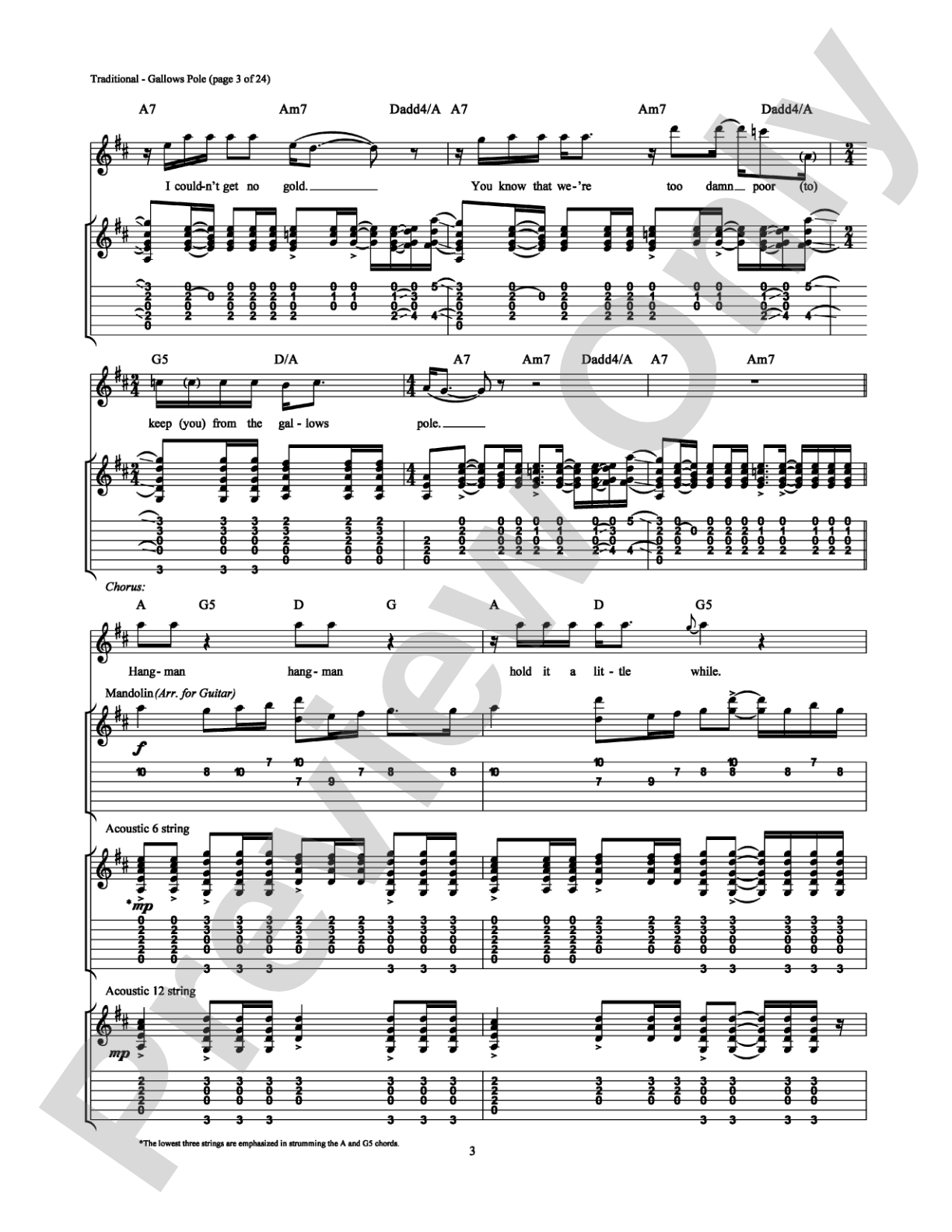
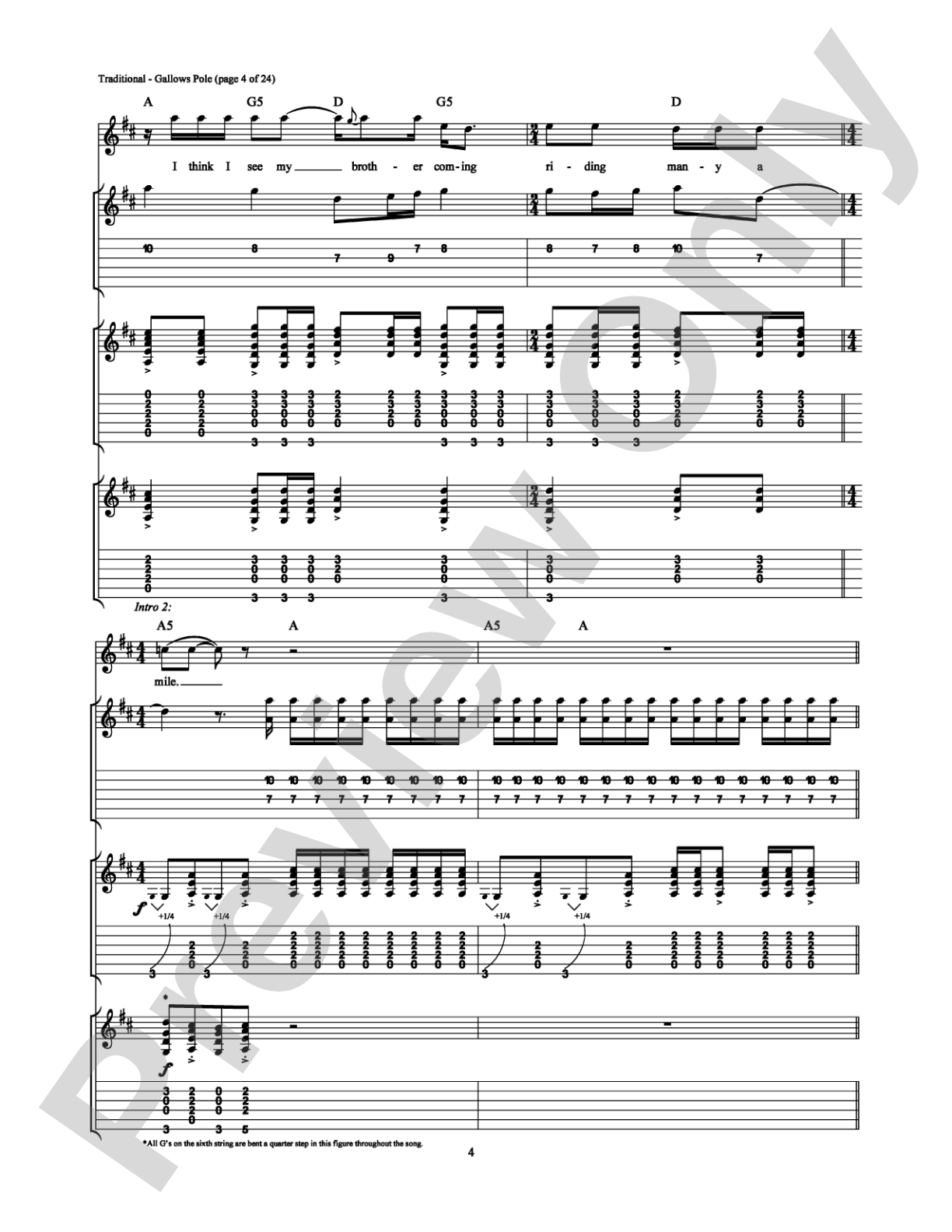

Gallows Pole: Authentic Guitar TAB
Led Zeppelin
Item: 00-PS-0000295
$9.99
Pickup currently not available
Related Items
Immigrant Song: Authentic Guitar TAB |
$5.99
|
View | |
Since I've been loving you: Authentic Guitar TAB |
$9.99
|
View | |
Bron-Y-Aur Stomp: Authentic Guitar TAB |
$9.99
|
View | |
Celebration Day: Authentic Guitar TAB |
$5.99
|
View | |
Friends: Authentic Guitar TAB |
$5.99
|
View | |
Hats Off to (Roy) Harper: Authentic Guitar TAB |
$9.99
|
View | |
Out on the Tiles: Authentic Guitar TAB |
$4.99
|
View | |
Tangerine: Authentic Guitar TAB |
$5.99
|
View | |
That's the Way: Authentic Guitar TAB |
$9.99
|
View | |
Bron-Y-Aur Stomp: Piano/Vocal/Chords |
$5.99
|
View | |
Celebration Day: Piano/Vocal/Chords |
$5.99
|
View | |
Gallows Pole: Piano/Vocal/Chords |
$9.99
|
View | |
Hats Off to Roy Harper: Piano/Vocal/Chords |
$9.99
|
View | |
Immigrant Song: Piano/Vocal/Chords |
$4.99
|
View | |
Out On the Tiles: Piano/Vocal/Chords |
$4.99
|
View | |
Since I've Been Loving You: Piano/Vocal/Chords |
$5.99
|
View | |
Tangerine: Piano/Vocal/Chords |
$5.99
|
View | |
Led Zeppelin: III Platinum Album Edition: Authentic Guitar TAB Book |
$24.99
|
View | |
Led Zeppelin: III Platinum Album Edition: Drum Transcriptions Book |
$19.99
|
View | |
Led Zeppelin: III Platinum Album Edition: Piano/Vocal/Chords Book |
$19.99
|
View | |
Led Zeppelin: III Platinum Album Edition: Authentic Bass TAB Book |
$16.99
|
View |
Description
Alfred Music, in association with Led Zeppelin, is proud to present new Platinum Album Edition songbooks for each of the band's classic studio recordings. Drawn from more than 30 years of documentation, interviews, and recorded footage, these all-new transcriptions deliver unprecedented accuracy and insight into the guitar style of Jimmy Page. With vintage Zeppelin photographs and a historical foreword by Guitar World magazine's editor-in-chief, Brad Tolinski, each volume is a true collectible every fan must own. Titles: Immigrant Song * Friends * Celebration Day * Since I've Been Loving You * Out on the Tiles * Gallows Pole * Tangerine * That's the Way * Bron-Y-Aur Stomp * Hats Off To (Roy) Harper.


Gallows Pole: Authentic Guitar TAB isn't in MakeMusic Cloud just yet...but it could be. Let us know you'd like to see it, and you'll help shape what comes next. In the meantime, start a free trial and dive into thousands of interactive titles your students can play along with today.
Request This Title
Tell us you want it.
Start Your Free Trial
Explore everything that's ready to play right now.
Sample Audio
No sample audio found.
Sample Video
No sample videos found.
Additional Details
Series:
Alfred's Platinum Album Editions
Publisher:
Alfred Music
Page Count:
108
SKU:
00-PS-0000295
More about this title
About the Artist: Led Zeppelin
Led Zeppelin redefined rock music across the 1970s through their innovative fusion of blues, folk, and Eastern influences. The band's three studio albums established a sonic template that continues to shape how guitarists and songwriters approach the instrument, blending fingerstyle technique with distorted power and layered acoustic textures. Jimmy Page's guitar work on these recordings remains a cornerstone of rock education, studied by musicians seeking to understand how traditional musical forms can be transformed into something entirely contemporary.
Why we love this
This transcription captures the nuance of Jimmy Page's fingerstyle approach and open tunings on 'Gallows Pole,' revealing the compositional architecture beneath a track that many guitarists assume is simply a folk cover. The accuracy here means students encounter the specific techniques Page employed rather than approximations or simplified versions, making it an essential resource for players serious about understanding how blues-based guitar vocabulary translates across genres.
What to expect
The piece carries the weight of its folk origins while introducing electric guitar textures that feel both organic and unsettling. Fingernail against string creates a percussive backdrop for the melody, with moments of surprising vulnerability before the arrangement shifts into something darker and more rhythmically insistent.
Who it's for
This transcription serves intermediate to advanced guitarists who want to decode Page's actual fingerings and tuning choices rather than working from ear or simplified tabs. It's equally valuable for music teachers introducing students to how folk traditions intersect with rock arranging, and for ensemble directors building guitar programs that prioritize accuracy and historical understanding.
How to get the most out of it
- Study the tuning notation carefully before beginning; 'Gallows Pole' uses open tuning, and starting with the correct pitch relationships will establish the track's distinctive resonance.
- Work through the fingerstyle patterns slowly with a metronome to lock the syncopation; the rhythm sits behind the beat in ways that require precision rather than rushing.
- Reference the recorded version periodically to internalize the dynamic arc; the studio recording demonstrates where Page emphasizes certain notes through touch and volume, not just picking direction.
- Pay attention to muting and damping notation; much of the track's percussive character comes from controlled silence as much as pitched notes.
How to use it
Feature this in a guitar recital program that traces the evolution of acoustic rock, pairing it with traditional blues or contemporary fingerstyle pieces to show how genres inform one another. It also works well as a capstone study for guitarists completing a unit on open tunings or as an independent project for students pursuing jazz or improvisation studies who need to understand how melody and rhythm integrate at an advanced level.
Skills your students will build
- Reading and executing open tunings specific to individual pieces
- Fingerstyle technique including simultaneous melody and accompaniment patterns
- Interpreting dynamic and muting cues to capture recorded tone
- Understanding how traditional folk melodies integrate with modern harmonic language
- Syncopated rhythm reading in the context of blues-influenced rock