
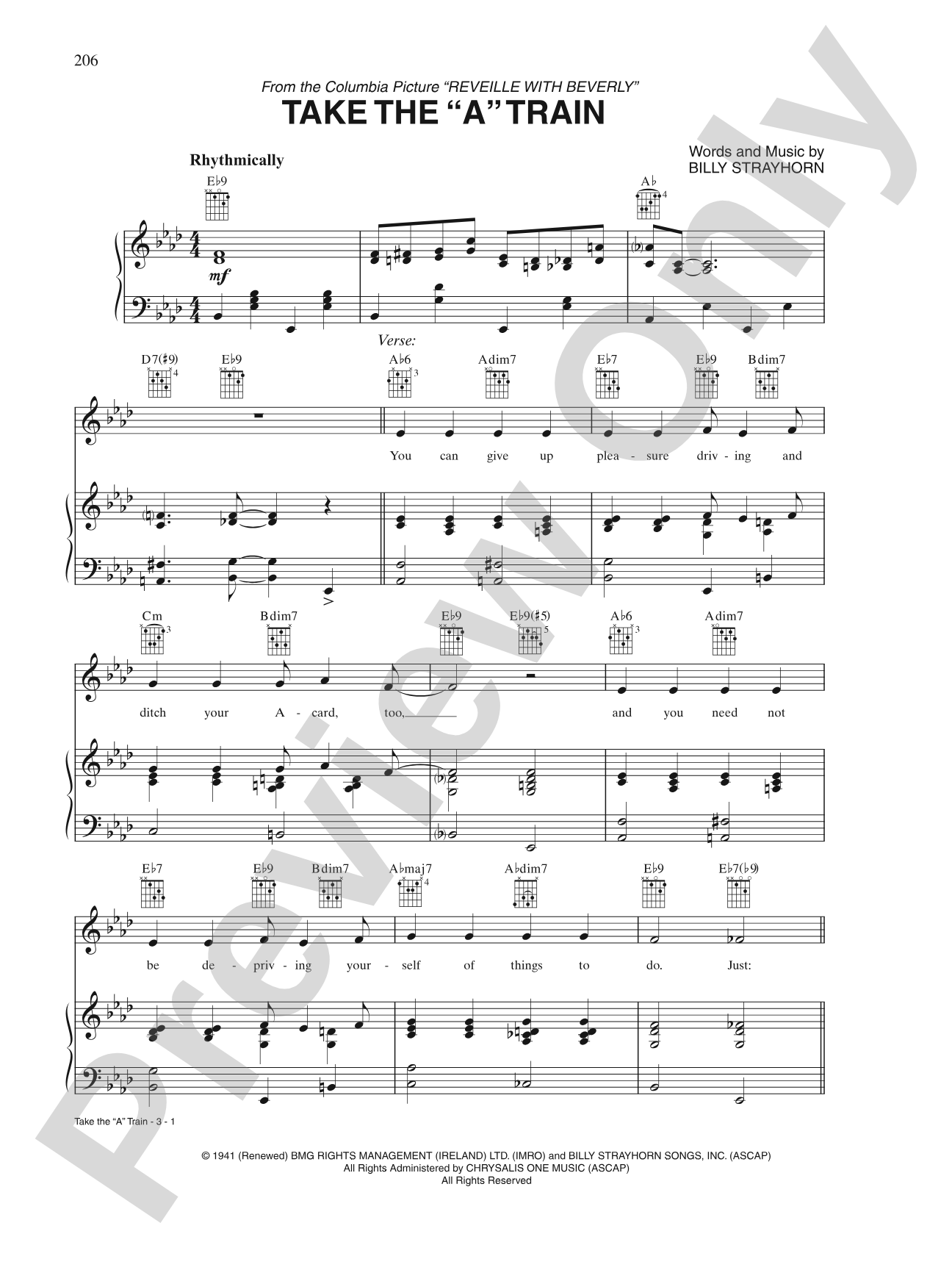

Take the "A" Train: Piano/Vocal/Chords
Item: 00-PS-0015639
$4.99
One moment…
Related Items
This Masquerade: Piano/Vocal/Chords |
$4.99
|
View | |
Misty: Piano/Vocal/Chords |
$4.99
|
View | |
Taking a Chance on Love: Piano/Vocal/Chords |
$4.99
|
View | |
Deep Purple: Piano/Vocal/Chords |
$4.99
|
View | |
Chattanooga Choo Choo: Piano/Vocal/Chords |
$4.99
|
View | |
Elmer's Tune: Piano/Vocal/Chords |
$4.99
|
View | |
Hey There: Piano/Vocal/Chords |
$4.99
|
View | |
Somewhere My Love (Lara's Theme): Piano/Vocal/Chords |
$4.99
|
View | |
You Stepped Out of a Dream: Piano/Vocal/Chords |
$4.99
|
View | |
Star Dust: Piano/Vocal/Chords |
$4.99
|
View | |
Mood Indigo: Piano/Vocal/Chords |
$4.99
|
View | |
Butterfly: Piano/Vocal/Chords |
$4.99
|
View | |
Dear Mr. Gable/You Made Me Love You (I Didn't Want to Do It): Piano/Vocal/Chords |
$4.99
|
View | |
I Let a Song Go Out of My Heart: Piano/Vocal/Chords |
$4.99
|
View | |
Smoke Rings: Piano/Vocal/Chords |
$4.99
|
View | |
Reach for Tomorrow: Piano/Vocal/Chords |
$4.99
|
View |
Description
This massive songbook is packed with sheet music for 75 of the most memorable standards for all occasions! Dozens of gems from the golden years of 20th Century pop and jazz are joined by traditional melodies in this collection of essential songs that belong in every musician's repertoire. Titles: Ain't Misbehavin' * All of Me * America the Beautiful * At Last * The Best Is Yet to Come * Blue Moon * Butterfly * Chattanooga Choo Choo * Dance Little Bird (a.k.a. The Chicken Dance) * Danny Boy (Londonderry Air) * Deep Purple * Don't Get Around Much Anymore * Don't Sit Under the Apple Tree * Dream a Little Dream of Me * Elmer's Tune * Fly Me to the Moon * Havah Nagilah * Heart * Hernando's Hideaway * Hey There! * Hi-Lili, Hi-Lo * Hit the Road Jack * I Don't Know Why (I Just Do) * I Let a Song Go out of My Heart * I Put a Spell on You * I Wanna Be Loved by You * I'm a Little Mixed Up * I'm Gonna Sit Right Down and Write Myself a Letter * I'm in the Mood for Love * Laura * Leaving on a Jet Plane * The Lion Sleeps Tonight * Love Is a Many Splendored Thing * Love Story (Where Do I Begin) * Misty * Mood Indigo * Moonlight Serenade * My Man * Theme from New York, New York * On the Atchison, Topeka, and the Santa Fe * Orange Colored Sky * Over the Rainbow * The Pink Panther * Reach for Tomorrow * Rock Around the Clock * The Shadow of Your Smile * Singin' in the Rain * Smoke Rings * Somewhere My Love * Stairway to the Stars * Star Dust * Star Eyes * Stars Fell on Alabama * Straighten Up and Fly Right * Swinging on a Star * Take Five * Take the "A" Train * Taking a Chance on Love * That's Amore * There Will Never Be Another You * This Masquerade * Those Were the Days * Tie a Yellow Ribbon 'Round the Ole Oak Tree * The Trolley Song * The Twelfth of Never * We Just Couldn't Say Goodbye * What a Wonderful World * Whatever Lola Wants * When the Saints Go Marching In * Who's Sorry Now? * Yesterday When I Was Young * You Don't Have to Say You Love Me * You Made Me Love You * You Stepped Out of a Dream * Young at Heart.


Take the "A" Train: Piano/Vocal/Chords isn't in MakeMusic Cloud just yet...but it could be. Let us know you'd like to see it, and you'll help shape what comes next. In the meantime, start a free trial and dive into thousands of interactive titles your students can play along with today.
Request This Title
Tell us you want it.
Start Your Free Trial
Explore everything that's ready to play right now.
Sample Audio
No sample audio found.
Sample Video
No sample videos found.
Additional Details
Series:
The Giant Book of Sheet Music
Publisher:
Alfred Music
Page Count:
276
SKU:
00-PS-0015639
More about this title
About the Composer: Billy Strayhorn
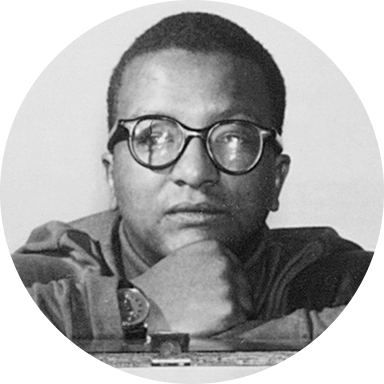
Billy Strayhorn (1915-1967) emerged as one of the defining voices of American jazz, yet spent much of his career working in the shadow of Duke Ellington. Beginning their collaboration in 1939, Strayhorn contributed arrangements, compositions, and orchestrations that became inseparable from the Ellington Orchestra's sound. His harmonic sophistication and melodic gift established him among the most recorded jazz composers of the era.
Strayhorn's legacy rests on standards that continue to challenge and inspire musicians decades after his death. "Take the 'A' Train" became the Ellington Orchestra's signature piece and remains a cultural touchstone, while "Lush Life," composed when he was just sixteen, stands as a cornerstone of the jazz ballad repertoire. Despite the historical recognition his music has earned across generations of artists from Ella Fitzgerald to John Coltrane, Strayhorn himself remained underappreciated in his lifetime, a fact that historians have long worked to correct.
Why we love this
This collection gathers 75 standards with piano/vocal/chords voicings, making it invaluable for pianists accompanying singers, guitarists supporting vocalists, and solo performers building a jazz repertoire. The breadth spans from swing-era classics to show tunes and jazz ballads, offering genuine variety rather than retreading the same well-worn titles. Strayhorn's own masterpiece anchors the book, but the surrounding standards represent the jazz and popular music landscape he inhabited and influenced.
What to expect
Opening this book is like stepping into a well-appointed supper club where the music spans decades but never feels dated. The standards carry the elegance and sophistication of the jazz world while remaining accessible enough for a first read-through, with harmonic language that ranges from straightforward diatonic progressions to the more intricate chord changes that defined the sophisticated side of American songwriting. There's warmth here: music written for singers and dancers, for celebration and heartbreak, for the specific pleasure of live performance.
Who it's for
Pianists and guitarists who accompany singers in jazz clubs, recitals, weddings, and studio sessions will find this collection immediately useful for both prepared performances and spontaneous requests. Vocalists building a standards repertoire or preparing for jazz auditions can learn these melodies and harmonic structures with reliable lead sheets. Solo performers and teachers looking to round out their jazz repertoire with historically important material will appreciate the curated selection.
How to get the most out of it
- Treat chord symbols as a foundation for comping rather than strict harmonic law; jazz voicings reward reharmonization and reinterpretation based on the vocalist's phrasing and the harmonic moment.
- Listen to multiple recorded versions of each standard before rehearsing with singers; understanding how different eras and artists approached tempo, rubato, and feel will inform your own accompaniment choices.
- Work out walking bass lines or rootless voicings in advance for uptempo swingers; having these shapes ready prevents hesitation during live performance while leaving room for spontaneous response to the vocalist.
- Balance accompaniment texture by listening to whether your vocalist needs full harmonic support or space to breathe; some standards benefit from lean, spacious playing while others thrive with richer comping.
How to use it
Build a standards-focused recital around clusters of songs from this collection, organizing by era, mood, or theme rather than composer; a program mixing uptempo swingers with ballads and novelty numbers creates natural pacing and variety. Use it as a reference book for spontaneous programming needs: when a vocalist requests a particular standard or when you need repertoire for an informal performance, having 75 reliable arrangements at hand saves preparation time. This book also serves musicians preparing for jazz auditions or those building a personal library of performance-ready material.
Skills your students will build
- Reading piano/vocal/chord lead sheets and understanding the relationship between melody, lyrics, and harmony
- Accompanying singers with appropriate texture, dynamics, and responsiveness to phrasing
- Jazz comping techniques including reharmonization, rhythmic flexibility, and conversational interplay with vocalists
- Recognizing harmonic patterns and chord substitutions common across the jazz standards repertoire
- Interpreting rhythmic notation and swing feel in the context of popular and jazz idioms