

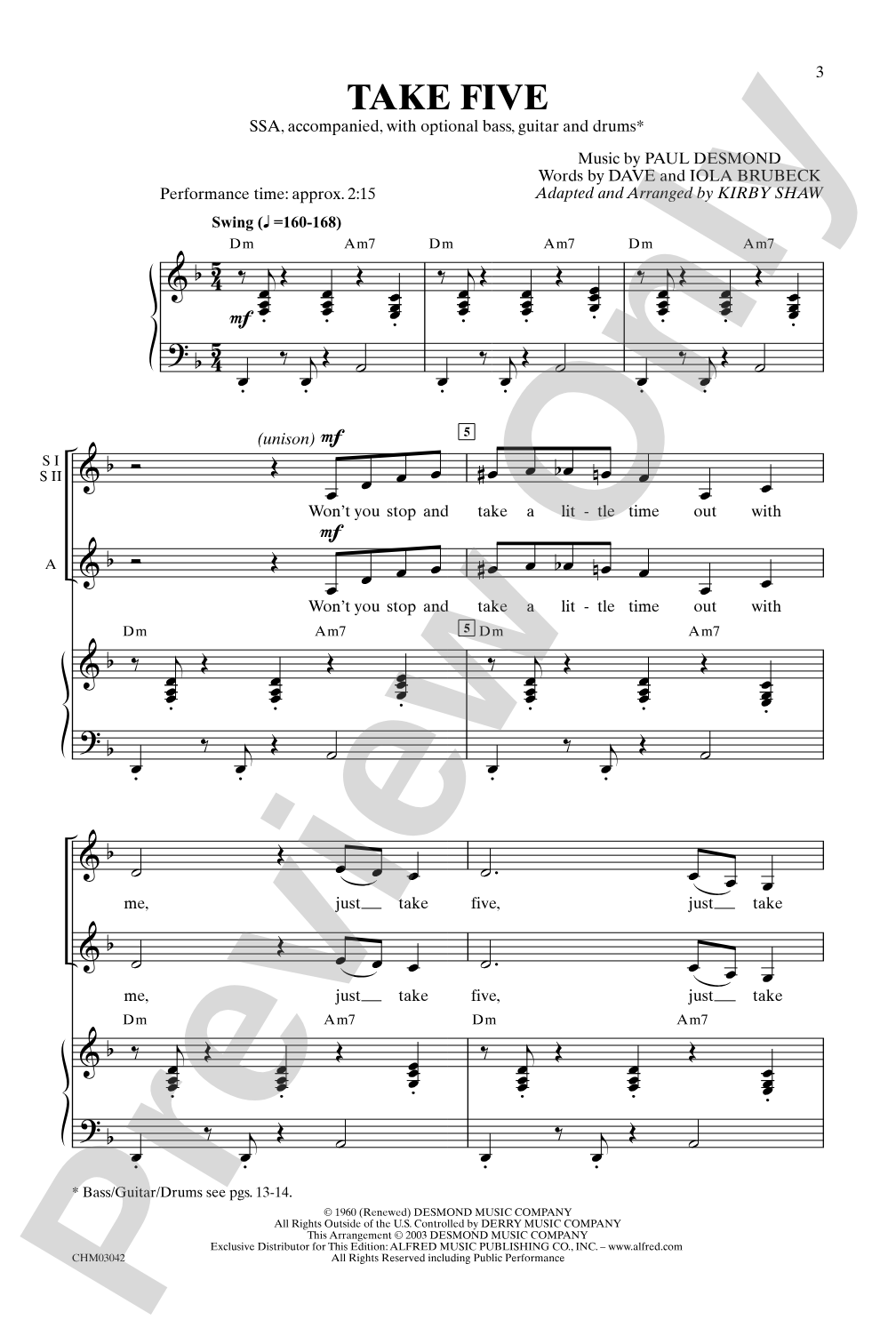
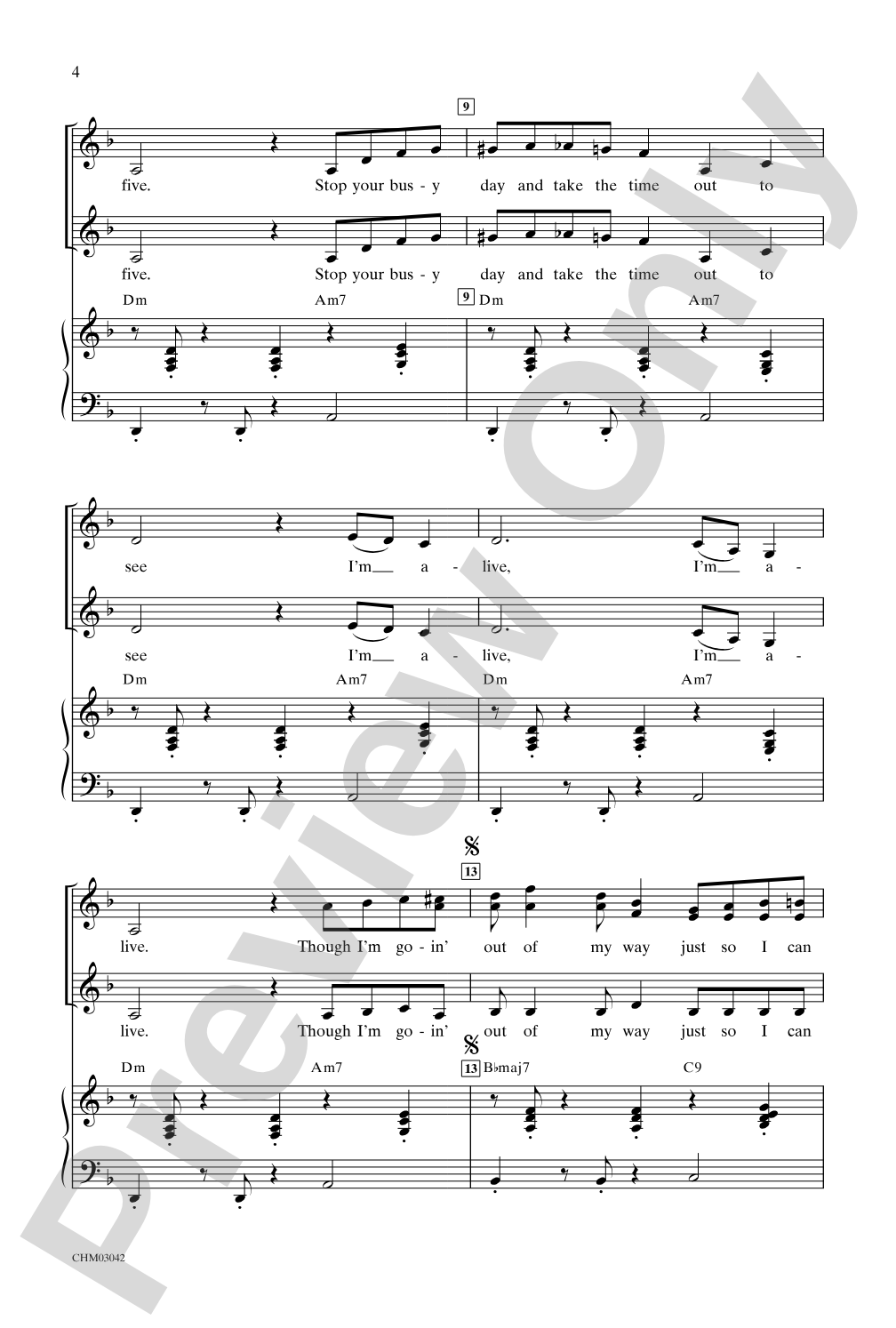

Take Five: SSA Choral Octavo
Music by Paul Desmond, words by Dave Brubeck and Iola Brubeck / adapted and arr. Kirby Shaw
Level: Moderate
Item: 00-PO-0007728
$2.20
Minimum order quantity: 20 copies
Pickup currently not available
Description
One of the true icons of "jazz" is Dave Brubeck. His signature song, written by Paul Desmond, comes to life in this remarkable setting from Kirby Shaw. It's hip and will be a hit with singers and audiences alike.


Take Five: SSA Choral Octavo isn't in MakeMusic Cloud just yet...but it could be. Let us know you'd like to see it, and you'll help shape what comes next. In the meantime, start a free trial and dive into thousands of interactive titles your students can play along with today.
Request This Title
Tell us you want it.
Start Your Free Trial
Explore everything that's ready to play right now.
Sample Audio
No sample audio found.
Sample Video
No sample videos found.
Additional Details
Series:
Alfred Pop Choral Series
Publisher:
Alfred Music
Page Count:
16
SKU:
00-PO-0007728
More about this title
About the Composer: Paul Desmond
Paul Desmond (1924, 1977) was an alto saxophonist and composer whose cool, lyrical sound defined the Dave Brubeck Quartet's approach to modern jazz. Though Brubeck led the ensemble, Desmond was its compositional heart, creating pieces that balanced harmonic sophistication with immediate melodic appeal. His work proved that jazz could reach mainstream audiences without sacrificing artistic integrity.
Desmond's gift for writing memorable melodies within complex harmonic frameworks made him invaluable to music education. Teachers and arrangers have long recognized that his compositions teach jazz language naturally, allowing students to absorb phrasing, swing feel, and chord awareness through music that genuinely excites them.
Why we love this
Kirby Shaw's arrangement captures the cool, uncluttered sophistication of the original while opening it up for singers. The SSA voicing sits naturally across a range of vocal abilities, and the recorded accompaniment lets you focus entirely on the blend and rhythmic precision that makes this tune swing. Audiences recognize it instantly, which means your singers get the reward of performing something genuinely beloved.
What to expect
Relaxed and modern, with a wry melodic twist that makes listeners smile. The piece has an effortless cool to it, the kind of understated sophistication that sounds simple but demands real rhythmic awareness and harmonic clarity to land properly.
Who it's for
This arrangement works for treble choirs at the middle school level through adult groups looking to expand their jazz repertoire without requiring soloistic virtuosity. Directors seeking an accessible entry point to jazz standards will find the moderate difficulty level honest, the voicing singable, and the cultural relevance substantial.
How to get the most out of it
- Lock the rhythm section's feel with your singers from the start. The groove depends on slight behind-the-beat placement, not mechanical precision. Work that pocket before worrying about intonation.
- Shape the melody with dynamics that reflect jazz phrasing rather than classical line-singing. Let it breathe in short phrases, pulling back on "Take Five" itself to emphasize its conversational quality.
- Balance the upper voices so the alto line stays audible. The harmonies are lean and modern, and Desmond's voice deserves to be heard beneath the sopranos.
- Reference the recorded accompaniment during rehearsals, then rehearse without it. Your singers need to feel confident landing on the changes independently.
How to use it
Slot this into a concert that pairs jazz standards with contemporary pop or light classics to show the continuum of American music. It's perfect for a spring or cabaret-style program where you want to signal that your choir takes jazz seriously and can execute it with authenticity.
Skills your students will build
- Reading and performing in a 5/4 meter
- Jazz phrasing and behind-the-beat rhythmic placement
- Chord changes and harmonic literacy in a jazz context
- Blending and balancing in a lean, contemporary voicing
- Responding to and interpreting recorded accompaniment