
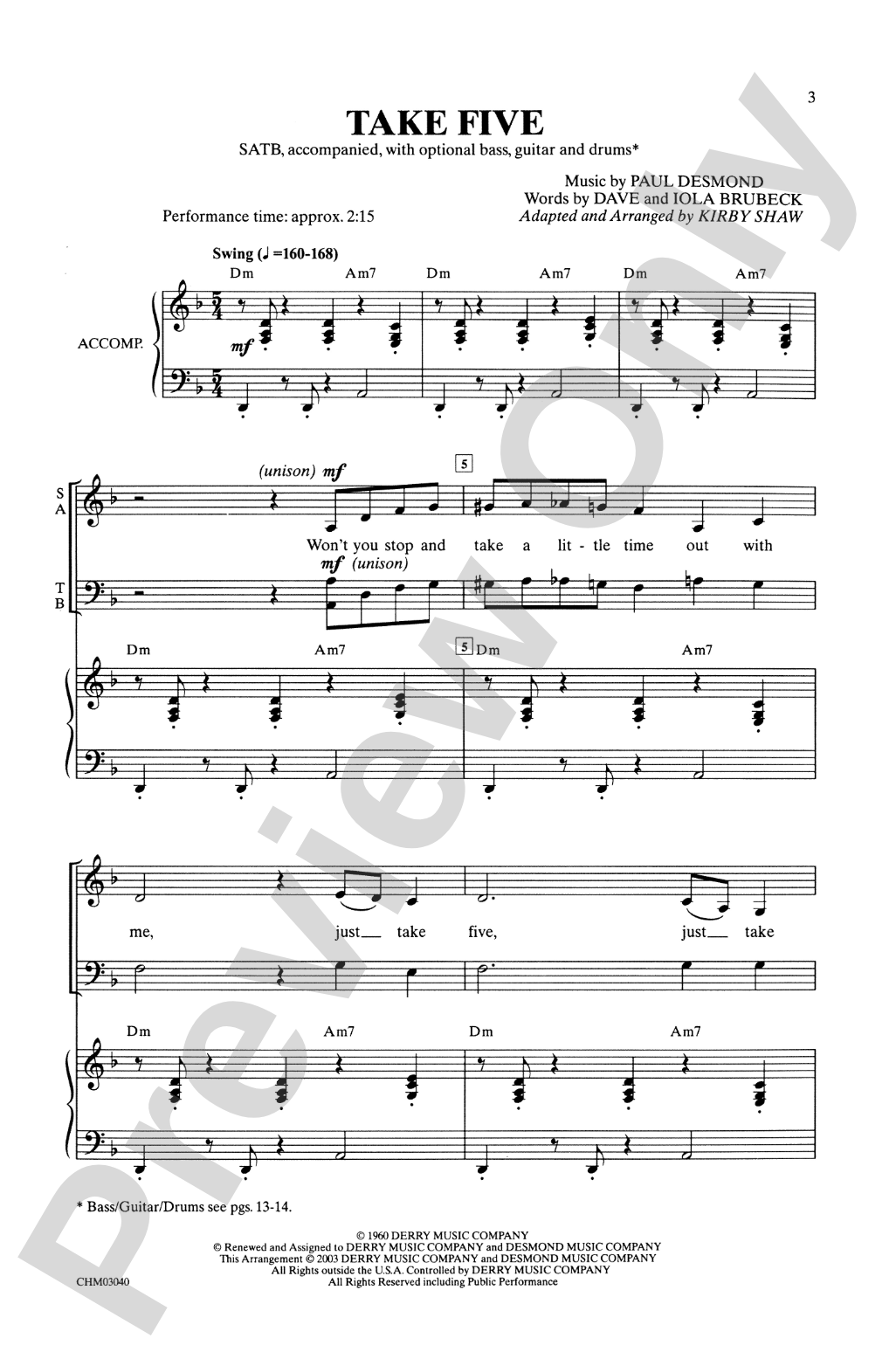
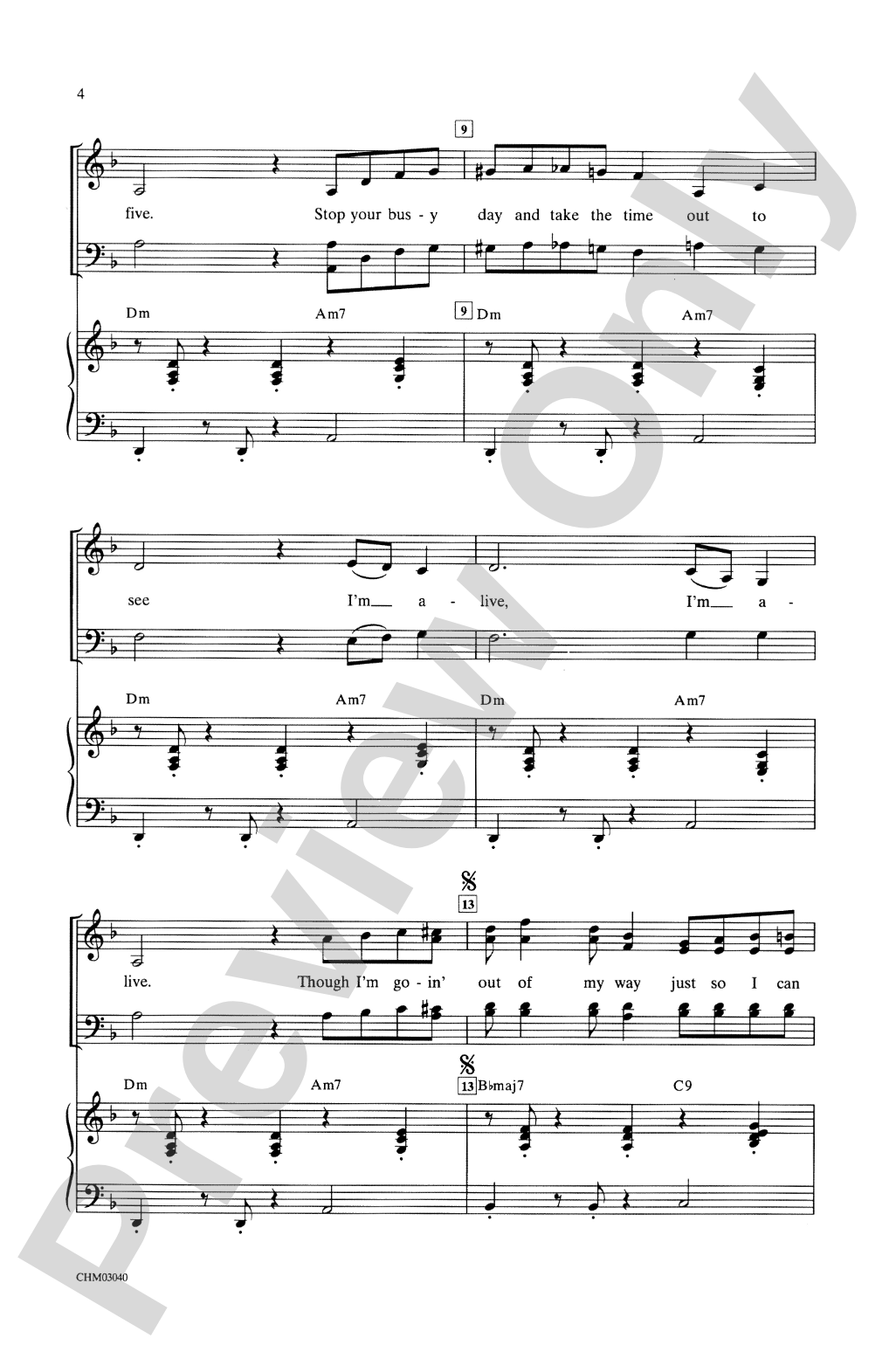
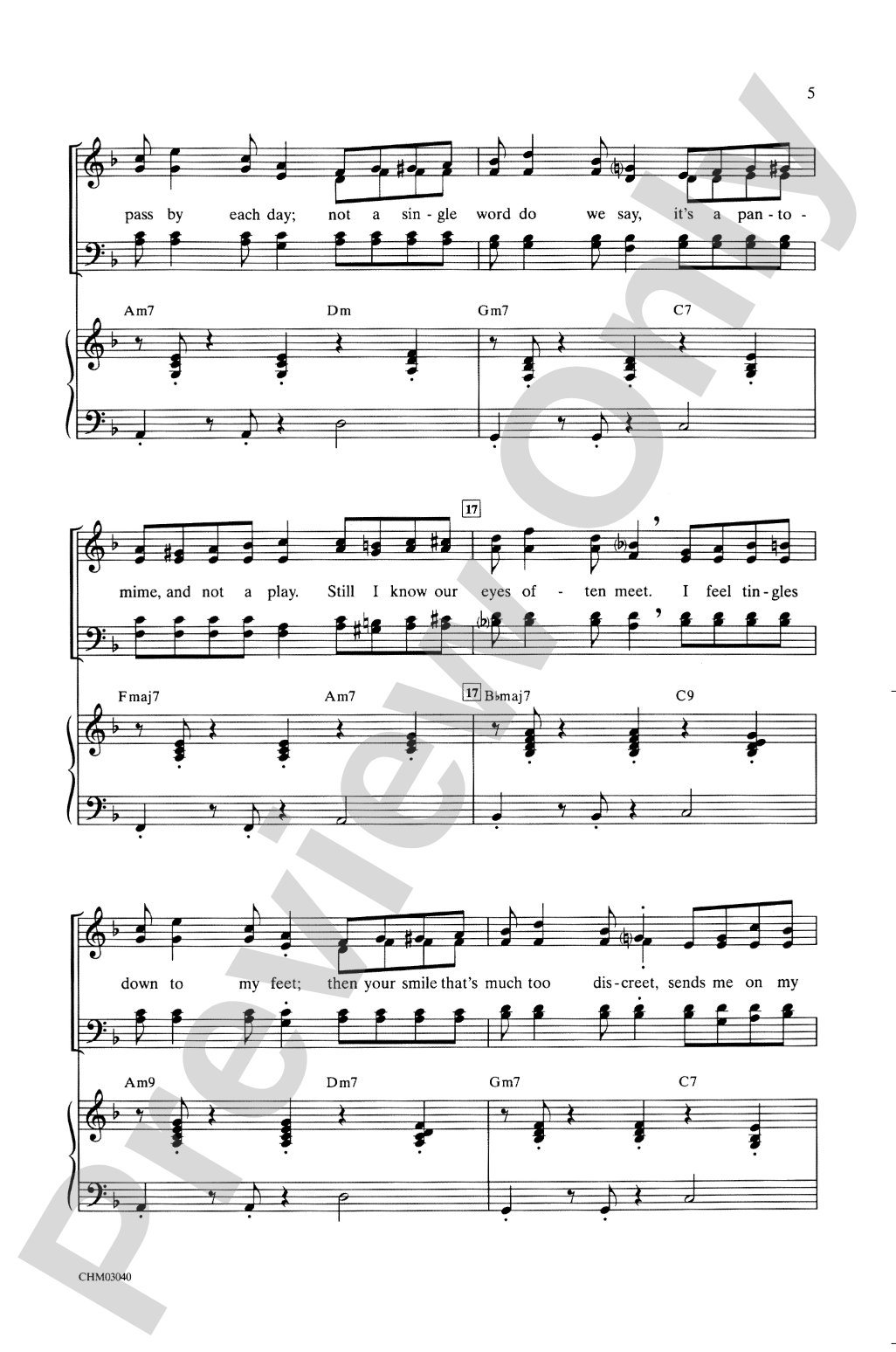

Take Five: SATB Choral Octavo
Music by Paul Desmond, words by Dave Brubeck and Iola Brubeck / adapted and arr. Kirby Shaw
Level: Moderate
Item: 00-PO-0007691
$2.20
Minimum order quantity: 20 copies
One moment…
Description
One of the true icons of "jazz" is Dave Brubeck. His signature song, written by Paul Desmond, comes to life in this remarkable setting from Kirby Shaw. It's hip and will be a hit with singers and audiences alike.


Discover MakeMusic Cloud: thousands of interactive titles your students can play along with today.
Sample Audio
1
Audio File
--:--
0:00
0:00
Sample Video
No sample videos found.
Additional Details
Series:
Alfred Pop Choral Series
Publisher:
Alfred Music
Page Count:
16
SKU:
00-PO-0007691
More about this title
About the Composer: Paul Desmond
Paul Desmond (1924-1977) was an alto saxophonist and composer whose lyrical approach to jazz melody set him apart from his contemporaries. He earned lasting recognition as the primary composer for the Dave Brubeck Quartet, creating some of jazz's most enduring standards including "Take Five," which became a crossover hit that brought modern jazz into living rooms across America.
Desmond's compositional voice emphasized accessibility without sacrificing sophistication. His melodies are singable yet harmonically interesting, making them ideal for choral adaptation. His influence extends far beyond jazz circles into music education, where his compositions continue to introduce students to jazz idioms and contemporary harmonic thinking.
Why we love this
Kirby Shaw's arrangement captures the cool sophistication of the original while making it genuinely performable for high school choirs. The jazz inflection stays true to Desmond's vision without requiring your singers to have studied bebop; they'll feel like they're singing something genuinely modern and stylish, which keeps ensemble morale high. Audiences light up when they recognize this tune, and that recognition becomes instant credibility for your program.
What to expect
Cool, sophisticated, and surprisingly playful. The 5/4 meter gives the piece an elegant, almost floating quality that makes it feel more modern than nostalgic, even though the original is now a classic. There's a rhythmic ease to it once the ensemble settles in, and the jazz harmonies feel sophisticated without being pretentious.
Who it's for
This arrangement works for choirs at the intermediate level who are ready to explore jazz style and contemporary sounds. High school show choirs and concert choirs benefit most, though strong middle school ensembles can tackle it with focused rehearsal. It suits directors looking to program something that bridges classical and pop repertoire while maintaining musical substance.
How to get the most out of it
- Establish the 5/4 meter early in rehearsals by having the ensemble count and clap the rhythm independently before adding the melody. The time signature itself is memorable and becomes part of the arrangement's appeal once singers own it.
- Shape the phrasing with swing eighth-notes in mind. Even though this is a choral octavo, the jazz origin should inform how notes breathe and connect, avoiding a purely classical legit tone.
- Balance the voicing to let the soprano line sing out during key moments, but keep the lower voices present and grounded. Jazz harmony relies on how all four parts interact, not on soprano dominance.
- If using the recorded accompaniment, rehearse with it regularly so singers internalize the groove and harmonic movement rather than fighting against it in performance.
How to use it
Program this as a contemporary jazz showcase that appeals to both traditional and casual listeners at your concert. It pairs well alongside spirituals or other American music traditions, or use it to bookend a set of pop and jazz standards. The 16 pages and moderate difficulty make it a natural choice for a spring concert when singers have developed ensemble trust and stamina.
Skills your students will build
- Reading and performing in 5/4 meter
- Jazz phrasing and swing articulation
- Four-part jazz harmony and voice leading
- Ensemble coordination in non-traditional time signatures
- Style awareness in contemporary and jazz idioms