

Take Five: 3-Part Mixed Choral Octavo
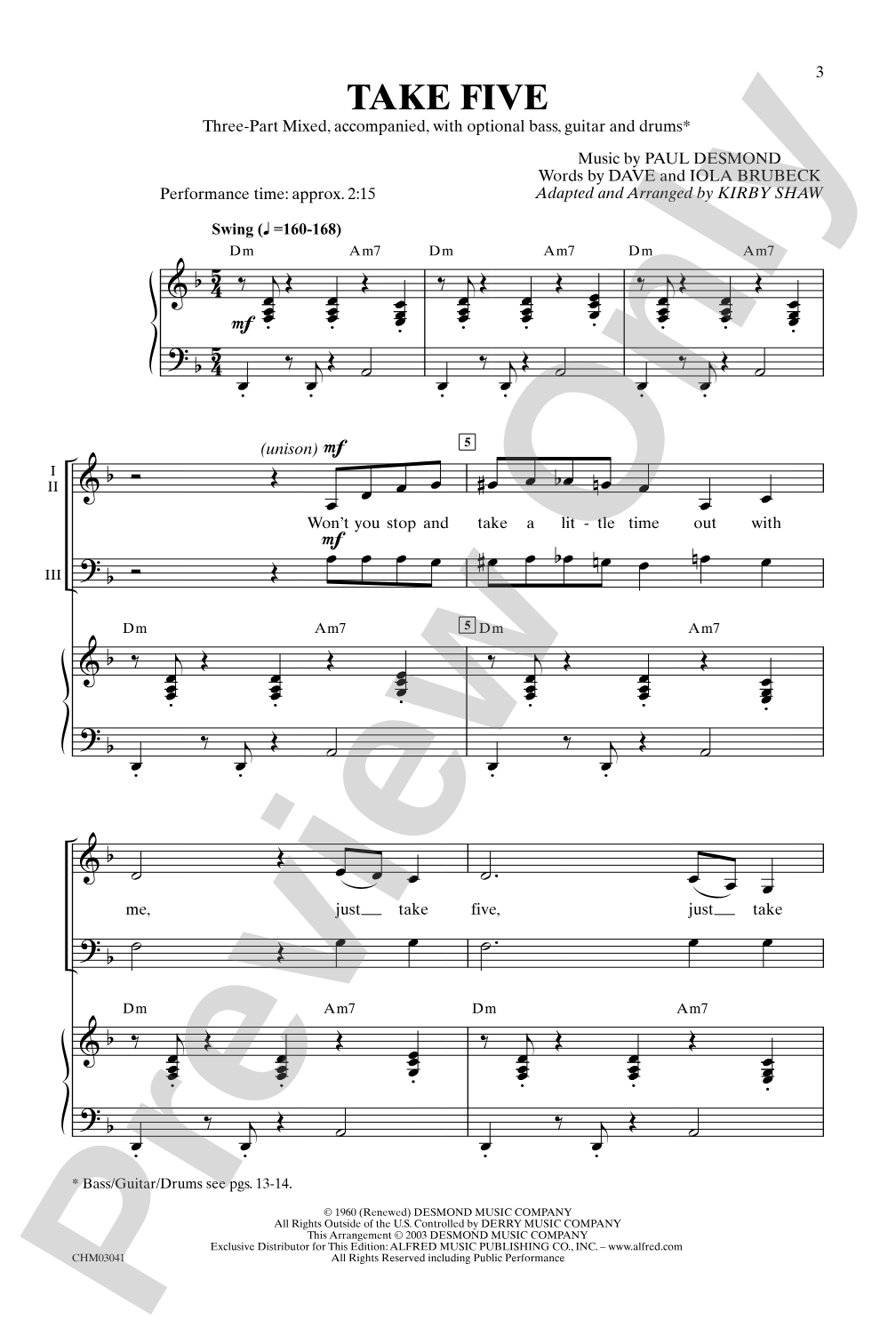
Music by Paul Desmond, words by Dave Brubeck and Iola Brubeck / adapted and arr. Kirby Shaw
Level: Moderate
Item: 00-PO-0007727
$2.20
Minimum order quantity: 20 copies
Pickup currently not available
Description
One of the true icons of "jazz" is Dave Brubeck. His signature song, written by Paul Desmond, comes to life in this remarkable setting from Kirby Shaw. It's hip and will be a hit with singers and audiences alike.


Discover MakeMusic Cloud: thousands of interactive titles your students can play along with today.
Sample Audio
No sample audio found.
Sample Video
No sample videos found.
Additional Details
Series:
Alfred Pop Choral Series
Publisher:
Alfred Music
Page Count:
16
SKU:
00-PO-0007727
More about this title
About the Composer: Paul Desmond
Paul Desmond (1924-1977) was an alto saxophonist and composer best known for his work with the Dave Brubeck Quartet, the groundbreaking jazz ensemble that brought complex time signatures and cool jazz sophistication to mainstream audiences. Desmond's compositions, particularly "Take Five," became jazz standards celebrated for their memorable melodic lines and elegant harmonic simplicity—qualities that have made them enduring favorites in educational and performance settings.
As a musician-composer, Desmond wrote music that bridged the gap between jazz virtuosity and popular accessibility. His melodies are intuitive enough for young singers to grasp quickly, yet harmonically interesting enough to hold the attention of experienced musicians. This balance made his work invaluable to music educators seeking repertoire that excites students without overwhelming them.
Why we love this
Kirby Shaw's choral setting transforms a jazz masterpiece into material that works beautifully for young mixed choirs without sacrificing the cool, hip character audiences expect from this tune. The three-part writing sits naturally in the voices, and the arrangement respects Desmond's iconic melody while giving singers genuine harmonic engagement and rhythmic interest that keeps rehearsals energetic.
What to expect
Cool, composed, and undeniably groovy. The melody has a breezy sophistication that feels modern even decades after its composition, and the 3-part harmony sits comfortably while maintaining enough harmonic color to feel jazz-inflected rather than pop. This is music that makes singers feel like they're performing something genuinely cool.
Who it's for
This arrangement serves mixed choirs at the middle school through early high school level, or any adult choir seeking accessible yet sophisticated secular repertoire. Singers who have basic sight-reading skills and some experience with jazz or contemporary styles will engage most fully with the material.
How to get the most out of it
- Establish the characteristic swing feel early in rehearsal by listening to the Dave Brubeck Quartet recording together. Your singers need to internalize the laid-back groove before worrying about notes.
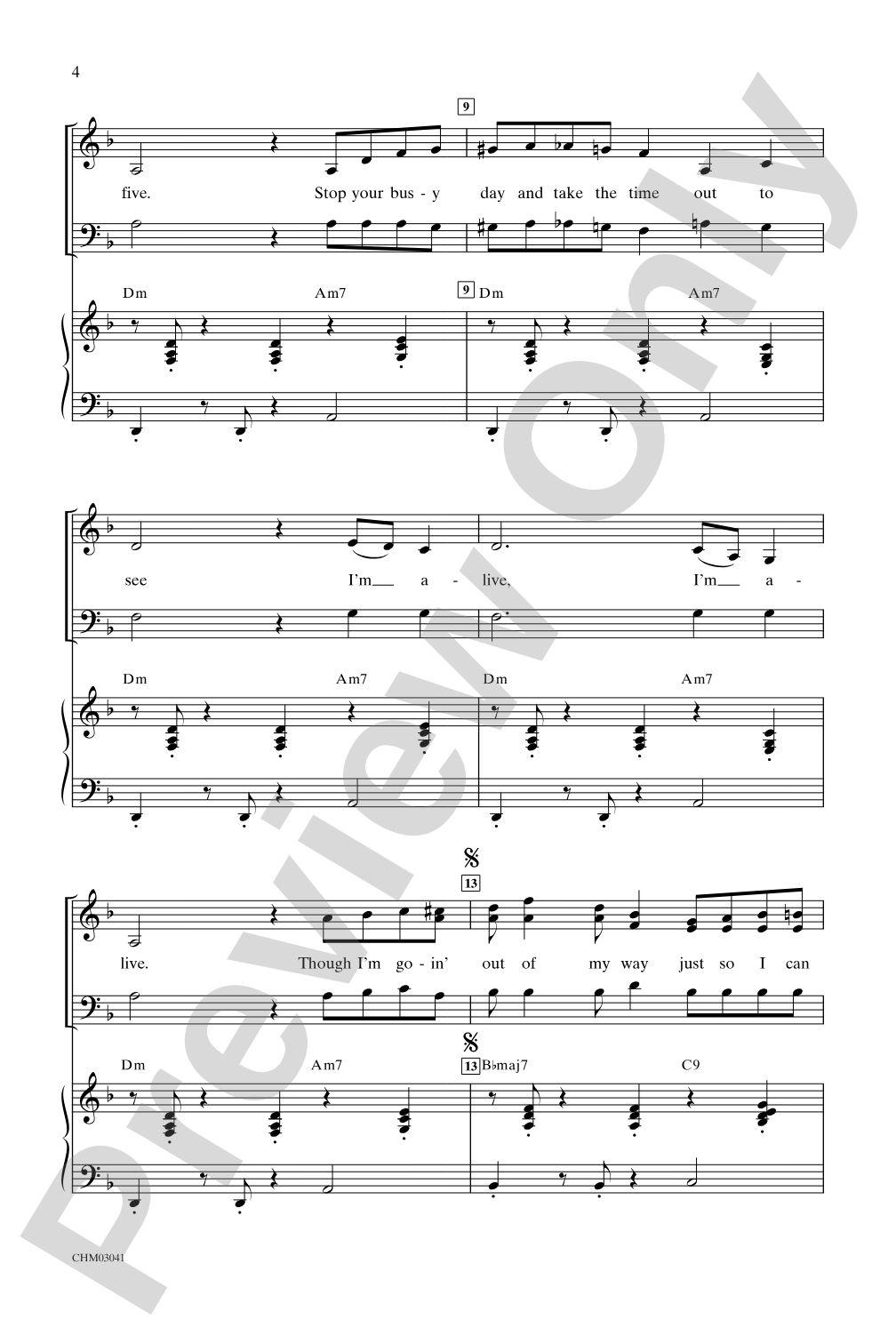
- Pay attention to the syncopated rhythms in the inner parts. Many students default to straight eighth notes; isolate these passages and snap or conduct them with precision so the arrangement's sophistication comes through.
- Balance the SAB voicing so the soprano line stays present but not dominant. The arranger's work shines when all three parts are audible and equally committed.
- Use the recorded accompaniment in final rehearsals and performance to build confidence. It establishes the groove and frees your singers to focus on blend and ensemble precision.
How to use it
Program this as a contrast piece on a concert featuring classical or traditional repertoire, or use it as a closer for a spring or casual concert where you want to send audiences out in a relaxed, upbeat mood. It also works beautifully on multicultural or contemporary-music-focused programs, and its moderate difficulty makes it suitable for festivals or invitational performances.
Skills your students will build
- Singing jazz/swing style with appropriate articulation and rhythmic placement
- Reading and executing syncopated rhythmic figures in choral parts
- Balancing three-part SAB voicing with awareness of harmonic function
- Ensemble singing with groove-based accompaniment
- Interpreting a well-known standard in a new arrangement