

Sound Innovations for String Orchestra: Sound Development (Advanced): Cello Book
$9.99 USD
Sale price
$9.99 USD
Regular price
Skip to product information



Sound Innovations for String Orchestra: Sound Development (Advanced): Cello Book
Warm-up Exercises for Tone and Technique for Advanced String Orchestra
By Bob Phillips and Kirk Moss
Item: 00-41098
$9.99
One moment…
Description
Sound Innovations: Sound Development for Advanced String Orchestra continues the emphasis on playing with a characteristic, beautiful sound, but also focuses on 3-octave scales, particularly scales that students will need for regional auditions and all-states. Advanced technical skills are presented in four levels, consistent with the revolutionary and flexible Sound Innovations structure: (1) Sound Tone, (2) Sound Bowing, (3) Sound Shifting, and (4) Sound Scales and Arpeggios. The levels can be used in the order that is best for your students, as individual warm-ups, or as structured units. The perfect book to follow Sound Development for Intermediate String Orchestra, or for any advanced string ensemble or individual learner, your students will further refine the proper use of the bow, bow strokes, shifting, and 3-octave scales.
This title is available in MakeMusic Cloud.


This title is available in MakeMusic Cloud.
Don't just read it, hear it, play along with it, and watch your students grow with it. In MakeMusic Cloud, Sound Innovations for String Orchestra: Sound Development (Advanced): Cello Book comes alive with professional accompaniment, adjustable tempo, and built-in practice tools that turn solo practice into real progress.
Open in the Player
Jump straight in and assign it today.
Start Your Free Trial
Open this title and explore the full library in minutes.
Sample Audio
No sample audio found.
Sample Video
No sample videos found.
Additional Details
More about this title
About the Authors
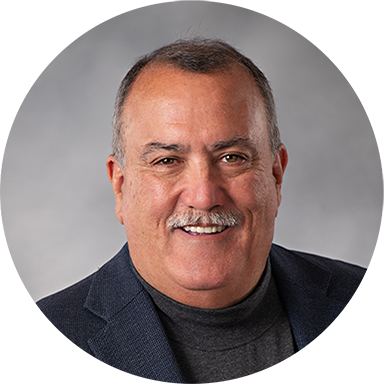
Bob Phillips, born in 1953, stands out as a composer, author, and educator who has fundamentally shaped string education through innovative pedagogy and large group instruction. His work spans conducting, teacher training, and curriculum development, establishing him as a leading voice in bringing diverse musical styles to string students worldwide.
Phillips has authored more than 25 book series for classroom use, including the complete Sound Innovations series and pioneering eclectic style collections such as Fiddlers Philharmonic, Jazz Philharmonic, Rock Philharmonic, Mariachi Philharmonic, Latin Philharmonic, and Fiddle and Song. Over 200 of his compositions have been published for orchestras and bands; he is an award-winning ASCAP composer whose works receive regular performances at the Midwest Clinic. His instructional DVD series, String Clinics to Go, has become a resource for thousands of teachers.
Throughout his 27 years in Saline, Michigan, Phillips built a string program serving over 700 students and recognized nationally for excellence in both classical and eclectic music. He founded and directed the Saline Fiddlers Philharmonic, an internationally respected ensemble that performed more than 80 shows annually, including multiple White House performances and Midwest Clinic appearances. As conductor, Phillips has worked with youth symphonies and all-state orchestras across the country, including programs at Interlochen, Blue Lake Fine Arts Camp, and numerous state honors orchestras. He spent 12 years as resident conductor and arranger for Seattle's Wintergrass Festival and served as assistant music director and arranger for the professional ensemble Barrage 8.
Phillips has authored more than 25 book series for classroom use, including the complete Sound Innovations series and pioneering eclectic style collections such as Fiddlers Philharmonic, Jazz Philharmonic, Rock Philharmonic, Mariachi Philharmonic, Latin Philharmonic, and Fiddle and Song. Over 200 of his compositions have been published for orchestras and bands; he is an award-winning ASCAP composer whose works receive regular performances at the Midwest Clinic. His instructional DVD series, String Clinics to Go, has become a resource for thousands of teachers.
Throughout his 27 years in Saline, Michigan, Phillips built a string program serving over 700 students and recognized nationally for excellence in both classical and eclectic music. He founded and directed the Saline Fiddlers Philharmonic, an internationally respected ensemble that performed more than 80 shows annually, including multiple White House performances and Midwest Clinic appearances. As conductor, Phillips has worked with youth symphonies and all-state orchestras across the country, including programs at Interlochen, Blue Lake Fine Arts Camp, and numerous state honors orchestras. He spent 12 years as resident conductor and arranger for Seattle's Wintergrass Festival and served as assistant music director and arranger for the professional ensemble Barrage 8.
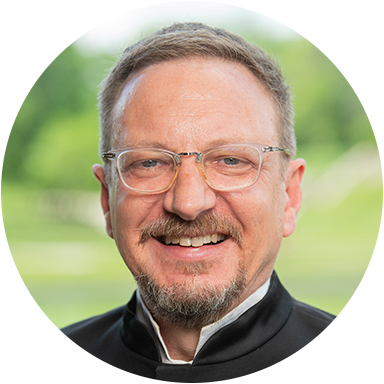
Kirk D. Moss, Ph.D., serves as Vice Provost for Faculty and Academic Programs at University of Northwestern – St. Paul. He is an accomplished conductor and string educator who earned recognition from the university with the 2021 Faculty Award for Excellence in Scholarship. A former national president of the American String Teachers Association, Moss has shaped the organization through multiple leadership roles, including five terms chairing the ASTA National Orchestra Festival and service on the Executive Board.
Throughout his career, Moss has made significant contributions to music education through publication and performance. He co-authored the Sound Innovations series method books for Alfred Music and has composed numerous string orchestra arrangements. His conducting, clinics, and adjudication work have taken him across nearly forty states as well as to Australia. The University of Florida School of Music presented him with an Alumni Outstanding Achievement Award, and he has received six ASTA National Citation for Leadership and Merit awards.
Moss spent twelve years directing school orchestras at the elementary, middle, and high school levels, with ensembles earning accolades at state, national, and international competitions. His influence extends beyond his tenure: one former high school established an annual college string scholarship bearing his name. He holds degrees from three major institutions: a Ph.D. in Music Education with conducting emphasis from University of Florida, a Master of Music in string pedagogy from University of Cincinnati College-Conservatory of Music, and a Bachelor of Music with high distinction from University of Michigan. Moss and his wife, Deb, have been married for more than thirty-five years and are parents to three adult children: Bethany, Luke, and Lydia.
Throughout his career, Moss has made significant contributions to music education through publication and performance. He co-authored the Sound Innovations series method books for Alfred Music and has composed numerous string orchestra arrangements. His conducting, clinics, and adjudication work have taken him across nearly forty states as well as to Australia. The University of Florida School of Music presented him with an Alumni Outstanding Achievement Award, and he has received six ASTA National Citation for Leadership and Merit awards.
Moss spent twelve years directing school orchestras at the elementary, middle, and high school levels, with ensembles earning accolades at state, national, and international competitions. His influence extends beyond his tenure: one former high school established an annual college string scholarship bearing his name. He holds degrees from three major institutions: a Ph.D. in Music Education with conducting emphasis from University of Florida, a Master of Music in string pedagogy from University of Cincinnati College-Conservatory of Music, and a Bachelor of Music with high distinction from University of Michigan. Moss and his wife, Deb, have been married for more than thirty-five years and are parents to three adult children: Bethany, Luke, and Lydia.