

Sound Innovations for String Orchestra, Book 2: Viola Book & Online Media
$11.99 USD
Sale price
$11.99 USD
Regular price
Skip to product information



Sound Innovations for String Orchestra, Book 2: Viola Book & Online Media
A Revolutionary Method for Early-Intermediate Musicians
By Bob Phillips, Peter Boonshaft, and Robert Sheldon
Item: 00-34601
$11.99
One moment…
Description
Sound Innovations for String Orchestra, Book 2 continues your student's musical journey by teaching with a complete review of Book 1, and a segmented presentation of new concepts while introducing ensemble playing. Continue skill development with review, new keys, rhythms, tone development, and introductory scales and arpeggios. Following the unique Sound Innovations organization, the string orchestra method contains levels, each of which is divided into several sections that introduces concepts separately, providing benchmarks, assessment, and intermediate goals. The isolation of new concepts helps facilitate the understanding of more advanced material. Sound Advice sections throughout the Teacher's Score assist with quick and easy-to-use tips and suggestions. Plenty of practice and performance opportunities are also provided in order to reinforce each lesson. MasterClass lessons with string ensemble videos and accompaniment recordings are available streaming at www.alfred.com/SIOnline from anywhere with internet access. Learn more at www.alfred.com/SIOnline.
This title is available in MakeMusic Cloud.
"Sound Innovations by Alfred Music is a dream-come-true method for beginning concert band and string orchestra. Its infusion of technology provides an open-ended architecture of the first order. This unique blend of time-tested strategies and technology offer a great foundation for a successful learning experience."
---John Kuzmich, Jr., BandDirector.com


This title is available in MakeMusic Cloud.
"Sound Innovations by Alfred Music is a dream-come-true method for beginning concert band and string orchestra. Its infusion of technology provides an open-ended architecture of the first order. This unique blend of time-tested strategies and technology offer a great foundation for a successful learning experience."
---John Kuzmich, Jr., BandDirector.com
Don't just read it, hear it, play along with it, and watch your students grow with it. In MakeMusic Cloud, Sound Innovations for String Orchestra, Book 2: Viola Book & Online Media comes alive with professional accompaniment, adjustable tempo, and built-in practice tools that turn solo practice into real progress.
Open in the Player
Jump straight in and assign it today.
Start Your Free Trial
Open this title and explore the full library in minutes.
Sample Audio
1
Gavotte
--:--
2
The Muffin Man
--:--
Gavotte
0:00
0:00
Sample Video
No sample videos found.
Additional Details
More about this title
About the Authors
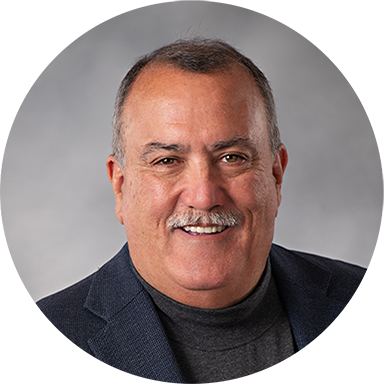
Bob Phillips is an accomplished composer, author, and string educator born in 1953 who has fundamentally shaped how strings are taught in large group settings. Recognized as a leading innovator in string education, he has developed distinctive eclectic styles that expand the musical horizons of young musicians. His extensive catalog of instructional materials reaches thousands of string students annually through classroom use and performance.
Phillips has authored more than 25 book series for educational settings, including the complete Sound Innovations series and groundbreaking eclectic publications such as Fiddlers Philharmonic, Jazz Philharmonic, Rock Philharmonic, and Mariachi Philharmonic. Over 200 of his compositions for orchestras and bands have been published, earning him recognition as an award-winning ASCAP composer whose works appear regularly at the Midwest Clinic. His instructional video series String Clinics to Go has become a valuable resource for thousands of teachers.
During his 27 years teaching in Saline, Michigan, Phillips built a nationally recognized string program serving over 700 students in both classical and eclectic music styles. He founded the Saline Fiddlers Philharmonic, which under his direction became internationally celebrated, performing more than 80 shows annually and appearing multiple times at the White House and the Midwest Clinic. As a guest conductor, Phillips has worked with youth symphonies, all-state orchestras, and prestigious summer programs including those at Interlochen and Blue Lake Fine Arts Camp. He served 12 years as resident conductor and arranger for Seattle's Wintergrass Festival.
Phillips has authored more than 25 book series for educational settings, including the complete Sound Innovations series and groundbreaking eclectic publications such as Fiddlers Philharmonic, Jazz Philharmonic, Rock Philharmonic, and Mariachi Philharmonic. Over 200 of his compositions for orchestras and bands have been published, earning him recognition as an award-winning ASCAP composer whose works appear regularly at the Midwest Clinic. His instructional video series String Clinics to Go has become a valuable resource for thousands of teachers.
During his 27 years teaching in Saline, Michigan, Phillips built a nationally recognized string program serving over 700 students in both classical and eclectic music styles. He founded the Saline Fiddlers Philharmonic, which under his direction became internationally celebrated, performing more than 80 shows annually and appearing multiple times at the White House and the Midwest Clinic. As a guest conductor, Phillips has worked with youth symphonies, all-state orchestras, and prestigious summer programs including those at Interlochen and Blue Lake Fine Arts Camp. He served 12 years as resident conductor and arranger for Seattle's Wintergrass Festival.
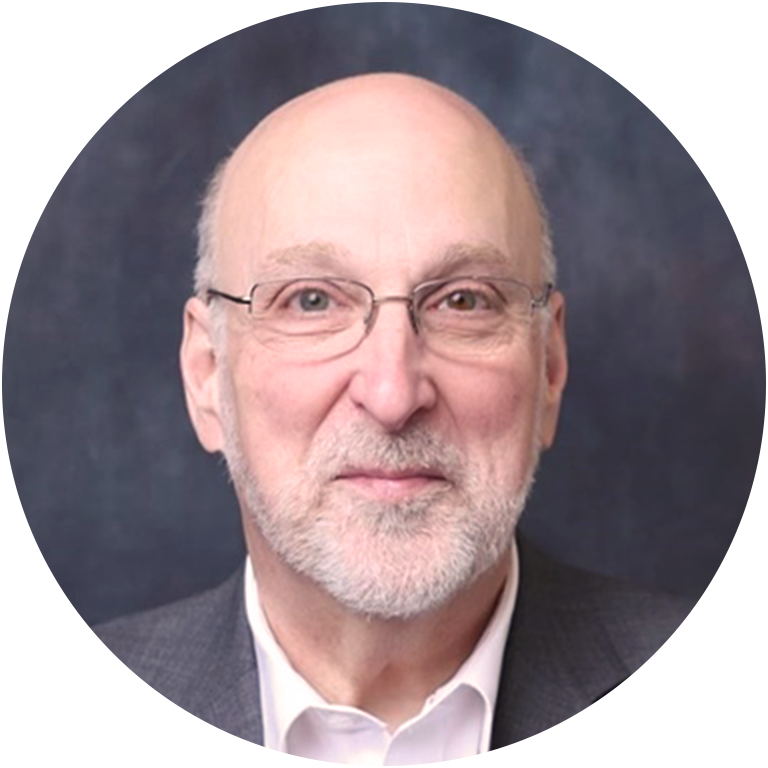
Peter Loel Boonshaft stands out as one of today's most dynamic voices in music education. He serves as Director of Education for Jupiter Band Instruments and holds the position of Professor Emeritus of Music at Hofstra University. His influence extends far beyond his professional roles through his widely followed "Boonshaft's Blog," which reaches music educators across the country with practical insights and inspiration.
Boonshaft's contributions to the field have earned him remarkable recognition. He received the inaugural "George M. Parks Award for Leadership in Music Education" from the National Association for Music Education and Music For All. His honors include three selections as a National Endowment for the Arts "Artist in Residence," membership in Pi Kappa Lambda and Alpha Chi, and the Al G. Wright Award of Distinction from Women Band Directors International. He has been invited to speak and conduct throughout all fifty states and internationally.
His work has brought him before prominent leaders, including performances for former Presidents George H. W. Bush and Bill Clinton, as well as Margaret Thatcher. Boonshaft holds a Doctor of Musical Arts degree along with a Master of Music Education in Conducting and a Bachelor of Music (Summa Cum Laude). He earned a Certificate from the Kodály Musical Training Institute through a Connecticut General Fellowship. Earlier in his career, he taught at Moravian College and the University of Hartford, and founded both the Pennsylvania Youth Honors Concert Band and the Connecticut Valley Youth Wind Ensemble.
Boonshaft's contributions to the field have earned him remarkable recognition. He received the inaugural "George M. Parks Award for Leadership in Music Education" from the National Association for Music Education and Music For All. His honors include three selections as a National Endowment for the Arts "Artist in Residence," membership in Pi Kappa Lambda and Alpha Chi, and the Al G. Wright Award of Distinction from Women Band Directors International. He has been invited to speak and conduct throughout all fifty states and internationally.
His work has brought him before prominent leaders, including performances for former Presidents George H. W. Bush and Bill Clinton, as well as Margaret Thatcher. Boonshaft holds a Doctor of Musical Arts degree along with a Master of Music Education in Conducting and a Bachelor of Music (Summa Cum Laude). He earned a Certificate from the Kodály Musical Training Institute through a Connecticut General Fellowship. Earlier in his career, he taught at Moravian College and the University of Hartford, and founded both the Pennsylvania Youth Honors Concert Band and the Connecticut Valley Youth Wind Ensemble.
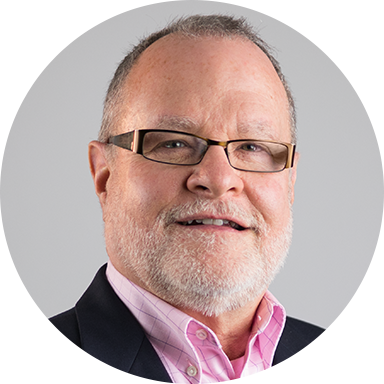
Robert Sheldon stands among the most widely performed composers in wind band music. He serves as lead author of Sound Innovations for Concert Band and has earned multiple prestigious awards from the American School Band Director's Association, Phi Beta Mu, and the American Society of Composers, Authors and Publishers. His compositions connect meaningfully with both performers and listeners, reaching audiences globally through concert programs and competition circuits.
Sheldon maintains an active schedule accepting commissions and releasing numerous publications for concert band annually. He regularly guests conducts All-State and Regional Honor Bands while serving as a clinician at colleges, universities, and state music education conferences. His professional engagements have taken him across the United States and internationally to Japan, Canada, Italy, Germany, Australia, and China. Notable performance venues for his works include Carnegie Hall in New York, Orchestra Hall in Chicago, Symphony Hall in Boston, the Sydney Opera House, and the Kennedy Center for the Performing Arts.
In 2020, VanderCook College of Music recognized Sheldon with an honorary doctorate in acknowledgment of his significant contributions to music education and composition.
Sheldon maintains an active schedule accepting commissions and releasing numerous publications for concert band annually. He regularly guests conducts All-State and Regional Honor Bands while serving as a clinician at colleges, universities, and state music education conferences. His professional engagements have taken him across the United States and internationally to Japan, Canada, Italy, Germany, Australia, and China. Notable performance venues for his works include Carnegie Hall in New York, Orchestra Hall in Chicago, Symphony Hall in Boston, the Sydney Opera House, and the Kennedy Center for the Performing Arts.
In 2020, VanderCook College of Music recognized Sheldon with an honorary doctorate in acknowledgment of his significant contributions to music education and composition.