
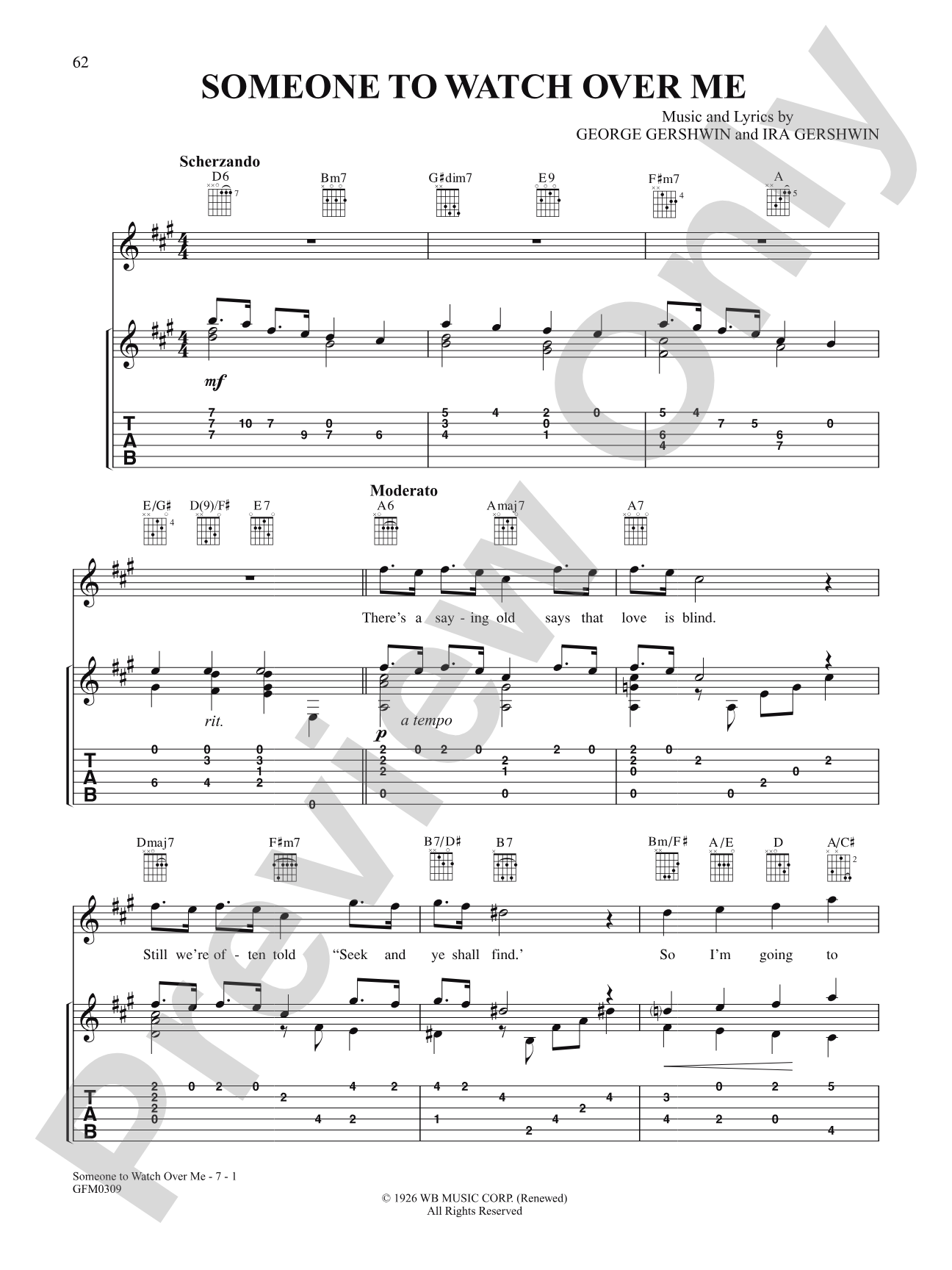
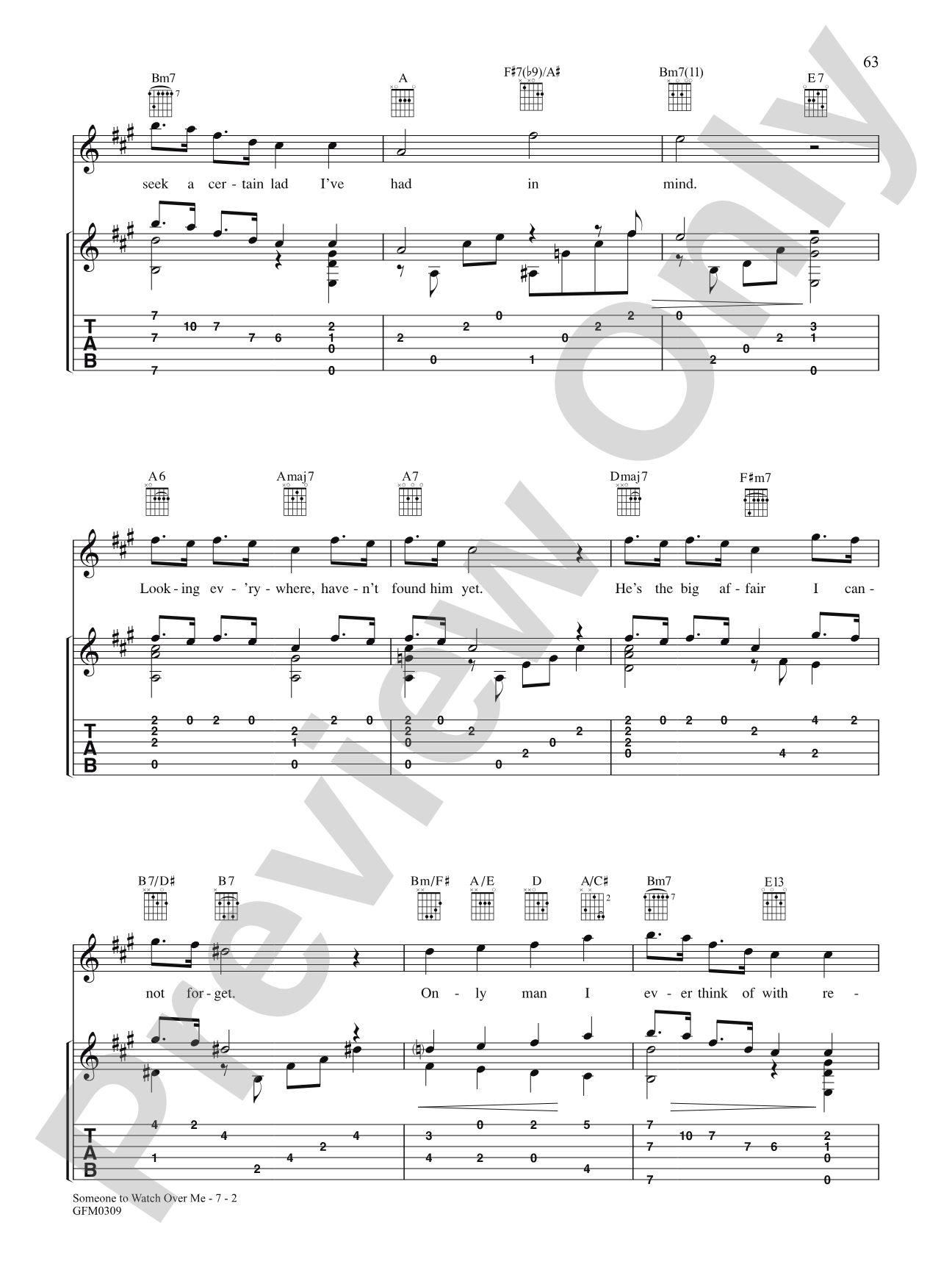

Someone To Watch Over Me (From "Oh, Kay!"): Solo Guitar
Eighteen Classic Standards Arranged As Easy-to-Play Guitar Solos
Arr. Jerry Silverman and Gregory Coleman
Item: 00-PSG-000456
$5.99
One moment…
Related Items
Laura: Solo Guitar |
$5.99
|
View | |
Over The Rainbow (From "The Wizard Of Oz"): Solo Guitar |
$5.99
|
View | |
Ain't Misbehavin': Solo Guitar |
$4.99
|
View | |
My Funny Valentine (From "Babes In Arms"): Solo Guitar |
$4.99
|
View | |
Summertime (From "Porgy And Bess"): Solo Guitar |
$4.99
|
View | |
Love For Sale: Solo Guitar |
$5.99
|
View | |
As Time Goes By (From "Casablanca"): Solo Guitar |
$4.99
|
View | |
What's New?: Solo Guitar |
$4.99
|
View | |
The Days Of Wine And Roses: Solo Guitar |
$4.99
|
View | |
I Got Rhythm: Solo Guitar |
$4.99
|
View | |
Satin Doll (Vocal Version): Solo Guitar |
$4.99
|
View |
Description
Eighteen classic standards in beautiful and playable solo guitar arrangements. Titles are: Ain't Misbehavin' * As Time Goes By * Bye Bye Blackbird * Days of Wine and Roses * Five Foot Two, Eyes of Blue * A Foggy Day * I Got Rhythm * It Had to Be You * Laura * Love for Sale * Misty * My Funny Valentine * Over the Rainbow * Satin Doll * Send in the Clowns * Someone to Watch Over Me * Summertime * What's New?


Someone To Watch Over Me (From "Oh, Kay!"): Solo Guitar isn't in MakeMusic Cloud just yet...but it could be. Let us know you'd like to see it, and you'll help shape what comes next. In the meantime, start a free trial and dive into thousands of interactive titles your students can play along with today.
Request This Title
Tell us you want it.
Start Your Free Trial
Explore everything that's ready to play right now.
Sample Audio
No sample audio found.
Sample Video
No sample videos found.
Additional Details
Series:
Guitar Solo
Publisher:
Alfred Music
Page Count:
84
SKU:
00-PSG-000456
More about this title
About the Composer: George Gershwin
George Gershwin (1898-1937) bridged popular song and concert music with a compositional voice that felt entirely American. His gift for melody and harmonic sophistication shaped standards that remain central to jazz and popular repertoire, and his willingness to write across genres—from Broadway to symphonic works—demonstrated that serious musicianship and popular appeal were not opposing forces.
Why we love this
This collection captures some of the most beloved American standards in arrangements that respect the original melodies while making them genuinely playable on solo guitar. The mix of pieces from different eras and styles gives guitarists real variety within a single, cohesive resource, and the arrangement quality keeps the harmonic sophistication intact without demanding virtuosic technique.
What to expect
These arrangements sit at the intersection of jazz sophistication and accessible lyricism. You'll find yourself drawn into the particular harmonic colors Gershwin favored—the blues inflections, the unexpected chord changes, the warmth of his melodic lines. Playing through this collection feels like inhabiting a specific moment in American musical culture where elegance and accessibility went hand in hand.
Who it's for
Solo guitarists at the intermediate level who want to develop familiarity with jazz standards and American popular song repertoire. This collection suits performers building a recital program, students exploring jazz-influenced composition and harmony, and anyone looking to expand beyond classical guitar literature into historically important songwriting.
How to get the most out of it
- Balance the melody against the harmonic accompaniment by bringing out the top line without letting the supporting chords disappear; these arrangements depend on voice leading to create their full character.
- Work through the chord voicings systematically; Gershwin's harmonic language often uses extended and chromatic chords that reward careful fingering choices.
- Use the tempo flexibility these standards invite; a rubato approach to phrasing can enhance the jazz and ballad elements without losing rhythmic clarity.
- Pay attention to dynamics across longer pieces; the arrangements likely include textural changes that mark section divisions and create narrative arc.
How to use it
Feature individual pieces as solo guitar interludes between larger ensemble works on a concert program, or use several pieces together to create a themed recital around American standards and songwriting. The variety in mood and style within the collection also makes it strong repertoire for a solo guitarist's audition or recital program that needs both lyrical and rhythmically engaging material.
Skills your students will build
- Reading and executing jazz chord voicings and extensions (ninths, thirteenths, altered chords)
- Balancing melody and harmony in a single-line staff arrangement
- Interpreting rubato and swing phrasing in a notated context
- Navigating chromatic harmony and voice leading
- Developing fingering strategies for complex chord shapes and position shifts