
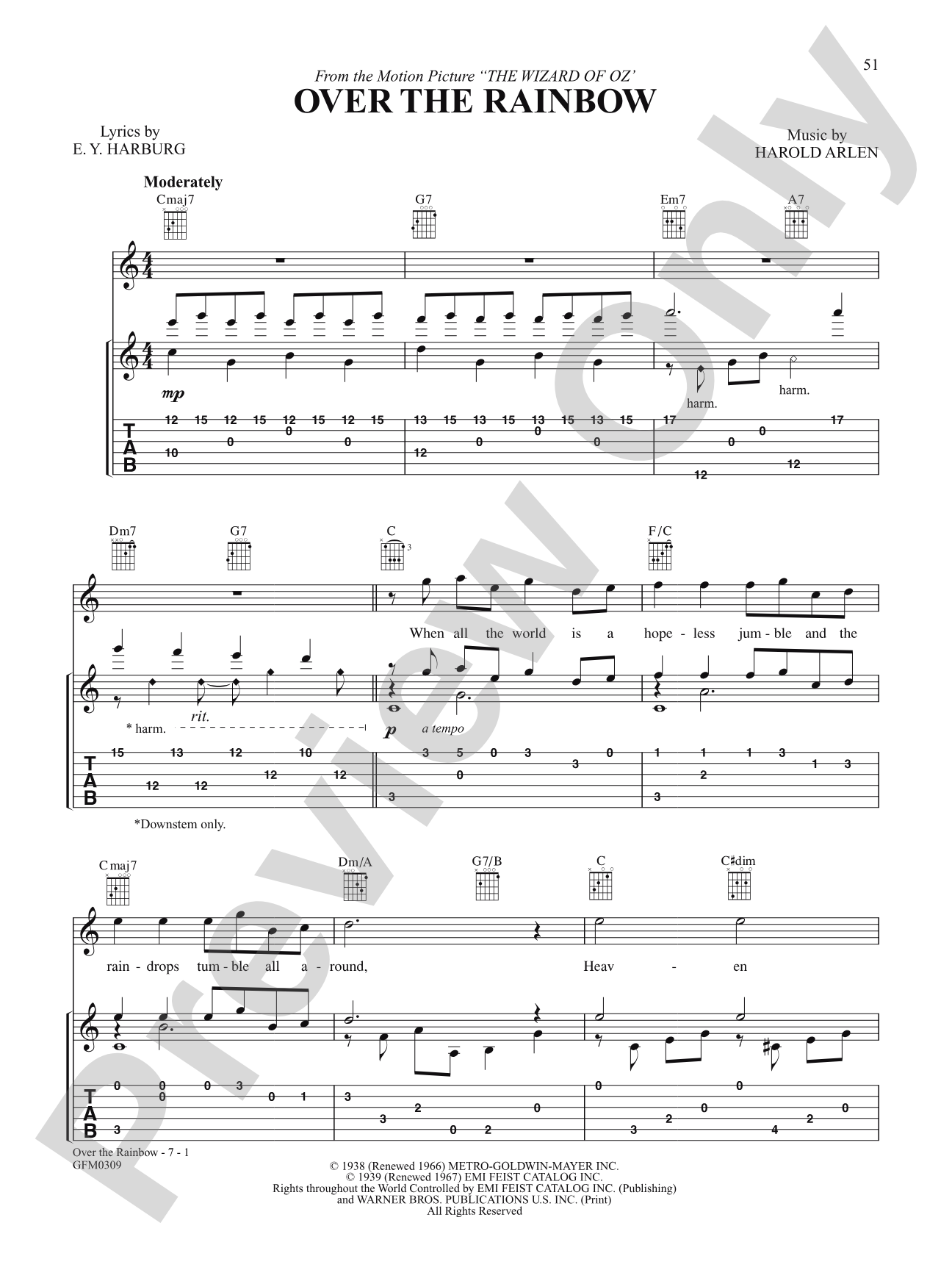
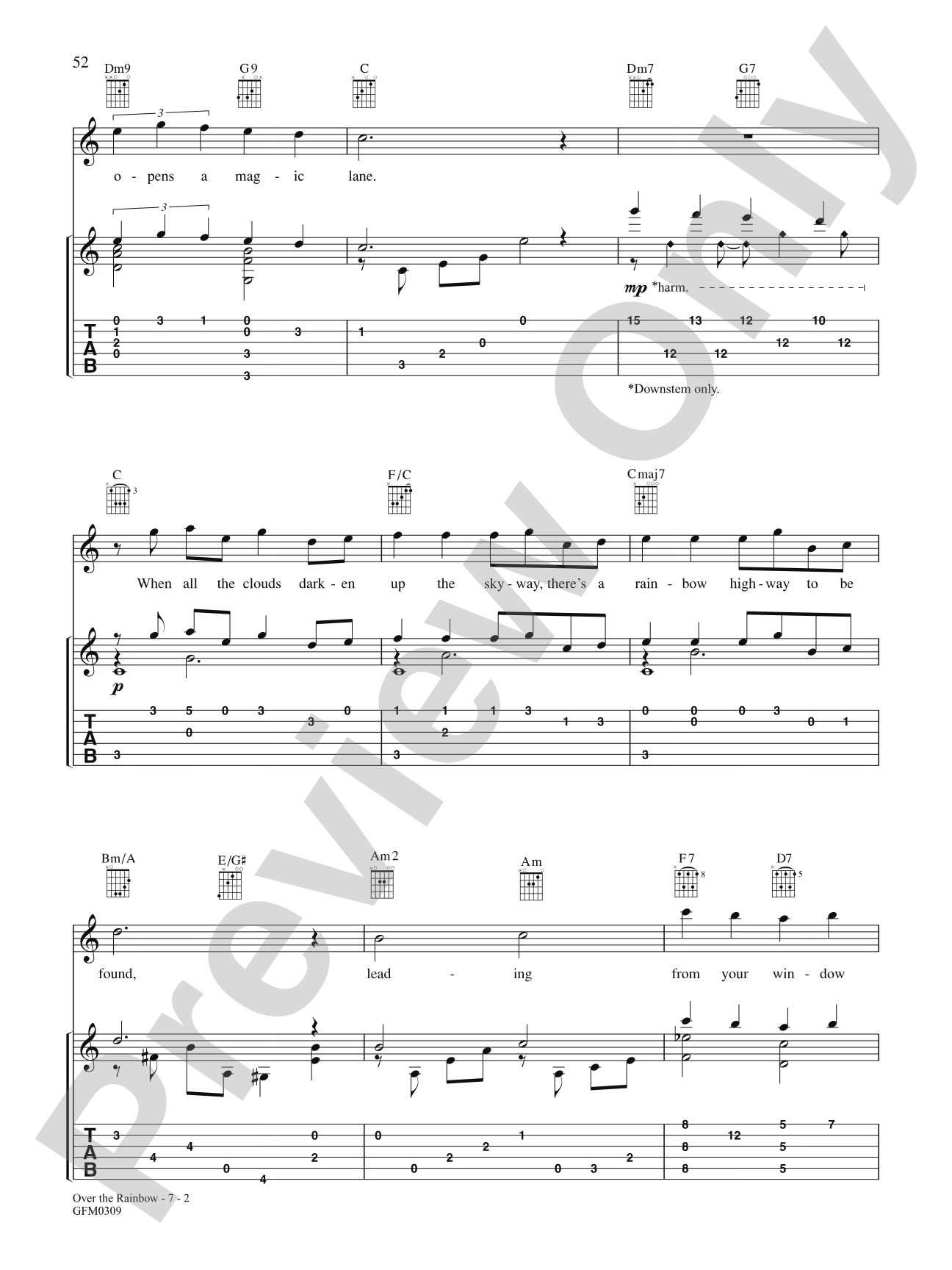

Over The Rainbow (From "The Wizard Of Oz"): Solo Guitar
Eighteen Classic Standards Arranged As Easy-to-Play Guitar Solos
Arr. Jerry Silverman and Gregory Coleman
Item: 00-PSG-000445
$5.99
One moment…
Related Items
Laura: Solo Guitar |
$5.99
|
View | |
Ain't Misbehavin': Solo Guitar |
$4.99
|
View | |
My Funny Valentine (From "Babes In Arms"): Solo Guitar |
$4.99
|
View | |
Summertime (From "Porgy And Bess"): Solo Guitar |
$4.99
|
View | |
Love For Sale: Solo Guitar |
$5.99
|
View | |
As Time Goes By (From "Casablanca"): Solo Guitar |
$4.99
|
View | |
What's New?: Solo Guitar |
$4.99
|
View | |
The Days Of Wine And Roses: Solo Guitar |
$4.99
|
View | |
I Got Rhythm: Solo Guitar |
$4.99
|
View | |
Someone To Watch Over Me (From "Oh, Kay!"): Solo Guitar |
$5.99
|
View | |
Satin Doll (Vocal Version): Solo Guitar |
$4.99
|
View |
Description
Eighteen classic standards in beautiful and playable solo guitar arrangements. Titles are: Ain't Misbehavin' * As Time Goes By * Bye Bye Blackbird * Days of Wine and Roses * Five Foot Two, Eyes of Blue * A Foggy Day * I Got Rhythm * It Had to Be You * Laura * Love for Sale * Misty * My Funny Valentine * Over the Rainbow * Satin Doll * Send in the Clowns * Someone to Watch Over Me * Summertime * What's New?


Discover MakeMusic Cloud: thousands of interactive titles your students can play along with today.
Sample Audio
No sample audio found.
Sample Video
No sample videos found.
Additional Details
Series:
Guitar Solo
Publisher:
Alfred Music
Page Count:
84
SKU:
00-PSG-000445
More about this title
About the Composer: Harold Arlen
Harold Arlen (1905-1986) composed some of the most enduring melodies in American popular music, with a gift for writing memorable, singable lines that have outlasted the specific moments they were written for. Though he worked extensively in film and theater, his songs transcended their original contexts to become standards performed across genres and instruments; his collaboration with lyricist E.Y. Harburg on "The Wizard of Oz" alone secured his place in music history.
Arlen's strength as a composer lay in his melodic invention and harmonic sophistication. His songs contain the kind of musical architecture that rewards close listening and skillful arrangement, making them perennially valuable for musicians developing their interpretive voice. For guitarists, Arlen's melodies offer both accessibility and depth, with chord changes that invite thoughtful voicing choices.
Why we love this
This collection pairs beloved melodies with arrangements that actually sound like guitar music rather than piano transcriptions. Eighteen standards give you genuine repertoire variety without requiring you to hunt through multiple books, and the writing respects the instrument's strengths while keeping the material in a genuinely playable range for developing players.
What to expect
These are songs written for singers and orchestras, now translated to the guitar with all their sophistication intact. The melodies carry the weight of the American songbook, elegant and emotionally direct, while the arrangements invite you into the interpretive tradition these standards represent.
Who it's for
Guitarists with solid fingerstyle technique who want to build a repertoire of standards. This collection suits both recital preparation and casual performance, and the range of keys and styles offers something for intermediate to advanced players developing their interpretive skills.
How to get the most out of it
- Listen to vocal and instrumental recordings of these standards before you perform them; understanding the original interpretations (especially the lyrical phrasing) will inform your choices about tempo, rubato, and where to shape the line.
- Approach the harmonic voicings as suggestions rather than requirements. These arrangements work well with some experimentation, and substituting voicings that sit more naturally under your fingers often improves both sound and confidence.
- Give yourself permission to breathe between phrases, even in solo guitar music. The standards tradition thrives on phrasing clarity, and brief pauses often serve the melodic line better than continuous playing.
How to use it
These standards work equally well in a classical guitar recital or a jazz-inflected program, as opening pieces that set a reflective tone or as encores. You might also use them individually to build a themed program around a specific era or mood, since the collection spans both upbeat and balladic material.
Skills your students will build
- Voice leading across extended harmonic progressions
- Fingerstyle arrangement interpretation and voicing choices
- Phrasing and rubato within the standards tradition
- Reading and executing jazz chord symbols and chord melody textures
- Stylistic awareness of American popular song composition