
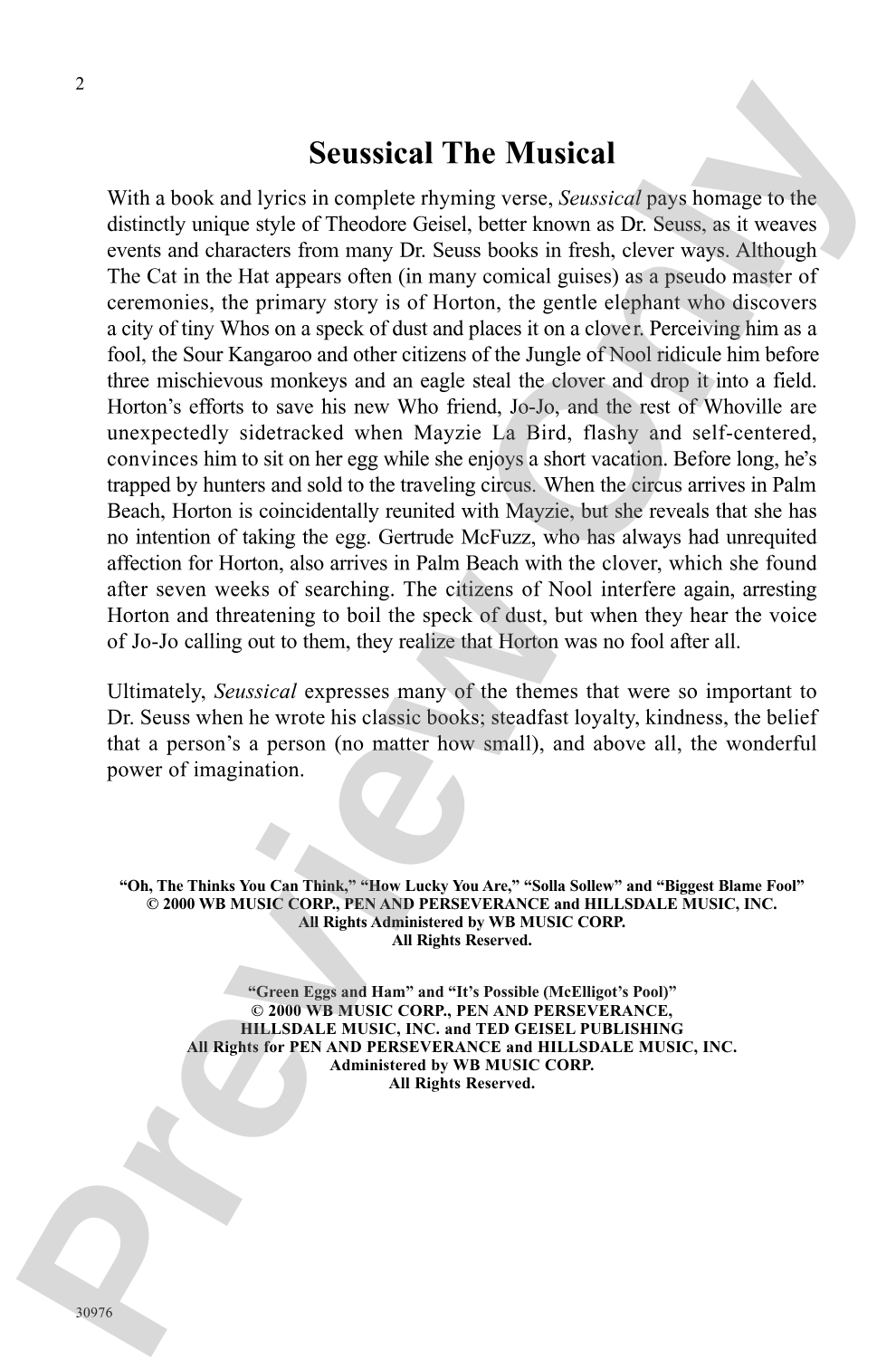
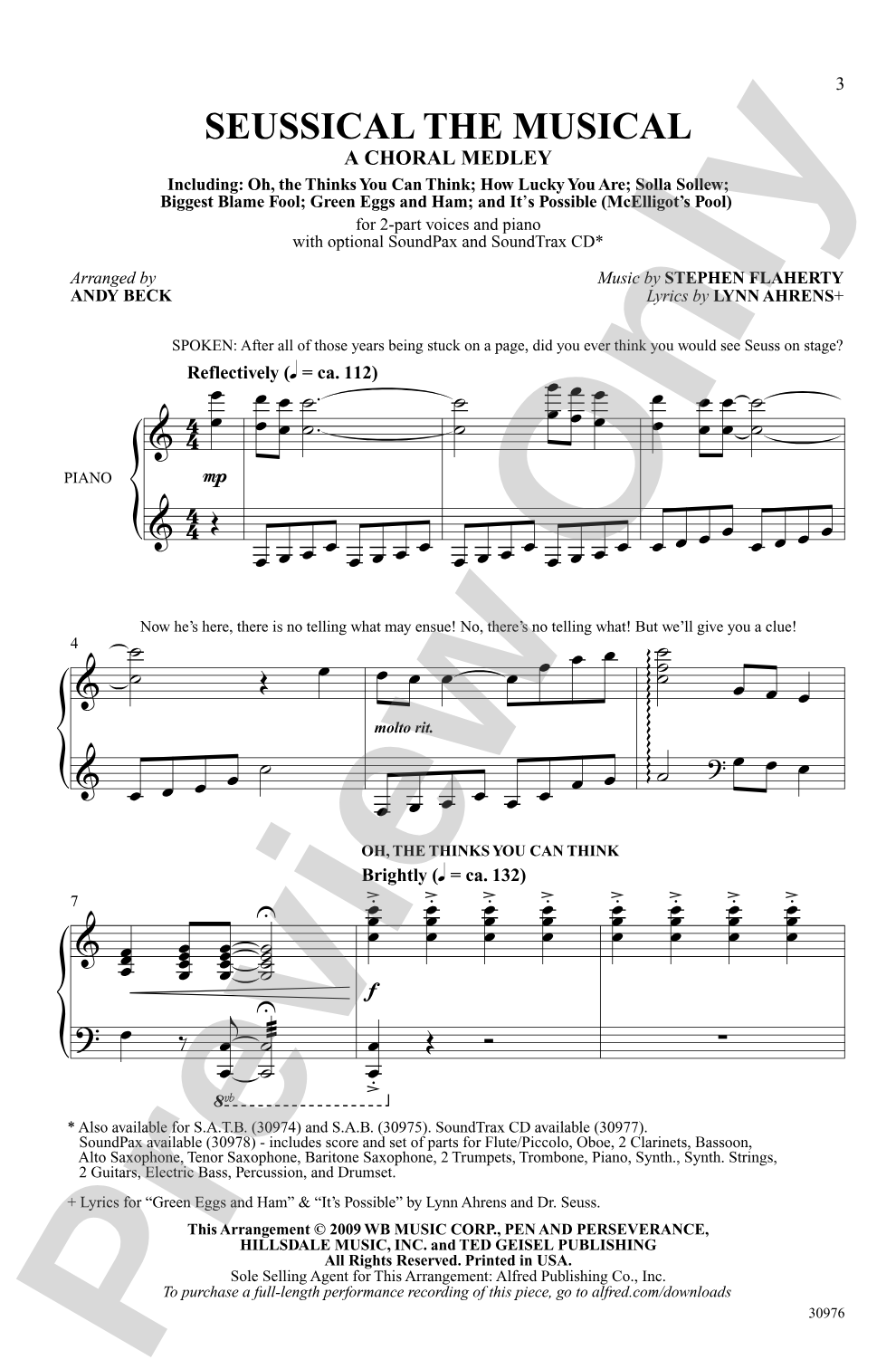
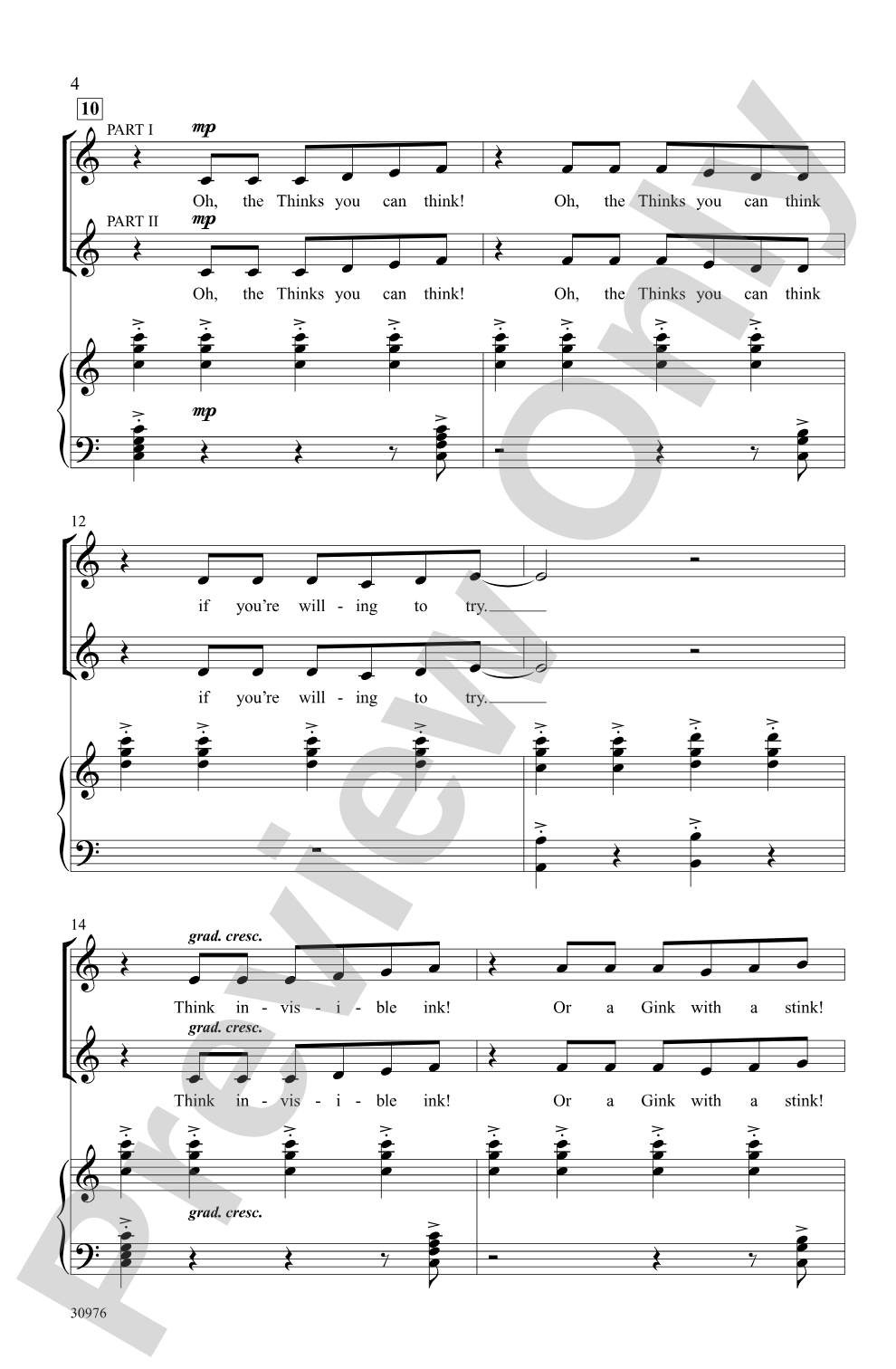
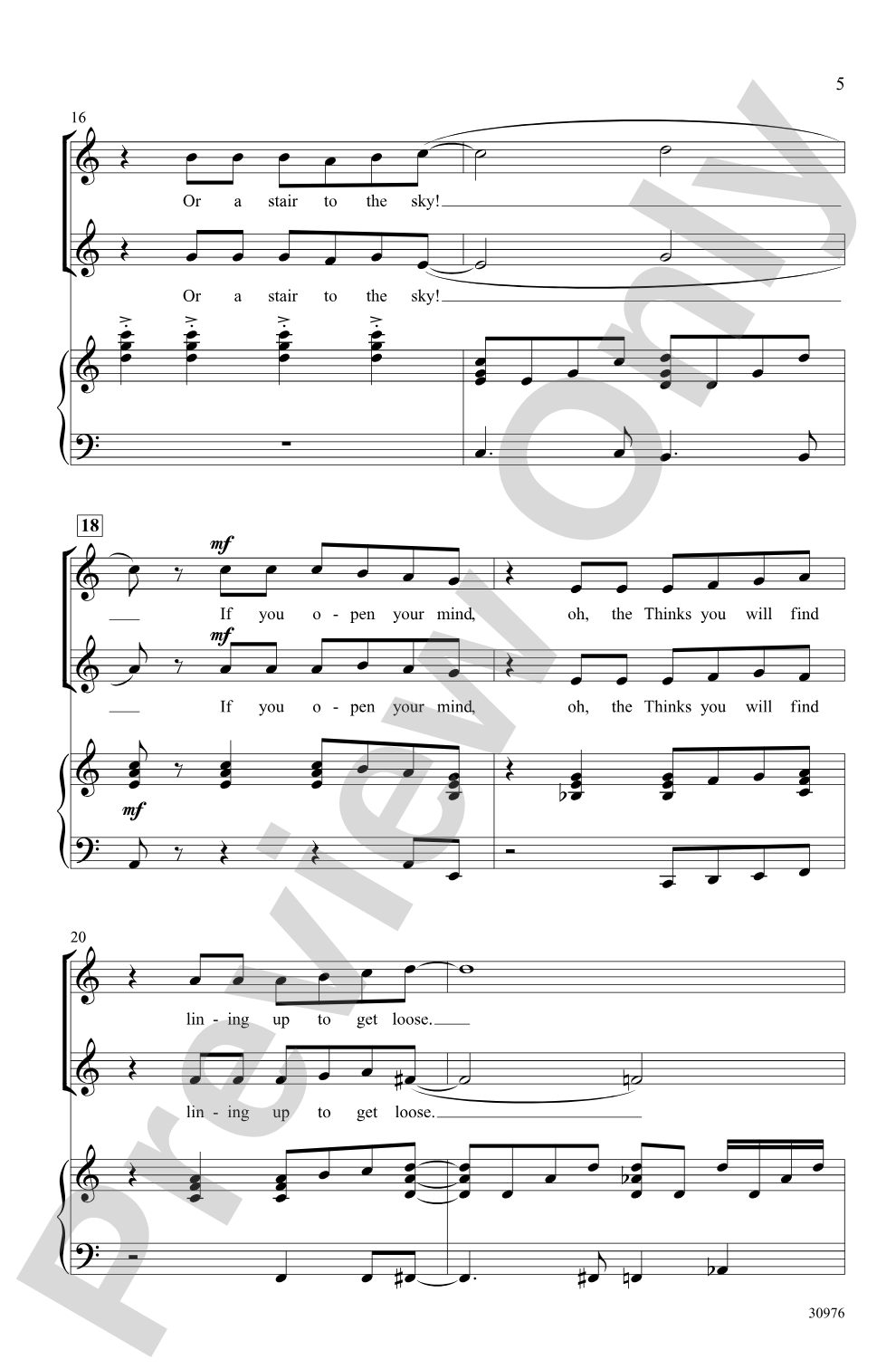
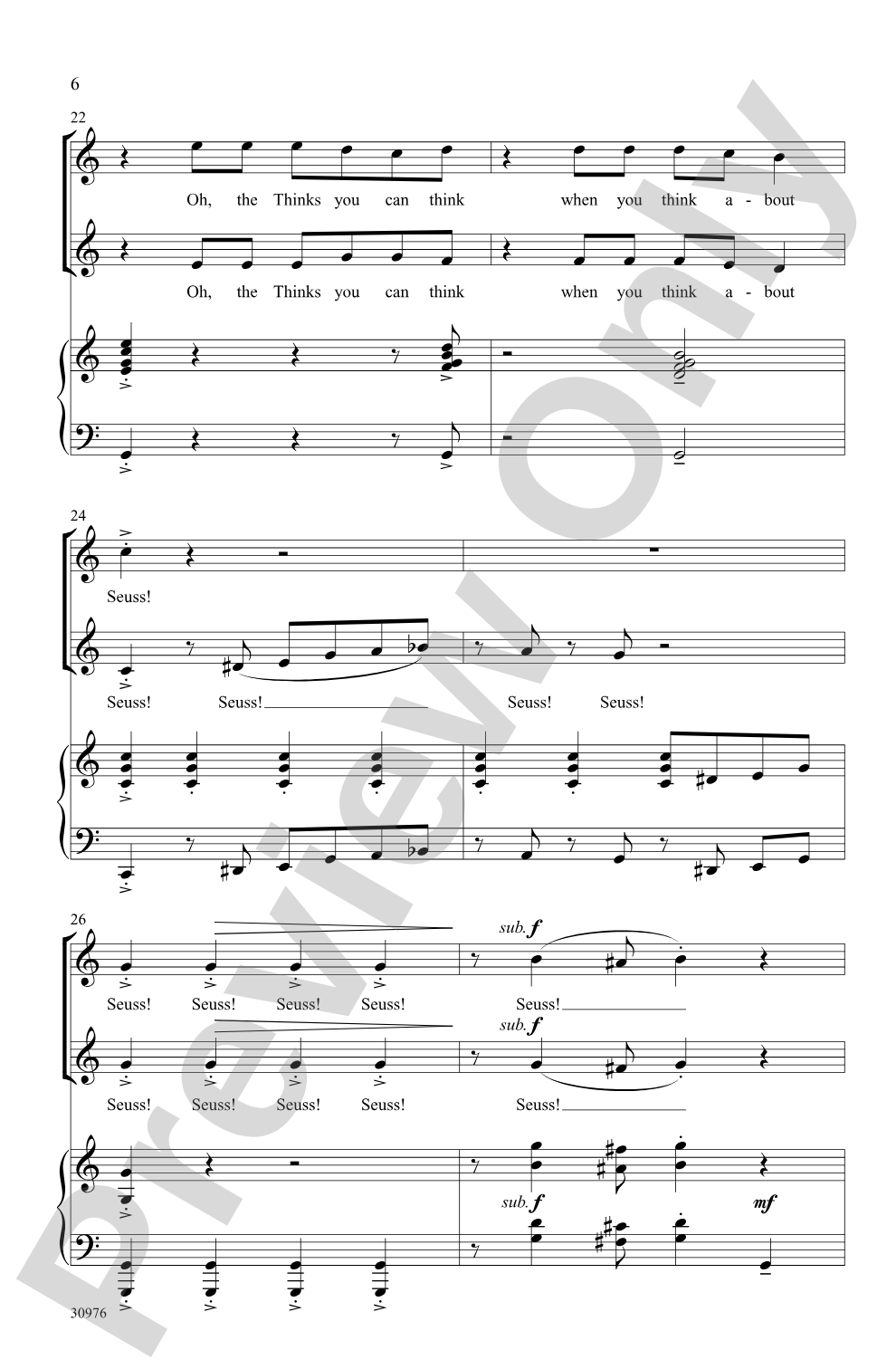
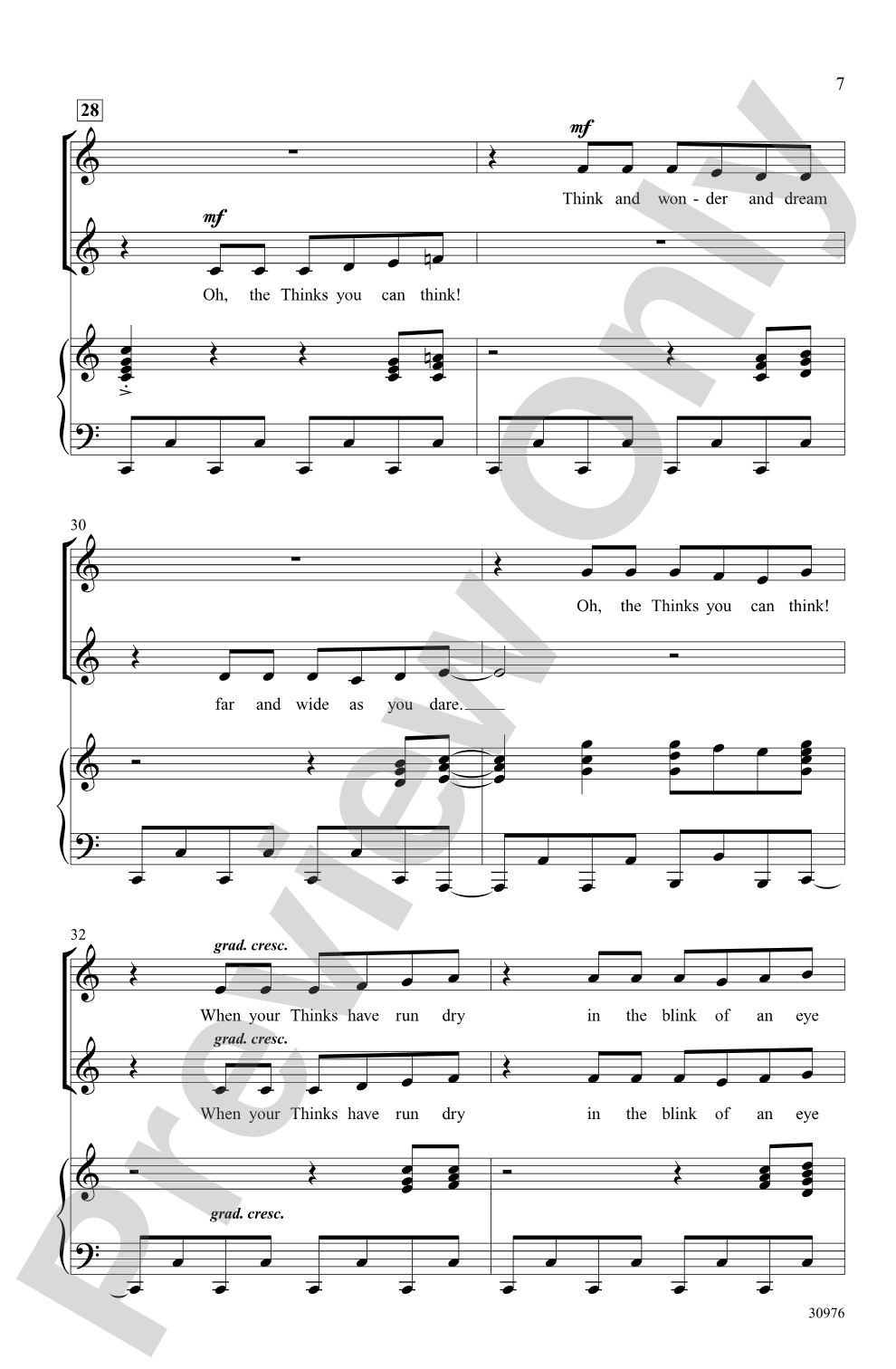
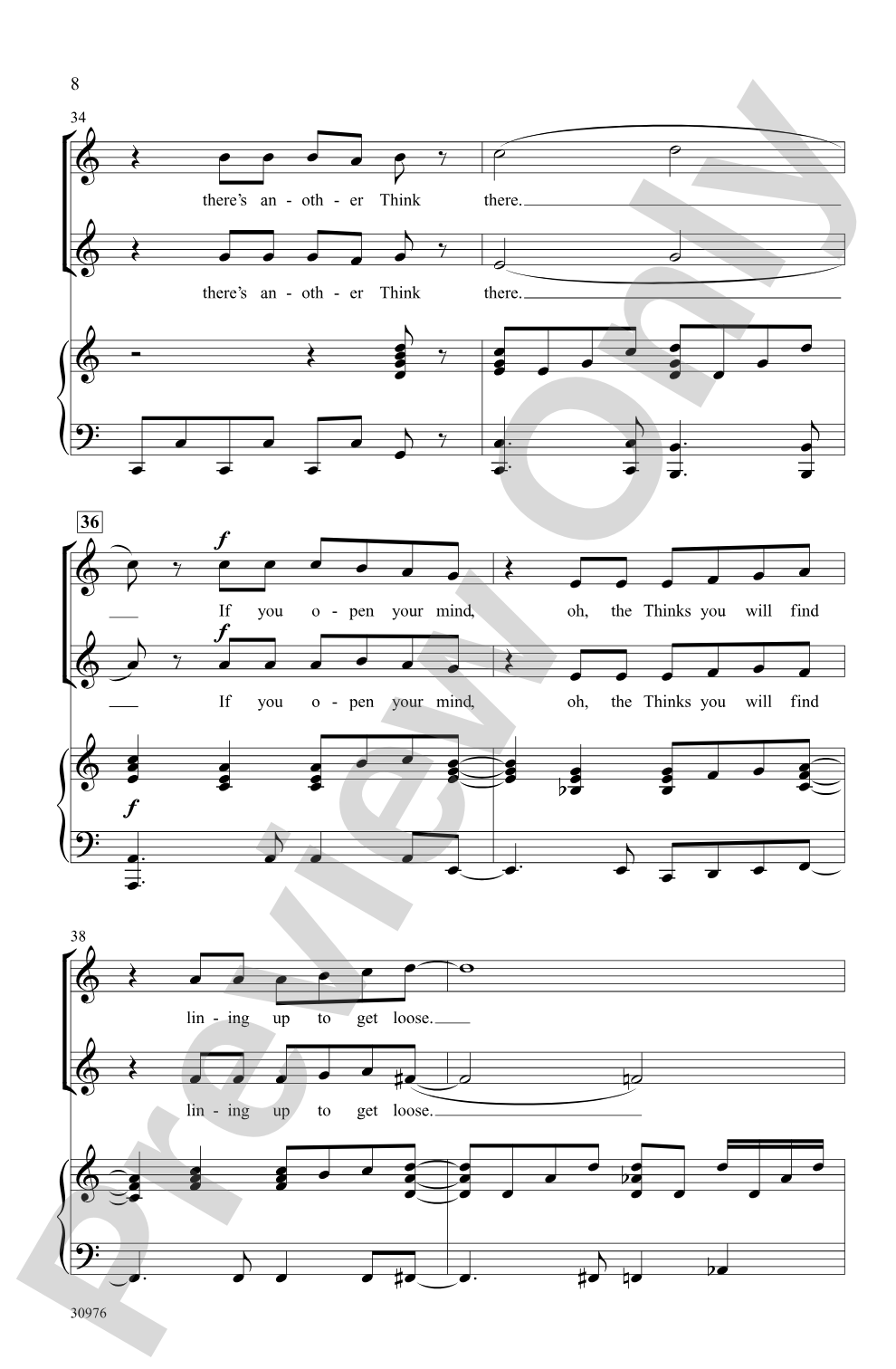
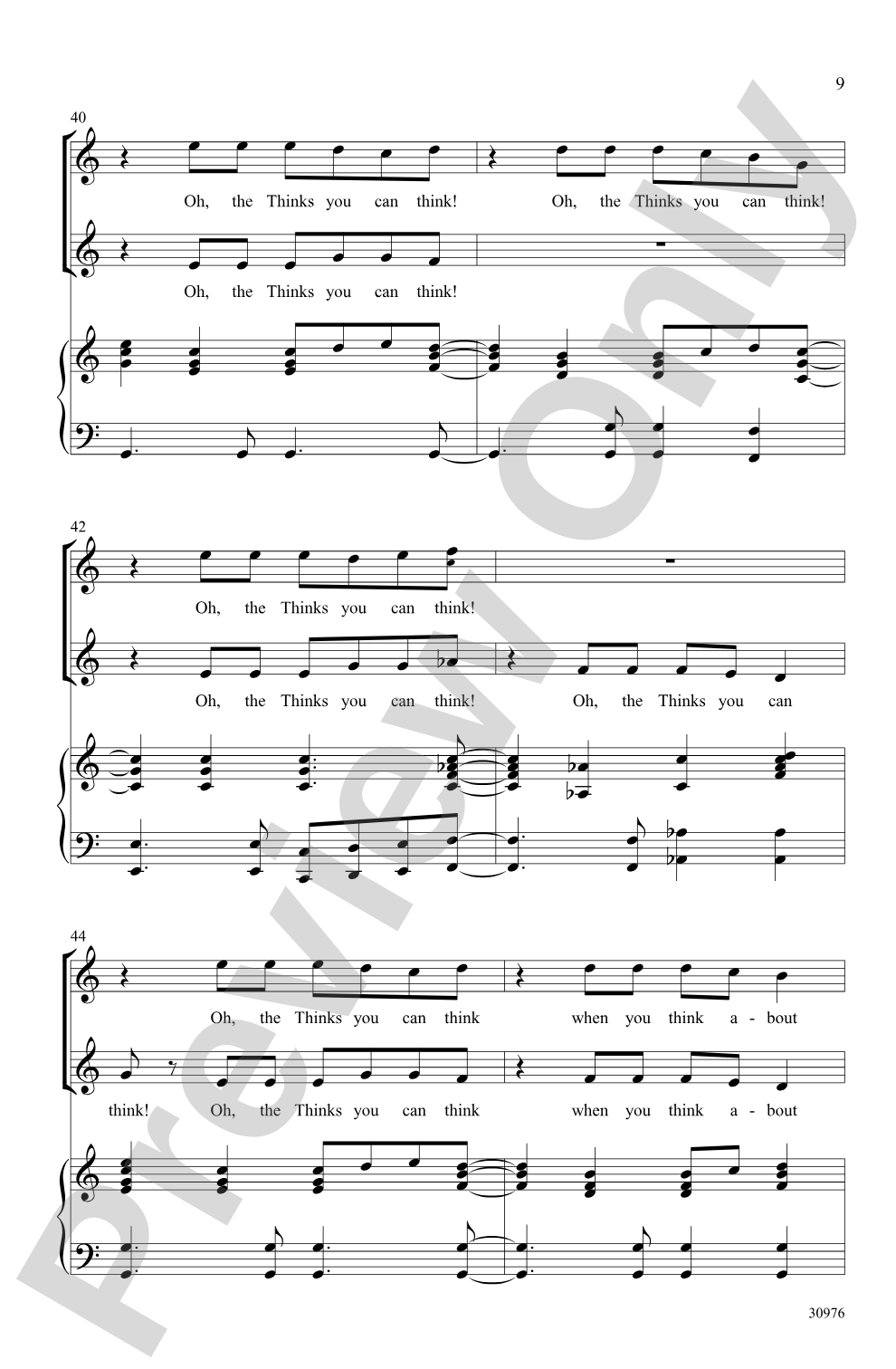
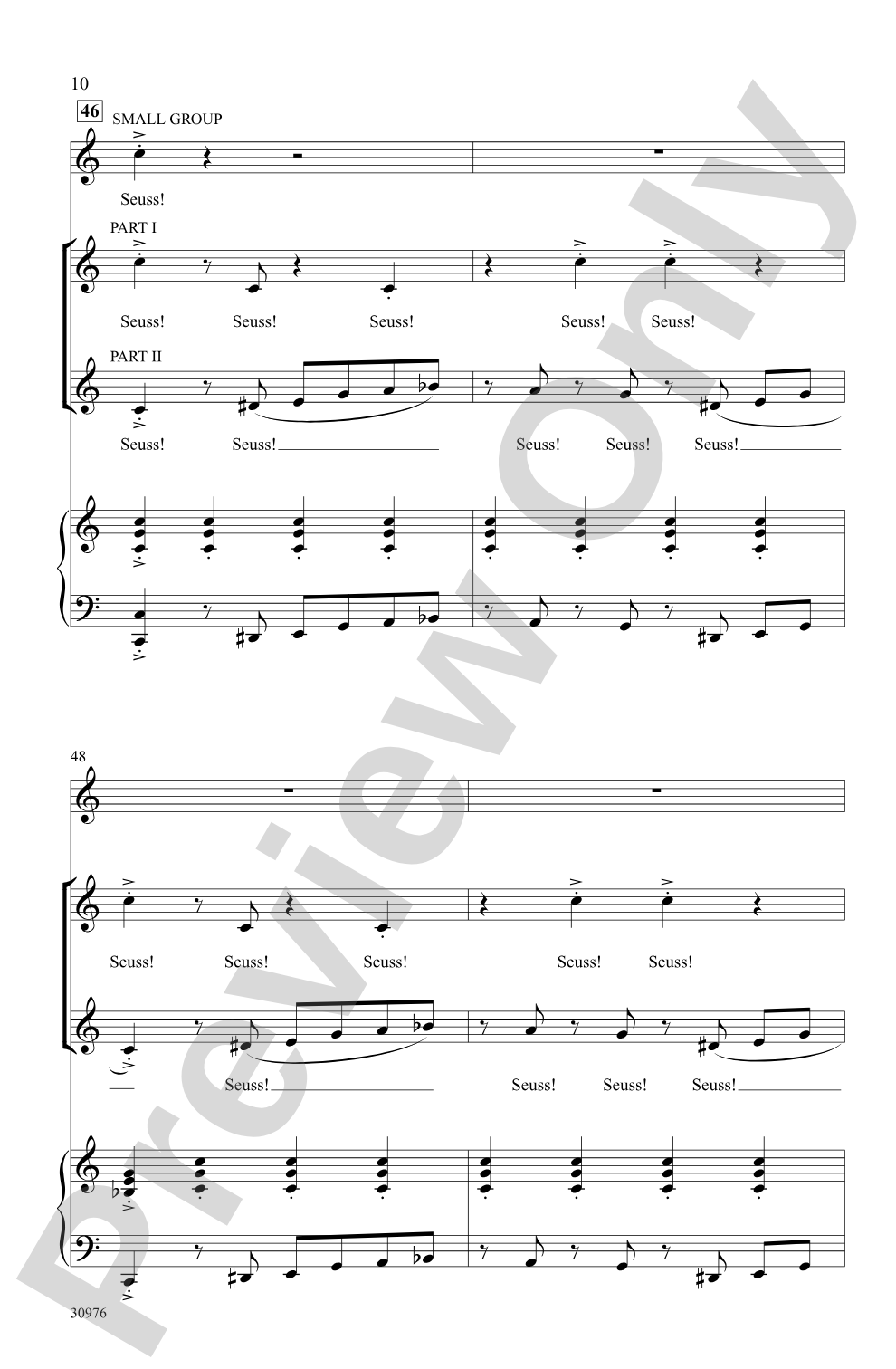
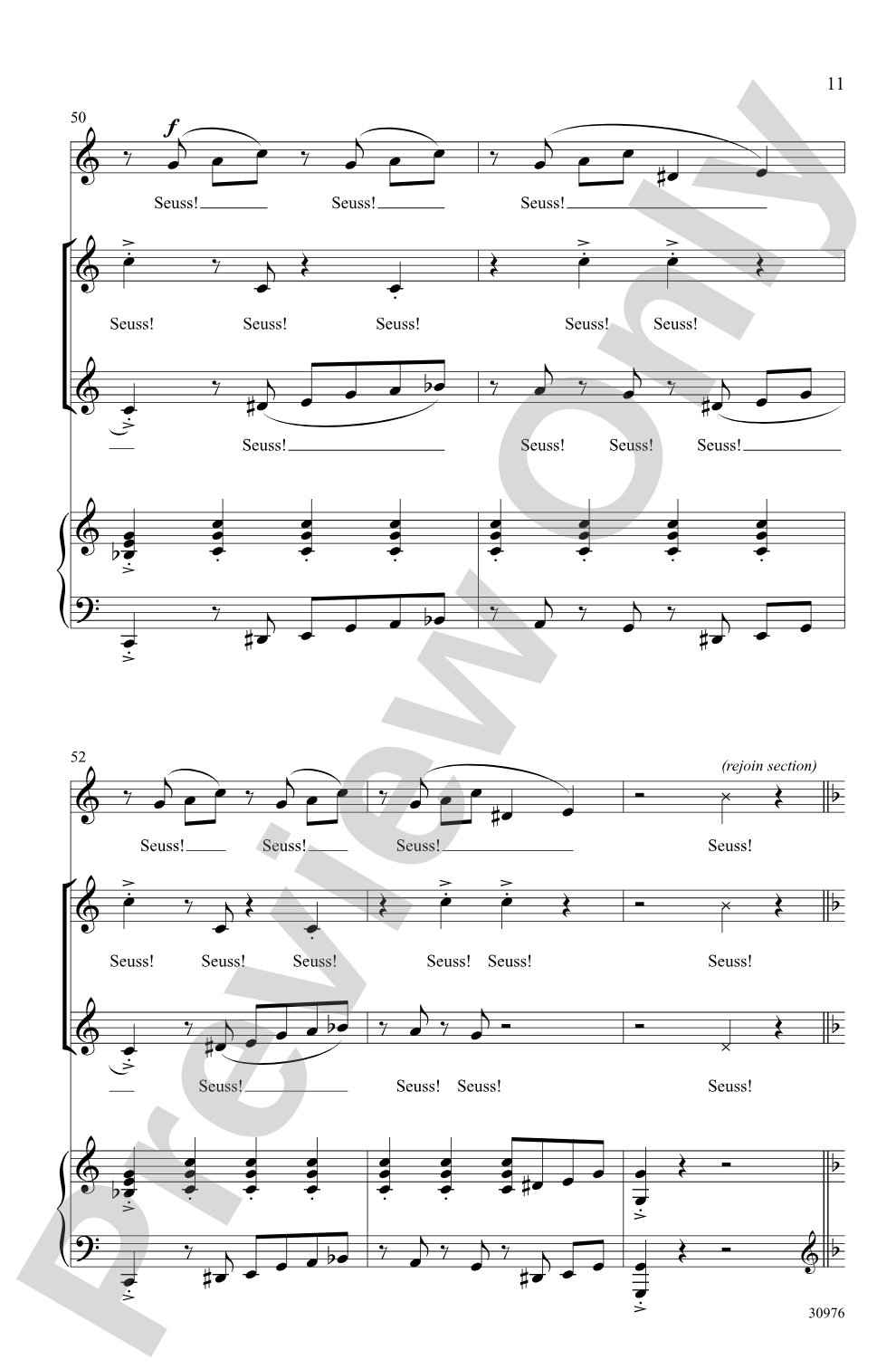

Seussical the Musical: A Choral Medley: 2-Part Choral Octavo
Featuring: Oh, the Thinks You Can Think / How Lucky You Are / Solla Sollew / Biggest Blame Fool / Green Eggs and Ham / It's Possible (In McElligot's Pool)
Music by Stephen Flaherty, lyrics by Lynn Ahrens and Dr. Seuss / arr. Andy Beck
Item: 00-PO-0002315
$4.99
Minimum order quantity: 20 copies
One moment…
Related Items
Seussical the Musical: A Choral Medley: SoundTrax Digital Audio Download |
$64.99
|
View | |
Seussical the Musical: A Choral Medley: SAB Choral Octavo |
$4.99
|
View | |
Seussical the Musical: A Choral Medley: Choral SoundPax |
$60.00
|
View | |
Seussical the Musical: A Choral Medley: SATB Choral Octavo |
$4.95
|
View | |
Seussical the Musical: A Choral Medley: 2-Part Choral Octavo |
$4.99
|
View | |
Seussical the Musical: A Choral Medley: Choral SoundPax |
$60.00
|
View |
Description
The Ahrens and Flaherty score you admire;
A 10-minute medley when sung by your choir.
And Dr. Seuss characters penned for the page
Are "stars of the show" on the Seussical stage!
So gather the singers, assemble the cast,
Get ready to have a fantastical blast.
Make way for the choir (a large one, or small),
'Cause this is a showstopper, perfect for all!
Songs include: Oh, the Thinks You Can Think * How Lucky You Are * Solla Sollew * Biggest Blame Fool * Green Eggs and Ham * It's Possible (McElligot's Pool).


A 10-minute medley when sung by your choir.
And Dr. Seuss characters penned for the page
Are "stars of the show" on the Seussical stage!
So gather the singers, assemble the cast,
Get ready to have a fantastical blast.
Make way for the choir (a large one, or small),
'Cause this is a showstopper, perfect for all!
Songs include: Oh, the Thinks You Can Think * How Lucky You Are * Solla Sollew * Biggest Blame Fool * Green Eggs and Ham * It's Possible (McElligot's Pool).
Seussical the Musical: A Choral Medley: 2-Part Choral Octavo isn't in MakeMusic Cloud just yet...but it could be. Let us know you'd like to see it, and you'll help shape what comes next. In the meantime, start a free trial and dive into thousands of interactive titles your students can play along with today.
Request This Title
Tell us you want it.
Start Your Free Trial
Explore everything that's ready to play right now.
Sample Audio
1
Audio File
--:--
0:00
0:00
Sample Video
No sample videos found.
Additional Details
Series:
Alfred Pop Choral Series
Publisher:
Alfred Music
Page Count:
46
SKU:
00-PO-0002315
More about this title
About the Composer: Stephen Flaherty
Stephen Flaherty is a composer whose theatrical work spans Broadway, film, and concert music. His scores for Anastasia, Ragtime, and Seussical have shaped contemporary musical theater, earning him Tony Award nominations and a reputation for creating accessible yet sophisticated melodies that work equally well for professional and educational productions.
Why we love this
Andy Beck's arrangement captures the infectious joy and theatrical momentum of the Seussical score while keeping the vocal writing singable for mixed-age 2-part choirs. The medley structure lets you program a 10-minute show-stopper without committing to a full musical, making this ideal for concert finales, spring pops shows, or festivals where you need maximum impact with minimum rehearsal time.
What to expect
Whimsical, exuberant, and delightfully theatrical. The harmonic language bounces between major-key brightness and unexpected turns that echo the playful absurdity of Dr. Seuss, while Flaherty's melodic gift keeps every moment singable and memorable. Your choir steps into a world where green eggs and impossibly wonderful things are not just permissible but inevitable.
Who it's for
Directors with developing to intermediate 2-part choirs who want substantial concert material with immediate theatrical appeal. This works for middle school choirs growing into more complex textures, high school choirs seeking fun programming alternatives to traditional repertoire, and community ensembles looking for contemporary Broadway energy.
How to get the most out of it
- Layer in the recorded accompaniment during rehearsals to anchor harmonic progressions, then gradually pull it back as your singers gain independence with the melodic lines.
- Mark character moments and scene transitions in your score so singers understand which Seussian personality drives each section; this transforms the medley from a song collection into a story told through music.
- Balance the two parts so neither dominates; the interplay between them creates the harmonic color, so both voices need clarity and presence.
- Build ensemble precision on the transitions between songs; clean section breaks will make the 10-minute arc feel polished rather than episodic.
How to use it
Open a spring or pops concert with this medley to set a celebratory tone, or close your season with it as a finale that leaves audiences smiling. It pairs naturally with other contemporary choral selections or stands alone as a conversation starter for younger singers discovering that concert music can be genuinely fun.
Skills your students will build
- Singing in two-part harmony with emphasis on blend and balance between parts
- Tracking multiple song sections and managing tempo/style shifts within a medley
- Performing with dramatic intention and character-specific phrasing
- Reading contemporary Broadway-influenced harmonic language