
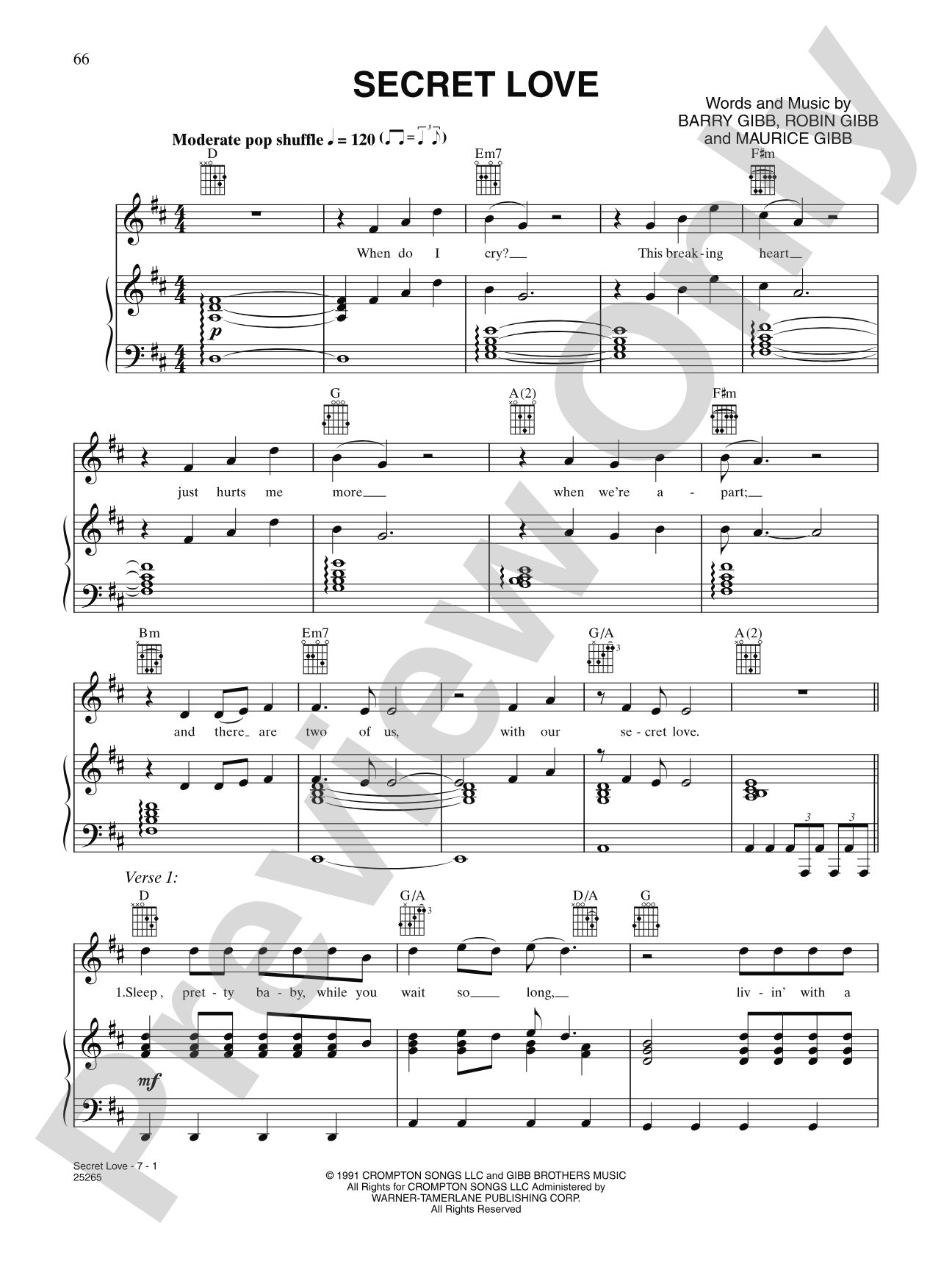
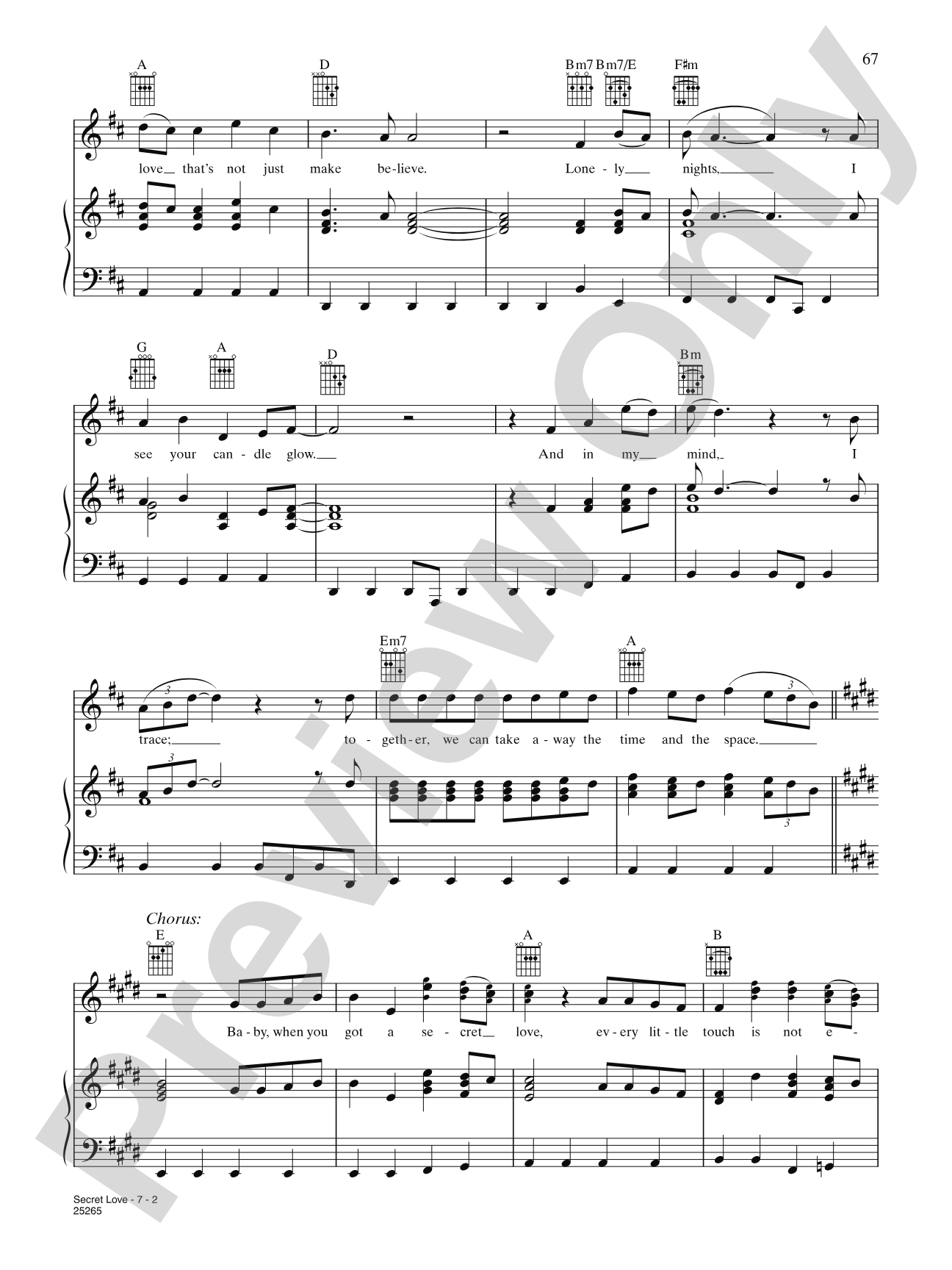

Secret Love: Piano/Vocal/Chords
Bee Gees
Item: 00-PSP-000036
$5.99
One moment…
Related Items
(Our Love) Don't Throw It All Away: Piano/Vocal/Chords |
$4.99
|
View | |
Emotion: Piano/Vocal/Chords |
$4.99
|
View | |
First Of May: Piano/Vocal/Chords |
$4.99
|
View | |
Heartbreaker: Piano/Vocal/Chords |
$5.99
|
View | |
How Can You Mend A Broken Heart: Piano/Vocal/Chords |
$4.99
|
View | |
How Deep Is Your Love: Piano/Vocal/Chords |
$4.99
|
View | |
I Could Not Love You More: Piano/Vocal/Chords |
$4.99
|
View | |
Islands In The Stream: Piano/Vocal/Chords |
$4.99
|
View | |
Lonely Days: Piano/Vocal/Chords |
$5.99
|
View | |
More Than A Woman: Piano/Vocal/Chords |
$4.99
|
View | |
To Love Somebody: Piano/Vocal/Chords |
$4.99
|
View | |
Too Much Heaven: Piano/Vocal/Chords |
$5.99
|
View | |
Words: Piano/Vocal/Chords |
$4.99
|
View |
Description
Titles: To Love Somebody * Words * First of May * Lonely Days * How Can You Mend a Broken Heart * How Deep Is Your Love * More Than a Woman * (Our Love) Don't Throw It All Away * Emotion * Too Much Heaven * Heartbreaker * Islands in the Stream * Juliet * Secret Love * For Whom the Bell Tolls * Closer Than Close * I Could Not Love You More * Wedding Day.


Secret Love: Piano/Vocal/Chords isn't in MakeMusic Cloud just yet...but it could be. Let us know you'd like to see it, and you'll help shape what comes next. In the meantime, start a free trial and dive into thousands of interactive titles your students can play along with today.
Request This Title
Tell us you want it.
Start Your Free Trial
Explore everything that's ready to play right now.
Sample Audio
No sample audio found.
Sample Video
No sample videos found.
Additional Details
Publisher:
Alfred Music
Page Count:
100
SKU:
00-PSP-000036
More about this title
About the Artist: Bee Gees
The Bee Gees (Barry, Robin, and Maurice Gibb) emerged from the late 1960s as one of popular music's most prolific songwriting and performing acts. Their mastery of melody, harmony, and production shaped disco, pop, and adult contemporary music across five decades, with compositions that balanced sophisticated arranging with immediate emotional accessibility.
For music educators, the Bee Gees catalogue represents a goldmine of functional harmony, vocal layering, and melodic writing that rewards both ensemble singers and solo pianists. Their ballads in particular offer singers rich harmonic landscapes and sustained legit technique, while their more upbeat selections showcase dynamic range and rhythmic precision.
Why we love this
This collection captures the Bee Gees at their most vocally and harmonically sophisticated, spanning from intimate ballads like "How Deep Is Your Love" to richly orchestrated songs such as "Islands in the Stream." Pianists gain access to well-crafted accompaniments with clear chord changes, while singers find repertoire that demands both technical control and emotional maturity. The sheer variety means directors can program a cohesive concert built entirely around one artist without repetition in mood or musical substance.
What to expect
Lush, emotionally generous, and burnished with sophisticated harmonies. These songs navigate longing, celebration, and tenderness with melodic clarity and harmonic depth that feels both immediate and enduring. Whether intimate or soaring, the Bee Gees' sound wraps listeners in warmth.
Who it's for
Pianists seeking substantial solo and accompanying repertoire, singers developing legit technique through well-written pop standards, and directors programming recitals, showcases, or concert series that build around a single beloved artist. This collection also serves intermediate to advanced students who thrive with contemporary material grounded in real harmonic and melodic craft.
How to get the most out of it
- Study the vocal phrasing in recordings before attempting these arrangements; the Bee Gees' signature use of rests, syncopation, and breath placement shapes the character of each song.
- Nail the harmonic movement in slower ballads by practicing the chord changes separately from the melody, then layer them together; these songs reward clean voice leading.
- Lock in with the written rhythms during upbeat selections, especially in songs like "Emotion" where syncopation against a steady accompaniment drives the energy.
- Pay attention to the chord voicings printed in the score, as they often suggest important harmonic colors that lift a simple melody into something more sophisticated.
How to use it
Build an entire pop standards recital around this collection, or intersperse selections throughout a broader concert to showcase stylistic range. A vocalist might pair one or two slower ballads with a contrasting upbeat number to demonstrate versatility, while a pianist can draw from the accompaniment arrangements to support student singers or perform solo selections.
Skills your students will build
- Singing with sustained legit tone over rich harmonic accompaniment
- Reading chord symbols and interpreting harmonic voicings at the keyboard
- Recognizing and executing syncopated rhythms in pop and disco-influenced grooves
- Balancing melody with harmonic complexity in arrangements that avoid oversimplification
- Shaping phrasing in ballads that reward both technical precision and emotional restraint