
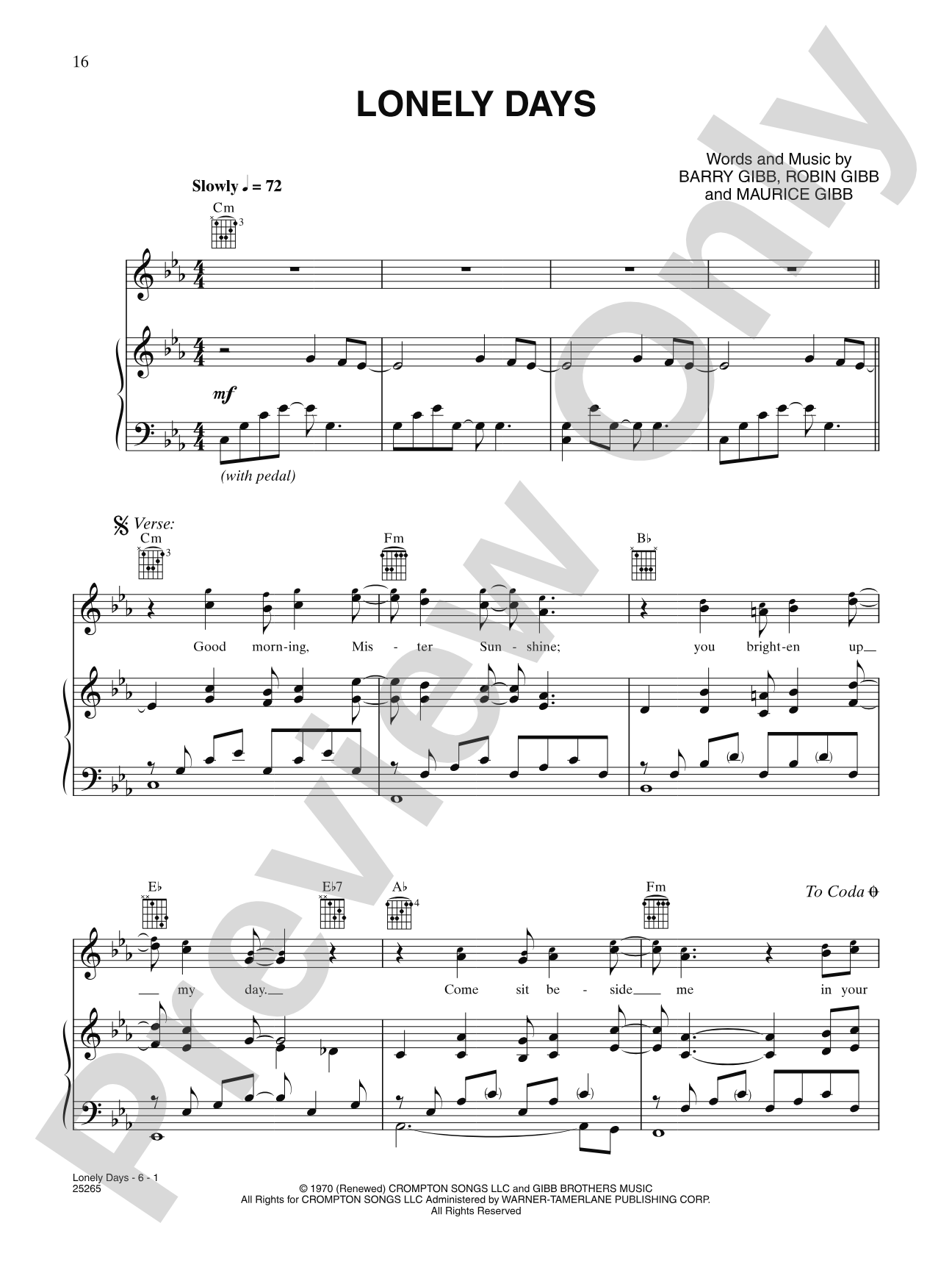
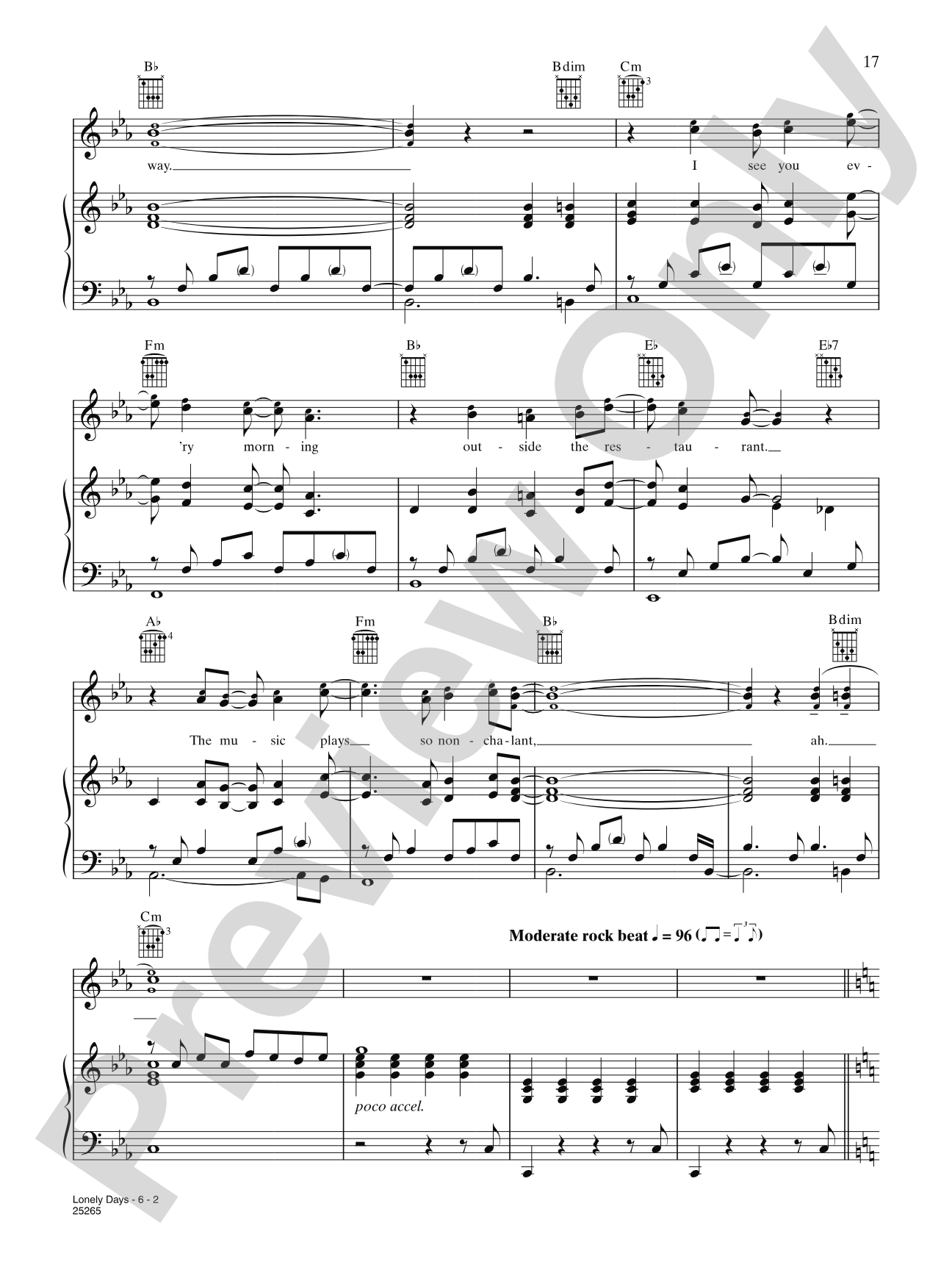

Lonely Days: Piano/Vocal/Chords
Bee Gees
Item: 00-PSP-000034
$5.99
One moment…
Related Items
(Our Love) Don't Throw It All Away: Piano/Vocal/Chords |
$4.99
|
View | |
Emotion: Piano/Vocal/Chords |
$4.99
|
View | |
First Of May: Piano/Vocal/Chords |
$4.99
|
View | |
Heartbreaker: Piano/Vocal/Chords |
$5.99
|
View | |
How Can You Mend A Broken Heart: Piano/Vocal/Chords |
$4.99
|
View | |
How Deep Is Your Love: Piano/Vocal/Chords |
$4.99
|
View | |
I Could Not Love You More: Piano/Vocal/Chords |
$4.99
|
View | |
Islands In The Stream: Piano/Vocal/Chords |
$4.99
|
View | |
More Than A Woman: Piano/Vocal/Chords |
$4.99
|
View | |
Secret Love: Piano/Vocal/Chords |
$5.99
|
View | |
To Love Somebody: Piano/Vocal/Chords |
$4.99
|
View | |
Too Much Heaven: Piano/Vocal/Chords |
$5.99
|
View | |
Words: Piano/Vocal/Chords |
$4.99
|
View |
Description
Titles: To Love Somebody * Words * First of May * Lonely Days * How Can You Mend a Broken Heart * How Deep Is Your Love * More Than a Woman * (Our Love) Don't Throw It All Away * Emotion * Too Much Heaven * Heartbreaker * Islands in the Stream * Juliet * Secret Love * For Whom the Bell Tolls * Closer Than Close * I Could Not Love You More * Wedding Day.


Lonely Days: Piano/Vocal/Chords isn't in MakeMusic Cloud just yet...but it could be. Let us know you'd like to see it, and you'll help shape what comes next. In the meantime, start a free trial and dive into thousands of interactive titles your students can play along with today.
Request This Title
Tell us you want it.
Start Your Free Trial
Explore everything that's ready to play right now.
Sample Audio
No sample audio found.
Sample Video
No sample videos found.
Additional Details
Publisher:
Alfred Music
Page Count:
100
SKU:
00-PSP-000034
More about this title
About the Artist: Bee Gees
The Bee Gees emerged in the 1960s as one of pop music's most prolific songwriting and recording acts, crafting some of the era's most enduring melodies across rock, pop, and disco genres. Their harmonic sophistication, falsetto vocals, and gift for emotionally direct songwriting made them essential to music education curricula, particularly for students learning to arrange and interpret pop standards. The group's catalog spans decades of chart success and remains a touchstone for understanding contemporary vocal harmony and production in popular music.
Why we love this
This collection pairs some of the Bee Gees' most accessible melodic writing with straightforward piano voicings, making it invaluable for students learning to marry vocal phrasing with keyboard accompaniment. The songs span their artistic range—from uptempo pop to intimate ballads—giving singers and pianists real variety in emotional register and technical demand within a single resource. Teachers will appreciate the blend of recognizable hits and deeper cuts, all written in singable keys with chord symbols that support improvisation and transposition.
What to expect
These songs radiate emotional clarity—whether soaring with hope or tender with heartbreak. The piano writing supports rather than overwhelms, creating space for the voice to shine while maintaining sophisticated harmonic movement beneath. There's an unmistakable warmth throughout the collection, a hallmark of Bee Gees songwriting that feels both polished and deeply human.
Who it's for
This collection serves singers and pianists working at intermediate to advanced levels who want to build their repertoire with pop standards that require genuine musicianship. Voice students preparing for recitals, auditions, or ensemble work will find songs that demonstrate control, interpretation, and stylistic maturity. Pianists accompanying vocalists will develop skills in supporting a singer's phrasing while managing harmonic complexity and rhythmic independence.
How to get the most out of it
- Balance the vocal melody against the piano part by identifying where each song sits within your students' range; transpose strategically rather than forcing uncomfortable keys
- Use the chord symbols as a springboard for exploring different voicings and rhythmic feels; these songs invite creative reharmonization and contemporary accompaniment styles
- Pay attention to the distinctive vocal timbre each song requires; the intimacy of a ballad like 'How Can You Mend a Broken Heart' demands different interpretive choices than the energy of 'Emotion'
How to use it
Draw from this collection to build a recital that explores contemporary songwriting at the classical song level; pairing 'How Deep Is Your Love' with art songs from other traditions demonstrates continuity in vocal writing across genres. Individual selections work equally well in variety concerts, where their melodic strength and emotional directness engage audiences familiar with both original recordings and fresh interpretations. Use this resource to bridge the gap between classical vocal training and the popular repertoire your students actually want to sing.
Skills your students will build
- Balancing vocal phrasing against steady harmonic accompaniment
- Reading chord symbols and realizing implied harmonies at the keyboard
- Adjusting dynamic range and articulation to support a vocalist's line
- Transposing melodies and harmonic progressions to appropriate keys
- Interpreting pop song structure (verse, chorus, bridge) while maintaining musical intent