
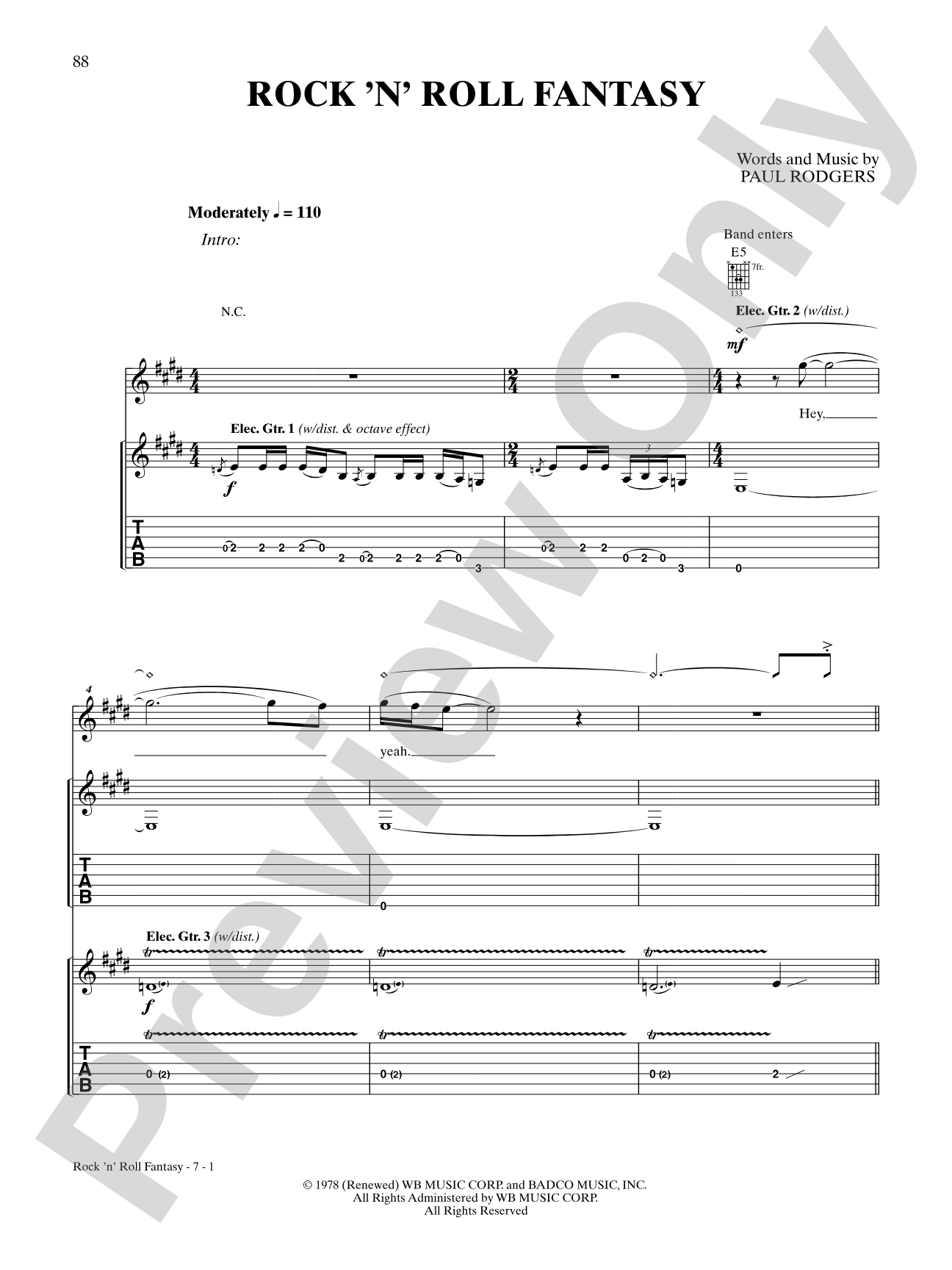
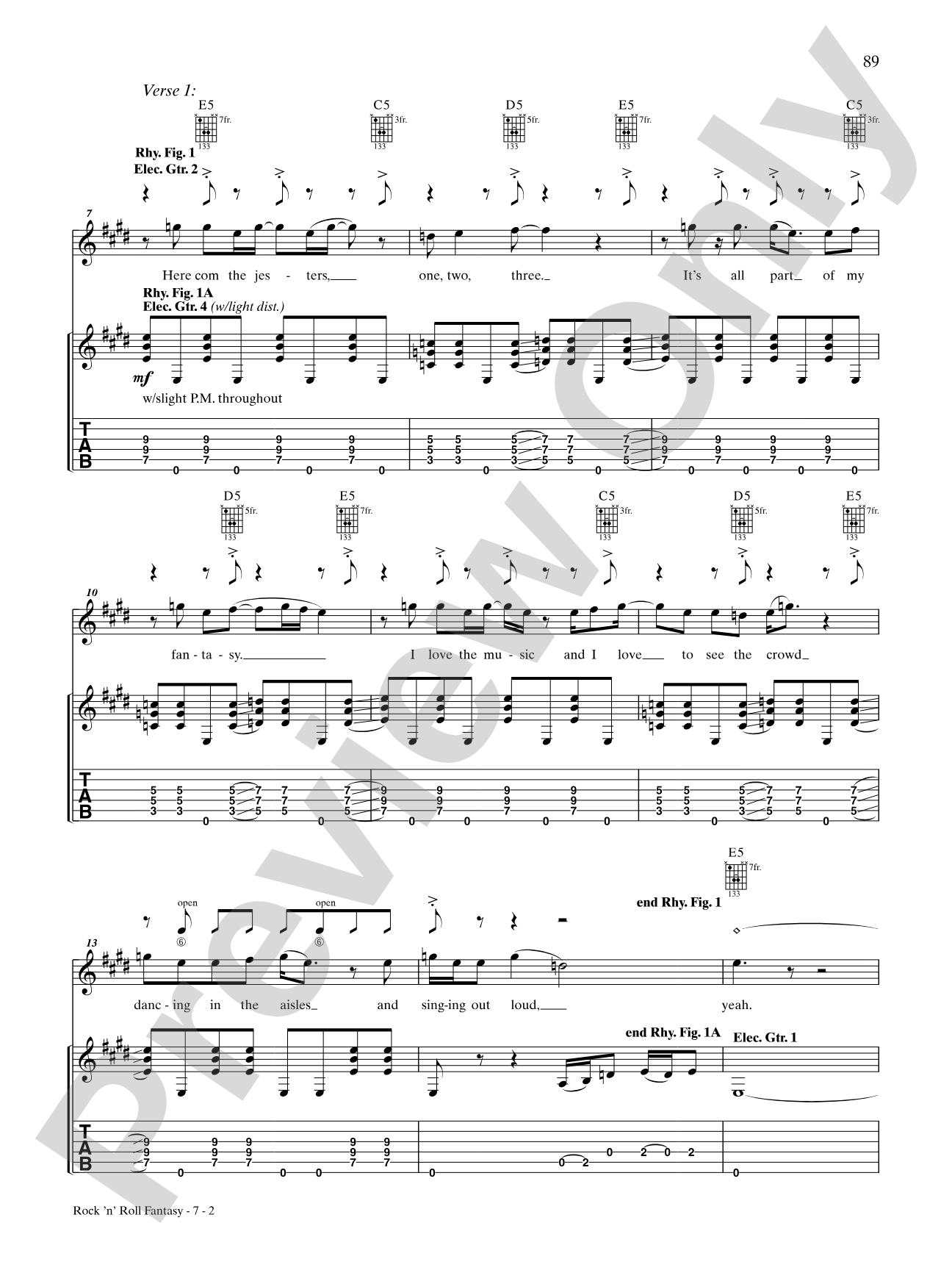

Rock & Roll Fantasy: Authentic Guitar TAB
Bad Company
Item: 00-PS-0013286
$5.99
One moment…
Related Items
Run With the Pack: Authentic Guitar TAB |
$5.99
|
View | |
Can't Get Enough (of Your Love): Authentic Guitar TAB |
$5.99
|
View | |
Ready for Love: Authentic Guitar TAB |
$4.99
|
View | |
Movin' On: Authentic Guitar TAB |
$5.99
|
View | |
Seagull: Authentic Guitar TAB |
$4.99
|
View | |
Live for the Music: Authentic Guitar TAB |
$5.99
|
View | |
Rock Steady: Authentic Guitar TAB |
$5.99
|
View | |
Bad Company: Authentic Guitar TAB |
$9.99
|
View | |
Burnin' Sky: Authentic Guitar TAB |
$4.99
|
View | |
Good Lovin' Gone Bad: Authentic Guitar TAB |
$5.99
|
View | |
Silver, Blue & Gold: Authentic Guitar TAB |
$5.99
|
View | |
Feel Like Makin' Love: Authentic Guitar TAB |
$5.99
|
View | |
Shooting Star: Authentic Guitar TAB |
$9.99
|
View |
Description
One of the first and most successful of the classic rock era super groups, Bad Company was formed by previous members of Free, Mott the Hoople, and King Crimson. This folio features full guitar TAB transcriptions of all their classic songs. Titles: Bad Company * Burnin' Sky * Can't Get Enough * Feel Like Makin' Love * Good Lovin' Gone Bad * Movin' On * Ready for Love * Rock 'n' Roll Fantasy * Rock Steady * Seagull * Shooting Star * Simple Man * Silver, Blue & Gold * Run with the Pack * Gone, Gone, Gone * Live for the Music * Electric Land * Deal with the Preacher.


Rock & Roll Fantasy: Authentic Guitar TAB isn't in MakeMusic Cloud just yet...but it could be. Let us know you'd like to see it, and you'll help shape what comes next. In the meantime, start a free trial and dive into thousands of interactive titles your students can play along with today.
Request This Title
Tell us you want it.
Start Your Free Trial
Explore everything that's ready to play right now.
Sample Audio
No sample audio found.
Sample Video
No sample videos found.
Additional Details
Series:
Guitar TAB Anthology
Publisher:
Alfred Music
Page Count:
120
SKU:
00-PS-0013286
More about this title
About the Composer: Paul Rodgers
Paul Rodgers co-founded Bad Company in 1973 following his tenure as lead vocalist for Free, the British rock band behind "All Right Now." His songwriting partnership with guitarist Mick Ralphs created some of the 1970s rock canon's most enduring anthems, balancing bluesy swagger with pop sensibility and genuine melodic craft.
Rodgers' vocal approach and compositional voice shaped the sound of arena rock during its commercial peak. His work across Bad Company's catalog demonstrates how strong songwriting and arrangement can sustain a band's relevance across decades of touring and recording.
Why we love this
Eighteen essential Bad Company tracks in full TAB transcription gives players direct access to the riffs, rhythms, and lead work that defined classic rock radio. The folio spans the band's entire creative arc, from their breakthrough through their most celebrated period, so you can build repertoire that audiences actually recognize and want to hear.
What to expect
Confident, bluesy, and built to fill a room. These songs move with the swagger of a band that knows exactly what they're doing, mixing minor-key grooves with singable hooks and guitar work that's expressive without being showy. There's a sense of forward momentum throughout, even in the ballads.
Who it's for
Intermediate to advanced guitarists who want to learn authentic transcriptions of classic rock material beyond simplified tabs found online. Players building a setlist for covers bands, tribute projects, or performance repertoire will find complete, reliable notation for songs their audiences know and love.
How to get the most out of it
- Study the rhythm guitar voicings first. Bad Company's power comes from the interaction between lead and rhythm parts, so understanding the harmonic foundation makes learning the lead lines faster and more musical.
- Use a pick attack that lets these riffs speak cleanly. The TAB notation shows you where to play, but your tone and pick articulation determine whether the line cuts through or gets lost in the mix.
- Record yourself playing rhythm parts and play lead over your own backing. This develops the independence you need to lock in with a band and reveals which passages need more fluency work.
- Pay attention to the dynamics marked in the TAB. Rock doesn't mean uniform volume; dynamics create tension and release that make these songs memorable.
How to use it
Feature individual tracks in a rock repertoire unit or covers concert, or assign the entire folio over a semester for a guitarist developing their classic rock foundation. The consistent style and authentic source material make it ideal for players preparing to join a covers band or teaching themselves the language of 1970s rock guitar.
Skills your students will build
- Reading and executing power chord progressions and barre chord voicings
- Playing blues-based pentatonic and scale-based lead lines with appropriate bending and vibrato
- Coordinating rhythm and lead parts in a band context
- Developing pick control and dynamics for rock articulation
- Learning the harmonic and rhythmic conventions of classic rock song structure