
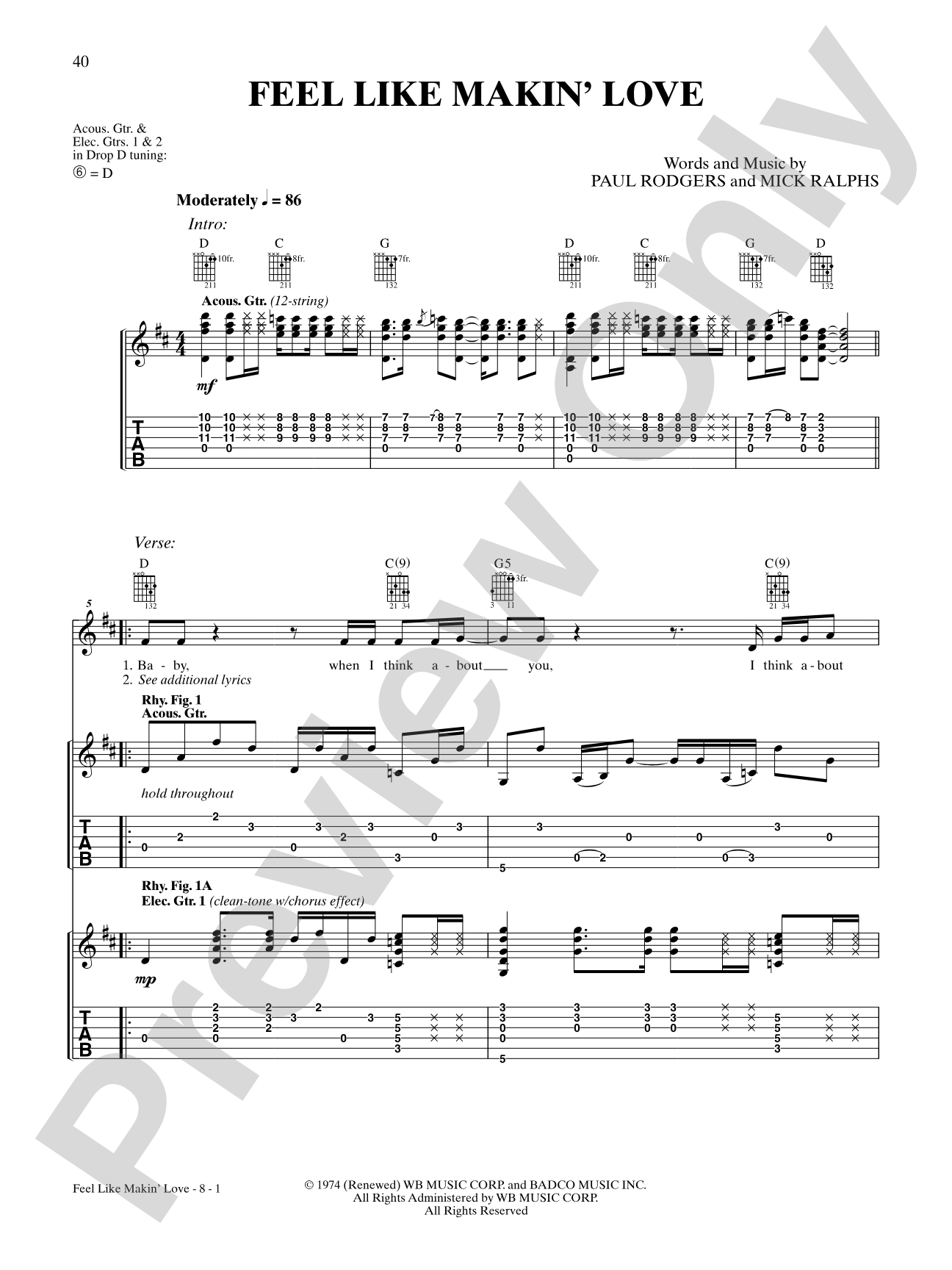
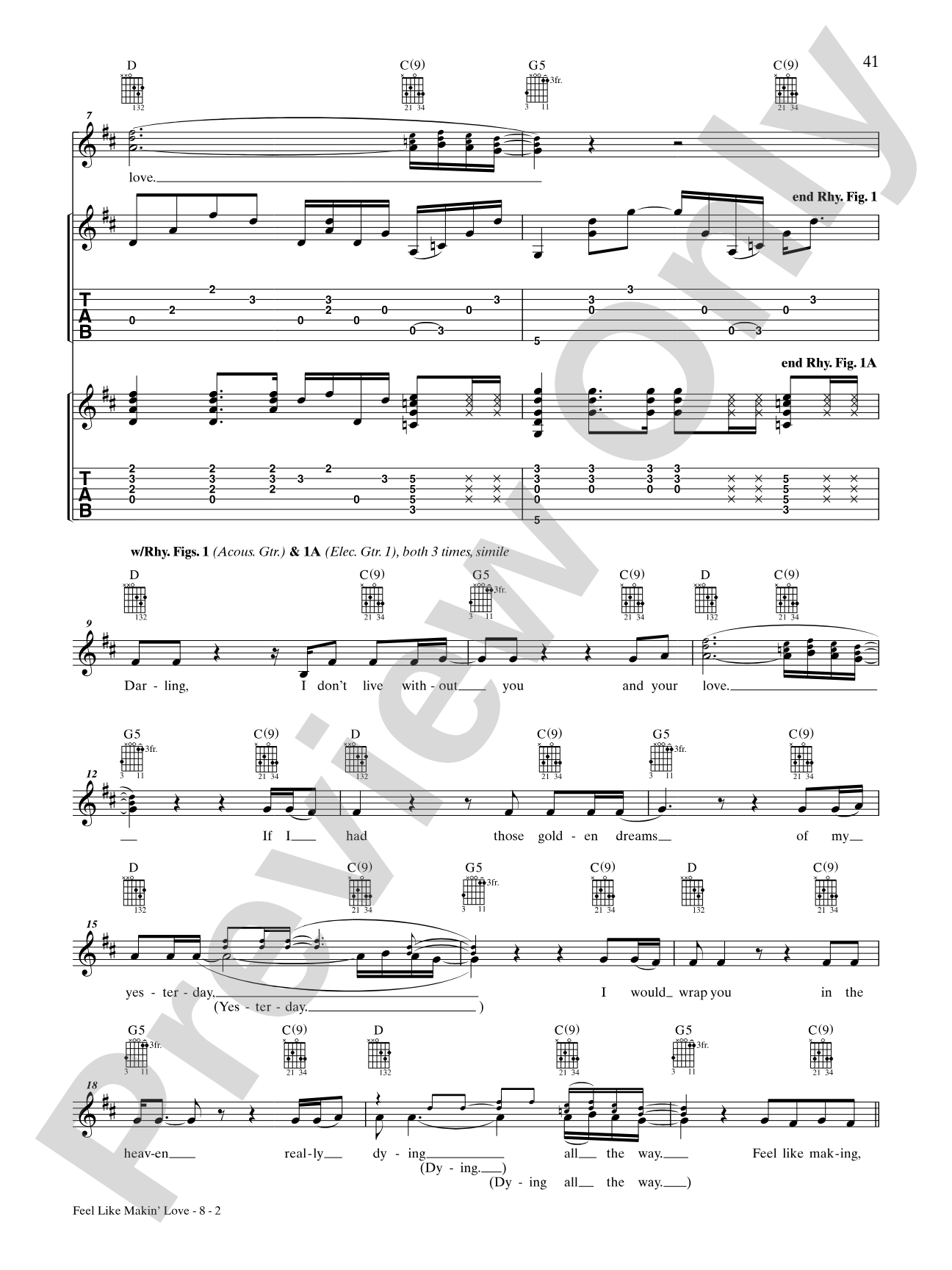

Feel Like Makin' Love: Authentic Guitar TAB
Bad Company
Item: 00-PS-0013290
$5.99
One moment…
Related Items
Run With the Pack: Authentic Guitar TAB |
$5.99
|
View | |
Can't Get Enough (of Your Love): Authentic Guitar TAB |
$5.99
|
View | |
Ready for Love: Authentic Guitar TAB |
$4.99
|
View | |
Movin' On: Authentic Guitar TAB |
$5.99
|
View | |
Seagull: Authentic Guitar TAB |
$4.99
|
View | |
Live for the Music: Authentic Guitar TAB |
$5.99
|
View | |
Rock Steady: Authentic Guitar TAB |
$5.99
|
View | |
Bad Company: Authentic Guitar TAB |
$9.99
|
View | |
Burnin' Sky: Authentic Guitar TAB |
$4.99
|
View | |
Rock & Roll Fantasy: Authentic Guitar TAB |
$5.99
|
View | |
Good Lovin' Gone Bad: Authentic Guitar TAB |
$5.99
|
View | |
Silver, Blue & Gold: Authentic Guitar TAB |
$5.99
|
View | |
Shooting Star: Authentic Guitar TAB |
$9.99
|
View |
Description
One of the first and most successful of the classic rock era super groups, Bad Company was formed by previous members of Free, Mott the Hoople, and King Crimson. This folio features full guitar TAB transcriptions of all their classic songs. Titles: Bad Company * Burnin' Sky * Can't Get Enough * Feel Like Makin' Love * Good Lovin' Gone Bad * Movin' On * Ready for Love * Rock 'n' Roll Fantasy * Rock Steady * Seagull * Shooting Star * Simple Man * Silver, Blue & Gold * Run with the Pack * Gone, Gone, Gone * Live for the Music * Electric Land * Deal with the Preacher.


Feel Like Makin' Love: Authentic Guitar TAB isn't in MakeMusic Cloud just yet...but it could be. Let us know you'd like to see it, and you'll help shape what comes next. In the meantime, start a free trial and dive into thousands of interactive titles your students can play along with today.
Request This Title
Tell us you want it.
Start Your Free Trial
Explore everything that's ready to play right now.
Sample Audio
No sample audio found.
Sample Video
No sample videos found.
Additional Details
Series:
Guitar TAB Anthology
Publisher:
Alfred Music
Page Count:
120
SKU:
00-PS-0013290
More about this title
About the Composer: Paul Rodgers
Paul Rodgers cofounded Free in the late 1960s, establishing himself as one of rock's most distinctive vocalists and songwriters before that band's dissolution. He then joined forces with guitarist Mick Ralphs and other seasoned musicians to create Bad Company in 1973, a supergroup that quickly became one of the defining acts of the classic rock era.
Why we love this
This collection gives guitarists direct access to the riffs and chord voicings that defined Bad Company's sound across nearly two decades of hits. The TAB transcriptions capture both the signature moments and the nuanced variations that make these songs rewarding to study and perform, offering insight into how blues-influenced rock writing translates to the fretboard.
What to expect
These songs carry the swagger and blues-rock swagger of the 1970s, mixing straightforward rock grooves with sophisticated chord progressions and layered guitar work. Each track balances accessibility with genuine musicianship, delivering that satisfying blend of power and polish that made Bad Company enduring staples of classic rock radio.
Who it's for
Guitar students and teachers seeking authentic transcriptions of rock repertoire with strong harmonic and melodic content. This folio works well for intermediate to advanced players who want to understand the arrangement and fretboard voice-leading behind these classic recordings.
How to get the most out of it
- Pay attention to the dynamics marked in the original recordings; Bad Company's arrangements rely on controlled dynamics shifts to build tension and release, especially in the verses and chorus transitions.
- Study how the lead and rhythm guitar parts interact throughout each song. Many tracks layer complementary lines that create the full texture, so mapping out which notes belong to which guitar helps with arrangement clarity.
- Lock the timing with a click track or backing track to match the feel of the original recordings, which often sit slightly behind or ahead of the beat to create a relaxed, intentional groove.
- Work through the barre chord shapes and position shifts before playing at tempo; several songs require quick, clean transitions between different chord voicings on the neck.
How to use it
Assign individual songs as student recital repertoire, or use selections to illustrate how classic rock arranges for multiple guitars. The variety of styles within the collection suits progressive-level curricula where students need to develop fluency across different feels, from blues shuffle grooves to uptempo rockers.
Skills your students will build
- Reading and executing authentic guitar TAB across multiple tunings and positions
- Translating recorded textures into fretboard technique
- Understanding blues-based rock chord voicings and substitutions
- Developing rhythmic precision in groove-oriented material
- Analyzing how lead and rhythm guitar parts complement each other in rock arrangements