
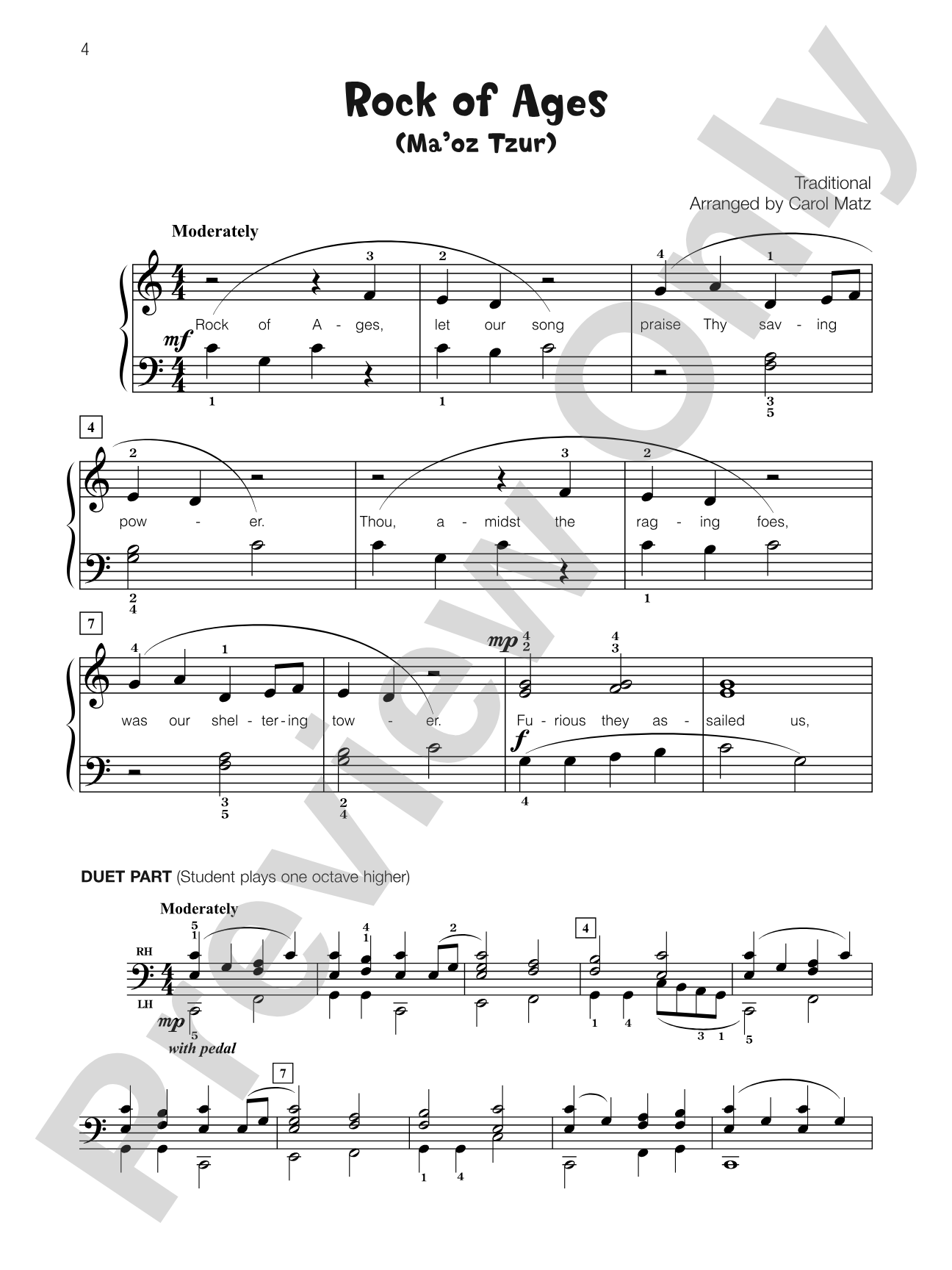

Rock of Ages (Ma'oz Tzur) - Piano Solo with Lyrics (with Optional Duet Accompaniments): Piano Solo with Lyrics
12 Appealing Piano Arrangements
Arranged by Carol Matz
Level: Elementary / Late Elementary
Item: 00-PS-0017348
$4.99
Pickup currently not available
Related Items
Adon Olam - Piano Solo with Lyrics (with Optional Duet Accompaniments): Piano Solo with Lyrics |
$4.99
|
View | |
Chad Gadya - Piano Solo with Lyrics (with Optional Duet Accompaniments): Piano Solo with Lyrics |
$4.99
|
View | |
Chanukah - Piano Solo with Lyrics: Piano Solo with Lyrics |
$4.99
|
View | |
Eiliyahu Hanavi - Piano Solo with Lyrics: Piano Solo with Lyrics |
$4.99
|
View | |
Haman, A Wicked Man - Piano Solo with Lyrics: Piano Solo with Lyrics |
$4.99
|
View | |
Hamotzi - Piano Solo with Lyrics: Piano Solo with Lyrics |
$4.99
|
View | |
Hatikva (National Anthem of Israel) - Piano Solo with Lyrics: Piano Solo with Lyrics |
$4.99
|
View | |
Ma Nishtana? (from "The Four Questions") - Piano Solo with Lyrics (with Optional Duet Accompaniments): Piano Solo with Lyrics |
$4.99
|
View | |
My Dreidel - Piano Solo with Lyrics: Piano Solo with Lyrics |
$4.99
|
View | |
Sh'ma Yisrael - Piano Solo with Lyrics (with Optional Duet Accompaniments): Piano Solo with Lyrics |
$4.99
|
View | |
Zum Gali Gali - Piano Solo with Lyrics: Piano Solo with Lyrics |
$7.99
|
View | |
Famous & Fun Jewish Songs, Book 3: Piano Book |
$7.99
|
View |
Description
Carol Matz's Famous & Fun Jewish Songs, Book 3 is filled with well-known, beloved Hebrew melodies. The collection contains songs for various Jewish holidays, Israeli, and Yiddish folk songs, as well as treasured traditional pieces. The arrangements can be used to supplement any method. Titles: Adon Olam * Chad Gadya * Chanukah * Eiliyahu Hanavi * Haman, A Wicked Man * Hamotzi * Hatikva * Ma Nishtana? * My Dreidel * Rock of Ages (Ma'oz Tzur) * Sh'ma Yisrael * Zum Gali Gali. A Federation Festivals 2024-2028 selection.


Rock of Ages (Ma'oz Tzur) - Piano Solo with Lyrics (with Optional Duet Accompaniments): Piano Solo with Lyrics isn't in MakeMusic Cloud just yet...but it could be. Let us know you'd like to see it, and you'll help shape what comes next. In the meantime, start a free trial and dive into thousands of interactive titles your students can play along with today.
Request This Title
Tell us you want it.
Start Your Free Trial
Explore everything that's ready to play right now.
Sample Audio
No sample audio found.
Sample Video
No sample videos found.
Additional Details
Series:
Famous & Fun
Publisher:
Alfred Music
Page Count:
24
SKU:
00-PS-0017348
More about this title
About the Arranger: Carol Matz

Carol Matz brings decades of classroom experience to every arrangement she creates. A composer and arranger with over 300 published works for piano students, she has led teaching workshops across the United States, Canada, England, New Zealand, and Australia, sharing her insights into effective pedagogy and engaging repertoire.
Her training in composition, arranging, and orchestration at the University of Miami equipped her to write across multiple ensembles and styles. The Famous & Fun series, her most recognizable work, reflects her commitment to making music learning both accessible and genuinely enjoyable for young pianists.
Why we love this
Matz captures the spirit of Ma'oz Tzur without overcomplicating it. The arrangement sits comfortably in the hands of elementary pianists while maintaining the melody's dignity, and the optional duet accompaniments give you flexibility for solo recital performances or ensemble contexts.
What to expect
This arrangement carries the quiet reverence of a centuries-old hymn while remaining immediate and singable. The piano writing is unpretentious, letting the melody's strength speak for itself, and the optional duet parts create opportunities for warmth and partnership in performance.
Who it's for
Elementary and late elementary pianists preparing for Chanukah recitals, winter concerts, or festival competitions. Students who benefit from culturally rooted repertoire and teachers seeking accessible arrangements of Jewish folk traditions.
How to get the most out of it
- Highlight the melody line so the familiar tune shines through. Keep the accompaniment conversational rather than intrusive.
- If performing the duet version, establish a steady tempo in rehearsal and lock it in before adding dynamics. The melody pianist should lead gently.
- Pay attention to any key changes or modulations within the piece. Even small shifts feel fresh if shaped with slight agogic flexibility.
- Incorporate the lyrics (if singing along) naturally, letting the piano support the voice rather than compete with it.
How to use it
Include it in a winter holiday recital to represent Jewish musical traditions alongside secular seasonal repertoire, or program it as part of a Chanukah-themed concert. The optional duet format makes it equally at home in a student showcase or a teacher-student performance pairing.
Skills your students will build
- Balancing melody and accompaniment in single-staff writing
- Reading and performing folk melodies with appropriate phrasing
- Managing optional duet parts and coordinating with a partner pianist
- Interpreting lyrics in performance and understanding text-music relationships