
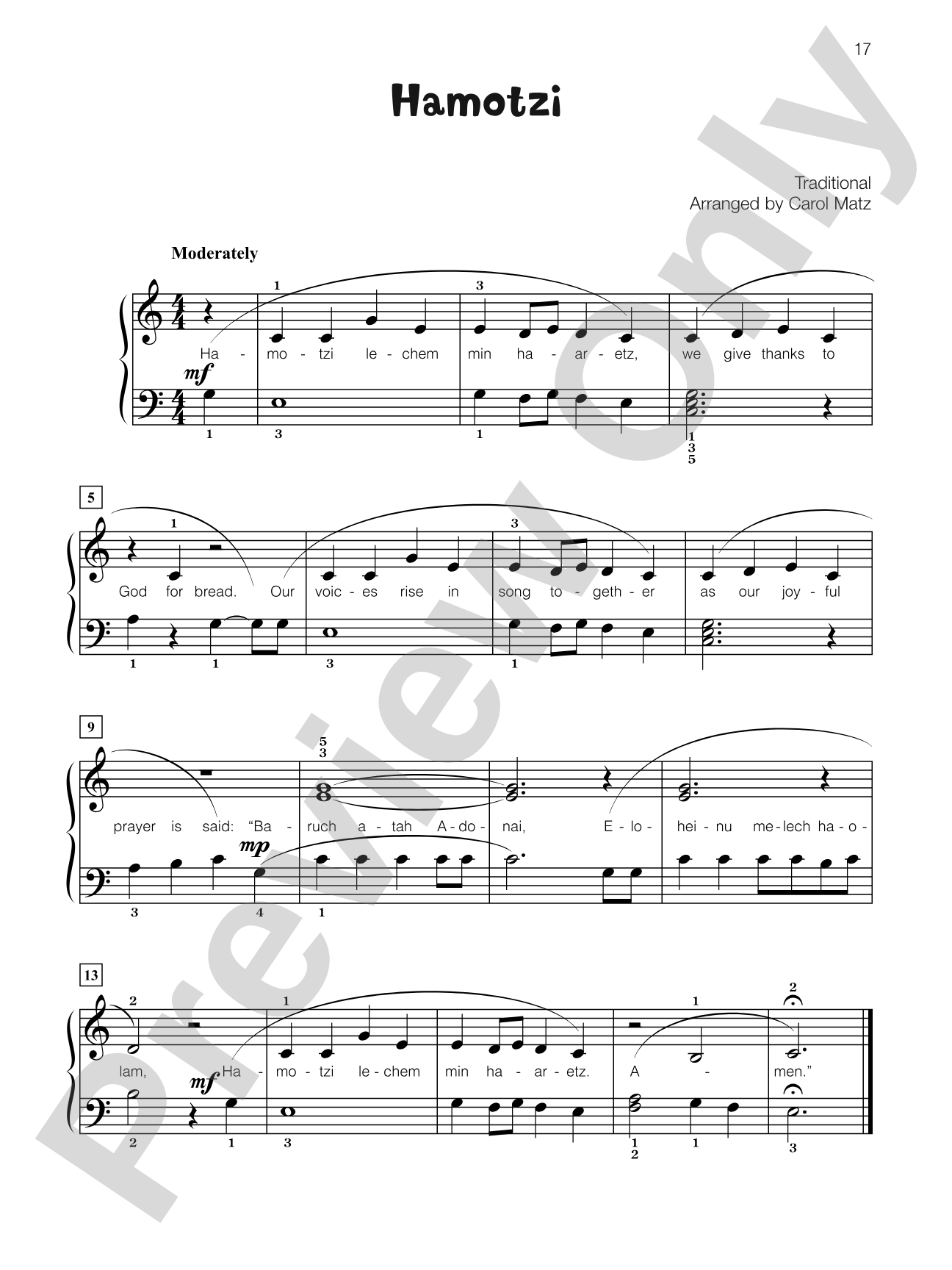

Hamotzi - Piano Solo with Lyrics: Piano Solo with Lyrics
12 Appealing Piano Arrangements
Arranged by Carol Matz
Level: Elementary / Late Elementary
Item: 00-PS-0017344
$4.99
Pickup currently not available
Related Items
Adon Olam - Piano Solo with Lyrics (with Optional Duet Accompaniments): Piano Solo with Lyrics |
$4.99
|
View | |
Chad Gadya - Piano Solo with Lyrics (with Optional Duet Accompaniments): Piano Solo with Lyrics |
$4.99
|
View | |
Chanukah - Piano Solo with Lyrics: Piano Solo with Lyrics |
$4.99
|
View | |
Eiliyahu Hanavi - Piano Solo with Lyrics: Piano Solo with Lyrics |
$4.99
|
View | |
Haman, A Wicked Man - Piano Solo with Lyrics: Piano Solo with Lyrics |
$4.99
|
View | |
Hatikva (National Anthem of Israel) - Piano Solo with Lyrics: Piano Solo with Lyrics |
$4.99
|
View | |
Ma Nishtana? (from "The Four Questions") - Piano Solo with Lyrics (with Optional Duet Accompaniments): Piano Solo with Lyrics |
$4.99
|
View | |
My Dreidel - Piano Solo with Lyrics: Piano Solo with Lyrics |
$4.99
|
View | |
Rock of Ages (Ma'oz Tzur) - Piano Solo with Lyrics (with Optional Duet Accompaniments): Piano Solo with Lyrics |
$4.99
|
View | |
Sh'ma Yisrael - Piano Solo with Lyrics (with Optional Duet Accompaniments): Piano Solo with Lyrics |
$4.99
|
View | |
Zum Gali Gali - Piano Solo with Lyrics: Piano Solo with Lyrics |
$7.99
|
View | |
Famous & Fun Jewish Songs, Book 3: Piano Book |
$7.99
|
View |
Description
Carol Matz's Famous & Fun Jewish Songs, Book 3 is filled with well-known, beloved Hebrew melodies. The collection contains songs for various Jewish holidays, Israeli, and Yiddish folk songs, as well as treasured traditional pieces. The arrangements can be used to supplement any method. Titles: Adon Olam * Chad Gadya * Chanukah * Eiliyahu Hanavi * Haman, A Wicked Man * Hamotzi * Hatikva * Ma Nishtana? * My Dreidel * Rock of Ages (Ma'oz Tzur) * Sh'ma Yisrael * Zum Gali Gali. A Federation Festivals 2024-2028 selection.


Hamotzi - Piano Solo with Lyrics: Piano Solo with Lyrics isn't in MakeMusic Cloud just yet...but it could be. Let us know you'd like to see it, and you'll help shape what comes next. In the meantime, start a free trial and dive into thousands of interactive titles your students can play along with today.
Request This Title
Tell us you want it.
Start Your Free Trial
Explore everything that's ready to play right now.
Sample Audio
No sample audio found.
Sample Video
No sample videos found.
Additional Details
Series:
Famous & Fun
Publisher:
Alfred Music
Page Count:
24
SKU:
00-PS-0017344
More about this title
About the Arranger: Carol Matz

Carol Matz brings decades of piano teaching experience to her arranging work, having developed a deep understanding of what engages young pianists. She has created over 300 published titles that balance accessibility with genuine musicality, earning recognition across North America, Europe, and the Pacific region for her pedagogically sound approach.
Matz's training in composition, arranging, and orchestration at the University of Miami informs every piece she creates. Her Famous & Fun series represents her philosophy that students thrive when playing music they recognize and love, whether that music comes from folk traditions, holiday celebrations, or world cultures.
Why we love this
Carol Matz has an instinct for what makes a folk melody sing on the piano without overcomplicating it. Her arrangements of these treasured Jewish songs respect the melodies while creating genuinely enjoyable pieces for elementary pianists to perform and share—essential when students are playing familiar material that their families and communities hold dear.
What to expect
Hamotzi carries the warmth of a familiar blessing, grounded in melody that feels both ancient and intimate. The piano arrangement honors the folk character of the tune, creating space for the words to resonate without overwhelming the essential simplicity that makes this piece memorable.
Who it's for
Elementary and late elementary pianists preparing recital material for winter holidays or festival seasons. This arrangement works especially well for students in Jewish communities or schools seeking culturally meaningful repertoire that connects them to tradition while building solid technical skills.
How to get the most out of it
- Allow the melody to sit naturally in the hand. Since this is a piece with lyrics, imagine singing the tune yourself first, then let that vocal phrasing guide your pedaling and tempo.
- Balance the accompaniment so listeners hear the text clearly. Young pianists often play too heavily in the left hand; practice hands separately to establish a lighter foundation that supports rather than buries the melody.
- Shape the phrases by listening to the breath points in the words. These traditional melodies have natural textual architecture that becomes your roadmap for dynamics and rubato.
How to use it
Program this piece on a Chanukah recital or winter holiday concert where it can sit alongside other seasonal music. It's equally effective as a solo piece or as part of a themed program that explores songs from different cultures, and the inclusion of lyrics makes it a natural choice when students are performing for family members who value the cultural or spiritual significance.
Skills your students will build
- Playing melody with lyrics and maintaining text clarity
- Balancing accompaniment texture in the left hand
- Using pedal expressively to support phrasing rather than blur it
- Reading and interpreting folk melodies that have natural vocal contours