

Rise Up, Shepherd, and Follow!: SAB Choral Octavo
Arr. Mark Hayes
Item: 00-PO-0004265
$2.25
Minimum order quantity: 20 copies
Pickup currently not available
Related Items
Rise Up, Shepherd, and Follow!: SATB Choral Octavo |
$2.25
|
View | |
Rise Up, Shepherd, and Follow!: SSA Choral Octavo |
$2.25
|
View | |
Rise Up, Shepherd, and Follow!: TTBB Choral Octavo |
$2.25
|
View | |
Rise Up, Shepherd, and Follow!: Choral SoundPax |
$30.00
|
View | |
Rise Up, Shepherd, and Follow!: SATB Choral Octavo |
$2.25
|
View | |
Rise Up, Shepherd, and Follow!: SAB Choral Octavo |
$2.25
|
View | |
Rise Up, Shepherd, and Follow!: SSA Choral Octavo |
$2.25
|
View | |
Rise Up, Shepherd, and Follow!: TTBB Choral Octavo |
$2.25
|
View | |
Rise Up, Shepherd, and Follow!: Choral Octavo SoundTrax CD |
$27.99
|
View | |
Rise Up, Shepherd, and Follow!: Choral SoundPax |
$30.00
|
View |
Description
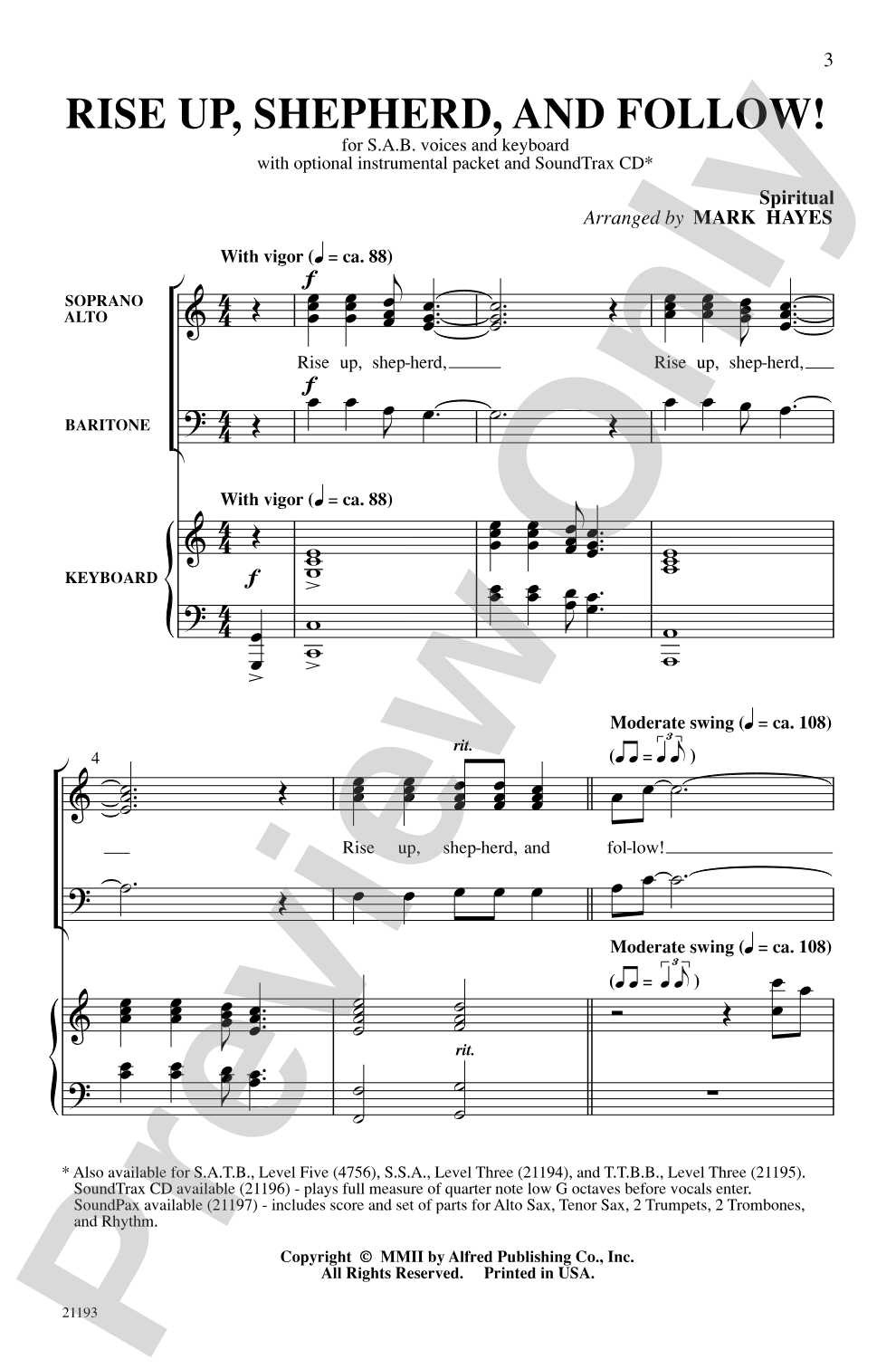
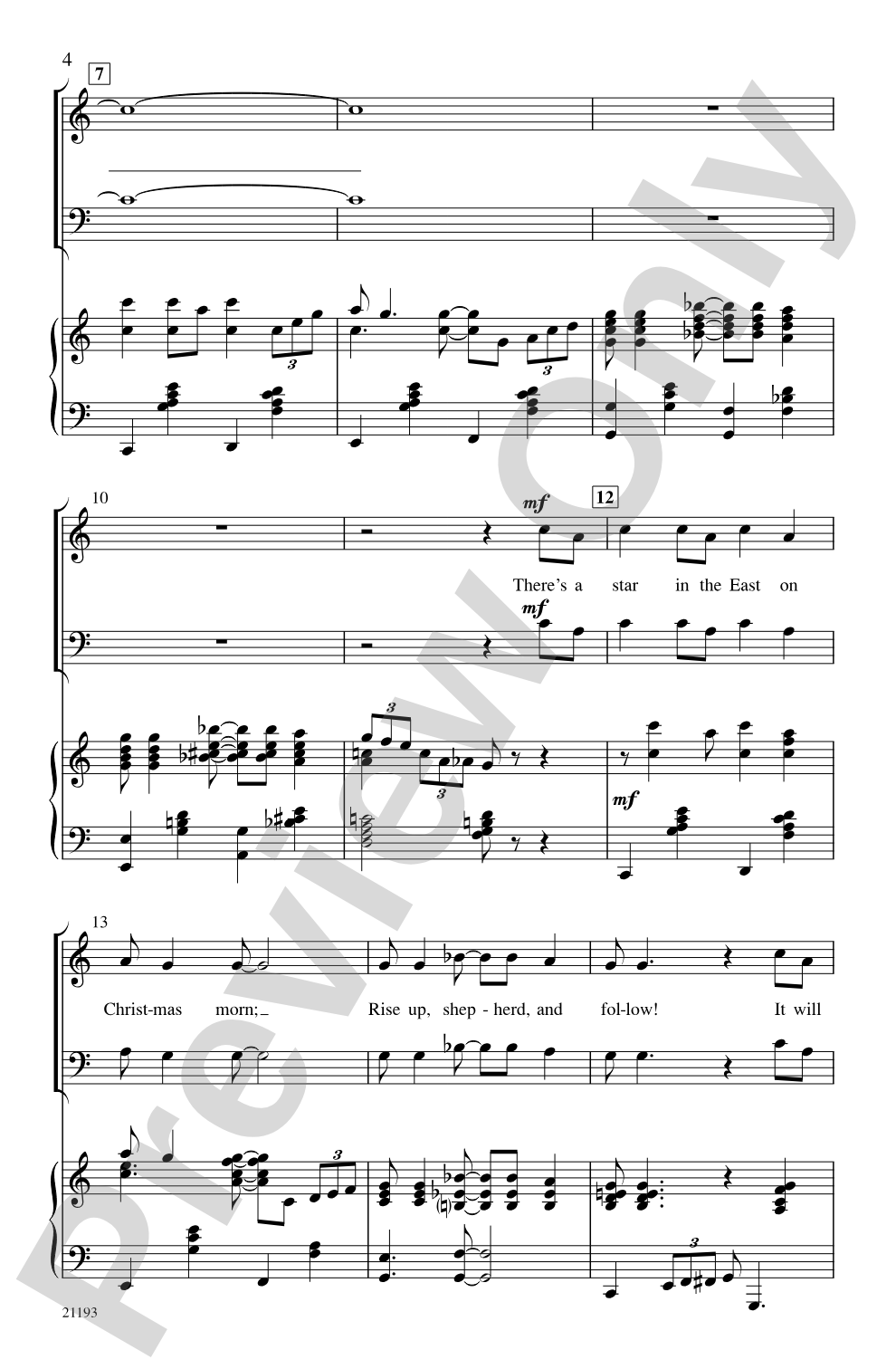
Outstanding is the best word to describe this Mark Hayes spiritual arrangement. The challenging piano part will show off your accompanist. The voice parts, however, are logical, and feature lots of unison writing. Opens with a majestic fanfare, followed by a moderate swing, which builds to a powerful ending.


Rise Up, Shepherd, and Follow!: SAB Choral Octavo isn't in MakeMusic Cloud just yet...but it could be. Let us know you'd like to see it, and you'll help shape what comes next. In the meantime, start a free trial and dive into thousands of interactive titles your students can play along with today.
Request This Title
Tell us you want it.
Start Your Free Trial
Explore everything that's ready to play right now.
Sample Audio
1
Audio File
--:--
0:00
0:00
Sample Video
No sample videos found.
Additional Details
Series:
Alfred Archive Edition: Alfred Choral Designs
Publisher:
Alfred Music
Page Count:
12
SKU:
00-PO-0004265
More about this title
About the Arranger: Mark Hayes
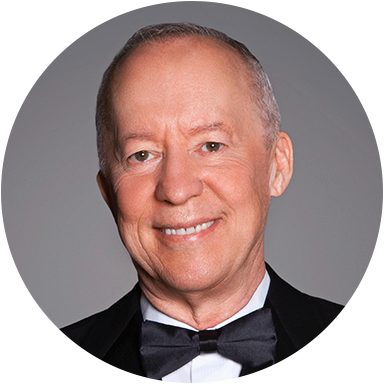
Mark Hayes has established himself as a prolific composer and arranger with more than 1,750 published works spanning sacred music, orchestral works, musical theater, and piano compositions. He earned his Bachelor of Music degree summa cum laude in Piano Performance from Baylor University in 1975 and has since conducted prestigious venues including Lincoln Center, the National Cathedral, and Carnegie Hall, where he has premiered major works like his Requiem and Te Deum.
Beyond his conducting career, Hayes has become known for his versatility as an orchestrator and musical theater contributor, having arranged music for contemporary musicals and composed the score for Civil War Voices, which garnered six awards at the Midtown International Theatre Festival. His passion for piano writing has resulted in over 100 published piano works ranging from gospel and classical to jazz and Broadway styles. In 2010, Baylor University honored him with the Award for Exemplary Leadership in Christian Music, recognizing his sustained contributions to the field.
Why we love this
This arrangement brings genuine polish to a beloved spiritual without overwhelming singers who are still building confidence in three-part mixed voicing. Hayes trusts his accompanist to carry the musical sophistication through an intentionally challenging piano part, which means your singers can focus on clear phrasing and ensemble blend rather than wrestling with complex voice leading. The unison passages give your ensemble moments to breathe together, while the majestic fanfare opening and powerful final climax create the kind of musical arc that reminds singers why they love this repertoire.
What to expect
Majestic and uplifting, opening with fanfare-like brightness before settling into a moderate swing that feels both reverent and alive. The arrangement builds warmth and momentum through unison singing, then arrives at a powerful, triumphant ending that sends singers and listeners alike away energized and moved.
Who it's for
SAB choirs looking for a spiritual arrangement that respects the abilities of singers in grades 5-8 and adult community ensembles while still challenging your accompanist. This works especially well for choirs with solid ensemble experience but limited three-part mixed experience, since the logical voice leading and generous unison sections provide a clear pathway through the form.
How to get the most out of it
- Let the recorded accompaniment establish the swing feel clearly during rehearsals; once your singers internalize that groove, the moderate tempo will feel secure and energized.
- Shape the opening fanfare with a sense of announcement rather than urgency, allowing each phrase to settle slightly before the swing section begins.
- Balance the unison passages by checking intonation on sustained notes at moderate dynamics; these moments build trust across voice parts before returning to divided writing.
- Build the final climax gradually across the last system or two, resisting the urge to jump to full volume too early so that the ending lands with genuine power rather than desperation.
How to use it
Pair this with other spirituals or sacred arrangements for a thematic concert section, or use it as a climactic second-half opener in a mixed-repertoire holiday program where you need a piece with architectural strength and genuine spirituality. The Christmas designation suggests December programming, though the spiritual tradition and Hayes's approach make it equally at home in spring concerts that celebrate American musical heritage.
Skills your students will build
- Blending unison and divided voice parts with clear intonation
- Responding to a driving rhythmic accompaniment while maintaining phrase independence
- Sustaining musical energy through dynamic buildup to a climactic ending
- Understanding the character and history of the spiritual tradition through an arrangement that respects both the genre and contemporary musical craft