

Rise Up, Shepherd, and Follow!: SATB Choral Octavo
Arr. Mark Hayes
Item: 00-PO-0002931
$2.25
Minimum order quantity: 20 copies
Pickup currently not available
Related Items
Rise Up, Shepherd, and Follow!: SAB Choral Octavo |
$2.25
|
View | |
Rise Up, Shepherd, and Follow!: SSA Choral Octavo |
$2.25
|
View | |
Rise Up, Shepherd, and Follow!: TTBB Choral Octavo |
$2.25
|
View | |
Rise Up, Shepherd, and Follow!: Choral SoundPax |
$30.00
|
View | |
Rise Up, Shepherd, and Follow!: SATB Choral Octavo |
$2.25
|
View | |
Rise Up, Shepherd, and Follow!: SAB Choral Octavo |
$2.25
|
View | |
Rise Up, Shepherd, and Follow!: SSA Choral Octavo |
$2.25
|
View | |
Rise Up, Shepherd, and Follow!: TTBB Choral Octavo |
$2.25
|
View | |
Rise Up, Shepherd, and Follow!: Choral Octavo SoundTrax CD |
$27.99
|
View | |
Rise Up, Shepherd, and Follow!: Choral SoundPax |
$30.00
|
View |
Description
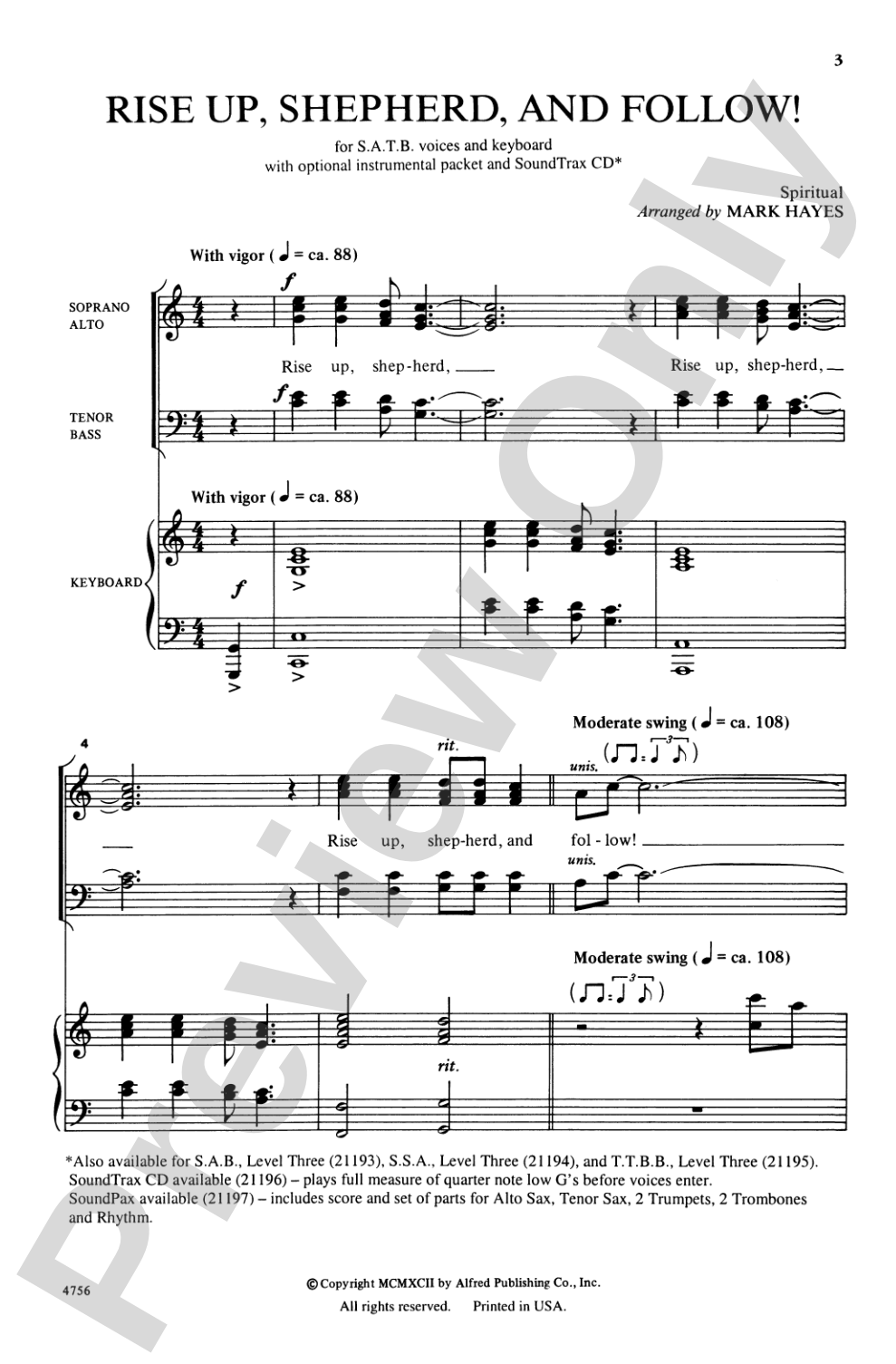
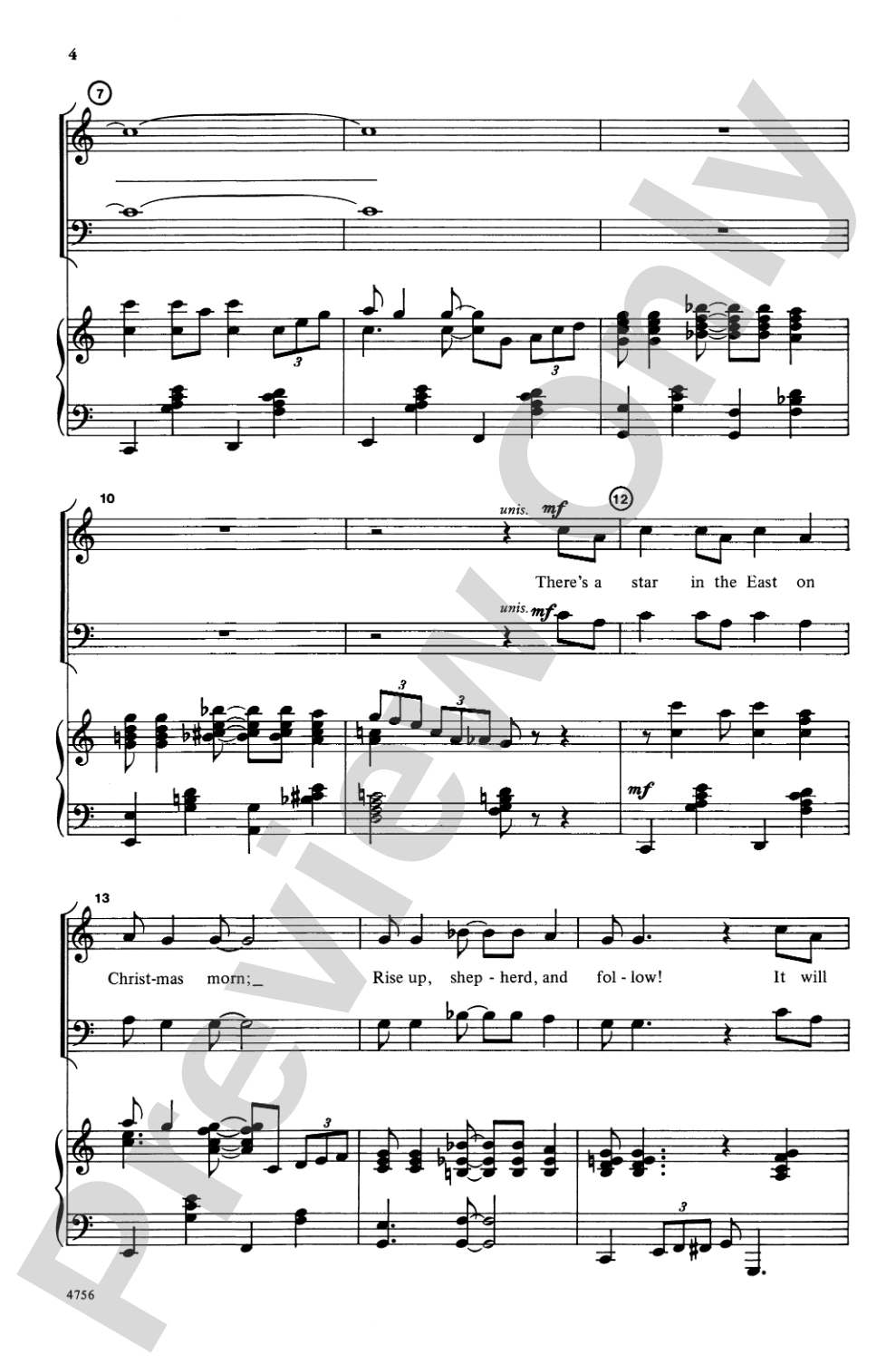
Outstanding is the best word to describe this Mark Hayes spiritual arrangement. The challenging piano part will show off your accompanist. The voice parts, however, are logical, and feature lots of unison writing. Opens with a majestic fanfare, followed by a moderate swing, which builds to a powerful ending.


Rise Up, Shepherd, and Follow!: SATB Choral Octavo isn't in MakeMusic Cloud just yet...but it could be. Let us know you'd like to see it, and you'll help shape what comes next. In the meantime, start a free trial and dive into thousands of interactive titles your students can play along with today.
Request This Title
Tell us you want it.
Start Your Free Trial
Explore everything that's ready to play right now.
Sample Audio
1
Audio File
--:--
0:00
0:00
Sample Video
No sample videos found.
Additional Details
Series:
Alfred Archive Edition: Alfred Choral Designs
Publisher:
Alfred Music
Page Count:
12
SKU:
00-PO-0002931
More about this title
About the Arranger: Mark Hayes
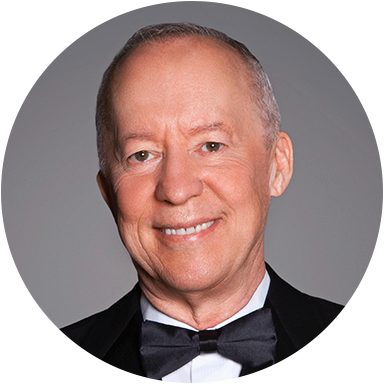
Mark Hayes holds over 1,750 published works across concert, choral, and orchestral genres. A pianist trained at Baylor University (summa cum laude, 1975), he has guest conducted at Lincoln Center, the National Cathedral, and Carnegie Hall, premiering major works including his Requiem at Lincoln Center in 2013 and again at St. Ignatius Basilica in Rome as part of a Vatican-sponsored festival in 2014.
Beyond the concert hall, Hayes has composed and arranged for musical theatre (orchestrating Madame Buttermilk and arranging We'll Meet Again) and created the score for Civil War Voices, which garnered six awards at the Midtown International Theatre Festival. His catalog includes over 100 piano books spanning gospel, classical, jazz, and Broadway idioms. In 2010, Baylor University Center for Christian Music Studies recognized his leadership in Christian music composition and education.
Why we love this
Hayes writes spirituals that work in real rehearsal spaces with mixed ability levels. The unison passages keep less secure voices confident while the sophisticated piano part gives your accompanist something genuinely rewarding to play, not something to simply get through. The structural arc from fanfare through swing to climax creates a performance moment your singers will feel.
What to expect
A spiritual reimagined through a concert lens, opening with processional grandeur before settling into a groovy, modern swing. The music feels contemporary yet rooted, sophisticated yet joyful, with momentum that builds naturally toward a satisfying, powerful close.
Who it's for
This arrangement suits intermediate to advanced choral programs with a capable pianist. Directors seeking a spiritual that moves beyond congregational style will find Hayes's harmonic sophistication and rhythmic vitality refreshing, while the unison writing keeps the piece accessible for singers still developing sight-reading confidence.
How to get the most out of it
- Shape the opening fanfare with clear articulation and weight in the piano; this sets the majestic tone before the ensemble enters and signals to listeners that this is no simple arrangement.
- Maintain the moderate swing feel with a light, forward lift in the voice parts rather than a heavy, dragging pulse; the piano will anchor the groove if the choir stays buoyant.
- Balance the climax carefully in the final section by bringing out upper voices without sacrificing the fundamental line, allowing the building intensity to feel earned rather than forced.
- Work with your accompanist early on the rhythmic interaction between hands in the piano part; the accompanist's confidence will directly affect how secure the choir feels in the swing sections.
How to use it
Program this at the center of a sacred or holiday concert where it can serve as a bridging piece between traditional hymn arrangements and more contemporary choral works. Its length (12 pages) and moderate difficulty make it ideal for spring concert or holiday shows that need a statement number without demanding excessive rehearsal time.
Skills your students will build
- Sustaining unison singing across sections while listening to inner harmony parts
- Locking into a swing feel with varied articulation and rhythmic precision
- Balancing ensemble power with clarity during dynamic climaxes
- Responding to sophisticated accompaniment without depending on the piano to carry weak vocal lines