

Prayer, The: SSA Choral Octavo
Words and music by Carole Bayer Sager and David Foster / arr. Mark Hayes
Item: 00-PO-0001961

$2.10
Minimum order quantity: 10 copies
Please note: Under U.S. copyright law, you must purchase the exact number of copies needed for your ensemble. Printing, duplicating or sharing additional copies is strictly prohibited.
Pickup currently not available
Related Items
Prayer, The: SATB Choral Octavo |
$2.05
|
View | |
Prayer, The: SAB Choral Octavo |
$2.10
|
View | |
Prayer, The: TTBB Choral Octavo |
$2.25
|
View | |
The Prayer: SoundTrax Digital Audio Download |
$27.99
|
View | |
The Prayer: SATB Choral Octavo |
$2.05
|
View | |
The Prayer: SAB Choral Octavo |
$2.10
|
View | |
The Prayer: SSA Choral Octavo |
$2.10
|
View | |
The Prayer: TTBB Choral Octavo |
$2.25
|
View | |
The Prayer: Choral Octavo SoundTrax CD |
$27.99
|
View |
Description
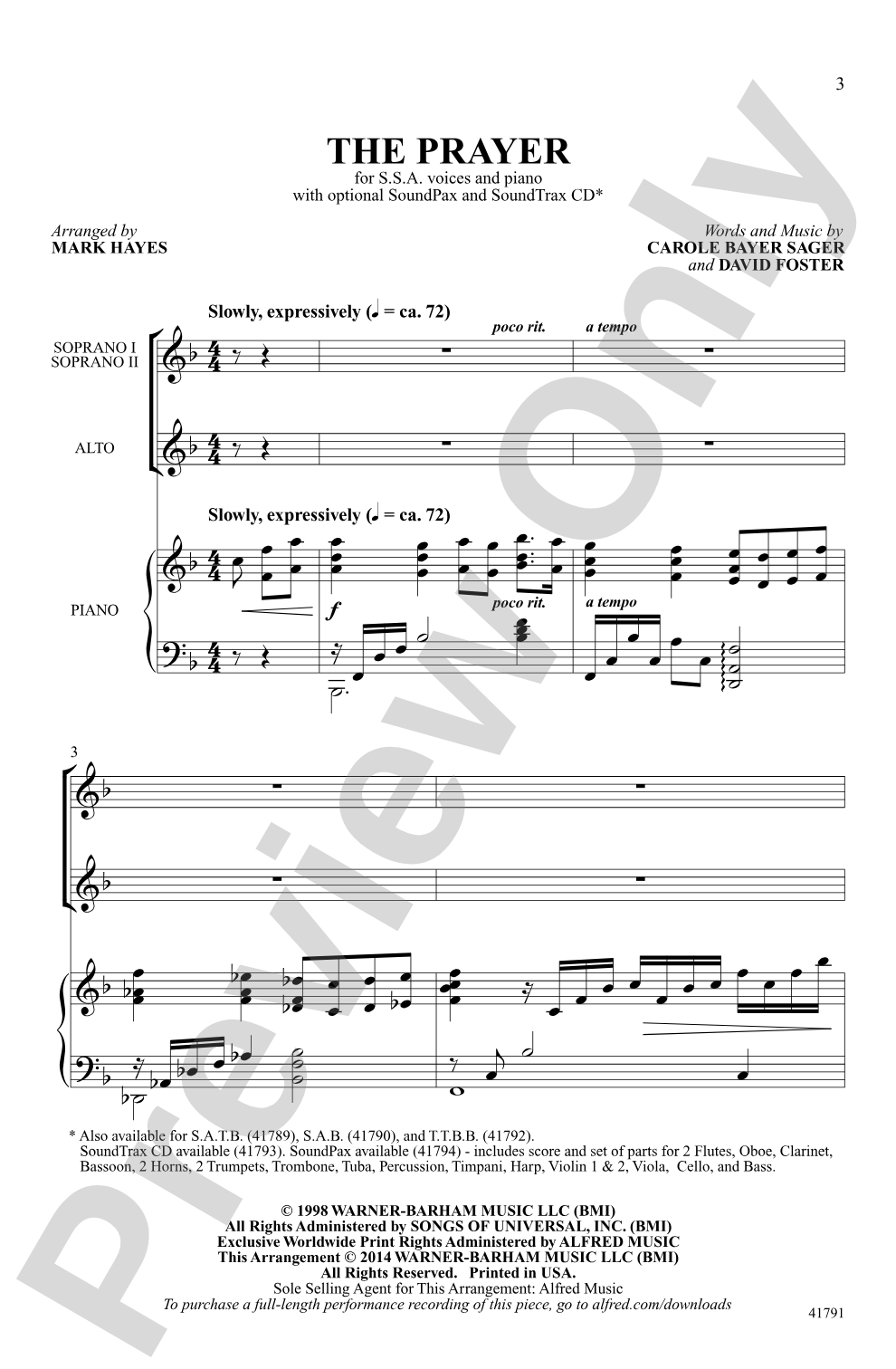
Originally recorded separately by both Celine Dion and Andrea Bocelli, the English and Italian versions were later combined to create this well-known duet. A beautiful, yet supportive, Mark Hayes' accompaniment makes this new arrangement soar.


Don't just read it, hear it, play along with it, and watch your students grow with it. In MakeMusic Cloud, Prayer, The: SSA Choral Octavo comes alive with professional accompaniment, adjustable tempo, and built-in practice tools that turn solo practice into real progress.
Open in the Player
Jump straight in and assign it today.
Start Your Free Trial
Open this title and explore the full library in minutes.
Sample Audio
1
Audio File
--:--
0:00
0:00
Sample Video
No sample videos found.
Additional Details
Series:
Alfred Pop Choral Series
Publisher:
Alfred Music
Page Count:
12
SKU:
00-PO-0001961
More about this title
About the Composer: Carole Bayer Sager
Carole Bayer Sager is a lyricist and composer whose songs have reached audiences across multiple genres and decades. Her collaborative work with David Foster on "The Prayer" demonstrates her gift for writing lyrics that resonate emotionally while remaining singable and accessible to performers at various levels.
Why we love this
Mark Hayes' arrangement captures the intimacy of the original duet while adapting it brilliantly for SSA voices. The accompaniment provides harmonic support without overshadowing the singers, making this a piece that sounds fuller and more polished than typical pop arrangements at this level.
What to expect
The piece carries a serene, reverent quality that invites singers into genuine introspection rather than theatrical delivery. Each phrase unfolds with unhurried grace, creating space for both individual voices and collective sound to shine.
Who it's for
Directors seeking repertoire that connects with singers emotionally while building musicianship across mixed or treble choirs. This arrangement works well for choirs with developing soloists who benefit from ensemble support, and for programs that value crossover sacred pieces with contemporary appeal.
How to get the most out of it
- Balance the melody line between soloists and ensemble sections so the emotional arc stays clear; the recorded accompaniment can help establish this balance during rehearsals.
- Shape the phrase endings with slight ritards and dynamic softening to mirror the reflective quality of the text.
- Use the instrumental parts to reinforce sections where singers need confidence or to add instrumental color during key moments.
How to use it
Consider programming this as a centerpiece for a spring concert or as part of a sacred music set that bridges classical and contemporary styles. It also works effectively as a closing piece that leaves audiences in a contemplative mood, or as a feature for your strongest soloists supported by the full choir.
Skills your students will build
- Balancing solo and ensemble textures
- Phrasing and shaping in contemporary sacred music
- Executing dynamic control in sustained, lyrical passages
- Coordinating with instrumental accompaniment