

Over the Rainbow (from the musical The Wizard of Oz): SSAA Choral Octavo
From the Musical The Wizard of Oz
Music by Harold Arlen, lyric by E. Y. Harburg / arr. Mark Hayes
Item: 00-PO-0002269
$2.10
Minimum order quantity: 20 copies
One moment…
Related Items
Over the Rainbow: SoundTrax Digital Audio Download |
$27.99
|
View | |
Over the Rainbow (from the musical The Wizard of Oz): SATB Choral Octavo |
$2.10
|
View | |
Over the Rainbow (from the musical The Wizard of Oz): SAB Choral Octavo |
$2.10
|
View | |
Over the Rainbow: TTBB Choral Octavo |
$2.25
|
View | |
Over the Rainbow (from the musical The Wizard of Oz): Choral SoundPax |
$60.00
|
View | |
Over the Rainbow: SATB Choral Octavo |
$2.65
|
View | |
Over the Rainbow: SAB Choral Octavo |
$2.10
|
View | |
Over the Rainbow: SSAA Choral Octavo |
$2.65
|
View | |
Over the Rainbow: TTBB Choral Octavo |
$2.25
|
View | |
Over the Rainbow: Choral Octavo SoundTrax CD |
$27.99
|
View | |
Over the Rainbow: Choral SoundPax |
$60.00
|
View |
Description
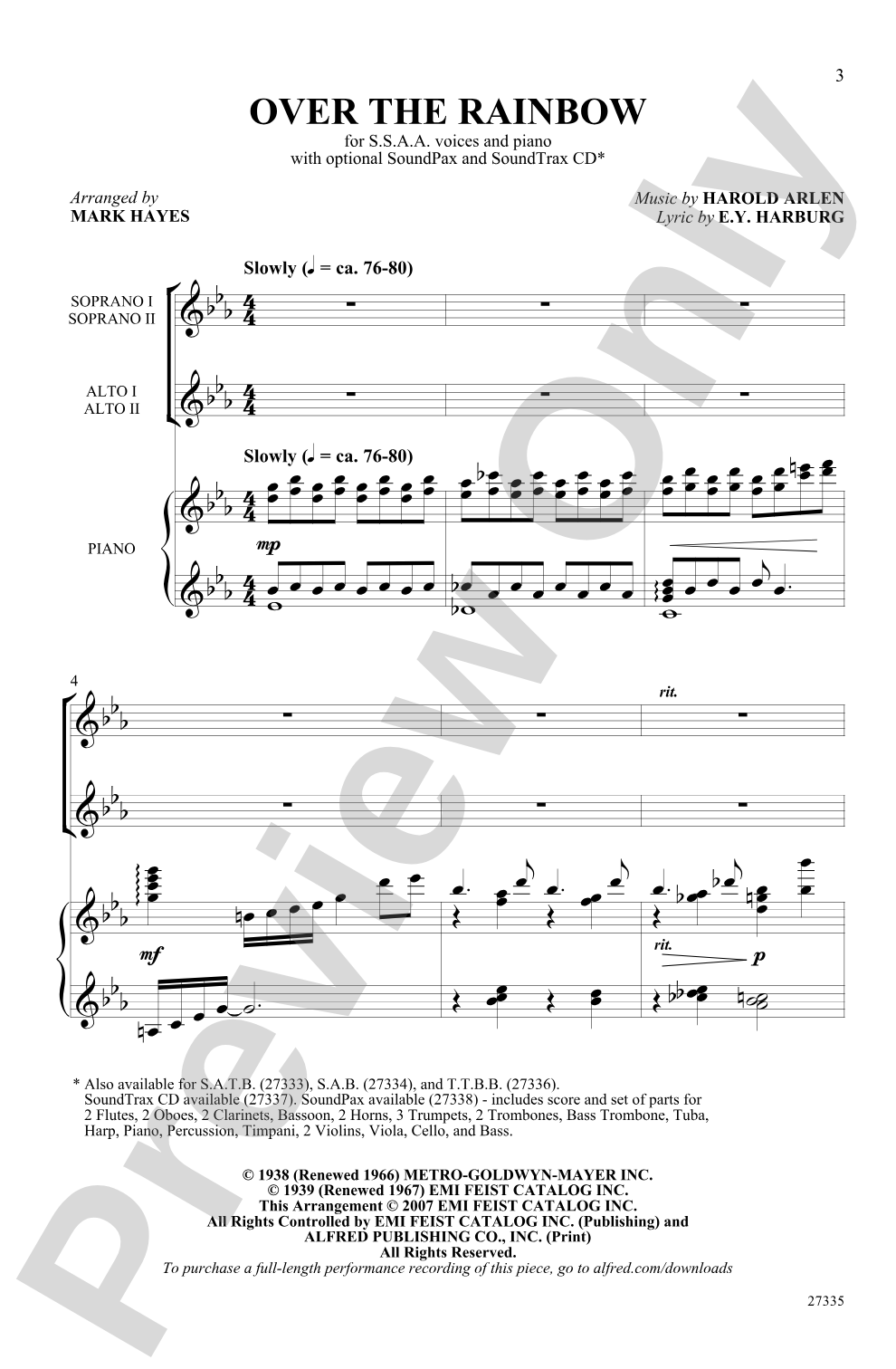
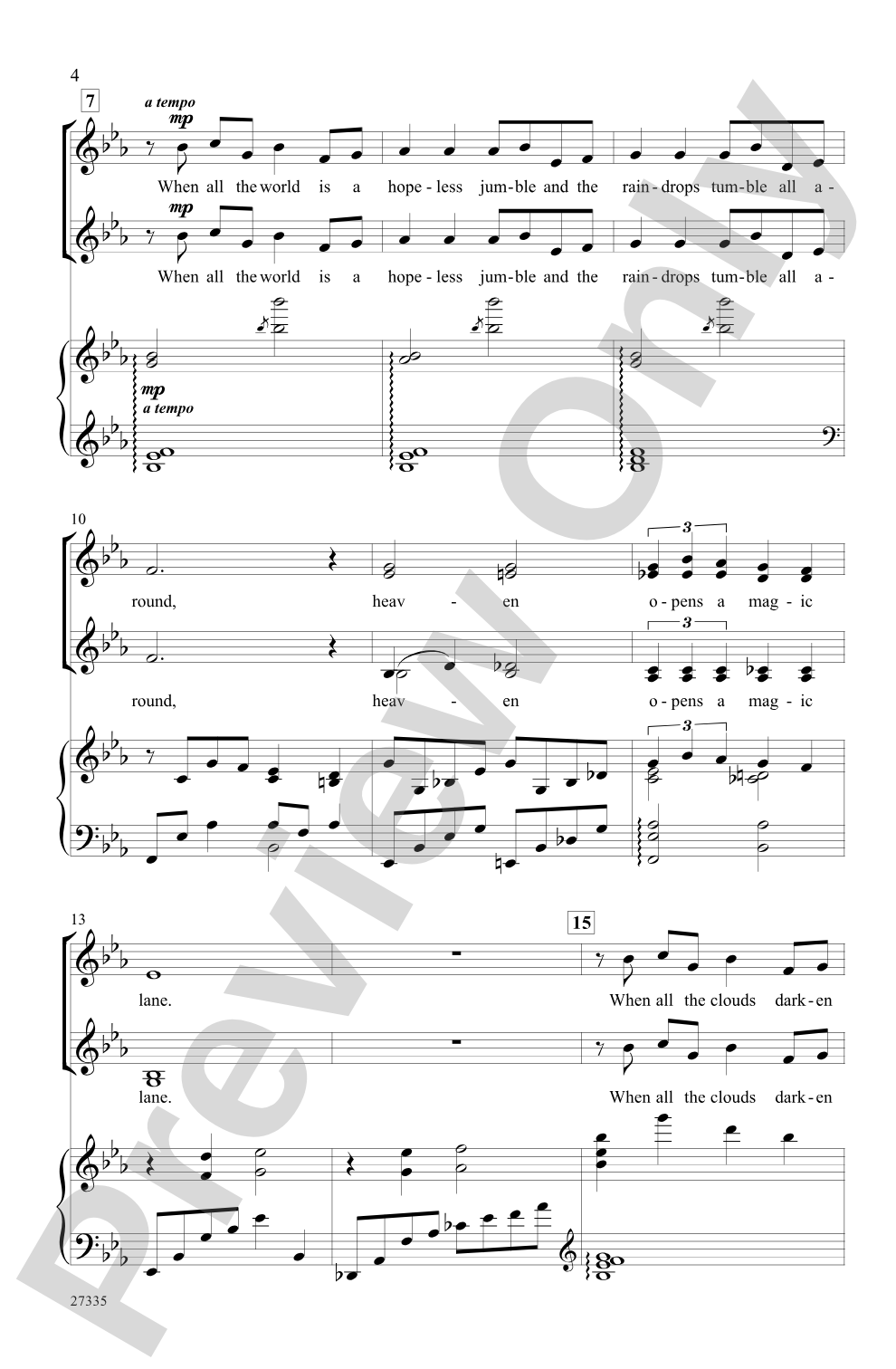
It's one of the most famous and most widely sung songs in the world, and now it's been arranged for choral groups by Mark Hayes. Includes the opening verse ("When all the world is a hopeless jumble...heaven opens a magic lane."), which sets the stage for that famous opening octave in the melody. The piano part couldn't be better, and the voice writing is impeccable. Fully orchestrated SoundTrax/SoundPax are available.


Over the Rainbow (from the musical The Wizard of Oz): SSAA Choral Octavo isn't in MakeMusic Cloud just yet...but it could be. Let us know you'd like to see it, and you'll help shape what comes next. In the meantime, start a free trial and dive into thousands of interactive titles your students can play along with today.
Request This Title
Tell us you want it.
Start Your Free Trial
Explore everything that's ready to play right now.
Sample Audio
1
Audio File
--:--
0:00
0:00
Sample Video
No sample videos found.
Additional Details
Series:
Alfred Pop Choral Series
Publisher:
Alfred Music
Page Count:
12
SKU:
00-PO-0002269
More about this title
About the Composer: Harold Arlen
Harold Arlen (1905-1986) composed some of the most enduring melodies in American popular music, with a gift for writing songs that balance sophisticated harmonic language with immediate singability. His work for film and theater, including The Wizard of Oz, defined the golden age of American songwriting and continues to anchor the repertoire of choral and vocal musicians worldwide.
Why we love this
Mark Hayes's arrangement preserves the emotional arc of Arlen's iconic melody while tailoring it for four-part treble voices with genuine musical substance. The inclusion of the opening verse gives singers and audiences a complete storytelling arc, and the piano part is crafted with such care that it elevates rather than overshadows the vocal lines. This is a song your singers will be eager to learn because they already love it, and the arrangement respects both the source material and the capabilities of developing choirs.
What to expect
There's a quiet longing in the opening verse that transforms into hope and wonder as the melody soars. The arrangement honors both the vulnerability of yearning and the lift of aspiration, creating space for genuine emotion rather than theatrical overdrive. Singers and listeners alike will feel the weight of the song's message: somewhere, things are better.
Who it's for
This arrangement works for treble choirs at the high school level and above, as well as community and adult ensembles with moderate sight-reading skills. The opening verse and familiar melody make it accessible to singers without prior knowledge of the piece, while Hayes's harmonic language keeps the musical content rewarding for experienced groups.
How to get the most out of it
- Shape the opening verse with dynamic restraint. This legit verse sets narrative context, so resist the urge to build volume until the famous octave arrives at 'Somewhere over the rainbow.'
- Balance the upper voices carefully when that opening octave enters. The leap is so recognizable that singers often anticipate it; keep the soprano line singing through its full phrase rather than scooping into the high note.
- Lean into the piano part's rhythmic precision. Hayes's accompaniment moves with intention, and locking the choir's diction to the harmonic changes in the piano creates clarity and forward motion.
- Let the breath support do the work in sustained passages. This melody sits well in the SSAA range when singers maintain consistent air flow rather than relying on volume.
How to use it
Program this as a concert centerpiece or as a bridge between classical and popular repertoire in a mixed season. The song's universal recognition makes it an excellent closer for community or benefit concerts, and its emotional directness pairs well with other jazz-influenced or contemporary American material. Consider it for spring or end-of-year performances when choirs want programming that resonates with audiences outside traditional concert circles.
Skills your students will build
- Singing sustained legit melodic lines without vibrato intrusion
- Balancing blend and diction in SSAA texture
- Negotiating the technical challenge of a wide melodic leap
- Interpreting lyrical music with narrative clarity
- Coordinating harmonic changes with piano accompaniment