
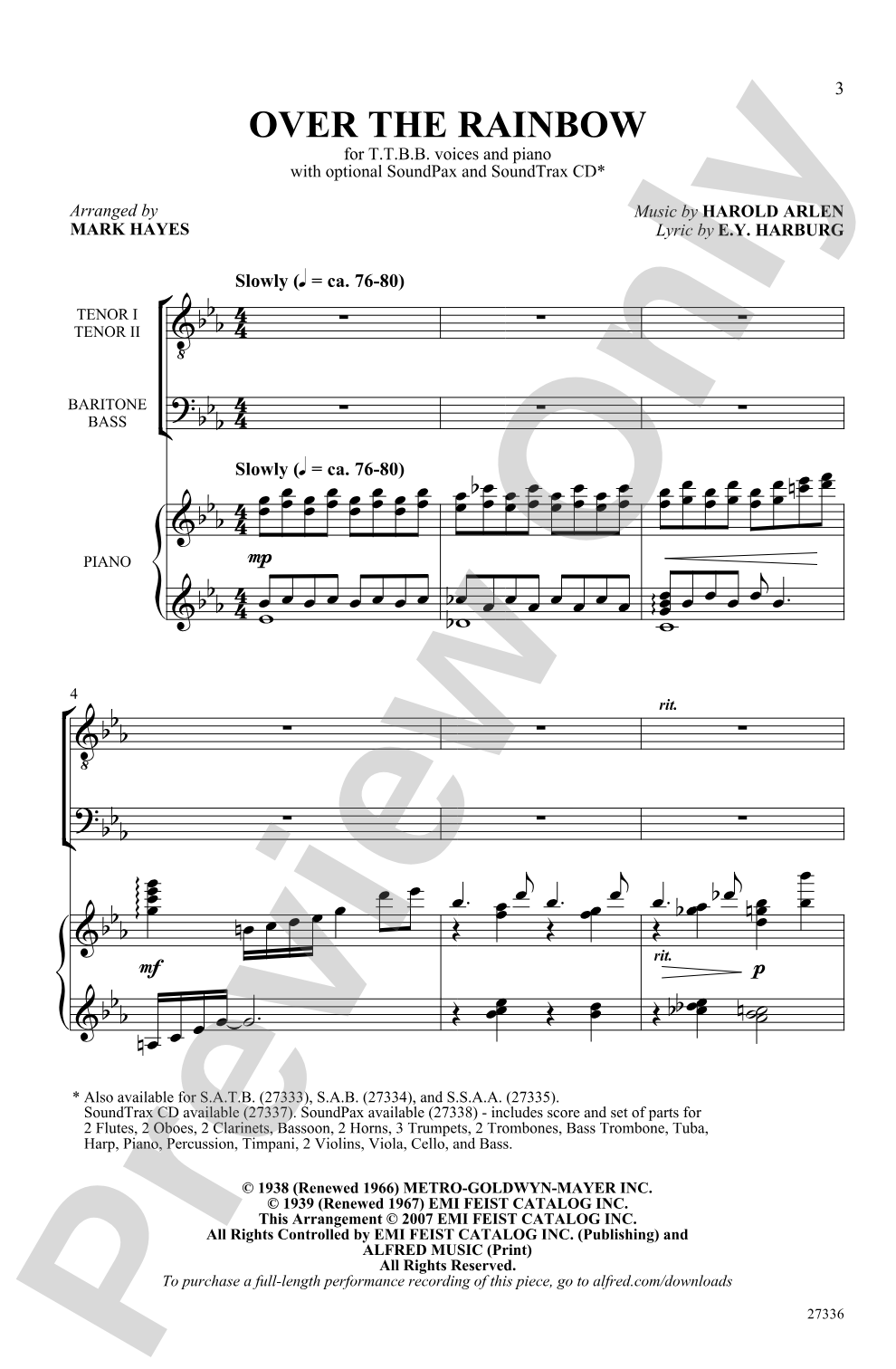

Over the Rainbow: TTBB Choral Octavo
From the Musical The Wizard of Oz
Music by Harold Arlen, lyric by E. Y. Harburg / arr. Mark Hayes
Item: 00-PO-0006573
$2.25
Minimum order quantity: 20 copies
One moment…
Related Items
Over the Rainbow: SoundTrax Digital Audio Download |
$27.99
|
View | |
Over the Rainbow (from the musical The Wizard of Oz): SATB Choral Octavo |
$2.10
|
View | |
Over the Rainbow (from the musical The Wizard of Oz): SAB Choral Octavo |
$2.10
|
View | |
Over the Rainbow (from the musical The Wizard of Oz): SSAA Choral Octavo |
$2.10
|
View | |
Over the Rainbow (from the musical The Wizard of Oz): Choral SoundPax |
$60.00
|
View | |
Over the Rainbow: SATB Choral Octavo |
$2.65
|
View | |
Over the Rainbow: SAB Choral Octavo |
$2.10
|
View | |
Over the Rainbow: SSAA Choral Octavo |
$2.65
|
View | |
Over the Rainbow: TTBB Choral Octavo |
$2.25
|
View | |
Over the Rainbow: Choral Octavo SoundTrax CD |
$27.99
|
View | |
Over the Rainbow: Choral SoundPax |
$60.00
|
View |
Description
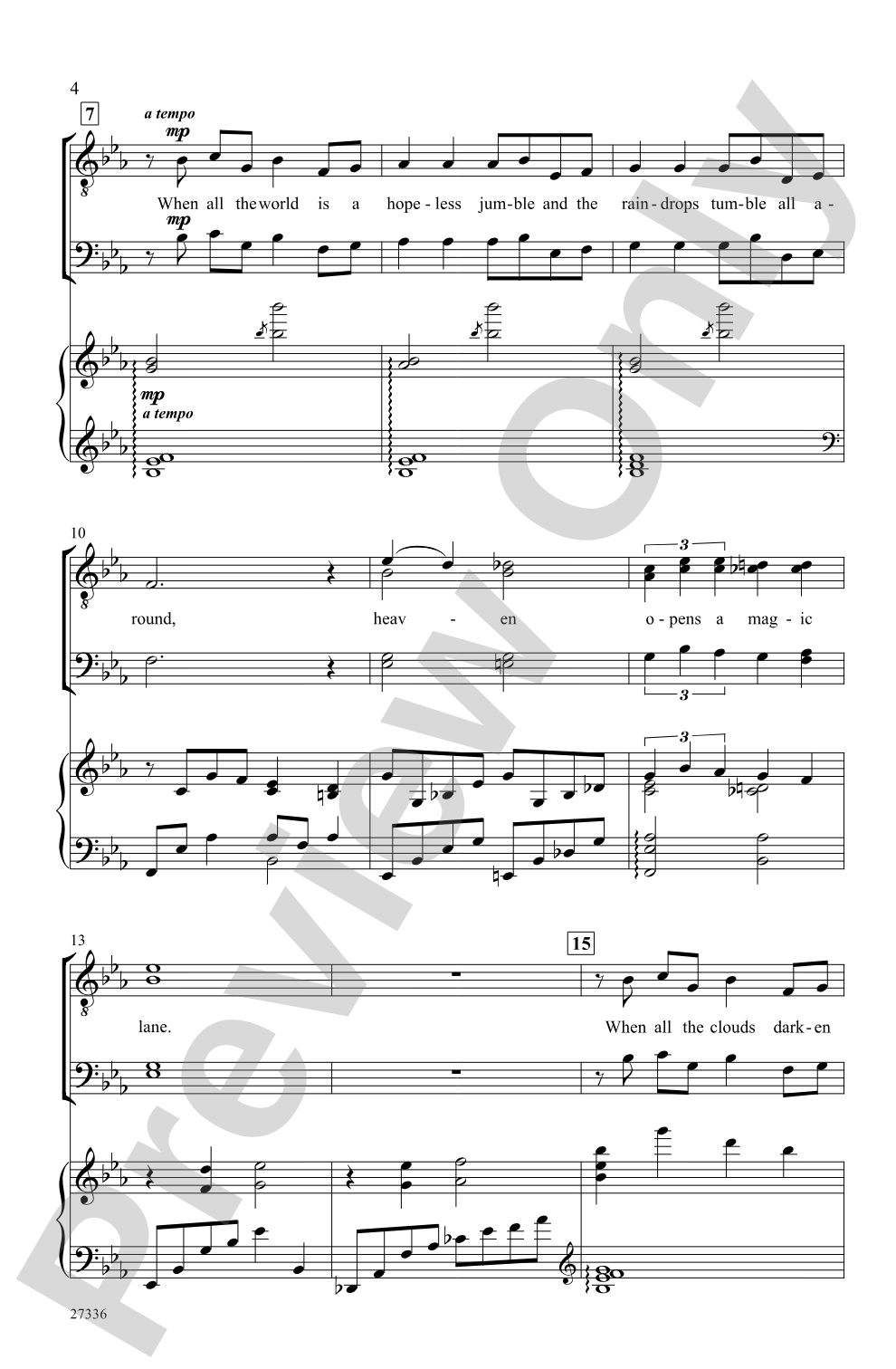
It's one of the most famous and most widely sung songs in the world, and now it's been arranged for choral groups by Mark Hayes. Includes the opening verse ("When all the world is a hopeless jumble...heaven opens a magic lane."), which sets the stage for that famous opening octave in the melody. The piano part couldn't be better, and the voice writing is impeccable. Fully orchestrated SoundTrax/SoundPax are available.


Over the Rainbow: TTBB Choral Octavo isn't in MakeMusic Cloud just yet...but it could be. Let us know you'd like to see it, and you'll help shape what comes next. In the meantime, start a free trial and dive into thousands of interactive titles your students can play along with today.
Request This Title
Tell us you want it.
Start Your Free Trial
Explore everything that's ready to play right now.
Sample Audio
1
Audio File
--:--
0:00
0:00
Sample Video
No sample videos found.
Additional Details
Series:
Alfred Archive Edition: Alfred Pop Choral Series
Publisher:
Alfred Music
Page Count:
12
SKU:
00-PO-0006573
More about this title
About the Composer: Harold Arlen
Harold Arlen (1905-1986) composed some of the most enduring melodies in American popular song, with a gift for writing singable, memorable lines that have transcended their original contexts. His work for stage and film defined the Golden Age of Broadway and Hollywood, earning him an Academy Award and a place among the most recorded composers of the twentieth century. For choral educators, Arlen's melodic architecture offers rich material: his songs sit naturally in the voice and reward careful harmonic exploration.
Why we love this
Mark Hayes's arrangement honors the song's iconic status while giving it genuine choral substance. The inclusion of the opening verse transforms what many singers know only as a melody into a complete arc, and the voice writing sits comfortably for TTBB groups without sacrificing musicality or harmonic interest. This is a standard that works equally well as a showcase moment or an audience favorite on a mixed program.
What to expect
Hopeful and expansive, with a touch of vulnerability in the verse before the melody lifts into something transcendent. The arrangement captures the song's dreamy quality and its quiet insistence that beauty and escape are possible, even in dark times.
Who it's for
TTBB choirs seeking a piece that combines immediate recognizability with genuine arranging craft. Directors programming concerts that need a showstopper with broad appeal, or ensembles looking to explore a beloved standard through a fresh harmonic lens.
How to get the most out of it
- Shape the opening verse with attention to text clarity and storytelling; the narrative sets emotional stakes for the famous melody that follows.
- Balance the chords in the famous octave passage and the soaring lines that follow it; let the upper voices bloom without drowning the harmonic foundation in the lower parts.
- Work with the accompanist to ensure the piano part provides structural support without overwhelming the choir, especially through the verse's quieter moments.
- Consider what tempo allows the familiar melody to feel fresh rather than rushed; this song's power lives in its spaciousness.
How to use it
Anchor a concert's second half or finale with this piece; its familiarity and emotional lift make it an ideal closer that leaves audiences satisfied. It also works beautifully in programs built around American standards or popular song, or as a featured moment within a larger thematic concert.
Skills your students will build
- Blend and balance in four-part writing with independent melodic lines
- Interpretation of text-painting and narrative song structure
- Intonation across sustained harmonic passages and parallel voice movement
- Coordination with piano accompaniment in a fully realized harmonic setting