
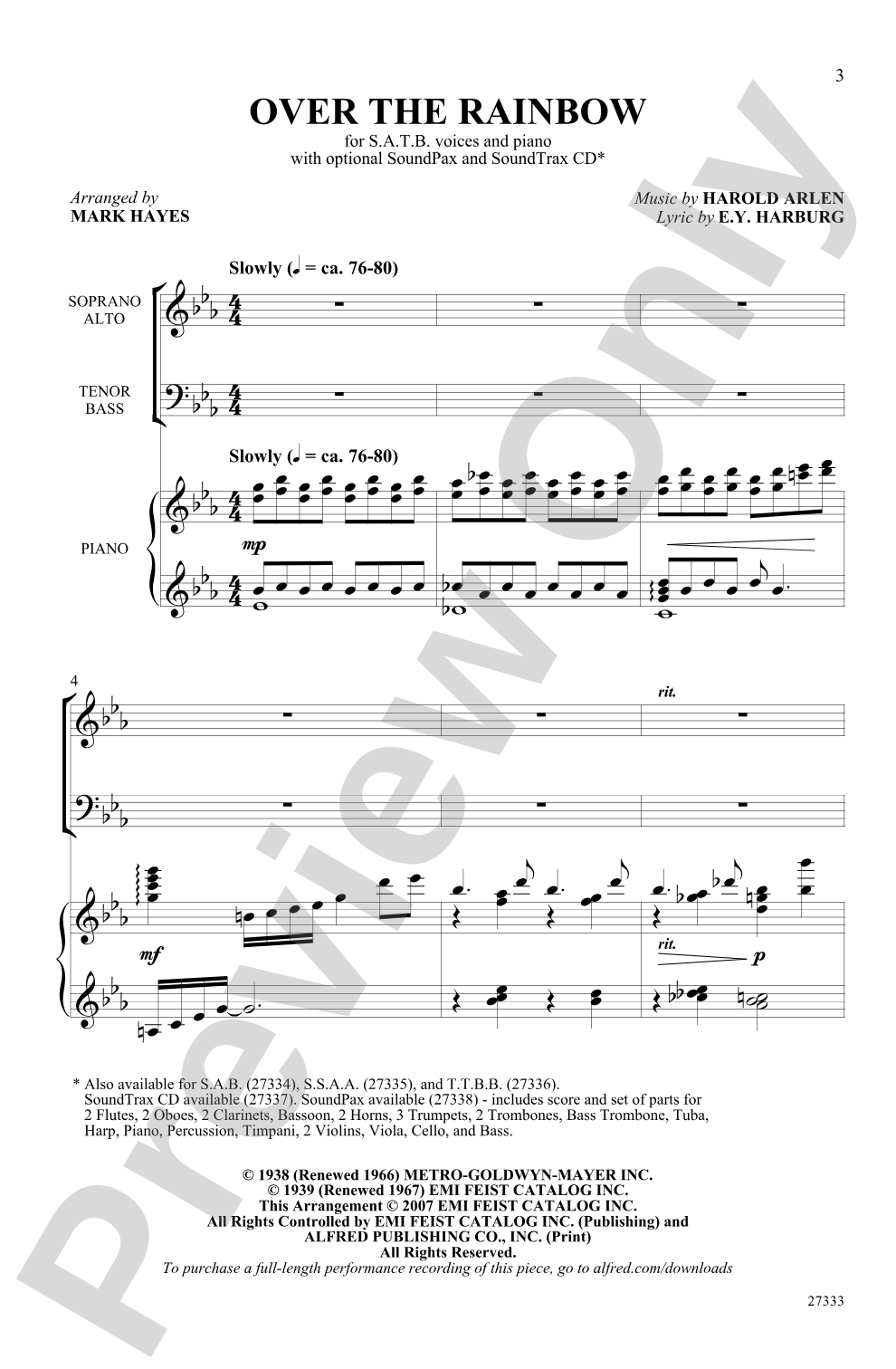

Over the Rainbow (from the musical The Wizard of Oz): SATB Choral Octavo
From the Musical The Wizard of Oz
Music by Harold Arlen, lyric by E. Y. Harburg / arr. Mark Hayes
Item: 00-PO-0002267
$2.10
Minimum order quantity: 20 copies
One moment…
Related Items
Over the Rainbow: SoundTrax Digital Audio Download |
$27.99
|
View | |
Over the Rainbow (from the musical The Wizard of Oz): SAB Choral Octavo |
$2.10
|
View | |
Over the Rainbow (from the musical The Wizard of Oz): SSAA Choral Octavo |
$2.10
|
View | |
Over the Rainbow: TTBB Choral Octavo |
$2.25
|
View | |
Over the Rainbow (from the musical The Wizard of Oz): Choral SoundPax |
$60.00
|
View | |
Over the Rainbow: SATB Choral Octavo |
$2.65
|
View | |
Over the Rainbow: SAB Choral Octavo |
$2.10
|
View | |
Over the Rainbow: SSAA Choral Octavo |
$2.65
|
View | |
Over the Rainbow: TTBB Choral Octavo |
$2.25
|
View | |
Over the Rainbow: Choral Octavo SoundTrax CD |
$27.99
|
View | |
Over the Rainbow: Choral SoundPax |
$60.00
|
View |
Description
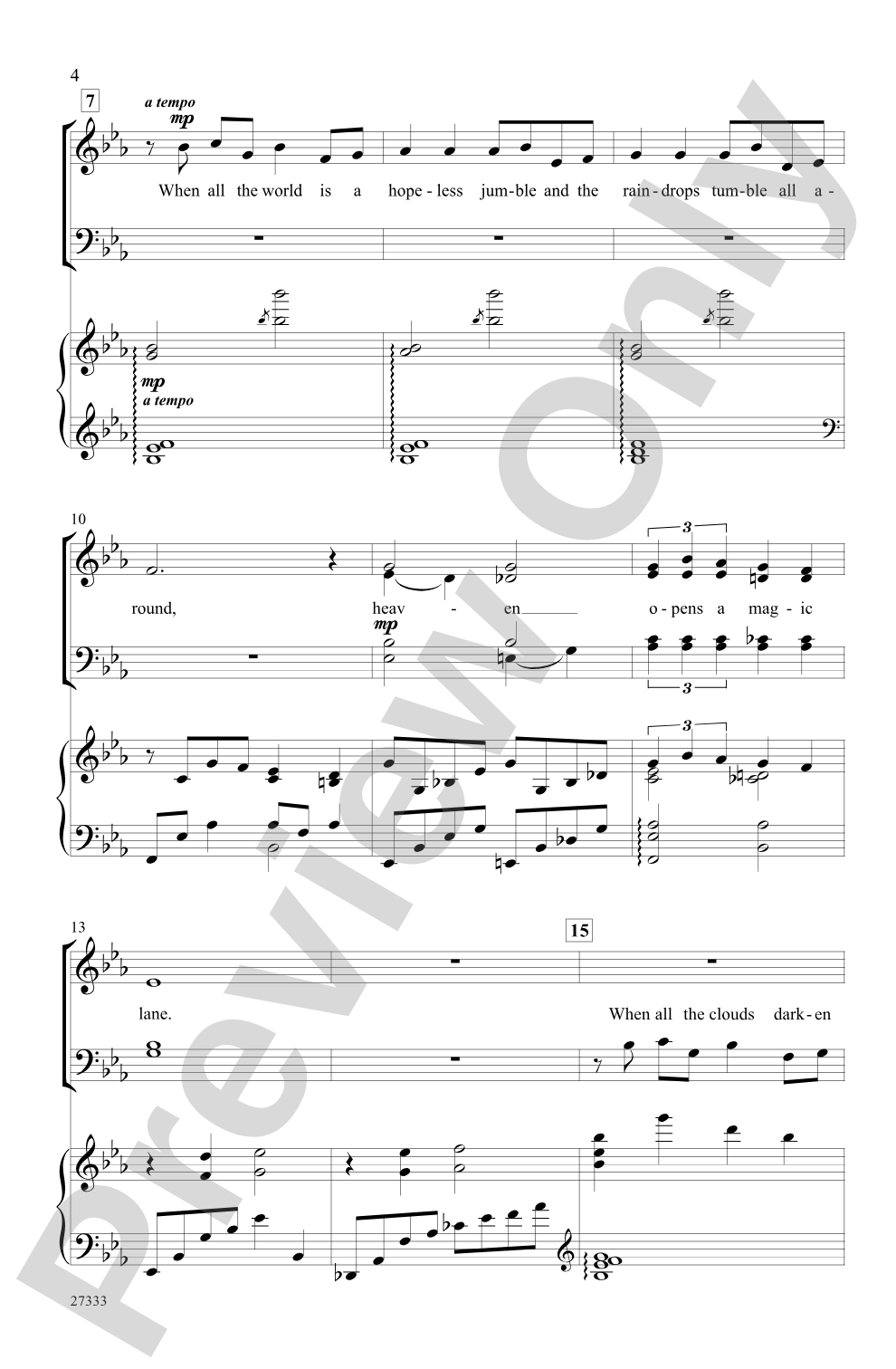
It's one of the most famous and most widely sung songs in the world, and now it's been arranged for choral groups by Mark Hayes. Includes the opening verse ("When all the world is a hopeless jumble...heaven opens a magic lane."), which sets the stage for that famous opening octave in the melody. The piano part couldn't be better, and the voice writing is impeccable. Fully orchestrated SoundTrax/SoundPax are available.


Over the Rainbow (from the musical The Wizard of Oz): SATB Choral Octavo isn't in MakeMusic Cloud just yet...but it could be. Let us know you'd like to see it, and you'll help shape what comes next. In the meantime, start a free trial and dive into thousands of interactive titles your students can play along with today.
Request This Title
Tell us you want it.
Start Your Free Trial
Explore everything that's ready to play right now.
Sample Audio
1
Audio File
--:--
0:00
0:00
Sample Video
No sample videos found.
Additional Details
Series:
Alfred Pop Choral Series
Publisher:
Alfred Music
Page Count:
12
SKU:
00-PO-0002267
More about this title
About the Composer: Harold Arlen
Harold Arlen (1905-1986) composed some of the most enduring melodies in American musical theater. His gift for writing singable, memorable lines that could anchor both intimate moments and grand productions made him a sought-after composer for Broadway and Hollywood. Over the Rainbow stands as perhaps his most iconic work, a song that transcends its theatrical origins to become part of the cultural fabric.
Arlen's influence on music education extends beyond any single piece. His approach to melody emphasized clarity and emotional directness, qualities that make his work rewarding for choirs to perform and audiences to hear. Teachers return to his songs repeatedly because they demonstrate how strong compositional craft serves storytelling.
Why we love this
Mark Hayes's arrangement honors the song's emotional core while giving choirs the space to make it their own. The inclusion of that opening verse provides dramatic context that enriches the famous melody, and the piano writing is genuinely beautiful rather than merely functional. This is a piece your singers will want to perform and audiences will lean in to hear.
What to expect
Hopeful without being saccharine, this arrangement captures both the longing and the quiet faith embedded in the song. The opening verse draws listeners into an intimate moment before the melody lifts them toward something larger.
Who it's for
Any choir that can balance four parts with musical maturity will benefit from learning this. It works equally well for high school choirs looking to expand their repertoire beyond contemporary pop arrangements and adult community choirs seeking accessible music with genuine artistic substance.
How to get the most out of it
- The opening verse needs a vulnerable, almost conversational quality. Resist the urge to force the tempo; let the lyrics breathe so the shift to that famous octave landing feels earned rather than inevitable.
- Balance the part writing so the melody remains the clear focal point without drowning out the harmonic support beneath it. Hayes's voicing rewards careful listening from all sections.
- The recorded accompaniment can anchor your rehearsals, but the piano part is detailed enough that a strong accompanist adds real value to performances. Consider featuring the live piano in concert when possible.
- Pay attention to the ending. This familiar song can drift into autopilot in its final measures. Sustain the emotional intention through the final note; that's what makes this arrangement sing.
How to use it
This works as a concert centerpiece or as part of a program celebrating American musical theater. It also serves as an excellent bridge piece when you're building a set that includes both classical choral literature and contemporary arrangements. Audiences know this song; programming it shows respect for what your singers can do with beloved music.
Skills your students will build
- Phrasing that serves lyrical storytelling across multiple sections
- Balancing homophonic and contrapuntal texture within a single arrangement
- Sustaining emotional intention through familiar material
- Reading a piano part substantial enough to inform choral interpretation