
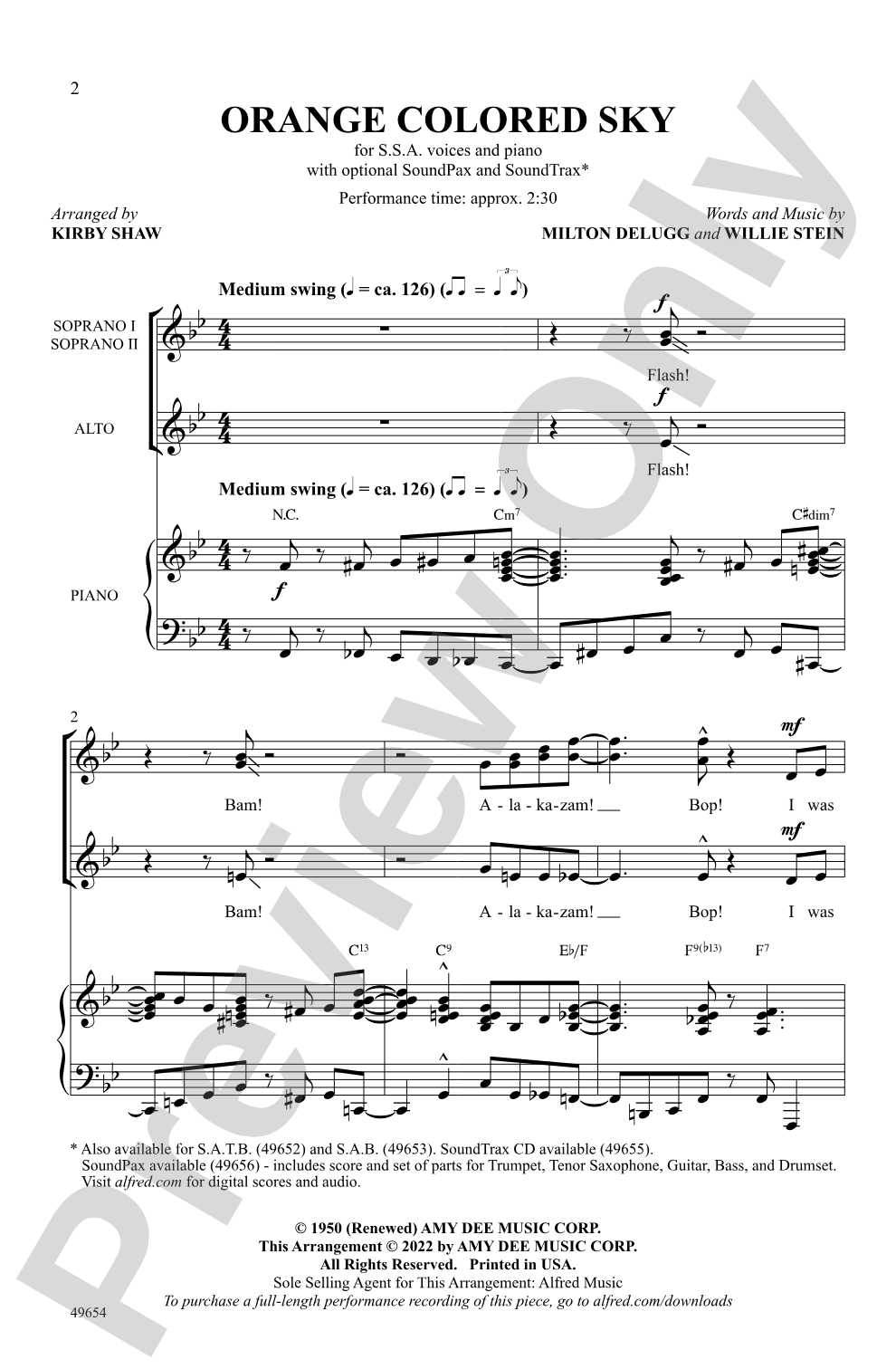

Orange Colored Sky: SSA Choral Octavo
Words and music by Milton Delugg and Willie Stein / arr. Kirby Shaw
Item: 00-PO-0006886

$2.10
Minimum order quantity: 20 copies
One moment…
Related Items
Orange Colored Sky: SoundTrax Digital Audio Download |
$29.99
|
View | |
Orange Colored Sky: SATB Choral Octavo |
$2.10
|
View | |
Orange Colored Sky: SAB Choral Octavo |
$2.10
|
View | |
Orange Colored Sky: Choral SoundPax |
$30.00
|
View | |
Orange Colored Sky: SATB Choral Octavo |
$2.10
|
View | |
Orange Colored Sky: SAB Choral Octavo |
$2.10
|
View | |
Orange Colored Sky: SSA Choral Octavo |
$2.10
|
View | |
Orange Colored Sky: Choral Octavo SoundTrax CD |
$29.99
|
View | |
Orange Colored Sky: Choral SoundPax |
$30.00
|
View |
Description
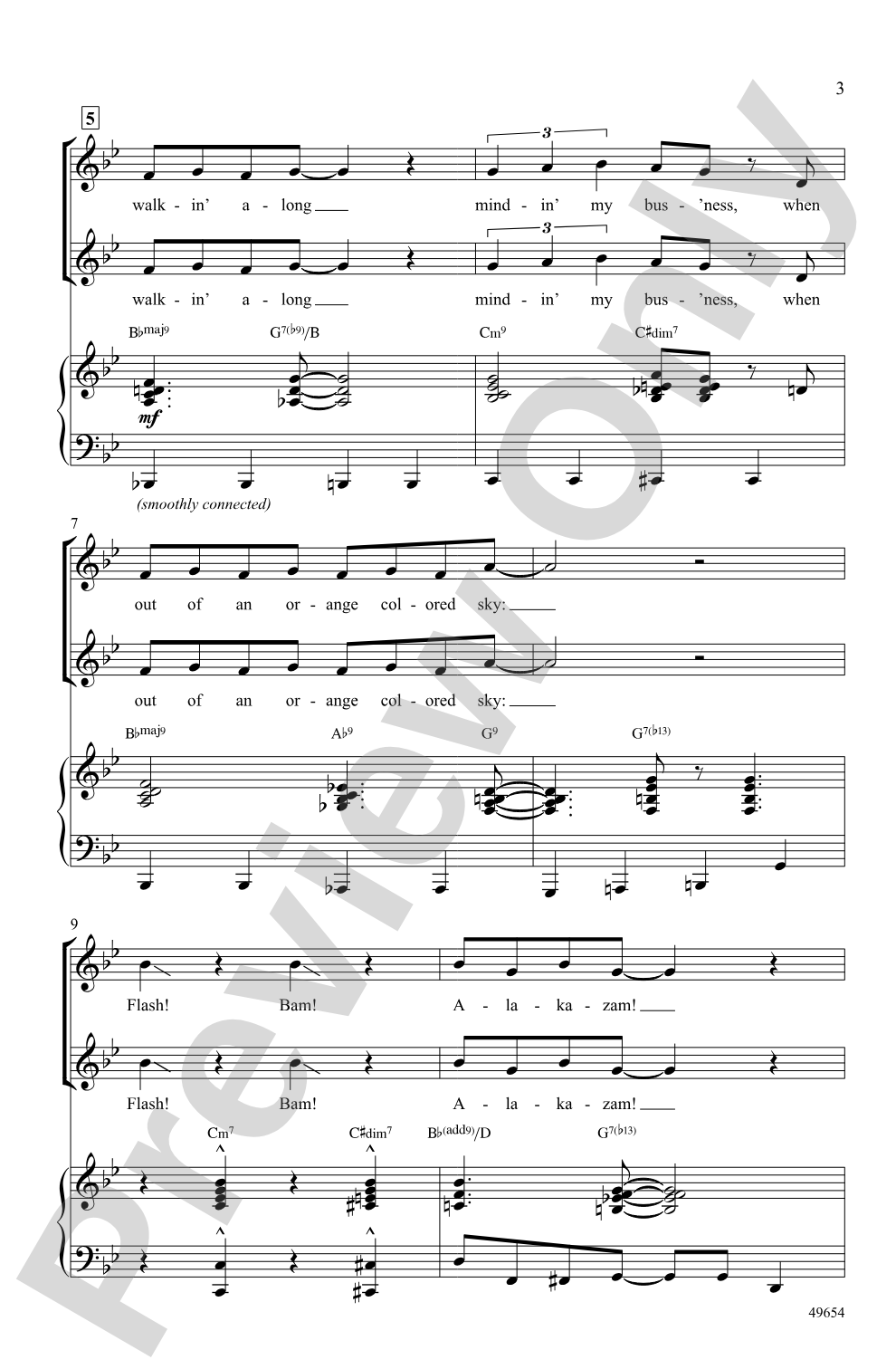
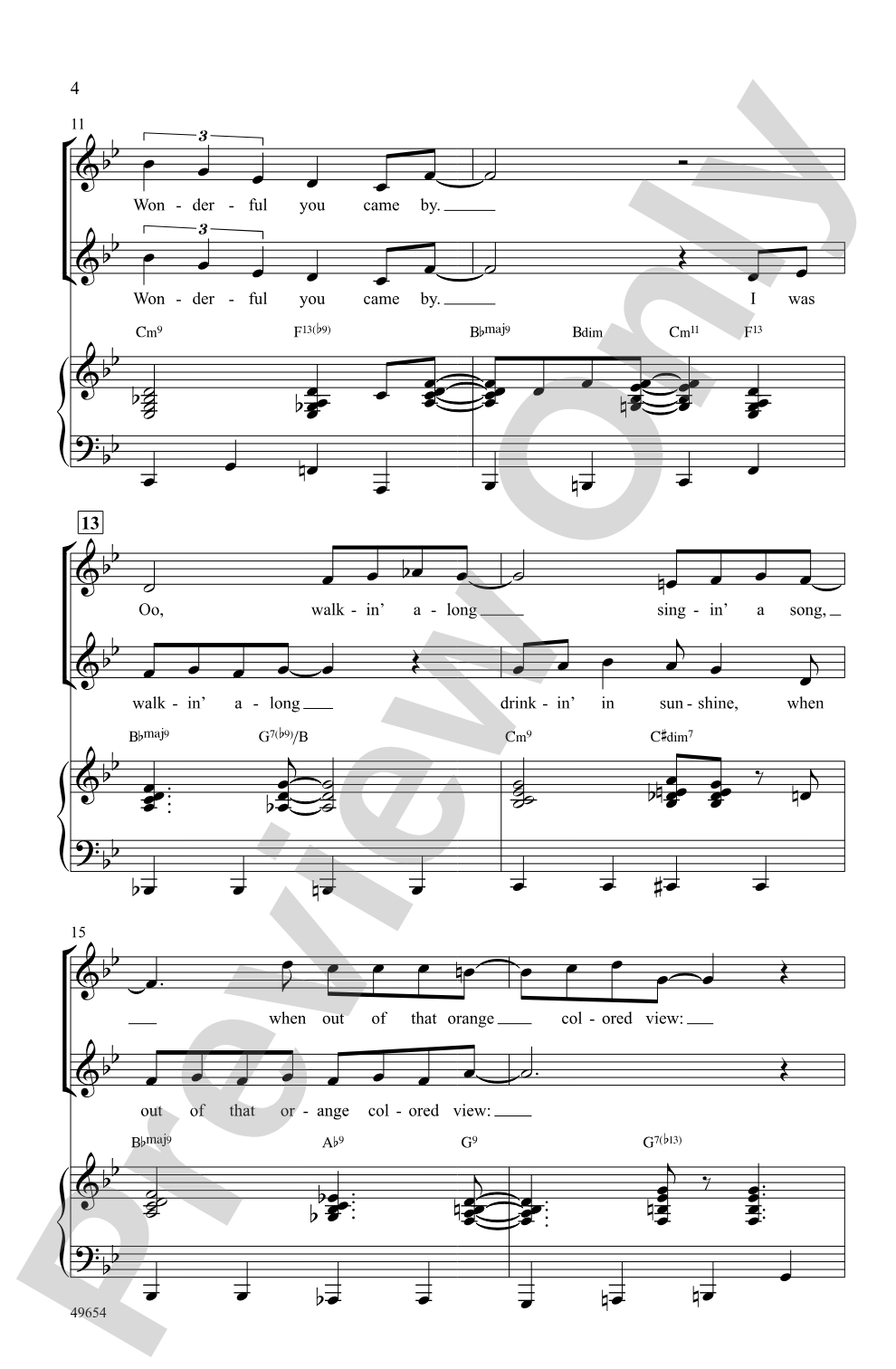
"Flash! Bam! Alakazam!" Vocal jazzers will love the fall-offs, slides, tight harmonies, and rapid fire triplets in Kirby's arrangement of this Great American Songbook standard. Two brief notated solos sound improvised over the hip changes at the turnaround. Recommended listening: study the style with the 1950 recording by Nat King Cole. SoundPax includes trumpet, sax, and rhythm.


Don't just read it, hear it, play along with it, and watch your students grow with it. In MakeMusic Cloud, Orange Colored Sky: SSA Choral Octavo comes alive with professional accompaniment, adjustable tempo, and built-in practice tools that turn solo practice into real progress.
Open in the Player
Jump straight in and assign it today.
Start Your Free Trial
Open this title and explore the full library in minutes.
Sample Audio
1
Audio File
--:--
0:00
0:00
Sample Video
Additional Details
Series:
Alfred Pop Choral Series
Publisher:
Alfred Music
Page Count:
12
SKU:
00-PO-0006886
More about this title
About the Composer: Milton Delugg
Milton Delugg (1918-2009) was an accordion virtuoso and composer who became a defining voice in American popular music during the mid-20th century. His gift for accessible, swinging melodies and his deep knowledge of jazz harmony made him a prolific writer for vocalists and small ensembles across radio, television, and recording sessions.
Delugg's work reflected his mastery of both the Great American Songbook idiom and contemporary pop sensibilities. He understood how to write for singers with wit and warmth, crafting pieces that felt both sophisticated and immediately singable. His collaborations with lyricists and other composers produced standards that remain vital teaching and performance repertoire for jazz-focused choral programs.
Why we love this
Kirby Shaw's arrangement captures everything that makes this standard irresistible: the rhythmic punch, the jazz vocabulary, and the sheer vocal playfulness that draws singers in. The notated solos give your vocalists a taste of jazz phrasing and harmonic sophistication without requiring improvisation skills, while the tight SSA harmonies stay singable even as they swing hard. This is the kind of piece that energizes an ensemble and reminds audiences why jazz-inflected pop still matters.
What to expect
Bright, snappy, and full of personality. The syncopation and fall-offs give it a retro coolness that feels both nostalgic and alive. There's a conversational ease to it, as if the choir is trading wisecracks with the accompaniment over a martini and cigarettes (in the best 1950s sense).
Who it's for
Choirs with jazz experience or strong rhythmic maturity will thrive here. SSA ensembles looking for secular repertoire that balances technical interest with genuine fun will find this rewarding; the style demands confident singers who can lock into swing feel and navigate jazz harmony confidently.
How to get the most out of it
- Study the 1950 Nat King Cole recording together as an ensemble before rehearsal begins; let singers hear how the triplets sit in the groove and how the falls and slides should sound conversational, not mechanical.
- Shape the two notated solos so they sound spontaneous. Encourage singers to lean into the "Flash! Bam! Alakazam!" punch without sacrificing the lyrical quality of the melodic content.
- Lock the rhythm section and soprano line first, then layer in the harmonic voices; the hip changes at the turnaround need rock-solid foundation support to land cleanly.
- Lighten the texture on the rapid-fire triplets so they sit nimbly on top of the beat rather than feeling sluggy or dragged.
How to use it
Slot this into a concert that celebrates the Great American Songbook or jazz history, where it will give audiences a vivid example of how arrangers bring standards to life for vocal ensembles. It pairs beautifully alongside other mid-century pop or jazz numbers that showcase swing feel and tight voicing. Consider programming it where you want an immediate mood lift and vocal personality to shine through.
Skills your students will build
- Swing rhythm and triplet subdivision in jazz context
- Jazz articulation including falls and slides
- Voice leading in close jazz harmonies (SSA voicing)
- Reading and executing rapid-fire rhythmic figures
- Phrasing and interpretation in jazz vocal style
- Ensemble blend and precision in syncopated passages