

Orange Colored Sky: SATB Choral Octavo
Words and music by Milton Delugg and Willie Stein / arr. Kirby Shaw
Item: 00-PO-0006884

$2.10
Minimum order quantity: 20 copies
One moment…
Related Items
Orange Colored Sky: SoundTrax Digital Audio Download |
$29.99
|
View | |
Orange Colored Sky: SAB Choral Octavo |
$2.10
|
View | |
Orange Colored Sky: SSA Choral Octavo |
$2.10
|
View | |
Orange Colored Sky: Choral SoundPax |
$30.00
|
View | |
Orange Colored Sky: SATB Choral Octavo |
$2.10
|
View | |
Orange Colored Sky: SAB Choral Octavo |
$2.10
|
View | |
Orange Colored Sky: SSA Choral Octavo |
$2.10
|
View | |
Orange Colored Sky: Choral Octavo SoundTrax CD |
$29.99
|
View | |
Orange Colored Sky: Choral SoundPax |
$30.00
|
View |
Description
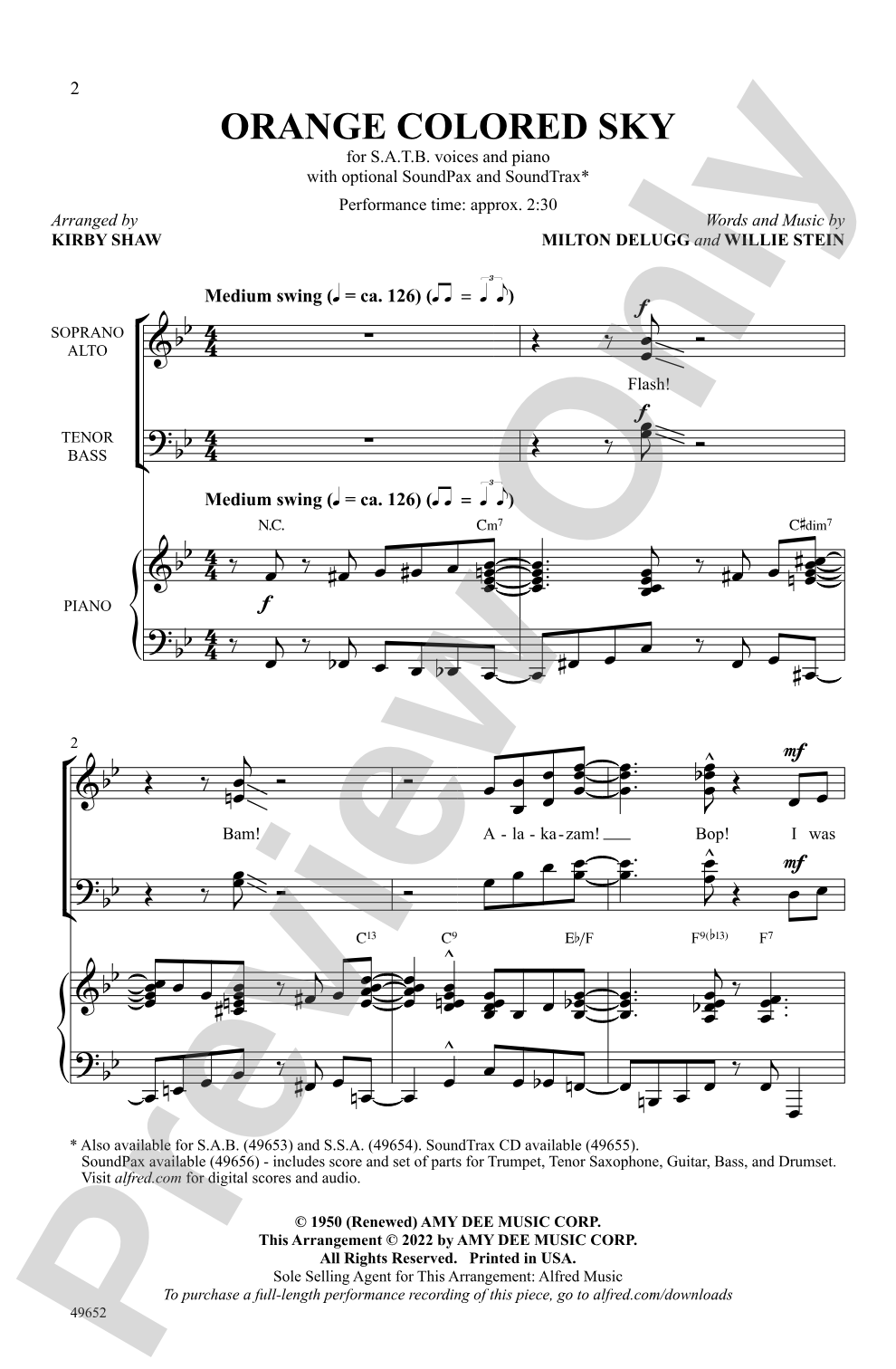
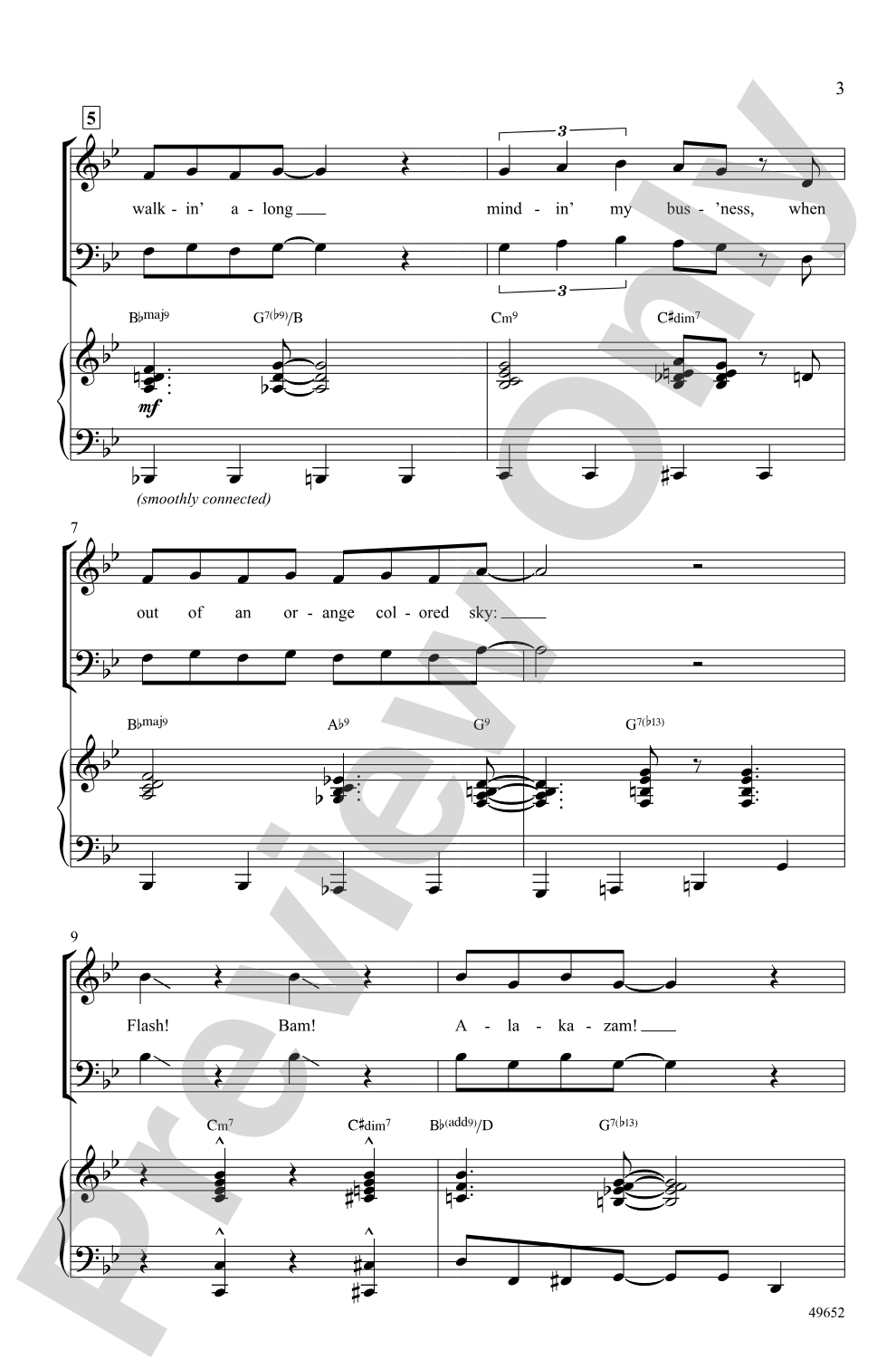
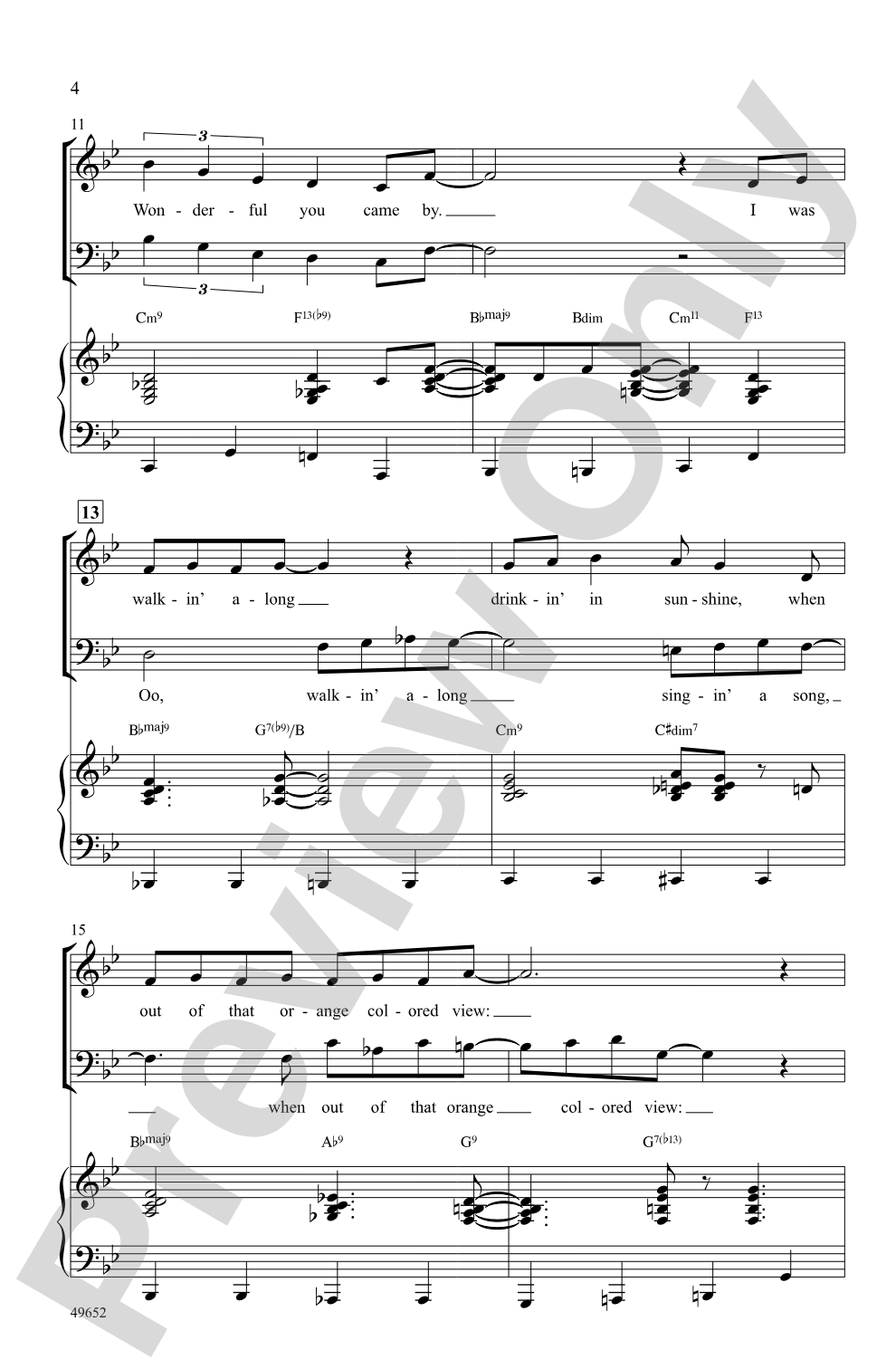
"Flash! Bam! Alakazam!" Vocal jazzers will love the fall-offs, slides, tight harmonies, and rapid fire triplets in Kirby's arrangement of this Great American Songbook standard. Two brief notated solos sound improvised over the hip changes at the turnaround. Recommended listening: study the style with the 1950 recording by Nat King Cole. SoundPax includes trumpet, sax, and rhythm.


Don't just read it, hear it, play along with it, and watch your students grow with it. In MakeMusic Cloud, Orange Colored Sky: SATB Choral Octavo comes alive with professional accompaniment, adjustable tempo, and built-in practice tools that turn solo practice into real progress.
Open in the Player
Jump straight in and assign it today.
Start Your Free Trial
Open this title and explore the full library in minutes.
Sample Audio
1
Audio File
--:--
0:00
0:00
Sample Video
Additional Details
Series:
Alfred Pop Choral Series
Publisher:
Alfred Music
Page Count:
12
SKU:
00-PO-0006884
More about this title
About the Composer: Milton Delugg
Milton Delugg (1918-2009) was an American composer and accordionist whose prolific output spanned from the 1940s through the early 2000s. Known for his ability to craft memorable melodies and his deep fluency in popular song idioms, Delugg wrote or co-wrote standards that became fixtures of the Great American Songbook, including "Orange Colored Sky." His music has been recorded by major artists across jazz, pop, and standards repertoire, and his compositions continue to appear in educational choral settings where accessibility meets genuine artistry.
Why we love this
Kirby Shaw's arrangement captures everything that makes jazz singing rewarding for choral musicians: playful slide articulations, chromatic voice leading that feels both sophisticated and singable, and solos written out in a way that sounds like genuine improvisation. The piece swings hard without requiring your ensemble to abandon musicianship, and the SoundPax accompaniment (trumpet, sax, and rhythm) gives singers a genuine small-group jazz texture to lock into rather than a smoothed-over background track.
What to expect
Bright, snappy, and irreverent in the best way. The piece bounces along with conversational ease, punctuated by moments of harmonic sophistication that remind listeners this isn't novelty singing but genuine jazz artistry translated into choral voices. There's joy in the swing and craft in the voicing.
Who it's for
Intermediate to advanced SATB choirs with some jazz singing experience or willingness to develop it. Your group needs secure rhythm readers and singers comfortable with swing articulation, but the individual vocal lines sit well and the arrangement supports ensemble singers throughout.
How to get the most out of it
- Nail the rhythmic precision of the rapid-fire triplets in the ensemble sections. These quick figures define the groove, so lock them in during early rehearsals before layering in the swing feel.
- Study the Nat King Cole recording for phrasing and inflection, particularly how the soloists approach their written passages. The arrangement intentionally notates those moments to sound improvised, which means your singers need to understand the style underneath the notes.
- Balance the fall-offs and slides so they land musically, not carelessly. These ornaments should feel conversational and relaxed, which means they need technical control to avoid sounding sloppy.
- Use the SoundPax accompaniment in rehearsal to build ensemble comfort with the harmonic movement, especially at the turnaround where the changes get 'hip.' Singers need to hear themselves against actual jazz voicings, not block chords.
How to use it
Program this alongside other standards-based choral jazz pieces to create a cohesive set, or use it as a palate-cleansing contrast in a concert that mixes classical and contemporary work. The piece works especially well in fall or winter concerts where seasonal programming takes a backseat to showcasing ensemble style and personality.
Skills your students will build
- Swing rhythms and triplet subdivision (reading and performing)
- Jazz articulation techniques (falls, slides, and stylistic inflection)
- Sight-reading chromatic voice leading and jazz harmony
- Ensemble balance and blend across mixed meter harmonic movement
- Listening to and responding to improvisation-style notated solos