

Of Grateful Praise: SAB Choral Octavo
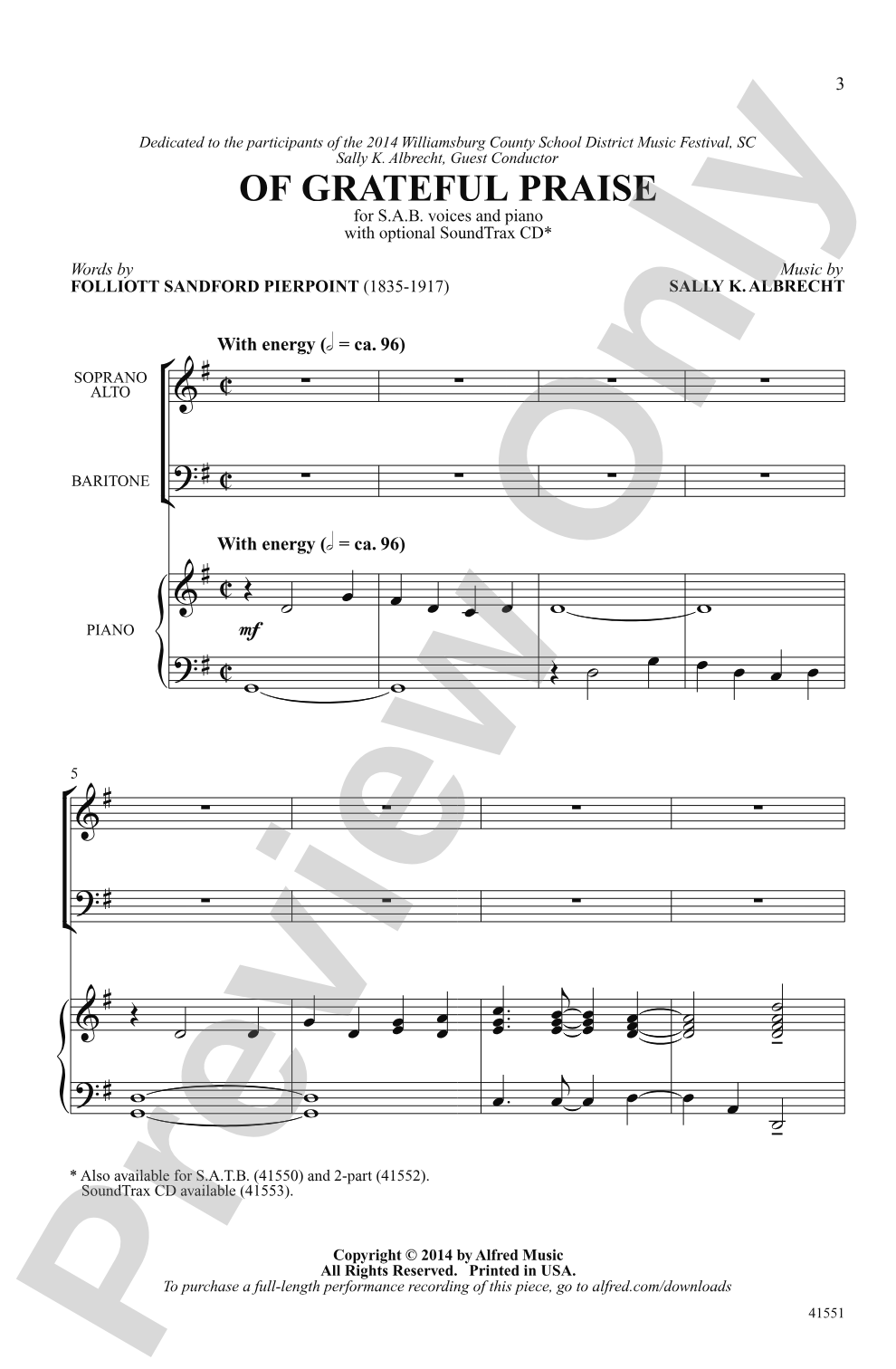
Words by Folliott Sandford Pierpoint, music by Sally K. Albrecht
Item: 00-PO-0001794
$1.85
Minimum order quantity: 20 copies
Pickup currently not available
Related Items
Of Grateful Praise: SoundTrax Digital Audio Download |
$27.99
|
View | |
Of Grateful Praise: SATB Choral Octavo |
$1.85
|
View | |
Of Grateful Praise: 2-Part Choral Octavo |
$1.85
|
View | |
Of Grateful Praise: SAB Choral Octavo |
$1.85
|
View | |
Of Grateful Praise: 2-Part Choral Octavo |
$1.85
|
View | |
Of Grateful Praise: Choral Octavo SoundTrax CD |
$27.99
|
View |
Description
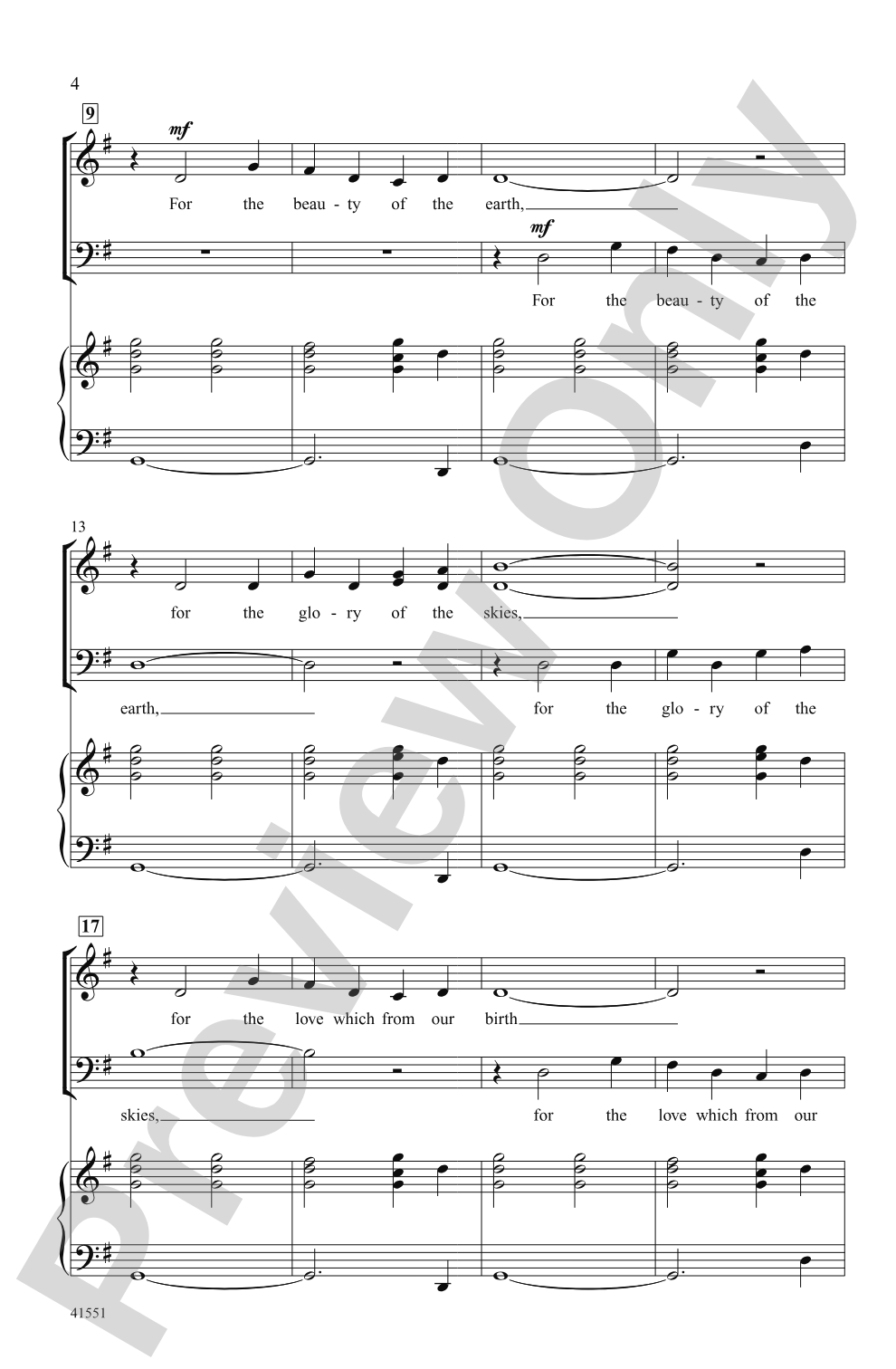
Pierpoint's famous "For the Beauty of the Earth" text is given new energy with a contemporary groove. Canonic verses and sensible repetition make for easy learning. An exciting song of praise for developing school and church choirs!


Of Grateful Praise: SAB Choral Octavo isn't in MakeMusic Cloud just yet...but it could be. Let us know you'd like to see it, and you'll help shape what comes next. In the meantime, start a free trial and dive into thousands of interactive titles your students can play along with today.
Request This Title
Tell us you want it.
Start Your Free Trial
Explore everything that's ready to play right now.
Sample Audio
1
Audio File
--:--
0:00
0:00
Sample Video
No sample videos found.
Additional Details
Series:
Alfred Choral Designs
Publisher:
Alfred Music
Page Count:
12
SKU:
00-PO-0001794
More about this title
About the Composer: Sally K. Albrecht

Sally K. Albrecht has shaped choral music education for over three decades, most notably as Director of School Choral, Vocal, and Elementary Publications at Alfred Music. Her catalog spans more than 600 choral works and 75 larger musicals and songbooks, earning her ASCAP Special Music Award recognition annually since 1987. She has conducted honor choirs at major venues including Lincoln Center, Carnegie Hall, and The Kennedy Center, bringing her distinctive approach to choral artistry across the country.
Albrecht holds degrees from Rollins College (B.A. in Music and Theater, 1976), the University of Miami (M.A. in Drama, 1977; M.M. in Accompanying, 1979), and has taught at Oakland University, Jersey City State College, and Meredith College. Her work is particularly distinguished by her integration of movement with choral sound. A native of Cleveland, she currently lives in Wake Forest, North Carolina, and was honored with Distinguished Alumna Awards from both the University of Miami Frost School of Music and Rollins College in 2021.
Why we love this
Albrecht takes one of the most beloved hymn texts in the choral repertoire and strips away the reverent solemnity to reveal its energy underneath. The canonic writing and smart repetition mean your developing singers learn quickly without sacrificing musical substance; they're singing real parts, not padding. This arrangement proves you don't need complexity to make praise feel genuinely joyful.
What to expect
Contemporary energy infuses a text rooted in gratitude, creating a piece that feels both reverent and alive. The canonic writing builds a sense of community as voices echo and answer one another, while the groove keeps everything grounded and forward-moving rather than floating on air.
Who it's for
This octavo works beautifully for middle and high school choirs with limited rehearsal time and mixed-voice experience, as well as adult church and community choirs seeking accessible sacred literature. The SAB voicing removes the complexity of four-part writing while keeping all singers engaged melodically.
How to get the most out of it
- Shape the canonic sections with clear articulation to let each voice part sing through without muddying the texture. The staggered entries need definition.
- Emphasize the contemporary groove in your conducting; let the rhythm breathe naturally rather than conducting in strict metronomic time, which flattens the energy.
- Balance the soprano and alto lines carefully when they weave together, ensuring the alto part has forward momentum rather than sinking into accompaniment texture.
- If using the recorded accompaniment, rehearse your singers' parts independently first so they own the melody and harmony before following along with the track.
How to use it
Place this in a concert celebrating harvest, thanksgiving, or spring renewal, where it can follow more reflective material and shift the emotional register toward joy and brightness. It pairs well with other Albrecht settings or with contemporary worship arrangements in either school or church contexts.
Skills your students will build
- Reading and performing canonic structures with independence
- Balancing harmony parts while maintaining forward rhythmic motion
- Understanding how contemporary rhythmic language can renew familiar sacred texts
- Developing clear articulation in ensemble settings