
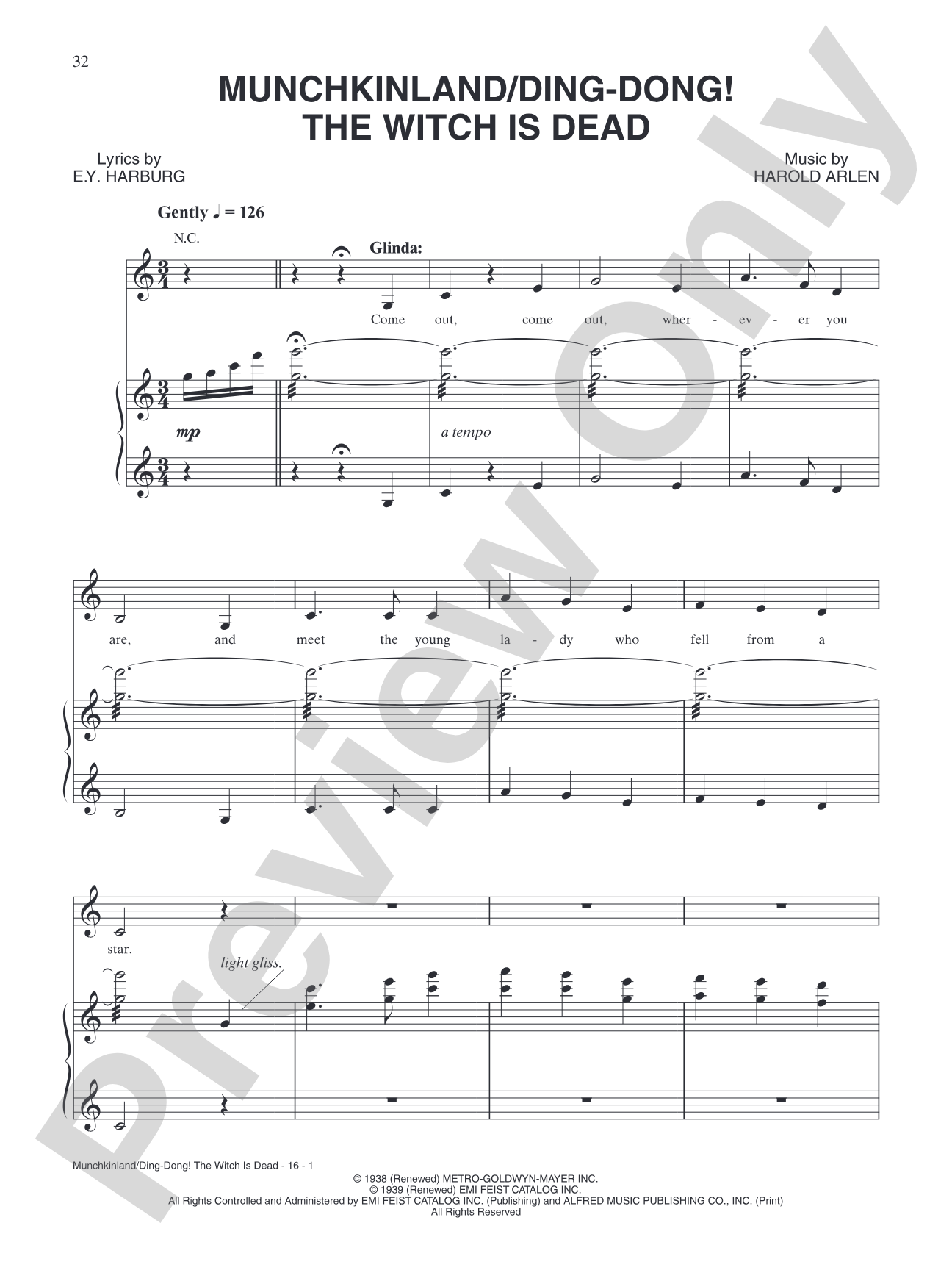
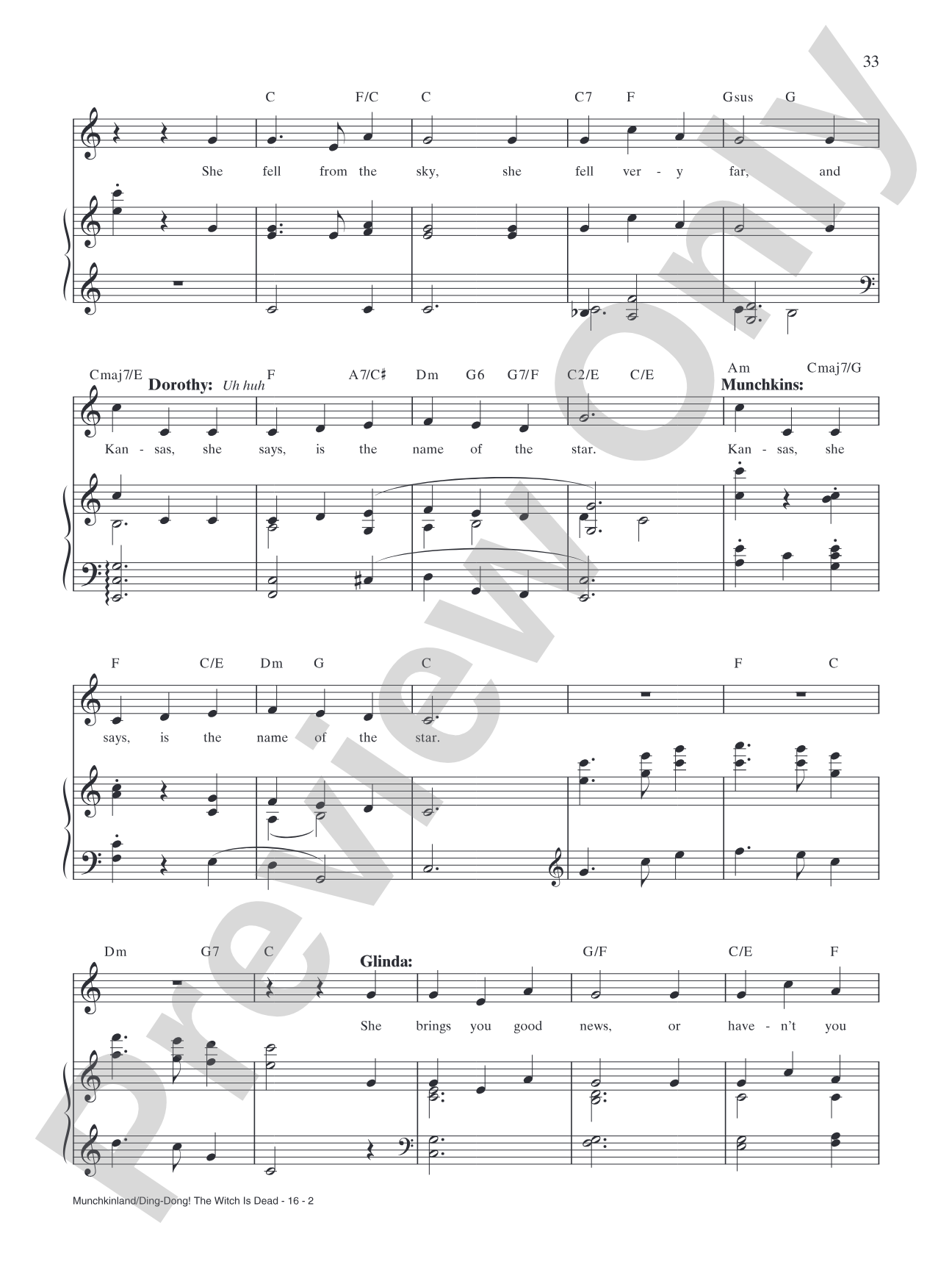
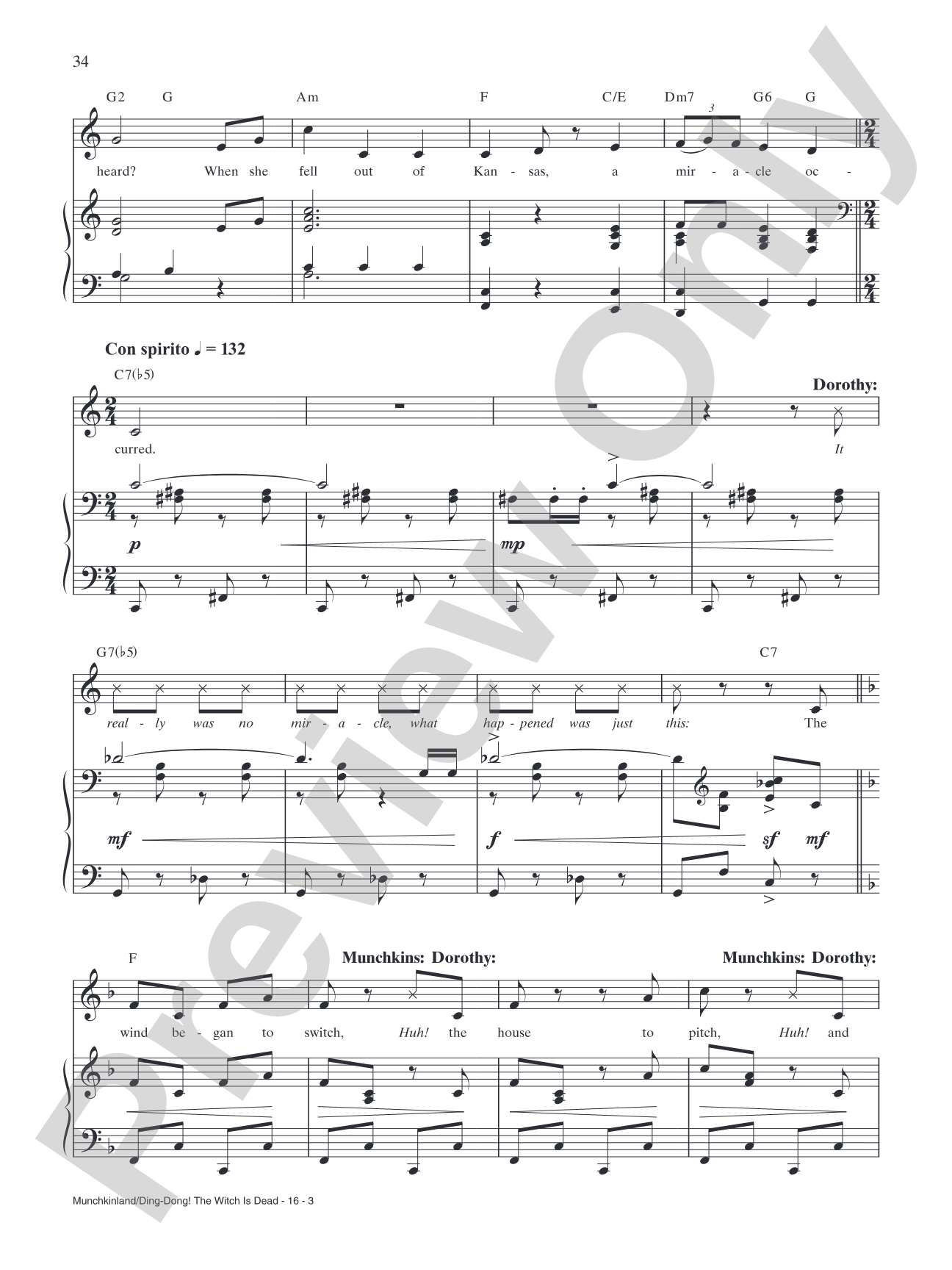
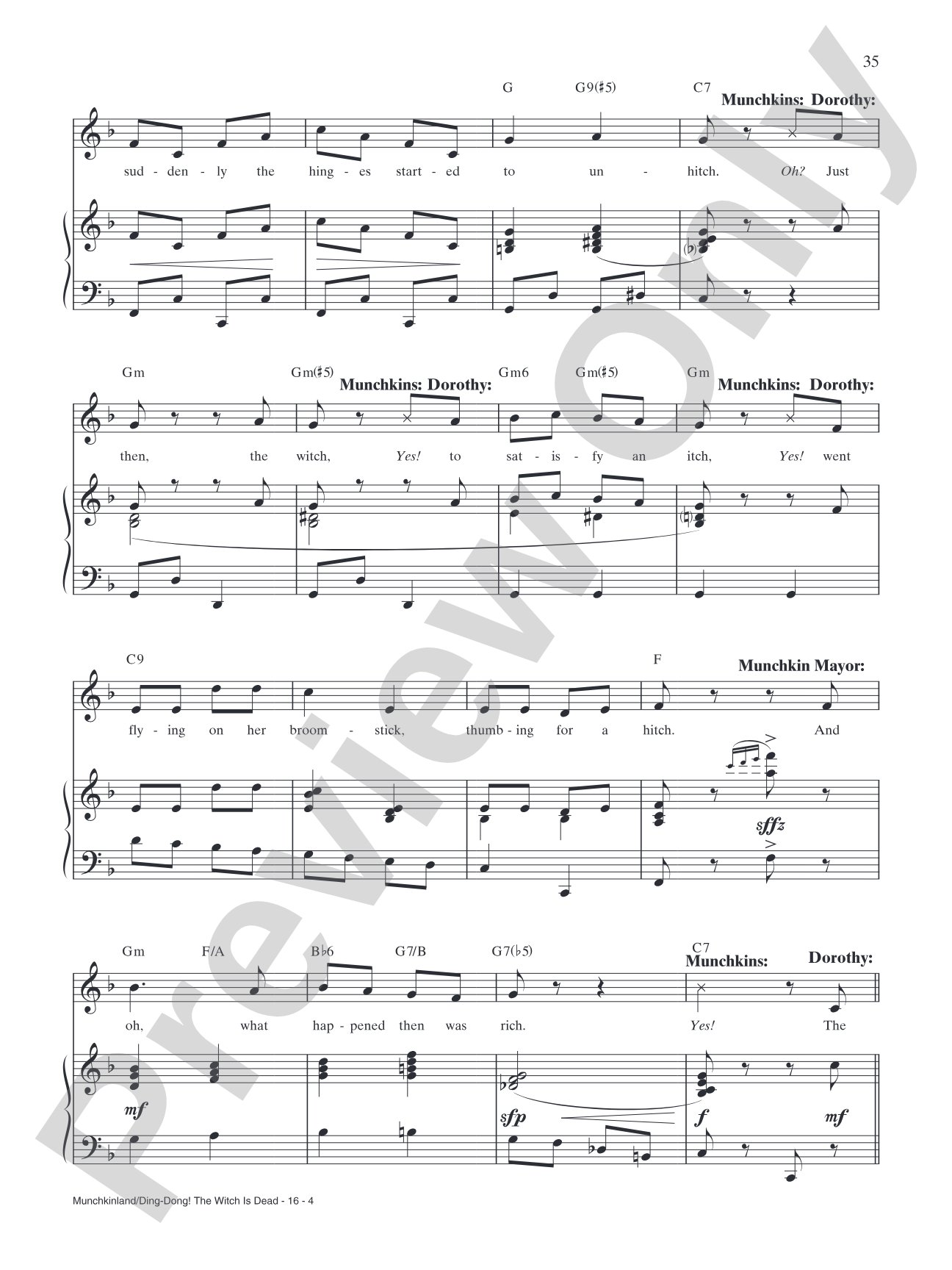

Munchkin Land/Ding Dong! The Witch Is Dead (from Andrew Lloyd Webber's "The Wizard of Oz"): Piano/Vocal/Chords
Music by Harold Arlen, lyrics by E. Y. Harburg, with new songs by Andrew Lloyd Webber and Tim Rice
Item: 00-XS-0000411
$9.99
One moment…
Related Items
If I Only Had a Brain (from Andrew Lloyd Webber's "The Wizard of Oz"): Piano/Vocal/Chords |
$4.99
|
View | |
The Merry Old Land of Oz (from Andrew Lloyd Webber's "The Wizard of Oz"): Piano/Vocal/Chords |
$5.99
|
View | |
We're Outta the Woods (from Andrew Lloyd Webber's "The Wizard of Oz"): Piano/Vocal/Chords |
$4.99
|
View | |
Over the Rainbow (from Andrew Lloyd Webber's "The Wizard of Oz"): Piano/Vocal/Chords |
$4.99
|
View | |
Follow the Yellow Brick Road (from Andrew Lloyd Webber's "The Wizard of Oz"): Piano/Vocal/Chords |
$4.99
|
View | |
If I Only Had a Heart (from Andrew Lloyd Webber's "The Wizard of Oz"): Piano/Vocal/Chords |
$5.99
|
View | |
If I Only Had the Nerve/We're Off to See the Wizard (from Andrew Lloyd Webber's "The Wizard of Oz"): Piano/Vocal/Chords |
$5.99
|
View | |
Hail-Hail! The Witch is Dead (from Andrew Lloyd Webber's "The Wizard of Oz"): Piano/Vocal/Chords |
$5.99
|
View | |
The Wizard of Oz: Selections from Andrew Lloyd Webber's New Stage Production: Piano/Vocal/Guitar Book |
$21.99
|
View |
Description
Upon its 2011 debut, Andrew Lloyd Webber's spectacular new stage production of The Wizard of Oz dazzled London audiences and embarked on a course for productions around the world. Building upon the original story and the classic movie score with music by Harold Arlen and lyrics by E.Y. Harburg, Lloyd Webber masterfully transforms the work by contributing more than a half-dozen new, original songs that at last successfully adapt the world's most beloved movie musical for live theatre. This collectible songbook contains piano/vocal sheet music for every song on the original cast recording, along with several pages of brilliant color photos from the original London production. Titles: Nobody Understands Me * Over the Rainbow * Wonders of the World * Munchkinland / Ding-Dong! The Witch Is Dead * Follow the Yellow Brick Road * If I Only Had a Brain * If I Only Had a Heart * If I Only Had the Nerve / We're Off to See the Wizard * We're Outta the Woods * The Merry Old Land of Oz * Bring Me the Broomstick * Red Shoes Blues * The Rescue * Hail-Hail! The Witch Is Dead * The Wizard's Departure * Already Home.


Discover MakeMusic Cloud: thousands of interactive titles your students can play along with today.
Sample Audio
No sample audio found.
Sample Video
No sample videos found.
Additional Details
Publisher:
Alfred Music
Page Count:
116
SKU:
00-XS-0000411
More about this title
About the Composer: Harold Arlen
Harold Arlen (1905-1986) composed the score for the 1939 film The Wizard of Oz, creating some of the most enduring melodies in American musical theater. Working with lyricist E.Y. Harburg, Arlen crafted a score that balances sophisticated harmonic language with accessibility, making it equally rewarding for professional performers and student musicians. His gift for memorable melody and theatrical orchestration established a template for American songwriting that influenced generations of composers.
Arlen's other major works include Stormy Weather, Cabin in the Sky, and St. Louis Woman. His compositions are celebrated for their jazz-inflected harmonies, unexpected key changes, and emotional directness. For music educators, Arlen's work offers a masterclass in writing for the voice: his melodies sit naturally in the range, his accompaniments support without overwhelming, and his songs tell character stories that singers can perform with conviction.
Why we love this
This collection captures the full emotional arc of a beloved story through a songbook that serves both pianists accompanying singers and pianists studying classic American song. Arlen's harmonic language rewards careful listening; chord progressions surprise without feeling arbitrary, and the vocal lines sit in the hand naturally while challenging singers to shape phrases with intentionality. For programs mixing classic material with contemporary work, these songs anchor an evening with theatrical substance and audience recognition.
What to expect
The score moves between intimate character moments and sweeping theatrical grandeur, often within the same song. Arlen's melodies have a singing quality that feels natural to the voice, while the piano writing offers lush harmonic support that can shift from playful (Munchkinland) to deeply moving (Over the Rainbow). The collection captures the film's theatrical magic without losing the conversational warmth that makes the story resonate.
Who it's for
This songbook serves pianists accompanying vocalists in recital settings, voice students building a foundation in classic American song, and music theater programs staging Webber's 2011 adaptation or concert selections from it. Pianists with intermediate-advanced skills will find sophisticated harmonies and part-writing that repay detailed study, while singers at intermediate level and above can engage with the emotional complexity of these character songs.
How to get the most out of it
- Pay close attention to Arlen's chord substitutions and passing harmonies in the piano part; they shift the emotional color significantly. Resisting the urge to oversimplify the accompaniment keeps the music from feeling dated.
- Singers should identify the emotional subtext of each character's song before locking onto stylistic choices. 'If I Only Had a Brain' requires a different performance approach than 'Red Shoes Blues,' even though both come from the same score.
- Tempo relationships between the patter sections and the sustained melody lines matter enormously. Use the recorded cast album as a reference, but find tempos that work for your pianist and vocalist pairing.
- The key relationships and modulations throughout the score are intentional and functional. Keep them intact; transposing individual songs away from their companions in the score can disrupt the carefully crafted tonal journey.
How to use it
Select individual songs for recital programming, particularly for voice students demonstrating musical theater repertoire or pianists showcasing song accompaniment skills. The full score works well for concert performances or classroom song cycles exploring how classic American song functions as character development. This edition also serves programs mounting scenes or full productions of Webber's stage adaptation.
Skills your students will build
- Interpreting jazz-influenced harmonic progressions and chord substitutions
- Balancing vocal line and piano accompaniment without subordinating either voice
- Shaping character-driven narratives through song phrasing and emotional commitment
- Reading and executing key relationships and modulations across a multi-song score
- Accompanying singers with responsiveness and musical support