
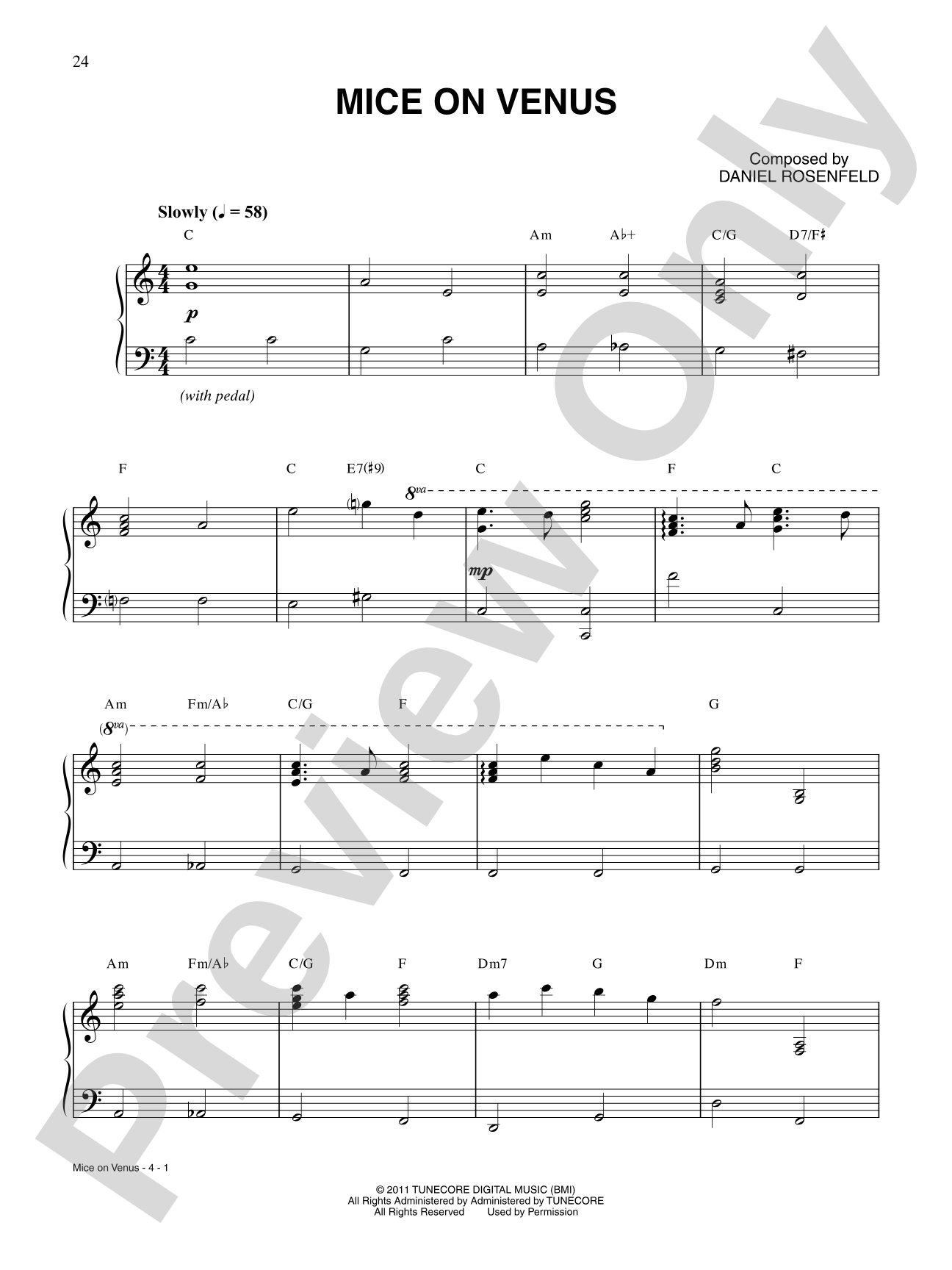

Mice on Venus (from "Minecraft"): Piano
Sheet Music Selections from the Video Game Soundtrack
Composed by C418
Item: 00-PS-0015488
$4.99
Pickup currently not available
Related Items
Key (from "Minecraft"): Piano |
$4.99
|
View | |
Door (from "Minecraft"): Piano |
$4.99
|
View | |
Subwoofer Lullaby (from "Minecraft"): Piano |
$4.99
|
View | |
Death (from "Minecraft"): Piano |
$4.99
|
View | |
Living Mice (from "Minecraft"): Piano |
$4.99
|
View | |
Moog City (from "Minecraft"): Piano |
$4.99
|
View | |
Haggstrom (from "Minecraft"): Piano |
$4.99
|
View | |
Equinoxe (from "Minecraft"): Piano |
$4.99
|
View | |
Dry Hands (from "Minecraft"): Piano |
$4.99
|
View | |
Clark (from "Minecraft"): Piano |
$4.99
|
View | |
Chris (from "Minecraft"): Piano |
$4.99
|
View | |
Excuse (from "Minecraft"): Piano |
$4.99
|
View | |
Sweden (from "Minecraft"): Piano |
$4.99
|
View | |
Danny (from "Minecraft"): Piano |
$4.99
|
View | |
Beginning (from "Minecraft"): Piano |
$4.99
|
View | |
Droopy Likes Ricochet (from "Minecraft"): Piano |
$4.99
|
View | |
Minecraft (from "Minecraft"): Piano |
$4.99
|
View | |
Wet Hands (from "Minecraft"): Piano |
$4.99
|
View | |
Minecraft: Volume Alpha: Piano Book |
$16.99
|
View |
Description
With more than 20 million players worldwide, Minecraft ranks among the world's most popular video games. Its soundtrack by Daniel "C418" Rosenfeld is one of the world's most recognized and beloved video game scores, and this book lets pianists bring the music to life! Titles: Key * Door * Subwoofer Lullaby * Death * Living Mice * Moog City * Haggstrom * Minecraft * Equinoxe * Mice on Venus * Dry Hands * Wet Hands * Clark * Chris * Excuse * Sweden * Danny * Beginning * Droopy Like Ricochet.


Discover MakeMusic Cloud: thousands of interactive titles your students can play along with today.
Sample Audio
No sample audio found.
Sample Video
No sample videos found.
Additional Details
Publisher:
Alfred Music
Page Count:
44
SKU:
00-PS-0015488
More about this title
About the Composer: Daniel Rosenfeld
Daniel Rosenfeld, known professionally as C418, composed the iconic soundtrack for Minecraft in 2009. His work establishing the game's ambient, minimalist soundscape became one of the most recognizable video game scores globally, influencing how composers approach interactive and open-world gaming audio. Rosenfeld's approach emphasizes melody and emotional resonance over complexity, making his compositions uniquely approachable for student pianists while maintaining artistic depth.
Why we love this
These pieces bridge the gap between what students actually want to play and what develops real musicianship. The collection spans multiple moods and technical levels within a single, cohesive source, so you can program it across the year or feature it in a concert themed around contemporary music and gaming culture. Rosenfeld's minimalist writing rewards careful attention to pedaling, dynamics, and phrasing rather than technical flash.
What to expect
These pieces evoke quiet wonder and introspection. Whether meditative and ambient or gently melancholic, the music carries a sense of exploration and discovery. The writing feels spacious and thoughtful, inviting the pianist to shape phrases with care and presence rather than propulsion.
Who it's for
Intermediate to advanced pianists who want to engage with contemporary music that matters to them. This collection appeals equally to students seeking repertoire beyond classical canon and to teachers looking for pieces that demonstrate how modern composition creates emotional depth through restraint rather than virtuosity.
How to get the most out of it
- Treat the sparse textures with intention. Silence and space matter as much as the notes you play; resist the urge to fill every gap with sound.
- Experiment with pedal to create the atmospheric quality these pieces demand, but change it frequently enough to keep harmonies clear.
- Listen to the original Minecraft recordings while learning. Understanding how each piece functions in the game context will inform your interpretation and help you identify which tracks suit your technical level.
- Pay attention to the emotional arc within each piece. Many of these compositions are short but travel significant emotional distance through subtle shifts in register or harmony.
How to use it
Feature selections from this collection in a recital exploring video game music and its compositional legitimacy, or use individual pieces as concert openers to establish mood and draw audiences into a specific emotional landscape. The 44-page collection also works well as a semester-long supplementary repertoire resource, with students exploring tracks independently alongside their primary lesson material.
Skills your students will build
- Pedal control and voice independence in sparse textures
- Expressive interpretation of minimalist compositional writing
- Sensitivity to dynamic nuance and phrasing without traditional structural landmarks
- Sustaining listener attention through restraint and emotional subtlety
- Rhythmic precision in pieces that prioritize mood over metric complexity