
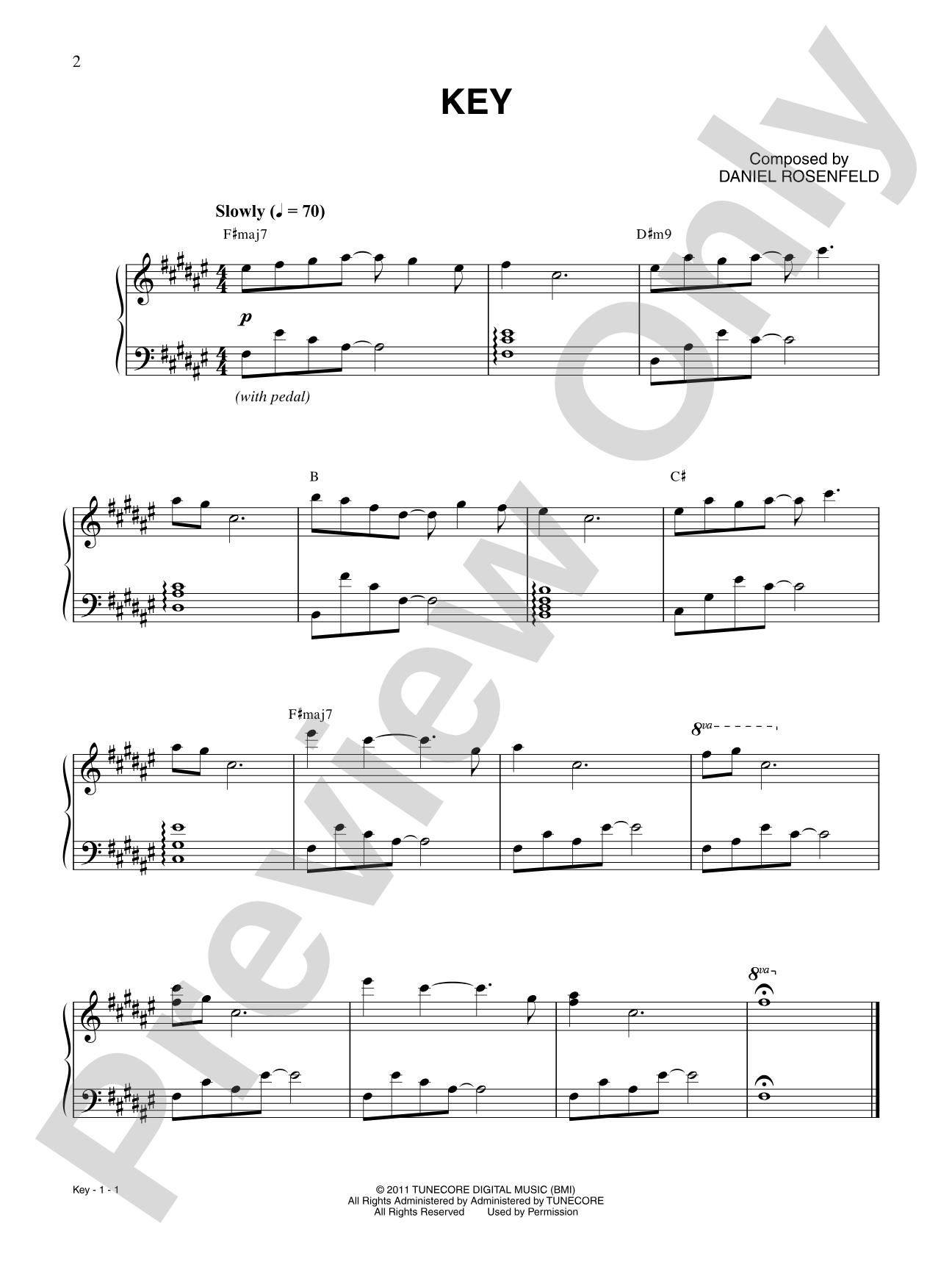

Key (from "Minecraft"): Piano
Sheet Music Selections from the Video Game Soundtrack
Composed by C418
Item: 00-PS-0015480
$4.99
Pickup currently not available
Related Items
Door (from "Minecraft"): Piano |
$4.99
|
View | |
Subwoofer Lullaby (from "Minecraft"): Piano |
$4.99
|
View | |
Death (from "Minecraft"): Piano |
$4.99
|
View | |
Living Mice (from "Minecraft"): Piano |
$4.99
|
View | |
Moog City (from "Minecraft"): Piano |
$4.99
|
View | |
Haggstrom (from "Minecraft"): Piano |
$4.99
|
View | |
Equinoxe (from "Minecraft"): Piano |
$4.99
|
View | |
Mice on Venus (from "Minecraft"): Piano |
$4.99
|
View | |
Dry Hands (from "Minecraft"): Piano |
$4.99
|
View | |
Clark (from "Minecraft"): Piano |
$4.99
|
View | |
Chris (from "Minecraft"): Piano |
$4.99
|
View | |
Excuse (from "Minecraft"): Piano |
$4.99
|
View | |
Sweden (from "Minecraft"): Piano |
$4.99
|
View | |
Danny (from "Minecraft"): Piano |
$4.99
|
View | |
Beginning (from "Minecraft"): Piano |
$4.99
|
View | |
Droopy Likes Ricochet (from "Minecraft"): Piano |
$4.99
|
View | |
Minecraft (from "Minecraft"): Piano |
$4.99
|
View | |
Wet Hands (from "Minecraft"): Piano |
$4.99
|
View | |
Minecraft: Volume Alpha: Piano Book |
$16.99
|
View |
Description
With more than 20 million players worldwide, Minecraft ranks among the world's most popular video games. Its soundtrack by Daniel "C418" Rosenfeld is one of the world's most recognized and beloved video game scores, and this book lets pianists bring the music to life! Titles: Key * Door * Subwoofer Lullaby * Death * Living Mice * Moog City * Haggstrom * Minecraft * Equinoxe * Mice on Venus * Dry Hands * Wet Hands * Clark * Chris * Excuse * Sweden * Danny * Beginning * Droopy Like Ricochet.


Discover MakeMusic Cloud: thousands of interactive titles your students can play along with today.
Sample Audio
No sample audio found.
Sample Video
No sample videos found.
Additional Details
Publisher:
Alfred Music
Page Count:
44
SKU:
00-PS-0015480
More about this title
About the Composer: Daniel Rosenfeld
Daniel Rosenfeld, known professionally as C418, composed the iconic soundtrack for Minecraft starting in 2009. His ambient, minimalist approach to video game music has influenced a generation of composers working in interactive media, proving that game soundtracks deserve the same artistic consideration as concert hall compositions.
Rosenfeld's work spans multiple albums and thousands of hours of gameplay, creating a cohesive sonic world that players recognize instantly. His compositions emphasize atmospheric texture and emotional restraint, making them surprisingly effective as standalone piano pieces.
Why we love this
This collection bridges the gap between students' lived experience and classical piano repertoire. Video game music has legitimacy as a compositional art form, and Rosenfeld's pieces reward serious musical engagement: they contain genuine harmonic interest, dynamic architecture, and the kind of melodic clarity that makes them satisfying to practice and perform.
What to expect
Ambient yet purposeful. These pieces evoke the quiet focus of gameplay: exploration, wonder, contemplation punctuated by moments of urgency. The harmonic language feels modern without being dissonant, and melodies emerge from carefully layered textures rather than soaring above them.
Who it's for
Pianists at the intermediate level and above who want to explore contemporary composition outside traditional classical boundaries. Students benefit from music that connects to their own cultural touchstones while developing serious technique and musicality.
How to get the most out of it
- Lean into the minimalist aesthetic rather than over-interpreting. These pieces often work best with clear touch and restrained pedal, letting the harmonic movement speak for itself.
- Study how Rosenfeld uses register and repetition to create emotional arc. A simple melodic figure gains power through strategic placement in higher or lower registers.
- Match tempo to the piece's character, not a metronome preset. "Subwoofer Lullaby" needs genuine spaciousness; "Dry Hands" demands rhythmic precision. Let the title and harmonic content guide your tempo choice.
How to use it
Program these alongside classical repertoire to demonstrate how contemporary composers use traditional harmonic language in new ways. A recital featuring Bach and Rosenfeld tells a story about how musical thinking evolves. Individual pieces also work well as palette cleansers in mixed-style programs or as encores that audiences universally recognize.
Skills your students will build
- Reading and performing minimalist textures with clarity and control
- Creating emotional shape through harmonic movement rather than melodic display
- Managing dynamic range and pedal use in ambient, sustained writing
- Interpreting contemporary notation and performance instructions