
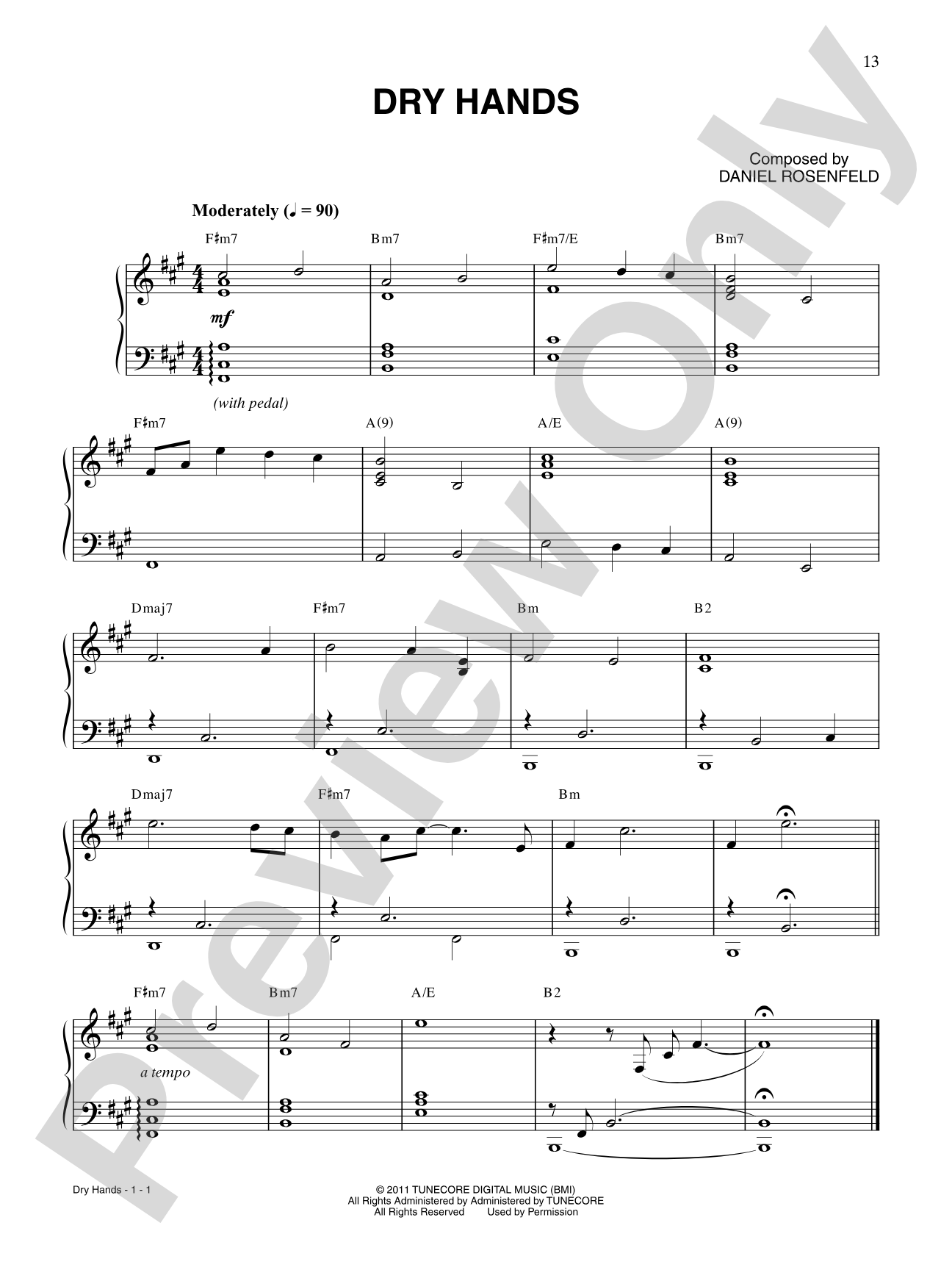

Dry Hands (from "Minecraft"): Piano
Sheet Music Selections from the Video Game Soundtrack
Composed by C418
Item: 00-PS-0015489
$4.99
Pickup currently not available
Related Items
Key (from "Minecraft"): Piano |
$4.99
|
View | |
Door (from "Minecraft"): Piano |
$4.99
|
View | |
Subwoofer Lullaby (from "Minecraft"): Piano |
$4.99
|
View | |
Death (from "Minecraft"): Piano |
$4.99
|
View | |
Living Mice (from "Minecraft"): Piano |
$4.99
|
View | |
Moog City (from "Minecraft"): Piano |
$4.99
|
View | |
Haggstrom (from "Minecraft"): Piano |
$4.99
|
View | |
Equinoxe (from "Minecraft"): Piano |
$4.99
|
View | |
Mice on Venus (from "Minecraft"): Piano |
$4.99
|
View | |
Clark (from "Minecraft"): Piano |
$4.99
|
View | |
Chris (from "Minecraft"): Piano |
$4.99
|
View | |
Excuse (from "Minecraft"): Piano |
$4.99
|
View | |
Sweden (from "Minecraft"): Piano |
$4.99
|
View | |
Danny (from "Minecraft"): Piano |
$4.99
|
View | |
Beginning (from "Minecraft"): Piano |
$4.99
|
View | |
Droopy Likes Ricochet (from "Minecraft"): Piano |
$4.99
|
View | |
Minecraft (from "Minecraft"): Piano |
$4.99
|
View | |
Wet Hands (from "Minecraft"): Piano |
$4.99
|
View | |
Minecraft: Volume Alpha: Piano Book |
$16.99
|
View |
Description
With more than 20 million players worldwide, Minecraft ranks among the world's most popular video games. Its soundtrack by Daniel "C418" Rosenfeld is one of the world's most recognized and beloved video game scores, and this book lets pianists bring the music to life! Titles: Key * Door * Subwoofer Lullaby * Death * Living Mice * Moog City * Haggstrom * Minecraft * Equinoxe * Mice on Venus * Dry Hands * Wet Hands * Clark * Chris * Excuse * Sweden * Danny * Beginning * Droopy Like Ricochet.


Discover MakeMusic Cloud: thousands of interactive titles your students can play along with today.
Sample Audio
No sample audio found.
Sample Video
No sample videos found.
Additional Details
Publisher:
Alfred Music
Page Count:
44
SKU:
00-PS-0015489
More about this title
About the Composer: Daniel Rosenfeld
Daniel Rosenfeld, known professionally as C418, composed the iconic soundtrack for Minecraft beginning in 2009. His minimalist, ambient approach to the game's music transformed video game composition by proving that simple, repetitive melodic and harmonic structures could create deeply emotional and memorable musical experiences. Rosenfeld's work on Minecraft has influenced how educators and musicians think about accessibility in composition; his pieces require no advanced technique but demand thoughtful interpretation and sensitivity to nuance.
Rosenfeld's compositional voice prioritizes atmosphere and emotional resonance over complexity. Each piece in the Minecraft score carries distinct character while maintaining a cohesive sonic world, making his work particularly valuable for pianists developing their ability to shape minimal material into engaging performances.
Why we love this
These pieces give students access to music they genuinely recognize and love while building real interpretive skills on material that sounds deceptively simple. The collection spans multiple moods and technical levels, so you can find something for nearly every pianist in your studio or program. Programming video game music legitimizes students' musical lives outside the lesson and concert hall, strengthening their commitment to daily practice.
What to expect
These pieces evoke calm exploration, quiet contemplation, and the meditative focus that draws millions to Minecraft. The writing blends tonal simplicity with harmonic sophistication, creating music that feels both intimate and vast, often evoking landscapes and solitude rather than narrative drama.
Who it's for
Pianists at early intermediate through advanced levels who want to perform music that resonates with their gaming experience and interests. This collection appeals equally to students seeking attainable yet musically satisfying repertoire and to teachers looking for contemporary material that motivates consistent practice.
How to get the most out of it
- Treat silence and space as active musical elements rather than empty time. Rosenfeld's compositions often depend on what is not played to create atmosphere.
- Experiment with pedal to shape the resonance without blurring harmonic clarity. These pieces benefit from subtle changes in damper pedal rather than continuous depression.
- Allow the natural decay of notes to complete phrases. Rushing into the next section diminishes the meditative quality that defines the score.
- Differentiate between pieces by establishing distinct tempos and touches. The variation in character across the collection invites performers to develop versatility within a cohesive style.
How to use it
Feature individual pieces on student recitals to celebrate the breadth of musical composition and show that concert repertoire can emerge from contexts students care about. The collection also works beautifully as supplementary material for students in their first years of independent practicing, since the accessible technical level allows focus on interpretation, voicing, and pedal control.
Skills your students will build
- Sustaining musical line and phrase over sparse texture
- Shaping repetitive material through subtle dynamic and tempo variation
- Pedal control and resonance management in minimalist writing
- Translating mood and atmosphere into performative choices
- Sight-reading contemporary popular music notation