
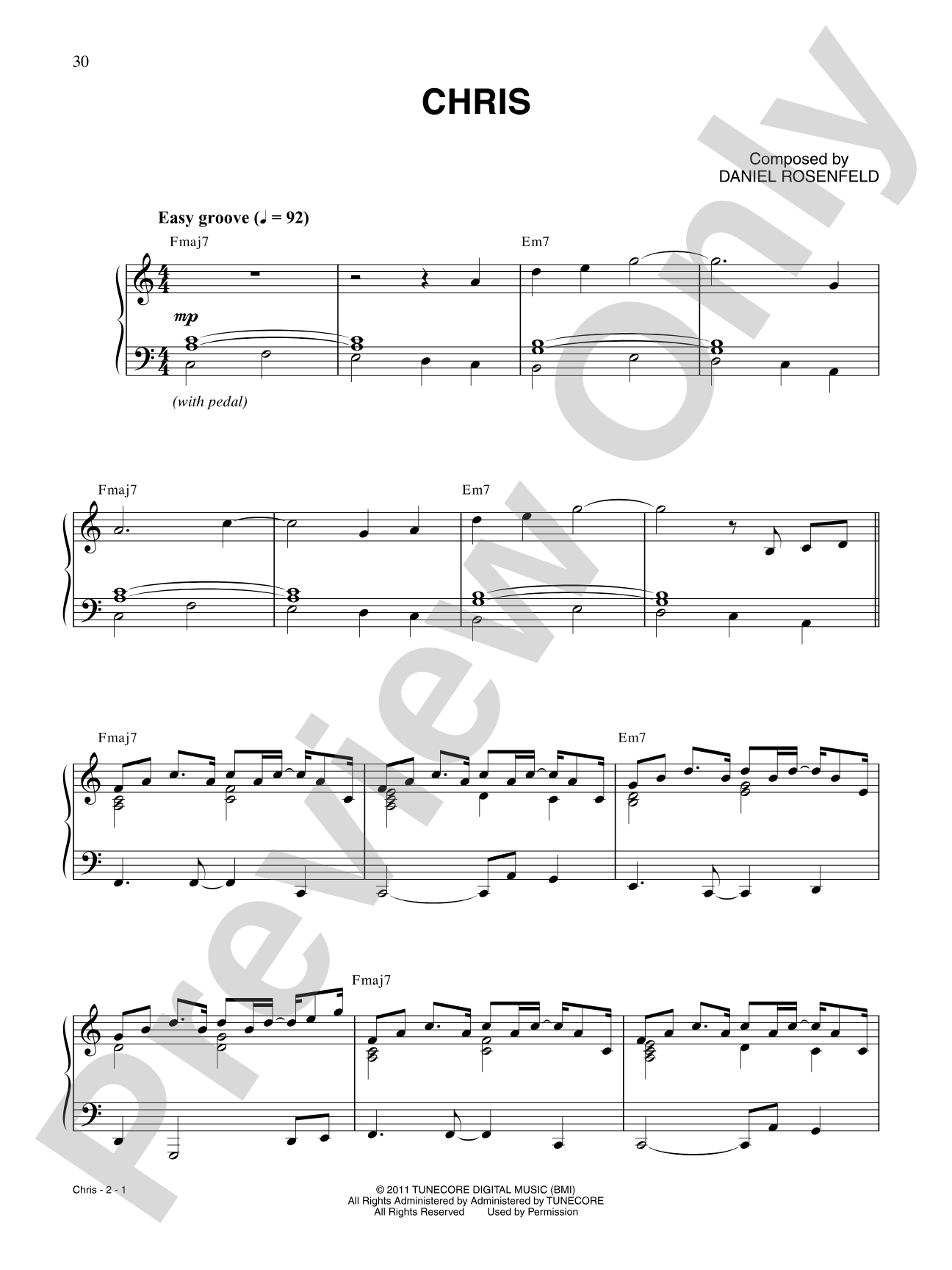

Chris (from "Minecraft"): Piano
Sheet Music Selections from the Video Game Soundtrack
Composed by C418
Item: 00-PS-0015491
$4.99
Pickup currently not available
Related Items
Key (from "Minecraft"): Piano |
$4.99
|
View | |
Door (from "Minecraft"): Piano |
$4.99
|
View | |
Subwoofer Lullaby (from "Minecraft"): Piano |
$4.99
|
View | |
Death (from "Minecraft"): Piano |
$4.99
|
View | |
Living Mice (from "Minecraft"): Piano |
$4.99
|
View | |
Moog City (from "Minecraft"): Piano |
$4.99
|
View | |
Haggstrom (from "Minecraft"): Piano |
$4.99
|
View | |
Equinoxe (from "Minecraft"): Piano |
$4.99
|
View | |
Mice on Venus (from "Minecraft"): Piano |
$4.99
|
View | |
Dry Hands (from "Minecraft"): Piano |
$4.99
|
View | |
Clark (from "Minecraft"): Piano |
$4.99
|
View | |
Excuse (from "Minecraft"): Piano |
$4.99
|
View | |
Sweden (from "Minecraft"): Piano |
$4.99
|
View | |
Danny (from "Minecraft"): Piano |
$4.99
|
View | |
Beginning (from "Minecraft"): Piano |
$4.99
|
View | |
Droopy Likes Ricochet (from "Minecraft"): Piano |
$4.99
|
View | |
Minecraft (from "Minecraft"): Piano |
$4.99
|
View | |
Wet Hands (from "Minecraft"): Piano |
$4.99
|
View | |
Minecraft: Volume Alpha: Piano Book |
$16.99
|
View |
Description
With more than 20 million players worldwide, Minecraft ranks among the world's most popular video games. Its soundtrack by Daniel "C418" Rosenfeld is one of the world's most recognized and beloved video game scores, and this book lets pianists bring the music to life! Titles: Key * Door * Subwoofer Lullaby * Death * Living Mice * Moog City * Haggstrom * Minecraft * Equinoxe * Mice on Venus * Dry Hands * Wet Hands * Clark * Chris * Excuse * Sweden * Danny * Beginning * Droopy Like Ricochet.


Discover MakeMusic Cloud: thousands of interactive titles your students can play along with today.
Sample Audio
No sample audio found.
Sample Video
No sample videos found.
Additional Details
Publisher:
Alfred Music
Page Count:
44
SKU:
00-PS-0015491
More about this title
About the Composer: Daniel Rosenfeld
Daniel Rosenfeld, known professionally as C418, is a German composer and musician who created the iconic soundtrack for Minecraft starting in 2009. His minimalist, ambient approach to game music broke new ground in the industry, proving that video game scores could achieve both artistic depth and massive cultural reach. Rosenfeld's work demonstrates how constraining technical limitations can spark creativity, with many of his pieces built from simple melodic and harmonic ideas layered into rich, contemplative soundscapes.
Beyond Minecraft, Rosenfeld has composed for other games and released independent albums that explore similar ambient and experimental territory. His music education value lies in how it balances accessibility with compositional sophistication, making it an ideal bridge between popular culture and serious musical study.
Why we love this
These arrangements capture the meditative, pixel-perfect quality that made the Minecraft soundtrack resonate with millions of players, while the collection's breadth gives pianists genuine variety to explore across a single book. The writing respects both the emotional core of each piece and the technical realities of student pianists, avoiding both oversimplification and unnecessary complexity. Programming this music signals to your students that their gaming culture has real artistic legitimacy.
What to expect
These pieces evoke quiet wonder and gentle melancholy, with the kind of hypnotic calm you feel while exploring a virtual landscape without pressure or danger. There's something both comforting and slightly mysterious in the harmonic movement, with unexpected chord changes that keep listeners engaged without demanding drama. The piano writing itself feels intimate, like a personal soundtrack to solitude and discovery.
Who it's for
Intermediate pianists (roughly Grades 3-5) seeking repertoire that feels contemporary and personally relevant, as well as teachers building playlists that include gaming culture alongside classical canon. Students who play Minecraft will find immediate motivation to learn these pieces, while pianists new to the game will discover why its music became so culturally significant.
How to get the most out of it
- Treat the sparse textures as intentional, not incomplete. Minecraft's beauty lives in restraint, so resist the urge to add flourishes or pedal through every measure.
- Pay close attention to the sustain pedal markings; they define the tonal color of each piece more than note choice alone.
- Lock in the tempo early and keep it steady. Many of these pieces rely on hypnotic repetition, and fluctuating tempo breaks the spell.
- Balance foreground melodies against background accompaniment by listening to the original soundtrack alongside your practice. The game version reveals which voices should carry and which should recede.
How to use it
Consider clustering two or three of these pieces together on a student recital or winter concert to create a thematic moment, or pair one piece with classical repertoire to highlight continuity across musical eras. The collection works equally well as a long-term practice resource for students who need motivation to stay consistent at the instrument, since the material feels fresh enough to sustain interest across months of playing.
Skills your students will build
- Pedal control and tonal shading in sparse textures
- Consistent tempo maintenance in repetitive material
- Voice independence when melody and accompaniment occupy nearby registers
- Attention to dynamics and articulation as primary expressive tools
- Interpreting contemporary music notation and stylistic cues